
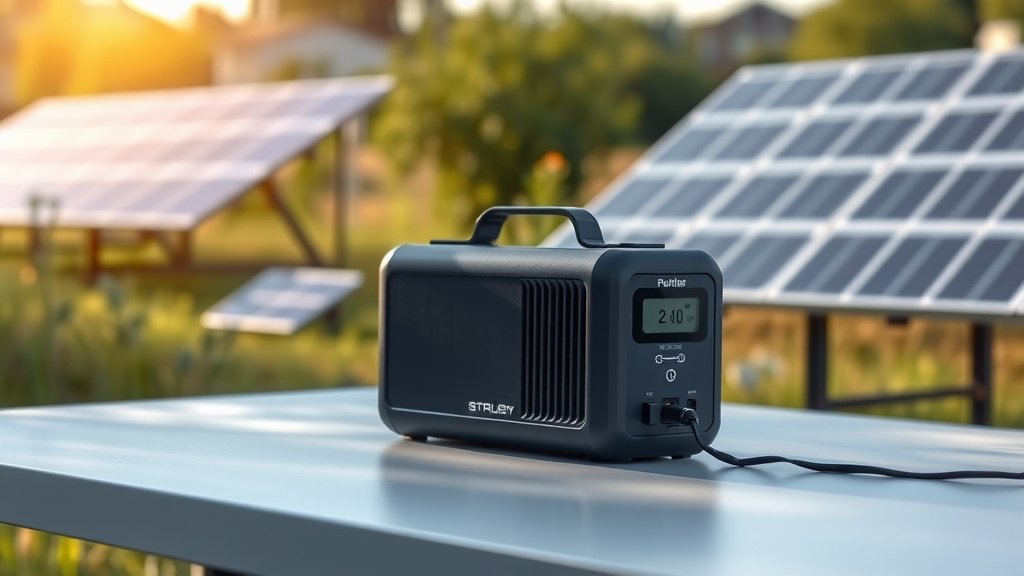
Depth of discharge (DoD) in a portable power station refers to how much battery capacity you’ve used compared to its total storage, expressed as a percentage.
A 50% depth of discharge means you’ve used half your power station’s battery capacity, while 100% DoD means the battery is completely empty.
TL;DR: Quick Answer
- DoD shows how much battery power you’ve used (0% = full, 100% = empty)
- Lower DoD percentages help your battery last longer over time
- Most lithium batteries handle 80% DoD regularly without major damage
- Checking DoD helps you plan power usage and protect your investment
- Different battery types have different safe DoD limits
What Is Depth Of Discharge In Portable Power Station?
Think of depth of discharge like the fuel gauge in your car. When your tank shows half empty, you’ve used 50% of your fuel capacity. DoD works the same way with your portable power station’s battery.
The measurement tells you exactly how much stored energy you’ve consumed. A fresh, fully charged power station starts at 0% DoD. As you run devices and drain power, the DoD percentage climbs higher.
Why Depth Of Discharge Matters For Your Power Station
Understanding DoD helps you make smarter charging decisions and extends your battery’s lifespan. Research shows that battery chemistry responds differently to various discharge levels.
Your power station’s longevity depends heavily on how deep you regularly discharge it. Shallow discharges generally cause less stress than deep ones.
Battery Lifespan Connection
Battery manufacturers often rate their products based on cycle life at specific DoD levels. A cycle means one complete charge and discharge process.
From what I found in battery research, a lithium-ion battery might last 2,000 cycles at 80% DoD but could handle 5,000 cycles at 50% DoD. The difference is huge for long-term value.
Cost Impact Over Time
Replacing a portable power station battery can cost hundreds of dollars. Managing DoD properly helps you avoid early replacement costs.
Think of it as preventive maintenance for your wallet. A little attention to discharge depth saves money down the road.
How To Calculate Depth Of Discharge
The DoD formula is simple: (Energy Used ÷ Total Capacity) × 100 = DoD Percentage.
Let’s say your power station holds 1,000Wh total. You’ve used 300Wh running your devices. Your DoD calculation looks like this: (300 ÷ 1,000) × 100 = 30% DoD.
Reading Your Display
Most modern power stations show remaining capacity as a percentage. If your display reads 70% remaining, you’ve reached 30% depth of discharge.
Some units display DoD directly. Others show remaining capacity, so you’ll need to do quick math to find your discharge depth.
Manual Tracking Method
You can track DoD manually by noting your starting capacity and current usage. Keep a simple log if your power station lacks a detailed display.
| Starting Capacity | Energy Used | Depth of Discharge |
|---|---|---|
| 1000Wh | 200Wh | 20% |
| 1000Wh | 500Wh | 50% |
| 1000Wh | 800Wh | 80% |
Different Battery Types And DoD Limits
Not all batteries handle deep discharge the same way. Your power station’s battery chemistry determines safe DoD ranges.
Lithium-Ion Batteries
Most portable power stations use lithium-ion technology. These batteries handle regular 80% DoD cycles quite well, according to battery research I found online.
You can safely discharge lithium batteries deeper than other types without immediate damage. Many experts recommend staying between 20% and 80% charge for optimal longevity.
LiFePO4 (Lithium Iron Phosphate)
LiFePO4 batteries are even more forgiving with deep discharge. Research indicates they can handle 90% or higher DoD regularly without significant capacity loss.
These batteries cost more upfront but offer better DoD tolerance and longer cycle life. Many premium power stations use LiFePO4 chemistry.
Lead-Acid Batteries
Older or budget power stations might use lead-acid batteries. These require much more careful DoD management.
Lead-acid batteries suffer permanent damage from deep discharge. Experts typically recommend never exceeding 50% DoD with lead-acid chemistry.
Optimal DoD Ranges For Maximum Battery Life
Finding the sweet spot for DoD helps balance usability with longevity. You want enough power for your needs without damaging the battery.
The 80% Rule
Many battery experts suggest the 80% rule for lithium-ion power stations. Charge to 80% and discharge to 20%, giving you 60% usable capacity per cycle.
This approach maximizes cycle life while providing reasonable power access. It works well for regular camping or emergency backup use.
Practical Flexibility
Real-world use sometimes demands deeper discharge. Don’t stress about occasionally hitting 90% DoD during emergencies or extended trips.
The key is avoiding regular deep discharge habits. Occasional deep cycles won’t destroy your battery, but daily deep discharge will shorten its life.
Seasonal Considerations
Cold weather affects battery performance and safe DoD limits. Batteries deliver less capacity in freezing temperatures, reaching higher DoD faster.
Warm your power station gradually if you’ve stored it in cold conditions. Sudden temperature changes can stress the battery chemistry.
Signs You’re Discharging Too Deep
Your power station will show warning signs if you’re regularly exceeding safe DoD limits. Watch for these red flags.
Capacity Loss Symptoms
If your power station runs out faster than it used to, you might be discharging too deeply. Premature capacity loss often indicates DoD damage.
Track your typical runtime with standard loads. Significant decreases suggest battery degradation from deep discharge stress.
Charging Behavior Changes
Damaged batteries from excessive DoD often charge differently. They might charge very quickly at first, then slow down dramatically.
Some units start showing inaccurate capacity readings after repeated deep discharge cycles. The display might jump around or show impossible percentages.
Temperature Issues
Batteries stressed by deep discharge sometimes run hotter during charging or use. Excessive heat indicates potential internal damage.
If your power station feels unusually warm during normal operation, check your recent DoD habits. You might need to adjust your usage patterns.
Smart Charging Strategies Based On DoD
Timing your charges based on DoD helps maintain battery health. You don’t need to wait for complete discharge before plugging in.
Opportunity Charging
Charge your power station whenever convenient, regardless of current DoD level. Lithium batteries don’t suffer from memory effects like older battery types.
Partial charging cycles actually benefit lithium chemistry. Top off your power station during lunch breaks or whenever you have access to power.
Storage DoD Guidelines
Store your power station at around 50% DoD for long-term storage. This level minimizes chemical stress during extended periods without use.
Check stored units every few months. Batteries naturally self-discharge over time, potentially reaching unsafe DoD levels if ignored too long.
Emergency Preparedness
Keep your emergency power station between 70-80% charge for quick deployment. This gives you immediate power access without starting from empty.
Rotate your emergency power station into regular use occasionally. This prevents prolonged storage at full charge, which can also stress batteries.
DoD Monitoring Tools And Features
Modern power stations include helpful features for tracking DoD. Take advantage of these tools to protect your investment.
Built-In Displays
Most quality power stations show remaining capacity prominently. Some display exact watt-hours used and remaining.
Higher-end units might show cycle count and battery health metrics. These readings help you track long-term DoD impact on your battery.
Mobile Apps
Many manufacturers offer smartphone apps that connect to your power station. These apps often provide detailed DoD history and usage analytics.
I found that app-connected units help users develop better charging habits. Seeing your DoD patterns visualized makes it easier to spot problems.
Third-Party Monitors
You can add external battery monitors to power stations lacking built-in tracking. These devices plug between your power station and loads.
External monitors work well for older units or budget models. They provide detailed DoD data without buying a completely new power station.
Common DoD Mistakes To Avoid
Learning from common mistakes saves your battery from unnecessary wear. These pitfalls catch many new power station owners.
The “Empty Tank” Habit
Don’t wait until your power station dies completely before charging. This old habit from phone batteries doesn’t apply to power stations.
Regular 100% DoD cycles stress your battery chemistry unnecessarily. Charge when convenient, not when desperate.
Ignoring Temperature Effects
Cold batteries reach high DoD faster than warm ones. What looks like 50% DoD in summer might actually be 70% DoD in winter.
Factor temperature into your DoD calculations. Cold weather camping requires more conservative discharge planning.
Mixing Battery Chemistries
Don’t apply lead-acid DoD rules to lithium power stations. Each chemistry has different safe discharge ranges.
Check your power station’s manual for manufacturer DoD recommendations. Generic advice might not match your specific battery type.
Conclusion
Understanding depth of discharge helps you get maximum value from your portable power station investment. DoD affects battery lifespan, replacement costs, and reliable performance over time.
Most lithium-ion power stations handle 80% DoD regularly without major issues. Stay aware of your discharge patterns, use built-in monitoring tools, and charge opportunistically rather than waiting for complete discharge. Smart DoD management keeps your power station running strong for years while avoiding expensive premature battery replacement.
How often should I charge my portable power station?
Charge your power station whenever convenient, regardless of current battery level. Lithium batteries benefit from partial charging cycles rather than waiting for complete discharge. Aim to keep your unit between 20-80% charge for daily use.
Can I leave my power station plugged in all the time?
Most modern power stations include overcharge protection, making permanent connection relatively safe. Some manufacturers recommend unplugging after full charge to optimize battery longevity, while others design their units for continuous connection.
What happens if I accidentally discharge my power station to 0%?
Occasional complete discharge won’t destroy your power station, but avoid making it a habit. Charge the unit as soon as possible after complete discharge. Repeated 100% DoD cycles will shorten battery lifespan over time.
Do solar panels affect depth of discharge calculations?
Solar panels complicate DoD tracking because they add power while you’re using it. Your actual DoD might be lower than expected if solar panels offset some consumption during use. Monitor net battery drain rather than total load consumption.
Should I drain my power station completely before long-term storage?
No, store your power station at approximately 50% charge for long-term storage. This level minimizes chemical stress and prevents both over-discharge and over-charge damage during extended periods without use. Check stored units every 3-4 months.