EcoFlow DELTA 2 Max Review: Worth It? (November 2026)
The EcoFlow DELTA 2 Max is a 2048Wh power station with 2400W output, fast AC and solar charging options, and expansion up to 6kWh. It suits home backup or travel when you need more capacity than a compact unit.

On this page (9 sections)
- What does the EcoFlow DELTA 2 Max offer?
- How much backup time can 2048Wh provide?
- Will the DELTA 2 Max run your backup loads?
- How fast does the DELTA 2 Max recharge?
- Can you expand its capacity?
- What are the main trade-offs?
- How does it compare with newer EcoFlow models?
- What should you check before buying?
- Should you choose the EcoFlow DELTA 2 Max?
The EcoFlow DELTA 2 Max is a 2048Wh portable power station rated for 2400W output, with AC, solar and car charging options. It can expand to 6kWh with extra batteries, making it a fit for planned backup loads or longer trips.
Its strongest case is flexible capacity: start with about 2kWh, then add storage if your needs grow. Check appliance draw and runtime before buying, since capacity and output answer different questions.
What does the EcoFlow DELTA 2 Max offer?
The DELTA 2 Max combines 2048Wh capacity, 2400W output and expandable storage. That mix gives you room for several smaller devices or a few higher draw appliances, as long as their combined load stays within the station's limits.
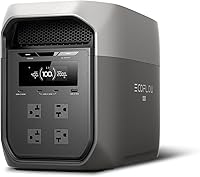
EF ECOFLOW Portable Power Station DELTA: Best for expandable backup capacity

- 2048Wh capacity
- 2400W output
- Expandable to 6kWh
- AC, solar and car charging
The DELTA 2 Max offers a 2048Wh starting capacity and can expand to 6kWh with extra batteries. Its AC, solar and car charging options support different backup and travel plans.
Pros
- Capacity can expand to 6kWh
- Three charging methods
- 15 outlets
Cons
- Extra batteries are needed to expand capacity
- Solar panels are optional
EcoFlow describes a 15-outlet layout, a built-in battery management system and app controls for energy use and automations. The model uses an LFP battery, which EcoFlow says supports 3000 cycles until capacity falls to 80%.
Is the EcoFlow DELTA 2 Max power station review a good fit?
This EcoFlow DELTA 2 Max power station review points to a good fit if you need a portable unit that can scale beyond its starting capacity. It's less compelling if your loads are light and brief, because a smaller capacity station may be easier to move and enough for the job.
For a compact alternative, see the EcoFlow RIVER 3 Plus review.
The listed 23 kg weight is worth considering before you plan to carry it far from a vehicle. For a fixed backup spot, weight matters less than a clear plan for charging, ventilation and which devices to connect.
How much backup time can 2048Wh provide?
A 2048Wh battery gives you about 2kWh of stored energy before conversion losses and operating limits. Runtime varies by appliance, so treat capacity as a planning figure, not a fixed number of hours.
For a rough estimate, add the watts of devices you expect to run and multiply by the hours you need them. A 100W device running for 5 hours uses about 500Wh, before accounting for conversion losses and standby draw.
| Example load | Approximate energy for 5 hours |
|---|---|
| 20W device | 100Wh |
| 100W device | 500Wh |
| 300W device | 1500Wh |
These examples are arithmetic, not runtime promises. Check appliance labels or manuals for actual draw, and leave room for startup surges if a device has a motor or compressor.
The Best Ecoflow Delta Model guide can help you compare capacity and features across the range. For an operating walkthrough, see how to use EcoFlow DELTA 2.
Will the DELTA 2 Max run your backup loads?
The unit's 2400W output rating is a ceiling for the connected load, while 2048Wh determines how long energy may last. A device can fall below the wattage limit and still drain the battery sooner than expected.
Start with essentials such as a router, phone chargers, lights or a refrigerator, then check each wattage. Motors and compressors may draw more power when starting than while running, so consult the appliance specifications and EcoFlow manual before connecting them.
EcoFlow says X-Boost can support high wattage appliances up to 3400W. Treat that as a mode with specific compatibility limits, not as a general increase in continuous output; verify the device will work as intended.
For a backup plan, group loads into must-run and optional devices. Estimate hours for each group and avoid counting every appliance in the house as available at once.
How fast does the DELTA 2 Max recharge?
EcoFlow says the DELTA 2 Max can reach 80% charge in 43 minutes using AC and up to 1000W solar input together, or in about 1.1 hours with AC alone. Charging time varies with input conditions and the setup you use.
The combination method can be useful when preparing for an outage or leaving for a trip on a short schedule. Solar input depends on the panels, sun and installation, so don't assume the maximum input will be available throughout the day.
The station also supports car charging, which can help during road travel when compatible with the vehicle and charging instructions. Check the manual for cable requirements and safe charging conditions.
Can you expand its capacity?
The DELTA 2 Max can grow from 2kWh to 6kWh with up to 2 extra batteries, according to EcoFlow. Expansion makes sense when you want longer runtime and can budget for extra storage and space.
Extra capacity does not raise the stated 2400W output rating by itself. It gives the same connected loads more stored energy, so evaluate power and duration separately.
Consider expansion only after calculating your current loads. If your main need is occasional phone charging and lighting, the base unit may already exceed the requirement.
What are the main trade-offs?
The key trade-off is substantial capacity and output in a 23 kg unit. It offers several charging paths and expansion, but it is not a light pack-in item for a long hike.
| Detail | EcoFlow DELTA 2 Max |
|---|---|
| Capacity | 2048Wh |
| Output | 2400W |
| X-Boost | Up to 3400W |
| Expandable capacity | Up to 6kWh |
| Charging methods | AC, solar and car |
| Battery chemistry | LFP |
| Weight | 23 kg |
| Outlets | 15 |
EcoFlow also describes low noise during low input and output use, around 30 dB at about 20 inches. That measurement is tied to the stated conditions, so sound may differ when charging or powering larger loads.
This is a solar powered battery station, not a fuel generator. It has no combustion engine, but solar panels are optional and charging still depends on a suitable power source.
How does it compare with newer EcoFlow models?
The DELTA 3 Max shares a stated 2048Wh capacity and 2400W output with the DELTA 2 Max, while its product details highlight faster 0–80% charging and a 10ms transfer time claim. Compare features and intended backup use before deciding whether the newer model is worth considering.
The DELTA 3 Ultra Plus review covers another newer option.
EF ECOFLOW DELTA 3 Max Portable Power: Best for newer-model comparison

- 2048Wh LFP battery
- 2400W output
- Up to 3400W X-Boost
- 0–80% charge in 1.13 hours
A newer DELTA model with the same stated capacity and output as the DELTA 2 Max. Compare its charging claims, transfer time and app controls with the older model.
Pros
- 2048Wh LFP battery
- 0–80% charging claim in 1.13 hours
- App control and 10ms transfer time claim
Cons
- Solar panel is optional
- Not the DELTA 2 Max model
Read the EcoFlow DELTA 3 Max review for a closer look at that model. The EcoFlow DELTA 3 Max Plus review can help if you're also considering the Plus version.
If you are comparing brands, our Best Ecoflow Outdoor Portable Power Station guide covers outdoor use cases. For a cross-brand comparison, see How Does Jackery 1000 Compare To EcoFlow Delta?.
What should you check before buying?
Confirm the loads, placement and charging plan before choosing the DELTA 2 Max. Those checks help determine whether its size and capacity solve your actual problem.
- Add the running watts of devices you expect to use together.
- Check startup demand for refrigerators, pumps and power tools.
- Estimate energy use in watt-hours for the number of hours you need.
- Decide whether the base 2048Wh capacity is enough or expansion matters.
- Check that your charging method and cables suit the intended location.
If you need a replacement AC cord, the Rjmubaius cord is described as compatible with the DELTA 2 Max and is 5 ft long. Confirm the connector and requirements in EcoFlow's manual before using a replacement.
Should you choose the EcoFlow DELTA 2 Max?
Choose the EcoFlow DELTA 2 Max if you need 2048Wh capacity, 2400W output and a path to 6kWh expansion. It suits planned home backup and road or camping use when you can manage its 23 kg weight and have a clear charging setup.
Pick a newer model for features that better match your needs, such as the DELTA 3 Max's stated fast charging and transfer time. Compare your expected loads first, then use the EcoFlow DELTA 2 setup guide to plan operation.
Frequently asked questions
How much capacity does the EcoFlow DELTA 2 Max have?
The DELTA 2 Max has a stated capacity of 2048Wh, or about 2kWh. EcoFlow says it can expand to 6kWh with up to 2 extra batteries.
Your usable runtime depends on the devices connected and their power draw, so add up expected watt-hours before relying on it for a full outage.
What can the EcoFlow DELTA 2 Max power?
The DELTA 2 Max is rated for 2400W output, with X-Boost supporting loads up to 3400W. Those figures don't mean every appliance will work: check each device's running and startup needs, and follow EcoFlow's guidance for X-Boost and compatible loads.
How quickly does the DELTA 2 Max charge?
EcoFlow says AC charging can reach 80% in about 1.1 hours, or 43 minutes when combining AC with up to 1000W of solar input. Actual charging depends on the available input and conditions, so use the manual to confirm setup and supported limits.
Can the DELTA 2 Max work for home backup?
It can support selected household loads within its 2048Wh capacity and 2400W output rating. Decide which essentials matter, check their power draw, and estimate how long you need them to run.
A power station cannot supply every home circuit at once, so plan the loads before an outage.