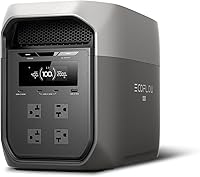
EcoFlow DELTA 2 Max vs DELTA Pro: Which Should You Choose? (November 2026)
Choose the DELTA 2 Max for a smaller, expandable 2,048Wh station; choose the DELTA Pro 3 for more capacity and 120V/240V output. The right EcoFlow depends on which appliances you need to run and how much backup power you want.
On this page (6 sections)
Choose the DELTA 2 Max for a smaller, expandable 2,048Wh station; choose the DELTA Pro 3 for more capacity and 120V/240V output. In this EcoFlow DELTA 2 Max vs Pro comparison, the key differences are starting capacity, output, expansion and weight.
The DELTA 2 Max has 2,048Wh capacity and 2,400W output. The DELTA Pro 3 doubles the starting capacity to 4,096Wh and raises output to 4,000W, with 120V/240V support.
This is a comparison of the DELTA 2 Max and DELTA Pro 3. EcoFlow also has other models, so see our Best Ecoflow Delta Model guide if you want to compare the wider range.
 Best for expandable 2kWh backup
EF ECOFLOW Portable Power Station DELTA
 Best for higher-capacity home backup
EF ECOFLOW DELTA Pro 3 Solar Generator
EcoFlow DELTA 2 Max vs Pro: what is the main difference?
The DELTA 2 Max is a 2,048Wh, 2,400W station; the DELTA Pro 3 starts at 4,096Wh and 4,000W. Pick based on your expected loads and how much backup time you need.
The DELTA 2 Max can expand to 6kWh with up to 2 extra batteries. The DELTA Pro 3 can expand to 48kWh with extra batteries or smart generators.
These figures point to different roles. The DELTA 2 Max can suit a smaller backup plan or mobile setup, while the Pro 3 offers more room for larger loads and longer use between charges.
How do their output ratings compare?
The DELTA 2 Max is rated at 2,400W output and includes X-Boost mode for high-wattage appliances up to 3,400W. The DELTA Pro 3 is rated at 4,000W output, with X-Boost up to 6,000W and stated scalability up to 12,000W.
Those modes and ratings don't mean every appliance will work in every setup. Check the startup and running requirements of your equipment, and follow EcoFlow's guidance for X-Boost and supported loads.
The Pro 3's 120V/240V support is a notable difference for buyers planning around equipment that uses 240V. Confirm voltage, connection method and circuit needs before relying on either station for a specific appliance.
What do the capacity numbers mean for you?
The DELTA Pro 3 starts with twice the energy capacity of the DELTA 2 Max: 4,096Wh versus 2,048Wh. That gives it more stored energy to draw from, but runtime depends on the load and operating conditions.
Write down the devices you want to run, their wattage and how long you need them powered. Add the energy needs together, then leave a margin rather than planning to use every watt-hour.
The DELTA 2 Max can be a better fit if your essential loads are modest and you value a smaller initial system. For extended home backup, the Pro 3's larger starting capacity and higher expansion ceiling may matter more.
Which station is better for home backup?
Choose the DELTA Pro 3 for larger home backup plans that need 120V/240V support; choose the DELTA 2 Max for a more limited set of essential devices. Match the station to your circuits and expected outage duration.
The DELTA Pro 3 is rated at 4,000W and 4,096Wh, and EcoFlow says it can expand to 48kWh. EcoFlow describes 2–4 days of whole-home backup with expansion, but that duration depends on the installed capacity and household loads.
The DELTA 2 Max offers 2,400W output and expansion to 6kWh. It may suit a plan focused on a refrigerator, communications, lights or selected small appliances, if their power needs fit the station.
Neither capacity alone proves that a station can back up every circuit in a home. Check transfer equipment, panel compatibility and installation requirements with EcoFlow or a qualified electrician.
When is the DELTA 2 Max enough?
The DELTA 2 Max is worth considering when your backup list is short and you can prioritize which devices run. Its 2,048Wh base capacity and 2,400W output give you a clear starting point for planning.
It supports AC, solar and car charging. EcoFlow says AC and solar input can be combined for an 80% charge in 43 minutes, or an 80% charge using AC alone in 1.1 hours.
Charging time depends on the input and conditions. Plan a recharge option that matches where you'll use the station and how quickly you need it ready again.
When does the DELTA Pro 3 make more sense?
The DELTA Pro 3 makes more sense when your needs exceed the DELTA 2 Max's 2,400W output or 6kWh expansion ceiling. Its 4,000W output, 120V/240V support and 48kWh expansion limit provide more headroom.
It weighs 115lb and measures 16.16 x 13.43 x 27.38 inches. That size can work for a planned home backup location, but it's a substantial load to move, so consider where it will stay.
The included kit named in the product title comes with 2 400W solar panels. EcoFlow notes that the panels and station ship in separate packages.
Which one works better for camping, an RV or travel?
The DELTA 2 Max is the more practical starting point for buyers who need a 2,048Wh station and plan to move it; the DELTA Pro 3 suits setups where capacity matters more than frequent lifting. Consider the station's weight, dimensions and charging options.
The DELTA 2 Max weighs 23kg and measures 12.2 x 9.7 x 20 inches. The Pro 3 weighs 115lb and is larger, so it is better treated as a planned power source than a casual carry.
For an RV, compare your appliances' voltage and wattage to the station's output. The Pro 3's 120V/240V support may be useful for compatible equipment, while the DELTA 2 Max supports a lower output rating.
For a look at a smaller 2,048Wh model, our EcoFlow DELTA 2 Max vs DELTA 3 Max comparison covers another choice in this capacity range. We also have an EcoFlow DELTA 3 Max review for details on that model.
How do charging and battery features differ?
Both models use LFP batteries, but their stated charging options and expansion paths differ. The DELTA 2 Max supports AC, solar and car charging, while the Pro 3 supports a broader set of charging methods.
EcoFlow says the DELTA 2 Max battery reaches 3,000 cycles before capacity falls to 80%. It also describes a 5-year service term for the station.
For the Pro 3, EcoFlow describes 7 unique charging methods and 18 combinations, including AC outlets, solar panels, gas generators, EV charging piles and the EcoFlow Smart Home Panel 2. The exact setup determines which methods apply.
The Pro 3 includes a 5-year warranty, according to EcoFlow. Keep warranty terms and charging compatibility in mind when comparing complete system costs and installation plans.
What does expansion add?
Expansion lets you add capacity beyond the station's built-in battery. The DELTA 2 Max can reach 6kWh with up to 2 extra batteries, while the DELTA Pro 3 can reach 48kWh with extra batteries or smart generators.
A larger expansion ceiling is useful only if you'll need the extra stored energy and can support the added equipment. Consider where the batteries will sit, how you'll recharge them and what loads they must cover.
For whole-home backup planning, the Pro 3 offers substantially more room to grow. For a smaller backup list, the DELTA 2 Max's 6kWh ceiling may be enough.
Which EcoFlow model should you choose?
Choose the DELTA 2 Max for a smaller expandable system; choose the DELTA Pro 3 for higher output, 120V/240V support and a much larger expansion path. Let your load list and installation plan settle the choice.
Pick the DELTA 2 Max if 2,400W output, 2,048Wh starting capacity and expansion to 6kWh cover your needs. Its 23kg weight and multiple charging inputs can suit a station you expect to move or recharge in different ways.
Pick the DELTA Pro 3 if your setup needs 4,000W output, 120V/240V support or expansion beyond 6kWh. The 115lb weight and larger size make placement and moving part of the decision.
If you're comparing the Pro 3 with EcoFlow's newer Pro line, read our EcoFlow DELTA Pro vs Pro 3 comparison. For a non-EcoFlow option in a smaller capacity class, compare Jackery 1000 and EcoFlow Delta, or see our EcoFlow Delta Pro vs Jackery 2000 comparison.
EcoFlow DELTA 2 Max vs Pro FAQ
Is the EcoFlow DELTA 2 Max or Pro better?
The DELTA 2 Max suits a smaller, expandable backup system with 2,400W output and a 6kWh expansion ceiling. The DELTA Pro 3 suits buyers who need 4,000W output, 120V/240V support or expansion to 48kWh.
The better choice depends on your actual appliance loads and backup plan.
Can the DELTA 2 Max run a 240V appliance?
The DELTA 2 Max details here specify 2,400W output but don't identify 120V/240V support. The DELTA Pro 3 is specifically described as supporting both 120V and 240V.
Check EcoFlow's current compatibility information for the exact appliance and setup before buying.
Can the DELTA Pro 3 run central air conditioning?
EcoFlow says the DELTA Pro 3 can power a 3-ton central AC with X-Boost, but that statement doesn't guarantee compatibility with every air conditioner. Check the unit's startup and running requirements, circuit, and connection method with EcoFlow and a qualified electrician.
Does the DELTA Pro 3 come with solar panels?
The compared package is titled as including 2 400W solar panels, and its included components name the DELTA Pro 3 and 2 panels. EcoFlow notes that the station and panels ship in separate packages, so plan for separate deliveries.
How heavy is the DELTA 2 Max compared with the Pro 3?
The DELTA 2 Max weighs 23kg, while the DELTA Pro 3 weighs 115lb. The Pro 3 is much heavier and larger, so it's better suited to a planned location or a setup with help for moving.
Check your path, storage space and placement before delivery.
Frequently asked questions
Is the EcoFlow DELTA 2 Max the same as the DELTA Pro?
No. The DELTA 2 Max has 2,048Wh capacity, 2,400W output and expansion to 6kWh.
The DELTA Pro 3 has 4,096Wh capacity, 4,000W output, 120V/240V support and expansion to 48kWh.
They suit different load sizes and backup plans.
Can the DELTA 2 Max power a whole home?
The DELTA 2 Max is rated for 2,400W output and can expand to 6kWh, so plan around the appliances and circuits you need to cover. The available details don't guarantee a whole-home connection method; check compatibility and installation requirements with EcoFlow or a qualified electrician.
How much larger is the DELTA Pro 3's battery?
The DELTA Pro 3 starts at 4,096Wh, compared with 2,048Wh for the DELTA 2 Max. That's twice the stated starting capacity.
Runtime still depends on what you connect and its power draw, so capacity alone can't tell you how long a particular appliance will run.
Can you expand both EcoFlow stations?
Yes, their stated expansion limits differ. The DELTA 2 Max can expand from 2kWh to 6kWh with up to 2 extra batteries, while the DELTA Pro 3 can expand to 48kWh with extra batteries or smart generators.
Confirm which add-ons fit your exact setup.
Which EcoFlow is easier to move?
The DELTA 2 Max is the more manageable choice based on the stated weight: it weighs 23kg, while the DELTA Pro 3 weighs 115lb. Dimensions also differ, so measure storage space and the route to your setup before choosing either station.