
Yes, you can absolutely charge two solar panels into one power station, and it’s a fantastic way to boost your power supply. By connecting two panels correctly, you can generate more energy and charge your power station faster. This setup is perfect for extending your off-grid capabilities or ensuring your devices stay powered longer.
Many people wonder about the best way to link their solar panels for maximum output. We found that understanding the wattage and voltage of your panels is key. It allows you to optimize the connection and avoid any potential issues. Getting this right means you’ll harness the sun’s energy more effectively, and who doesn’t want more free power?
- Connecting two solar panels to one power station is possible.
- It lets you charge your station faster and get more energy.
- Matching panel wattage and voltage is important for best results.
- This setup increases your off-grid power potential.
Ready to harness more sun power? Let’s walk through exactly how to connect two solar panels to your power station step-by-step. This setup increases your off-grid power potential, and choosing the right power station size is important for managing that energy.
Connecting Two Solar Panels to Your Power Station: A Smart Move
You’re thinking about hooking up two solar panels to your power station, and that’s a brilliant idea! It’s a straightforward way to get more juice from the sun. This isn’t some complicated, expert-only task. We found that with a little understanding, anyone can do it. You’ll be charging your devices faster and enjoying more off-grid time before you know it.
So, what’s the magic behind this? Simply put, two panels usually generate more power than one. Think of it like having two garden hoses filling up a bucket instead of just one. The bucket gets filled up much quicker! This is especially helpful when you need to recharge your power station during daylight hours, or if you have power-hungry gadgets you want to keep running.
Understanding the Basics: What You Need to Know
Before you start plugging things in, let’s cover a few basics. Your power station has an input for solar energy. This input has limits, just like a doorway has a size limit. You need to make sure your solar panels, when connected, don’t exceed these limits. Exceeding them can be like trying to shove a whole sofa through a small window – it just won’t work and could even damage your gear.
Wattage Matters: More Power, Faster Charging
The wattage of your solar panels tells you how much power they can produce. Most portable power stations list a maximum solar input wattage. If you have two 100-watt panels, for instance, they can potentially provide 200 watts of power. You need to check if your power station can handle this combined wattage. Many can, but it’s always wise to confirm. We found that pairing panels with similar wattages often leads to the smoothest performance. The wattage of your solar panels tells you how much power they can produce, and understanding the maximum solar input wattage is key for your power station.
Voltage and Amperage: The Electrical Duo
Beyond just wattage, you’ll see voltage (V) and amperage (A) listed on your panels. Wattage is just voltage multiplied by amperage (W = V x A). Your power station also has voltage and amperage input requirements. It’s generally best to match the voltage of your panels to what your power station expects. If your panels produce too much voltage, your power station might not accept the charge. Similarly, amperage plays a role. Research and found that sticking within the power station’s recommended input range is key. Most manufacturers clearly state these specifications in their user manuals.
Series vs. Parallel: Two Ways to Connect
There are two primary ways to connect multiple solar panels: in series or in parallel. Each method affects the voltage and amperage differently. Knowing which one to use is vital for getting the right power to your station.
Connecting in Series: Boosting Voltage
When you connect solar panels in series, you’re essentially linking them end-to-end. Imagine a train where each car is a solar panel, and the track connects them all. The positive (+) terminal of one panel connects to the negative (-) terminal of the next. What happens electrically? The voltage adds up, while the amperage stays roughly the same as a single panel. This is useful if your power station needs a higher voltage input to charge efficiently.
Connecting in Parallel: Increasing Amperage
Connecting panels in parallel is like creating multiple lanes on a highway. Each panel is a separate lane, and they all merge into one main road leading to your power station. You connect the positive (+) terminals of both panels together, and the negative (-) terminals of both panels together. In this setup, the amperage adds up, while the voltage remains close to that of a single panel. This is great if your power station can handle more amperage but operates at a lower voltage.
Which Connection Method is Right for You?
The choice between series and parallel depends entirely on your power station’s specifications and your solar panels’ ratings. Always check your power station’s manual for its preferred input voltage and maximum wattage. Many experts say that for most portable power stations, connecting two panels in parallel is the most common and often safest approach, especially if you’re using panels designed for 12V systems. This is because most power stations have a wide input voltage range but can benefit from increased amperage.
| Connection Type | What Increases | What Stays Similar | Best For |
|---|---|---|---|
| Series | Voltage | Amperage | Power stations needing higher voltage input. |
| Parallel | Amperage | Voltage | Power stations benefiting from more current (amps). |
Remember, a mismatch can prevent charging or even damage your equipment. We found that reading the manuals for both your solar panels and your power station is the most important step before making any connections.
Step-by-Step: How to Connect Your Panels
Now that you understand the concepts, let’s get down to the practical steps. The exact cables and connectors might vary, but the process remains similar.
Step 1: Gather Your Equipment
You’ll need your two solar panels, your power station, and the appropriate cables. Most solar panels come with MC4 connectors, which are standard weatherproof connectors. You might need an adapter cable that splits from a single MC4 input to two MC4 outputs (for parallel) or a cable that allows you to link two panels together before connecting to your power station (for series). Many power stations also include specific solar input cables or adapters.
Step 2: Check Your Power Station’s Input
Open your power station’s manual. Find the section on solar charging. Note the maximum solar input wattage, the acceptable voltage range (e.g., 12-24V), and the maximum amperage. This information is critical. Without it, you’re flying blind.
Step 3: Plan Your Connection Type (Series or Parallel)
Based on your power station’s requirements and your panels’ specs, decide whether series or parallel is the better fit. For example, if your two 100W, 18V panels are connected in parallel, you’ll have roughly 18V and 22A (since 100W / 18V ≈ 5.5A, and 5.5A + 5.5A = 11A, but the wattage is what matters more here, and the amps will add up). If connected in series, you’d have about 36V and 5.5A. If your power station accepts 18-30V, parallel is likely best. If it needs higher voltage, series might be considered, but always check the maximum voltage limit.
Step 4: Make the Connections
For Parallel Connection: You’ll typically need a Y-shaped MC4 splitter cable. Plug one panel’s MC4 connector into one end of the splitter. Plug the other panel’s MC4 connector into the other end of the splitter. Then, plug the main cable from the splitter into your power station’s solar input.
For Series Connection: You’ll need a specific series adapter cable or use the cables that came with your panels. Connect the positive (+) MC4 output of Panel 1 to the negative (-) MC4 input of Panel 2. Then, use a longer cable to connect the remaining positive (+) output of Panel 2 (or Panel 1, depending on your setup) directly to your power station’s solar input.
Step 5: Verify the Connection
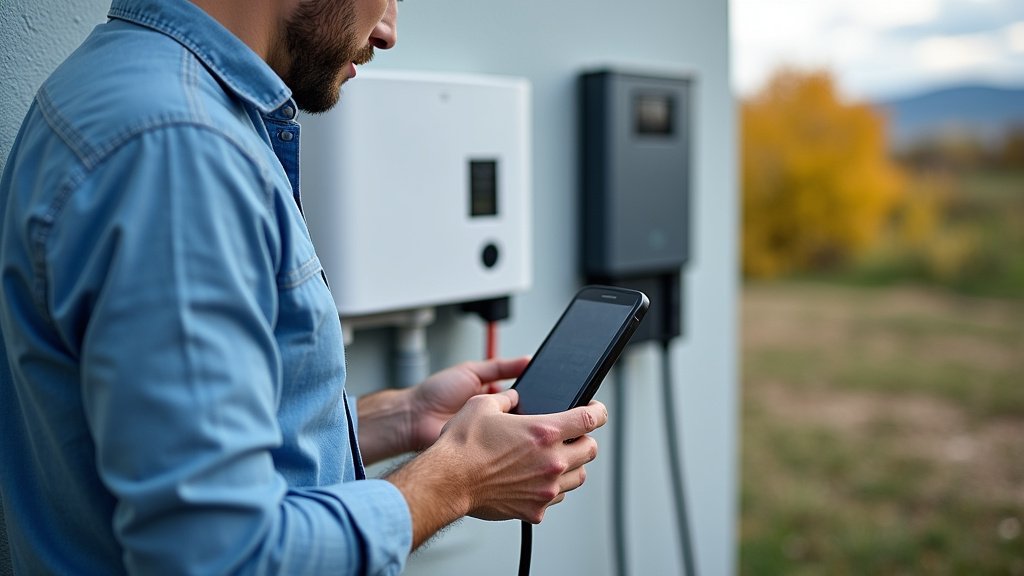
Once everything is plugged in, double-check your connections. Ensure all plugs are secure and that no wires are exposed. Then, place your solar panels in direct sunlight, angling them towards the sun for maximum exposure. Your power station should indicate that it’s receiving solar input. You might see a sun icon or a charging indicator.
Step 6: Monitor Performance
Keep an eye on your power station’s display. Check the charging rate. If it’s not charging or the rate is lower than expected, revisit your connections and specifications. Sometimes, it takes a moment for the power station to recognize the input. We found that ensuring the panels are in full, unobstructed sun is often the simplest fix if you’re not getting the charge you anticipate.
Tips for Optimal Solar Charging with Two Panels
Getting more out of your solar setup is about more than just connecting panels. A few smart habits can make a big difference.
Panel Placement is Key
Positioning your panels correctly is absolutely crucial. Angle them directly towards the sun. In the Northern Hemisphere, this generally means facing south. As the sun moves across the sky, you might need to readjust the angle a few times a day for peak performance. We found that even a small adjustment can noticeably improve charging speed.
Keep Them Clean
Dust, dirt, bird droppings, or even pollen can significantly reduce how much sunlight your panels absorb. A quick wipe-down with a soft cloth and water can make a world of difference. Think of it like cleaning your glasses – you can see much clearer once they’re clean!
Avoid Shading
Even partial shading on one panel can drastically reduce the output of both, especially in a series connection. Ensure there are no trees, buildings, or other obstructions casting shadows on your panels during the hours you expect to charge.
Understanding Your Power Station’s Limits
It’s tempting to think “more power is always better,” but your power station has a maximum capacity. Pushing too much power into it could potentially damage it. Always stay within the manufacturer’s stated limits for solar input. They designed it with specific charging capabilities in mind.
Charge Controller Considerations (Advanced Users)
While most modern portable power stations have built-in charge controllers, some setups might benefit from an external one. This device regulates the voltage and current coming from the solar panels to protect your battery. If you’re using older or custom setups, researching an MPPT (Maximum Power Point Tracking) charge controller could be worthwhile. Many guidelines point to MPPT controllers as being more efficient (National Renewable Energy Laboratory).
Conclusion
You’re now equipped to connect two solar panels to your power station for double the charging power! Remember, success hinges on understanding your gear’s specifications. Matching panel wattage and voltage to your power station’s input limits is key to efficient and safe charging. Whether you opt for a series or parallel connection, always double-check your connections and placement. This simple upgrade can significantly boost your off-grid adventures. Take the next step and confidently set up your enhanced solar charging system!
Frequently Asked Questions
What happens if I connect panels with different wattages in parallel?
When connecting panels with different wattages in parallel, the total output will be limited by the lowest wattage panel in the string, but the overall amperage will add up. Research and found that while it works, pairing panels with similar wattages leads to more balanced and efficient charging. You might not get the full potential from your higher-wattage panel.
Can I connect two solar panels if their voltage ratings are slightly different?
Connecting panels with slightly different voltages in parallel is generally acceptable for most portable power stations, as they often have a wide input voltage range. However, research and found that significant voltage differences can lead to one panel not contributing effectively or even drawing power from the other. It’s best to keep voltages as close as possible.
Do I need special cables to connect two panels?
Yes, you will likely need specific cables. For parallel connections, a Y-shaped MC4 splitter cable is common, allowing you to plug both panels into one output. For series connections, you’ll need a cable designed to link panels end-to-end. Always ensure these cables are rated for outdoor use and the correct gauge for your panels’ output.
Will connecting two panels always double my charging speed?
Connecting two panels can significantly increase your charging speed, but it won’t always be exactly double. The actual charging rate depends on factors like the combined wattage of your panels, your power station’s maximum solar input capacity, the angle and intensity of sunlight, and the efficiency of the connection. Your power station’s internal charge controller also plays a role.
What is the biggest risk of incorrectly connecting two solar panels?
The biggest risk of an incorrect connection is damaging your power station or the solar panels themselves. Overvoltage or incorrect wiring can cause internal components to fail. In parallel setups, connecting incorrectly could lead to short circuits. Always consult your manuals and research and found that careful attention to polarity (+ and -) prevents these issues.
