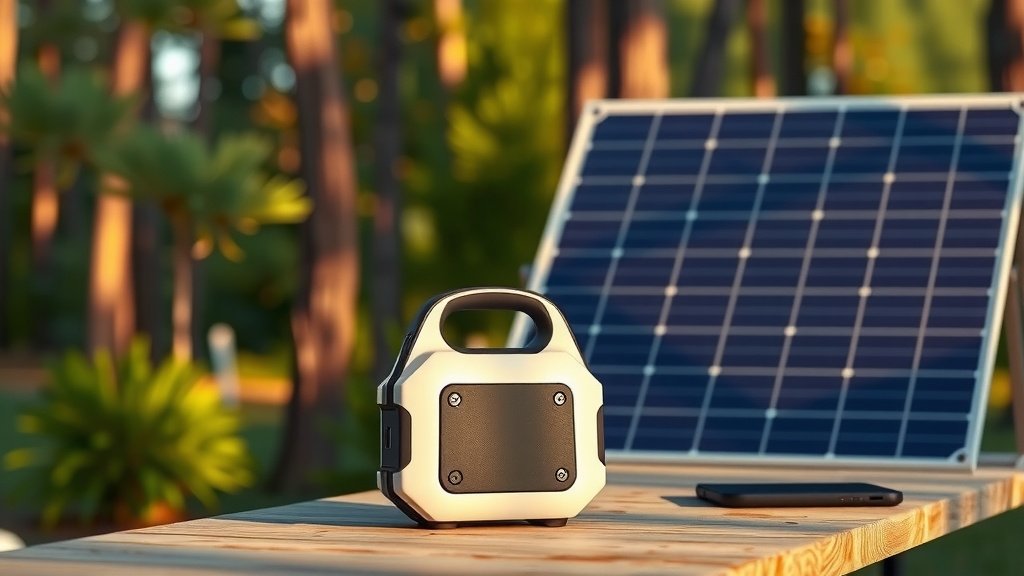
Your portable power station size depends on your power needs and usage time. Calculate total watt-hours by multiplying device watts by hours of use, then add 20% buffer.
Most people need 300-500Wh for basic devices, 1000-1500Wh for camping trips, or 2000Wh+ for home backup power during outages.
Quick Power Station Size Guide
Choosing the right portable power station feels overwhelming with so many options. You want enough juice for your devices without overpaying for capacity you’ll never use.
Think of it like buying a backpack. Too small and you can’t fit your gear. Too big and you’re carrying extra weight for nothing.
Basic Size Categories
Power stations come in four main sizes:
- Small (100-300Wh): Phone charging, small electronics
- Medium (300-800Wh): Laptops, cameras, CPAP machines
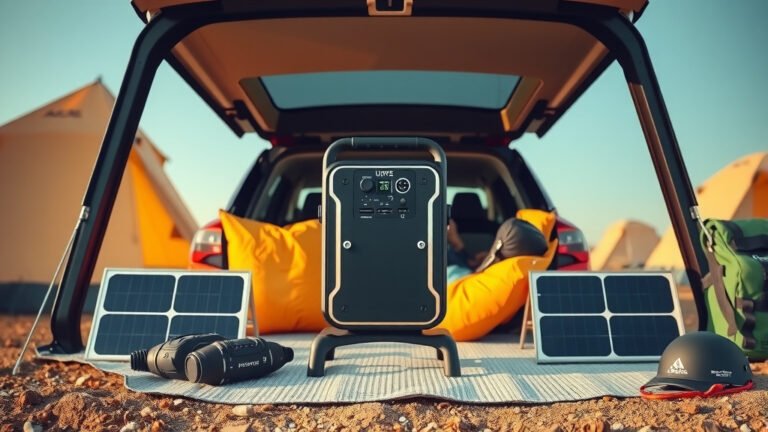
- Large (800-1500Wh): Mini fridges, power tools, camping gear
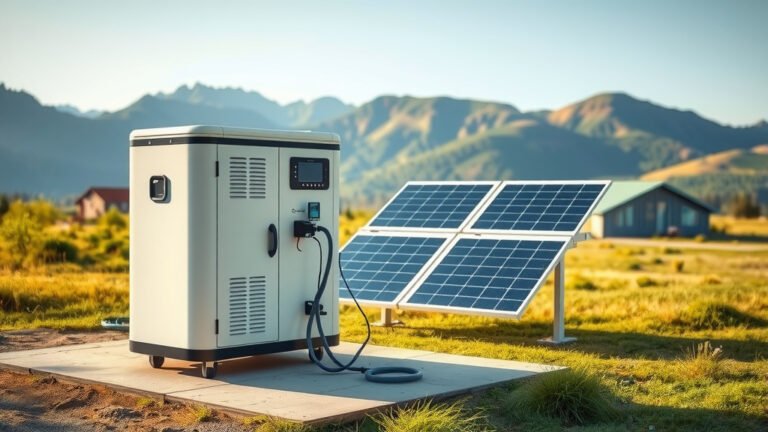
- Extra Large (1500Wh+): Home appliances, extended off-grid use
Calculate Your Power Needs in 3 Steps
Math makes this simple. Don’t worry – it’s easier than your phone bill.
Step 1: List Your Devices
Write down everything you want to power. Check device labels or manuals for wattage. Can’t find it? Search “[device name] power consumption” online.
Common devices and their power draw:
- Smartphone: 5-10 watts
- Laptop: 45-100 watts
- LED light: 10-20 watts
- Mini fridge: 40-100 watts
- Coffee maker: 800-1200 watts
Step 2: Estimate Usage Hours
How long will you run each device? Be realistic. You won’t charge your phone for 8 straight hours.
A laptop might run 4 hours. LED lights could go 6 hours. Your phone charges in 2 hours but uses power all day.
Step 3: Do the Math
Multiply watts by hours for each device. This gives you watt-hours (Wh).
Example: 60-watt laptop × 4 hours = 240Wh
Add up all your watt-hours. Then add 20% extra as a safety buffer.
Real-World Usage Scenarios
Let me show you how this works in practice. These examples help you see what size fits your lifestyle.
Weekend Camping Trip
You want to charge phones, run LED lights, and power a small fan.
- Two phones: 10W × 4 hours = 40Wh
- LED lantern: 15W × 6 hours = 90Wh
- Small fan: 25W × 8 hours = 200Wh
Total: 330Wh + 20% buffer = 396Wh needed
A 500Wh power station works perfect here.
Home Office Backup
Power outage hits during work. You need laptop, router, and desk lamp running.
- Laptop: 65W × 6 hours = 390Wh
- WiFi router: 12W × 8 hours = 96Wh
- LED desk lamp: 18W × 8 hours = 144Wh
Total: 630Wh + 20% buffer = 756Wh needed
Look for 1000Wh minimum.
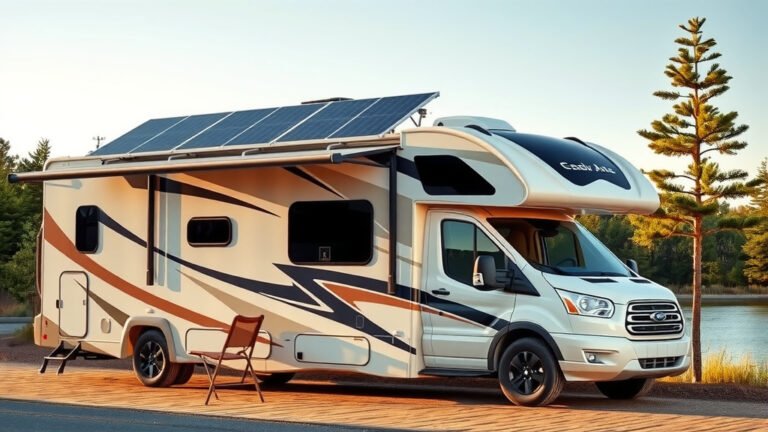
RV Living
Running multiple devices daily requires serious capacity.
- 12V fridge: 60W × 12 hours = 720Wh
- Water pump: 35W × 2 hours = 70Wh
- Lights: 40W × 6 hours = 240Wh
- Electronics charging: 200Wh daily
Total: 1230Wh + 20% buffer = 1476Wh needed
You want 2000Wh or larger.
Understanding Key Specifications
Power station specs can confuse anyone. Let me break down what matters most.
Watt-Hours vs Watts
Watt-hours (Wh) tell you total energy storage. Think of it as your gas tank size.
Watts (W) show maximum power output. This is like your engine horsepower.
You need enough Wh for duration and enough W for your hungriest device.
Peak vs Continuous Power
Continuous power runs steady. Peak power handles startup surges.
Motors and compressors need 2-3 times their running watts to start up. A 400W blender might need 1000W peak power.
AC vs DC Output
AC outlets power household devices. DC ports charge phones and 12V gear.
AC power goes through an inverter. This wastes about 10-15% of your stored energy.
Size Recommendations by Use Case
I researched common use patterns and found these size guidelines work well for most people.
Emergency Preparedness
Power outages last 2-24 hours typically. You want lights, communication, and food preservation.
Minimum 1000Wh covers basics for a family. Go larger if you have medical devices or work from home needs.
Outdoor Adventures
Car camping allows bigger units. Backpacking demands weight limits.
Car camping: 500-1000Wh handles most needs comfortably.
Backpacking: 300Wh maximum unless you’re staying multiple days.
Work and Professional Use
Photography, videography, and remote work have specific power demands.
Drone operators need 500-800Wh for multiple battery charges plus equipment.
Video production wants 1500Wh+ for lights, cameras, and editing gear.
Common Sizing Mistakes to Avoid
People make predictable errors when choosing power station size. Learn from their mistakes.
Buying Too Small
Underestimating power needs frustrates everyone. Running out of juice ruins camping trips and emergency backup plans.
Always round up when between sizes. The extra capacity proves useful later.
Ignoring Efficiency Losses
Power stations lose energy through heat and conversion. Figure 85-90% efficiency for AC loads.
A 1000Wh station delivers about 850-900Wh of usable AC power.
Forgetting Future Needs
Your power requirements grow over time. New devices appear. Usage patterns change.
Buy slightly larger than current needs allow. This extends your power station’s useful life.
Budget vs Performance Trade-offs
Price per watt-hour decreases as capacity increases. Bigger units offer better value but cost more upfront.
| Capacity Range | Price Range | Best For |
|---|---|---|
| 100-300Wh | $100-300 | Phone charging, small electronics |
| 500-800Wh | $400-700 | Weekend camping, basic backup |
| 1000-1500Wh | $800-1400 | Extended trips, home office backup |
| 2000Wh+ | $1500+ | RV living, whole-house backup |
When to Splurge
Buy larger if you’ll use it regularly. Daily users benefit from extra capacity and features.
One-time campers can start smaller and upgrade later if needed.
Solar Charging Considerations
Solar panels recharge your power station during extended trips. This affects size requirements.
Daily Solar Input
100W solar panel generates 300-500Wh daily in good conditions. Weather and shade reduce this significantly.
Match your daily power consumption to solar input for indefinite off-grid operation.
Cloudy Day Buffer
Solar charging fails during storms. Size your battery for 2-3 days without sun.
This larger capacity costs more but provides true energy independence.
Conclusion
Choosing the right portable power station size comes down to honest assessment of your needs. Calculate your device power consumption, add usage hours, and include a safety buffer. Small units under 500Wh work for basic electronics and phone charging. Medium stations around 1000Wh handle camping trips and emergency backup. Large 2000Wh+ systems power extended off-grid living and home appliances. Remember that buying slightly larger than your current needs allows for growth and unexpected usage. The math is simple, but taking time to plan prevents expensive sizing mistakes later.
How long will a 500Wh power station run my laptop?
A typical 65W laptop runs about 6-7 hours on a 500Wh power station, accounting for efficiency losses. Actual runtime depends on your laptop’s power consumption and screen brightness settings.
Can I run a refrigerator with a portable power station?
Yes, but you need adequate capacity and output power. A small 12V fridge uses 40-60W and needs 500-700Wh daily. Standard household refrigerators require 1500Wh+ stations with high surge capacity.
What happens if I exceed my power station’s watt limit?
The power station shuts off automatically to protect itself. Most units have overload protection that cuts power when you draw too many watts. You’ll need to disconnect devices and reset the unit.
Do power stations lose charge when not in use?
Yes, all power stations self-discharge over time. Lithium batteries lose 2-5% capacity monthly when stored. Check and recharge your unit every 3-6 months to maintain battery health.
Should I get multiple smaller stations or one large one?
One large station offers better value and efficiency. Multiple small units provide redundancy and portability advantages. Choose based on whether you need power in multiple locations simultaneously.