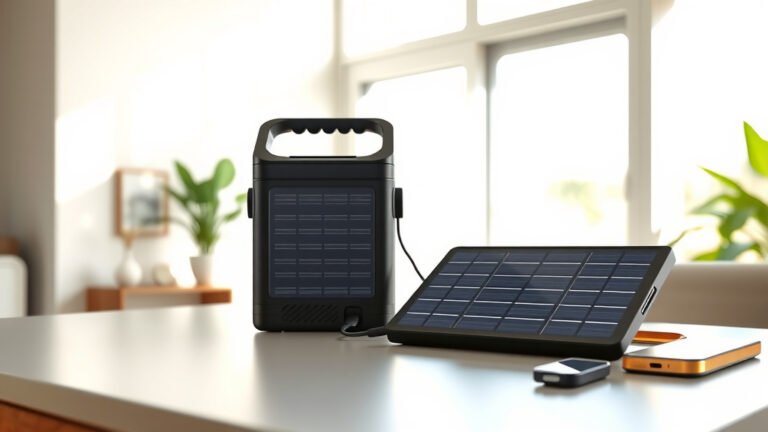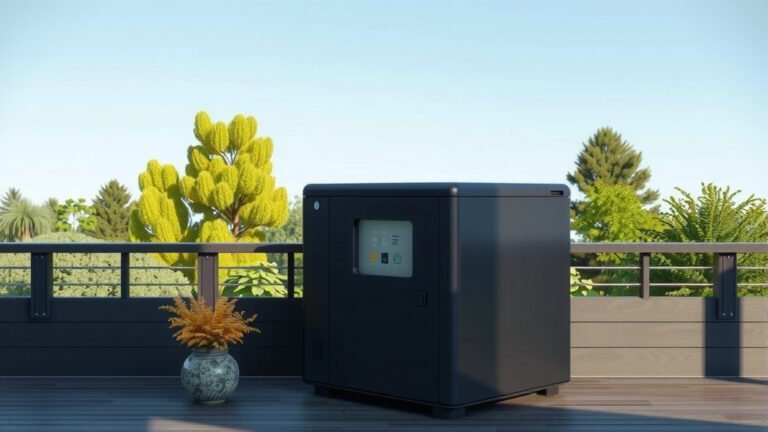

Most portable power stations range from 150 watts to 6,000+ watts, depending on their size and intended use.
The wattage you need depends on what devices you plan to power and for how long.
Understanding Portable Power Station Wattage
Think of wattage as the muscle of your portable power station. Just like a car engine, more watts mean more power to run bigger appliances.
But here’s the thing – you don’t always need the biggest engine. A compact 300-watt unit might be perfect for camping, while a home backup might need 2,000 watts or more.
What Does Wattage Actually Mean?
Wattage tells you how much electrical power your station can deliver at once. It’s like the flow rate of water from a hose.
Your phone charger uses about 20 watts. A mini-fridge needs around 100-150 watts. A microwave? That hungry beast wants 1,000+ watts.
Peak vs Continuous Wattage
Here’s where it gets tricky. Power stations have two wattage ratings, and manufacturers love to advertise the higher one.
Peak wattage is the short burst of power for startup. Continuous wattage is what you can actually use all day long.
Always plan around continuous wattage. That’s your real usable power.
Small Portable Power Stations: 150-500 Watts
These little powerhouses are perfect for basic needs. Think of them as your reliable backup buddy.
What Can You Power?
- Phones and tablets (multiple charges)
- LED lights
- Small fans
- Laptop computers
- CPAP machines
- Camera equipment
Best Use Cases
Camping trips are where these shine. You can keep your phone charged, run LED string lights, and power a small fan for comfort.
I found that many outdoor enthusiasts prefer the 300-500 watt range. It’s the sweet spot between portability and usefulness.
Weight and Portability
Most units in this range weigh 10-25 pounds. You can easily carry them in one hand or pack them in your car.
Medium Portable Power Stations: 500-1,500 Watts
Now we’re talking serious power. These stations can handle real appliances and longer runtime needs.
What You Can Run
- Small refrigerators
- Power tools
- Coffee makers
- Electric grills
- Medical equipment
- Multiple devices at once
Perfect for RV Life
RV owners often choose this range. You can run your fridge overnight and still have power for morning coffee.
Research shows that 1,000-watt stations are the most popular choice for weekend warriors (Consumer Reports).
Runtime Expectations
A 1,000-watt station with 1,000 watt-hours of storage will run a 100-watt device for about 10 hours. Simple math, but battery efficiency usually gives you 8-9 hours in real use.
Large Portable Power Stations: 1,500-3,000 Watts
These heavy hitters can power most household appliances. They’re less “portable” and more “moveable with effort.”
Home Backup Territory
Power outages don’t scare you when you have one of these. Your refrigerator keeps running, lights stay on, and life goes on almost normally.
What They Can Handle
- Full-size refrigerators
- Microwaves
- Space heaters
- Well pumps
- Multiple appliances simultaneously
Weight Trade-off
Expect 40-80 pounds. Many come with wheels because carrying them isn’t fun. But the power output makes the weight worthwhile for serious applications.
Extra Large Units: 3,000+ Watts
These monsters approach whole-house backup territory. They’re for people who refuse to compromise on power.
Professional and Emergency Use
Contractors love these for job sites. Emergency responders use them for disaster relief. Some homeowners buy them for complete backup security.
Serious Investment
Prices often hit $3,000-$8,000+. You’re buying professional-grade equipment at this level.
Many experts recommend these only if you have specific high-power needs (IEEE standards).
Choosing the Right Wattage for Your Needs
Stop and think about what you actually want to power. Making a list helps avoid overspending or underbuying.
Calculate Your Power Needs
Add up the watts of everything you want to run at the same time. Then add 20% as a safety buffer.
Your coffee maker uses 1,200 watts. Your laptop needs 65 watts. Running both? You need at least 1,500 watts of capacity.
Consider Startup Surges
Motors and compressors need extra power when starting. A refrigerator might use 150 watts running but need 400 watts to start up.
Think About Runtime
Wattage is only half the equation. Battery capacity (measured in watt-hours) determines how long your power lasts.
A 2,000-watt station might only have 1,000 watt-hours of storage. That’s 30 minutes at full power, not 30 hours.
Wattage Comparison Table
| Wattage Range | Best For | Weight | Price Range |
|---|---|---|---|
| 150-500W | Phones, lights, laptops | 10-25 lbs | $200-$600 |
| 500-1,500W | Small appliances, RVs | 25-40 lbs | $600-$1,500 |
| 1,500-3,000W | Home backup, large appliances | 40-80 lbs | $1,500-$3,000 |
| 3,000W+ | Professional, whole-house backup | 80+ lbs | $3,000+ |
Common Wattage Mistakes to Avoid
Don’t buy more than you need. That 5,000-watt beast looks impressive, but it’s overkill for charging phones while camping.
Forgetting About Efficiency
Inverters aren’t perfect. They lose 10-15% of power converting DC to AC. Factor this into your calculations.
Ignoring Pure Sine Wave Requirements
Some sensitive electronics need clean power. Medical devices and modern appliances often require pure sine wave output.
Overlooking Charging Speed
A massive battery is useless if it takes 20 hours to recharge. Consider how you’ll refill your power station.
Solar Charging and Wattage
Solar panels add another wattage number to consider. Your solar input should match your usage patterns.
A 400-watt solar array can theoretically add 2,000+ watt-hours per day in good sun. But weather and angles affect real performance.
Matching Solar to Station Size
Small stations work fine with 100-200 watts of solar. Large stations might need 400-800 watts for reasonable charging speed.
Maintenance and Wattage Over Time
Batteries age, and maximum wattage can decrease. Lithium batteries typically maintain 80% capacity after 2,000+ cycles.
Plan for gradual performance decline. What works perfectly today might struggle in three years.
Temperature Effects on Performance
Cold weather reduces battery capacity. Hot weather can trigger thermal protection that limits wattage output.
Store your unit in moderate temperatures when possible. Extreme heat and cold both hurt long-term performance.
Conclusion
Choosing the right wattage comes down to matching your real needs with practical limitations. A 500-watt station might be perfect for weekend camping, while serious home backup requires 2,000+ watts.
Start by listing what you want to power, add up those watts, and add a safety margin. Don’t forget to consider weight, price, and how you’ll recharge the unit.
The best portable power station is the one that meets your needs without breaking your back or budget.
How long will a 1000-watt portable power station run my refrigerator?
A typical home refrigerator uses 150-200 watts while running. With a 1000 watt-hour battery, you’d get 5-6 hours of continuous runtime. But refrigerators cycle on and off, so real-world runtime is often 12-24 hours depending on ambient temperature and how often you open the door.
Can I run a microwave with a portable power station?
Yes, but you need adequate wattage. Most microwaves need 1000-1500 watts. Your power station should have at least 2000 watts capacity to handle the startup surge and provide clean power for proper microwave operation.
What’s the difference between rated watts and surge watts?
Rated watts (or continuous watts) is the steady power your station can provide indefinitely. Surge watts is the brief power boost available for 1-3 seconds when motors or appliances start up. Always plan your usage around the continuous rating, not the surge rating.
Do portable power stations lose wattage capacity over time?
The maximum wattage output typically stays the same, but battery capacity decreases gradually. After 2,000-3,000 charge cycles, lithium batteries usually retain about 80% of their original capacity. This means shorter runtime, not lower wattage output for the time it does run.
How much solar wattage do I need to keep my power station charged?
A good rule is solar input should equal or exceed your daily power consumption. If you use 500 watt-hours per day, aim for 200-300 watts of solar panels. This accounts for weather, seasons, and less-than-perfect conditions that reduce solar efficiency.