Before buying a solar generator, you should ask about its capacity in Watt-hours, continuous output wattage, and how quickly it recharges from both solar and AC sources.
You need to consider its battery chemistry, safety features, portability, and the exact types of output ports you require to power your essential devices.
TL;DR: Here’s what matters most when buying a solar generator:
- Evaluate the total battery capacity (Wh) and continuous power output (W) for your needs.
- Look at battery type – LiFePO4 offers better lifespan and safety.
- Check solar and AC charging speeds to avoid long waits.
- Prioritize safety features like BMS and surge protection.
- Assess portability, durability, and the variety of output ports.
What Questions To Ask Before Buying Solar Generator?
Choosing a solar generator can feel like a big decision, can’t it? You want the right one to power your adventures or keep things running during an outage. Asking the right questions upfront will help you avoid buyer’s remorse and ensure you get a product that truly fits your life.
Think of it like buying a car; you wouldn’t just pick one based on color. We’ll help you navigate the important details so you make a smart choice for your power needs.
Understanding Power Capacity and Output
The first thing to consider is how much power you actually need. A solar generator’s capacity is measured in Watt-hours (Wh), telling you how long it can run devices. Its output is in Watts (W), indicating what devices it can power at any one moment.
Do you need to run a mini-fridge for a weekend, or just charge phones and a laptop? This difference is key. A higher Wh rating means longer run times for your devices.
How Many Watt-Hours Do You Really Need?
Calculating your total power consumption helps narrow down options. List all the devices you plan to power and their individual wattages. Then, estimate how many hours you’ll use each device daily.
For example, a 60W laptop used for 5 hours needs 300Wh (60W x 5h). Add up these totals to find your ideal generator capacity.
What About Continuous and Peak Wattage Output?
The continuous wattage tells you what the generator can power steadily. Peak wattage is a short burst it can handle, like when a motor starts. Make sure your most power-hungry device’s running wattage is less than the generator’s continuous output.
If you plan to run items with motors, check their startup wattage. Many experts say that surge capacity is vital for appliances (Consumer Reports).
Battery Chemistry Matters for Longevity
The type of battery inside your solar generator significantly affects its lifespan and safety. Lithium-ion is common, but lithium iron phosphate (LiFePO4) batteries are gaining popularity for good reason.
We found that LiFePO4 batteries offer more charge cycles and better thermal stability. This means they last longer and are generally safer than traditional lithium-ion options.
| Battery Type | Lifespan (Cycles) | Safety | Cost |
|---|---|---|---|
| Lithium-ion (NMC/NCA) | 500-1000 | Good | Medium |
| LiFePO4 | 2000-3500+ | Excellent | Higher |
How Many Charge Cycles Can You Expect?
A “charge cycle” means fully charging and then fully discharging the battery. LiFePO4 batteries often provide over 2,500 full cycles before their capacity drops to 80% (Battery University).
For casual use, even 500 cycles might last years. But for daily powering, more cycles mean a longer-lasting investment for you.
Recharging Speeds: Don’t Get Caught Waiting
How quickly can your solar generator recharge itself? This is a question you’ll appreciate having answered during an outage or when planning your next trip. Both AC wall charging and solar panel charging speeds are important.
A generator with fast AC charging can often go from 0% to 80% in an hour or two. Solar charging, understandably, takes longer and depends heavily on sunlight intensity and panel size.
What Are Your Solar Charging Options?
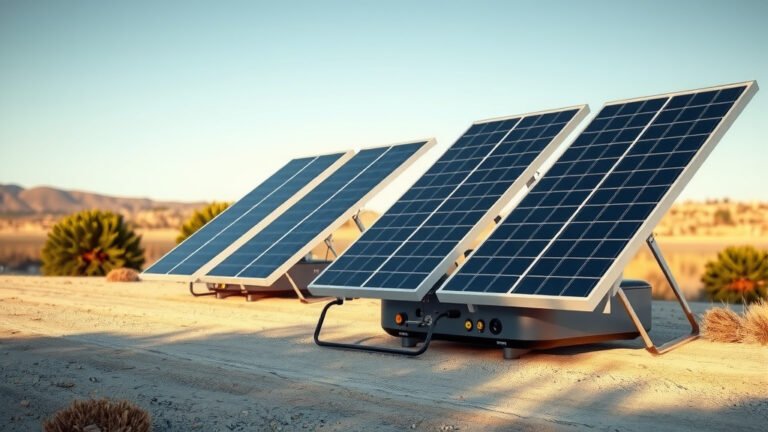
When you’re off-grid, solar input is your lifeline. Ask about the maximum solar input wattage the generator can handle. Higher wattage input means it can charge faster with compatible solar panels.
Also, check if it comes with built-in Maximum Power Point Tracking (MPPT) technology. Many experts agree that an MPPT controller optimizes solar input, especially in changing light conditions.
Portability and Durability for Your Adventures
Where will you use your solar generator? If it’s for camping or tailgating, portability is key. Look at its weight, dimensions, and if it has a comfortable handle or even wheels. Nobody wants to lug around a heavy brick.
Durability also matters, especially if it will face the elements. A sturdy casing and protected ports will protect your investment.
Will It Withstand the Outdoors?
Outdoor use demands a robust design. Check for solid construction and maybe some level of weather resistance. While most aren’t fully waterproof, some can handle a light drizzle.
We found that features like rubberized corners and dust covers for ports can significantly extend the life of your unit when used outside. Protect your power source!
Safety Features: Your Peace of Mind
Powering your home or campsite means you want to feel safe. A good solar generator should have multiple safety protections built-in. This includes a Battery Management System (BMS).
The BMS protects against overcharging, over-discharging, over-temperature, and short circuits. This system is the unsung hero that keeps your battery healthy and safe.
What Protections Does the BMS Offer?
A comprehensive BMS ensures the battery operates within safe parameters. It monitors cell voltage, temperature, and current. Without a robust BMS, battery issues are more common.
Research often connects BMS reliability directly to the overall safety of portable power devices (UL Solutions guidelines).
Connectivity and Outlets: Powering Your World
What good is power if you can’t connect your devices? Check the variety and number of output ports. Do you need AC outlets for household appliances? USB-A and USB-C for modern electronics? Maybe a 12V car port?
Ensure the generator offers enough of each type to meet your charging and powering needs simultaneously. Don’t forget to check if it has a pure sine wave inverter for sensitive electronics.
Do You Need Pure Sine Wave Output?
For sensitive electronics like laptops, medical equipment, or power tools, a pure sine wave inverter is essential. It delivers clean, stable power, mimicking the electricity from your wall outlets.
Modified sine wave inverters are cheaper but can potentially damage certain devices over time. Many people find pure sine wave a worthwhile upgrade for peace of mind.
Warranty and Customer Support
Even the best products can sometimes have issues. A strong warranty and reliable customer support are indicators of a manufacturer’s confidence in their product. What happens if something goes wrong?
Look for at least a two-year warranty. Also, check reviews regarding customer service experiences. You want a company that stands behind its generators.
Making Your Final Decision
Before you hit that purchase button, take a moment to review your needs one last time. It’s like a final pre-flight check. Have you considered all the key aspects we discussed?
Getting the right solar generator means investing in convenience, preparedness, and freedom. Don’t rush; make an informed choice that you’ll be happy with for years to come.
Your Solar Generator Buying Checklist:
- Does the Watt-hour capacity match your estimated needs?
- Is the continuous wattage output enough for your main devices?
- Does it feature a LiFePO4 battery for better lifespan?
- Are the AC and solar charging speeds acceptable for you?
- Is it portable enough and durable for your intended use?
- Does it have a robust Battery Management System (BMS)?
- Does it offer all the specific output ports you require?
- Is there a solid warranty and good customer support available?
Conclusion
Asking the right questions before you buy a solar generator is more than just smart shopping; it’s about investing wisely in your power independence. By focusing on capacity, battery type, charging speeds, safety, and connectivity, you gain clarity.
You’re not just buying a gadget; you’re securing a reliable energy source for camping, emergencies, or daily convenience. Take your time, weigh your options, and you’ll find the perfect solar generator to light up your world, wherever you are.
What is the main advantage of a solar generator over a gas generator?
The main advantages of a solar generator are that it produces no noise, emits no fumes, and requires no fuel apart from sunlight, making it much cleaner and quieter than a gas generator. They are also virtually maintenance-free.
Can a solar generator power an entire house during an outage?
Most portable solar generators are not designed to power an entire house. They are better suited for essential appliances or critical circuits. Larger, home-backup systems can power a house, but these are much bigger investments than typical portable solar generators.
How long does it take for a solar generator to fully charge with solar panels?
The charging time for a solar generator depends on its battery capacity, the wattage of your solar panels, and the intensity of the sunlight. It can range from 3-4 hours in ideal conditions with high-wattage panels to 8-10 hours or more on cloudy days or with smaller panels.
Are solar generators safe to use indoors?
Yes, solar generators are very safe to use indoors because they produce no harmful fumes or carbon monoxide, unlike gas generators. Their quiet operation also makes them ideal for indoor use without disturbance.
What kind of maintenance does a solar generator require?
Solar generators require very little maintenance. You should keep the unit clean, especially the solar panels, and store it in a cool, dry place when not in use. It’s also a good idea to cycle the battery every few months to maintain its health, as recommended by many manufacturers.