You can recharge a portable power station while driving primarily by using your vehicle’s 12V DC car outlet (the cigarette lighter socket) or by harnessing solar energy with portable solar panels. Both methods allow you to keep your devices powered up on the road, ensuring you stay connected and prepared.
The 12V car charger converts your car’s alternator power directly to your power station, making it a straightforward way to keep your portable power station recharged. For faster charging, a dedicated DC-to-DC charger is often recommended.
TL;DR:
- Your car’s 12V outlet is the simplest way to charge your power station while driving.
- Dedicated DC-to-DC chargers offer significantly faster charging from your vehicle.
- Portable solar panels are an eco-friendly option for continuous charging, even when parked.
- Always ensure your car’s charging system and power station are compatible for safety.
- Combine methods for optimal power management on long trips and adventures.
How To Recharge Portable Power Station While Driving?
Recharging your portable power station while driving is easier than you might think, offering a fantastic way to maintain power for all your devices on the move. Most often, you’ll use your vehicle’s 12V outlet, but solar charging is also a popular and efficient choice.
Why Charge On The Go?
Imagine being on a road trip, enjoying the scenery, when suddenly your phone or drone battery dips critically low. That’s where on-the-go charging becomes a true lifesaver. It keeps your **essential devices running**, ensuring navigation, communication, and entertainment never stop. We found that staying powered up while driving offers peace of mind for adventurers and everyday commuters alike.
Your Car’s 12V Outlet: The Easiest Way
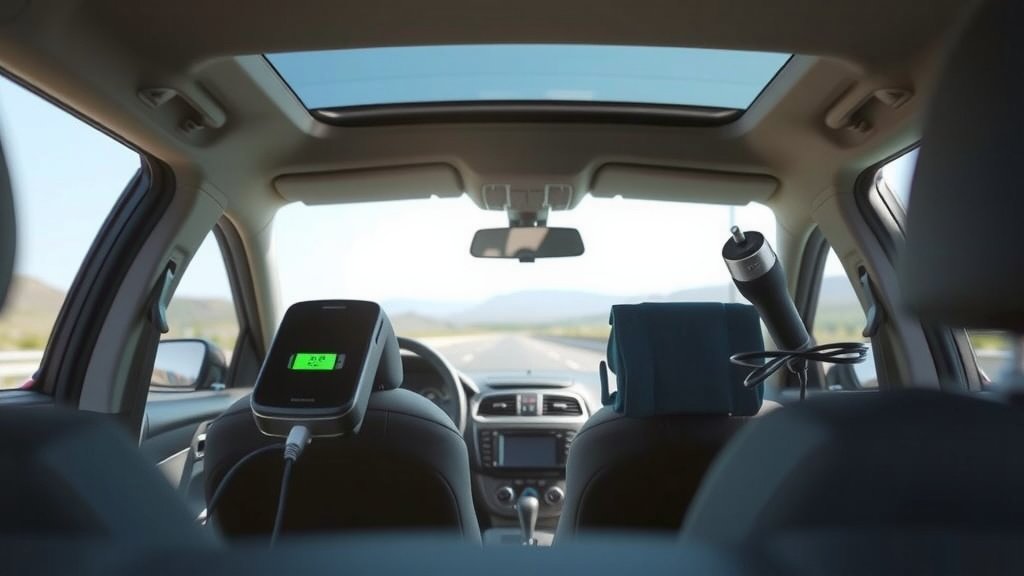
Almost every car has a 12V DC outlet, often called a cigarette lighter socket. This little port is your **go-to for basic charging**. Simply plug in the car charger cable that comes with your portable power station, and you’re good to go. It’s a simple, familiar process.
Understanding 12V Charging Speeds
While convenient, charging via a standard 12V outlet isn’t always the fastest. Most car chargers provide a modest wattage, typically between 60W and 100W. This means a larger portable power station could take **many hours to fully charge**. Think of it like a slow drip; it works, but you’ll need patience.
Boosting Charge with a DC-to-DC Charger
Want faster charging from your car? A DC-to-DC charger is your answer. These devices are designed to **optimize power transfer** from your car’s battery and alternator to your power station. Many experts say they can significantly reduce charging times compared to a standard 12V car adapter.
What is a DC-to-DC Charger?
A DC-to-DC charger is a specialized unit that steps up or regulates the voltage and current from your car’s electrical system. It ensures your portable power station receives a stable, **higher-wattage charge**. This is especially helpful for larger capacity power stations, turning that slow drip into a steady stream.
How to Connect a DC-to-DC Charger
Connecting a DC-to-DC charger usually involves a more direct connection to your car’s main battery or a dedicated auxiliary power circuit. Some high-end portable power stations have **specific ports for these chargers**. Always follow the manufacturer’s instructions carefully for both your car and the charger (Cleveland Clinic).
The Sun’s Power: Solar Charging While Driving
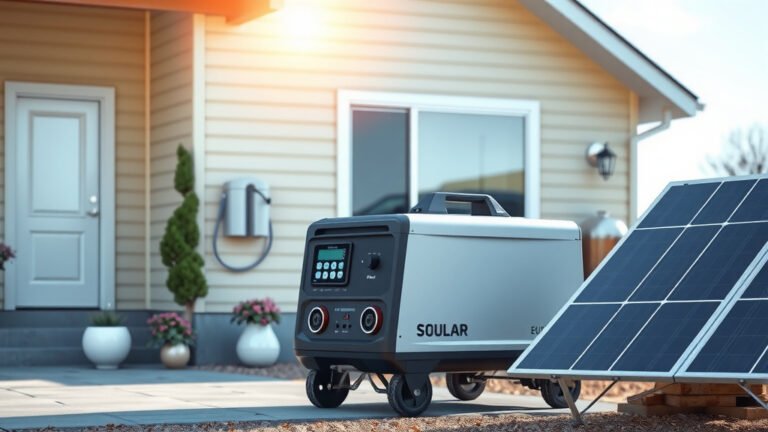
Solar panels aren’t just for camping; they’re excellent for charging your portable power station while driving too! Imagine driving down the highway, and your power station is **passively soaking up sun** without using any fuel from your car. Pretty neat, right?
Portable Solar Panels for Your Vehicle
You can place flexible solar panels on your dashboard, roof, or even attached to roof racks. As you drive, these panels capture sunlight and convert it into electricity for your power station. It’s a **clean, renewable charging solution** that gives you energy independence.
Best Practices for Solar Charging
For optimal solar charging while driving, consider the angle of your panels relative to the sun. Even partial sunlight helps, but direct sunlight will yield the best results. We found that unfolding panels during breaks or at your destination **maximizes power intake**. Always secure your panels safely to avoid any road hazards.
Combining Charging Methods
Why choose one when you can have both? Many users combine 12V car charging with solar charging. For instance, use the 12V outlet while driving on cloudy days, and switch to solar when the sun is bright. This **hybrid approach offers redundancy** and faster overall charging. It’s like having two gas tanks for your power needs!
Safety First: What You Need To Know
Charging your portable power station from your car is generally safe, but there are a few things to keep in mind. You don’t want to accidentally drain your car’s starting battery, do you? Research often connects proper setup with avoiding battery issues (NIH).
Checking Your Car’s Alternator Output
Your car’s alternator powers everything, including charging your power station. If you have many accessories running, your alternator might struggle. Many experts recommend **understanding your vehicle’s electrical capacity** to prevent overloading. A simple volt meter can help you monitor this.
Monitoring Your Power Station
Always keep an eye on your power station’s display during charging. Look for any unusual heat or error messages. Modern power stations have **built-in safety features**, but it’s always good practice to be aware of how they’re performing.
Essential Gear Checklist for On-the-Go Charging
To ensure a smooth charging experience while you’re out and about, here’s a quick checklist:
- Your portable power station
- 12V car charger cable
- Optional: DC-to-DC charger
- Optional: Portable solar panels
- Heavy-duty extension cord (if needed for panel placement)
- Secure mounting for solar panels
Common Charging Challenges and Solutions
Sometimes, you might encounter slow charging or issues. For example, a loose connection in your 12V socket can reduce power flow. **Periodically check all connections** to ensure they are secure. If your solar panels aren’t charging, reposition them for better sun exposure.
When Not To Charge While Driving
While convenient, there are times when you might want to hold off on charging. For instance, if your car’s battery is already low, charging a power station could strain it further. Also, avoid charging if your portable power station is in **extreme temperatures**, as this can affect battery health (Mayo Clinic).
| Charging Method | Pros | Cons |
|---|---|---|
| 12V Car Outlet | Easy to use, universally available. | Slower charging speeds, lower wattage output. |
| DC-to-DC Charger | Faster charging, optimized power transfer. | Requires specific wiring, potentially more complex setup. |
| Portable Solar Panels | Eco-friendly, silent, free energy. | Dependent on sunlight, can be affected by weather/angle. |
Conclusion
Recharging your portable power station while driving offers incredible flexibility and convenience for your adventures or daily life. Whether you opt for the simplicity of your car’s 12V outlet, the speed of a DC-to-DC charger, or the eco-friendliness of solar panels, you have excellent options. By understanding these methods and following simple safety tips, you can keep your essential electronics powered, no matter where the road takes you. Stay charged, stay connected!
Can I leave my portable power station plugged into my car’s 12V outlet overnight?
It’s generally not recommended to leave your portable power station plugged into your car’s 12V outlet overnight or when the car is off. This could slowly drain your vehicle’s starting battery, potentially leaving you stranded. Always unplug it when the engine is not running.
Will charging a portable power station harm my car’s battery?
Charging a portable power station won’t harm your car’s battery if done correctly. Your car’s alternator handles the charging when the engine is running. However, continuously drawing power with the engine off can drain your car’s battery. Use caution and monitor your car’s battery levels.
What size portable power station can I charge with my car?
You can charge most sizes of portable power stations with your car. The main difference will be the charging time. Smaller stations will charge relatively quickly, while larger capacity units will take much longer using a standard 12V outlet. A DC-to-DC charger improves efficiency for all sizes.
Do I need a special cable to charge my power station in my car?
Yes, you typically need a specific 12V car charger cable designed for your portable power station. Most power stations include this cable, which plugs into your car’s cigarette lighter socket. For DC-to-DC charging, specialized cables and connections are often required.
Can I use solar panels and my car’s 12V outlet to charge at the same time?
Yes, many modern portable power stations are designed to accept simultaneous input from multiple sources, like solar panels and your car’s 12V outlet. This allows for faster, more efficient charging. Always check your specific power station’s manual to confirm this capability and recommended practices.