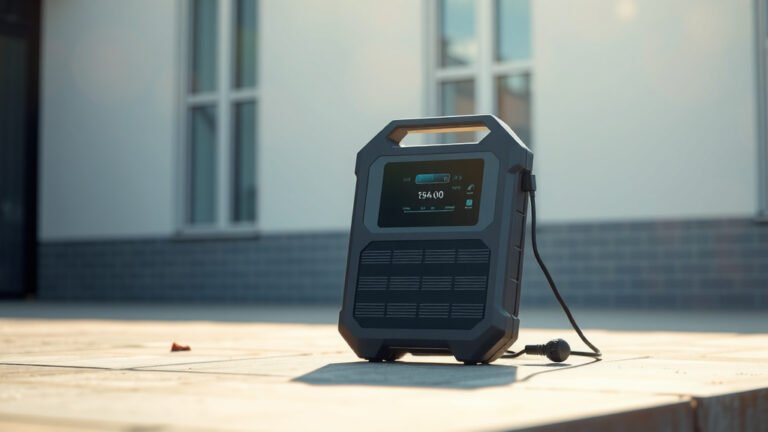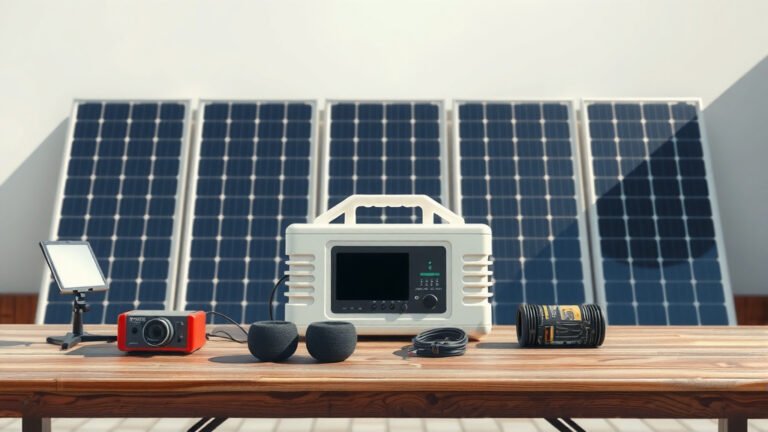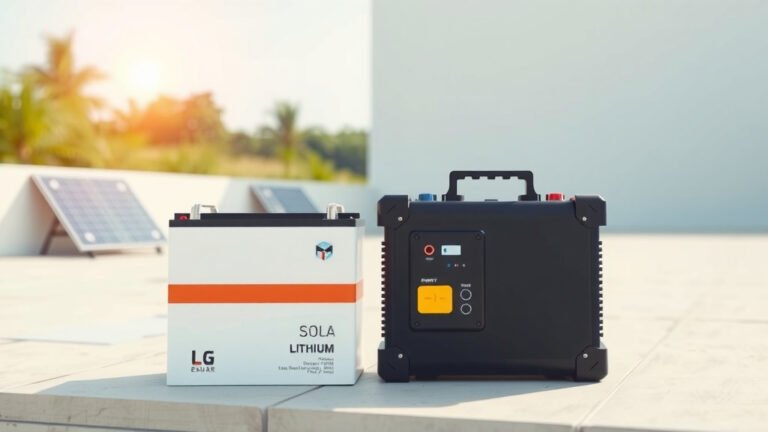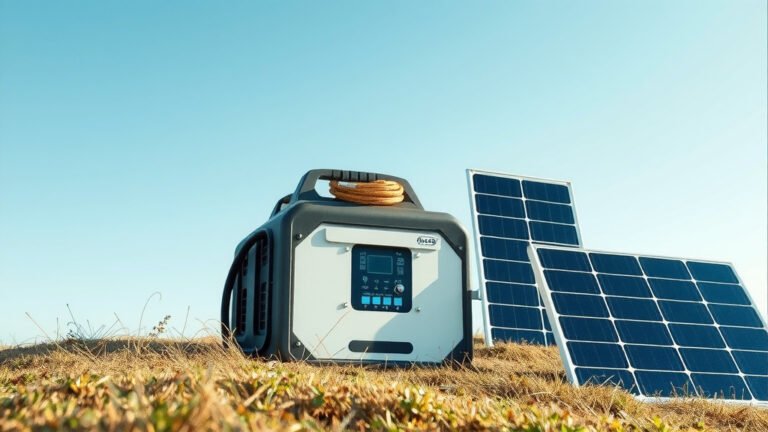
No, a typical solar generator cannot directly power an entire central heating system due to the high and fluctuating power demands of furnaces or heat pumps.
However, you can use a solar generator to power crucial components like the furnace fan, thermostat, or specific pumps in an emergency during a power outage.
TL;DR: Here’s a quick summary of what you need to know:
- Solar generators generally cannot power an entire central heating system directly because heating systems use a lot of power.
- You can power specific, lower-wattage parts of your heating system, like the fan or thermostat.
- This offers temporary warmth and comfort during short power outages.
- Matching your solar generator’s output to the component’s wattage is key for success.
- Always prioritize safety when connecting any backup power source.
Does Solar Generator Work With Central Heating System?
A solar generator typically cannot power an entire central heating system on its own due to the high power draw of furnaces or heat pumps. However, it can often run essential, smaller components to keep some warmth flowing.
Thinking about using a solar generator to keep your home warm when the power goes out? That’s a smart thought. Many people consider this for peace of mind. But let’s be realistic about what these amazing devices can and cannot do for your central heating system.
Understanding Your Central Heating’s Power Needs
Your central heating system is a bit like a team of energy-hungry players. It’s not just one thing. There are burners, blowers, pumps, and electronics involved. Each part needs power to do its job.
The High Demands of a Furnace
A furnace, especially a gas or oil one, often needs a burst of power to start its blower motor. We found that this initial surge can be quite high (many experts refer to this as “starting watts”). Running watts are lower, but still substantial for a long period.
For example, a typical furnace might need 600-1500 running watts, and much more to start. A solar generator often struggles with these demands.
Heat Pumps: A Different Power Story
Heat pumps are generally more efficient, but they also have significant power requirements. They might need 2,000 to 5,000 watts, or even more, to operate. Trying to run one on a standard solar generator is usually not feasible.
This is why directly powering an entire system with a portable solar generator is often a challenge.
Where a Solar Generator CAN Help (Indirectly)
While powering the whole shebang might be tough, solar generators are fantastic for powering specific, lower-demand parts. Think of it as keeping the “brains” and “lungs” of your system going.
Powering the Furnace Fan (Blower Motor)
If your furnace is gas-fired, its main power draw comes from the blower fan. This fan distributes warm air through your ducts. We found that many furnace fans use between 300-800 running watts. Many solar generators can handle this.
Powering just the fan allows you to circulate existing warm air. You might not have the burner on, but some air movement is better than none.
Keeping Your Thermostat Alive
Your thermostat is the brain of your heating system. It tells everything when to turn on and off. Most modern smart thermostats need very little power, often just a few watts. Your solar generator can easily keep this running.
This means your system’s settings remain intact. You can still manage zones if you have them, even if the main heating elements are off.
Supporting Hot Water Circulating Pumps
Do you have a boiler system with hot water radiators? The circulating pump moves the hot water around. These pumps usually require 50-200 watts. A solar generator is perfect for keeping these pumps running.
This could help maintain some warmth in a hydronic system during a power outage.
Sizing Your Solar Generator for Heating Components
Choosing the right solar generator is like picking the right tool for the job. You need to match its power output to what you want to run. Don’t guess; check the numbers.
Checking Wattage: Your First Step
Look at your appliance’s label for its wattage. This is crucial. For motors, note both the starting watts (peak) and running watts (continuous). Your generator needs to handle both.
We advise adding a buffer to your wattage estimate. If your fan needs 500 watts, aim for a generator with 700-800 continuous watts.
Estimating Run Time for Comfort
How long do you need power? This depends on the solar generator’s battery capacity (measured in Watt-hours, Wh). If your fan draws 500 watts and your generator has a 1000Wh battery, it could theoretically run for about 2 hours.
Remember, solar charging can extend this. On a sunny day, you might get continuous power for smaller loads.
Connecting Safely: What You Need to Know
Safety is not something to skip when dealing with electricity. Improper connections can be dangerous. We found that many incidents happen due to incorrect wiring (National Fire Protection Association).
- Consult an electrician: For any permanent or complex connections, always get professional help.
- Use heavy-duty extension cords: Ensure they are rated for outdoor use and the wattage you need.
- Avoid backfeeding: Never plug a generator directly into a wall outlet. This sends power back into the grid, creating a severe shock hazard for utility workers.
- Read your manuals: Both your generator and heating system manuals have important safety information.
- Ventilation is key: If using a gas furnace, ensure proper ventilation for combustion byproducts. Solar generators produce no emissions, but the furnace itself does.
Solar Generator vs. Traditional Generator for Heating
Here’s a quick comparison to help you weigh your options when thinking about backup heating:
| Feature | Solar Generator (for components) | Traditional Gas Generator (for whole system) |
|---|---|---|
| Fuel Source | Sunlight, no emissions | Gasoline/Propane, requires fuel storage |
| Noise Level | Silent operation | Loud, requires distance |
| Indoor Use | Safe indoors (no fumes) | Only outdoors (carbon monoxide risk) |
| Maintenance | Minimal battery care | Engine maintenance, oil changes |
| Initial Cost | Moderate to high | Moderate to high |
| Running Cost | Zero (free sunlight) | Ongoing fuel costs |
Your Checklist Before Relying on Solar for Heat
Before you commit, ask yourself these questions:
- Do I know the exact wattage of the heating components I want to run?
- Does my solar generator’s capacity match those wattage needs with a buffer?
- Do I have the right cables and adapters for a safe connection?
- Have I practiced connecting it and running a test?
- Do I have enough solar panels for recharging, especially on cloudy days?
- Is my home’s insulation good enough to retain what little heat I can generate?
Realistic Expectations for Solar Heating Backup
It’s important to set realistic expectations. A solar generator for central heating is usually about keeping essential functions going. It’s not about enjoying the same level of warmth you get from grid power. Think of it as a “survival mode” solution.
We found that for many, this backup offers enough comfort to get through a few hours or even a day. It prevents pipes from freezing and keeps some heat circulating. It’s a smart part of an emergency plan, not a full replacement.
Conclusion
While a solar generator likely won’t power your entire central heating system, it’s a very practical solution for keeping crucial components running during a power outage. You can maintain comfort by focusing on the furnace fan, thermostat, or circulating pumps. Remember to always prioritize safety, accurately size your generator, and understand its limitations. A well-planned solar generator setup can make a big difference in keeping your home more comfortable when the grid goes down.
FAQs
Can a small portable solar generator run a space heater?
Many smaller space heaters draw 1000-1500 watts, which is often too much for entry-level portable solar generators. Some larger, more powerful units might handle a small space heater for a limited time, but it will drain the battery very quickly.
How do I know the wattage of my furnace fan?
You can usually find the wattage or amperage listed on a sticker inside your furnace’s access panel. If it lists amps, multiply amps by volts (typically 120V) to get watts. For example, 5 amps x 120V = 600 watts.
Is it more efficient to heat with electric blankets than a furnace fan during an outage?
Yes, electric blankets are significantly more efficient for personal warmth. They directly heat your body, using much less power (typically 60-150 watts) than even a furnace fan, which aims to heat an entire space. They are a great complement to limited backup power.
Can I use an inverter generator with my central heating system?
An inverter generator (gas-powered) can provide cleaner, more stable power than conventional generators, making it safer for sensitive electronics in your heating system. With sufficient wattage, it could potentially power more of your central heating system than a solar generator. However, it still requires fuel and emits fumes.
What’s the difference between “starting watts” and “running watts” for heating components?
Starting watts (or surge watts) is the temporary, higher power needed to kick-start a motor, like the furnace blower. Running watts (or continuous watts) is the lower power level required to keep the component operating steadily. Your generator must meet the starting watts capacity for the component to turn on, and then the running watts to keep it going.