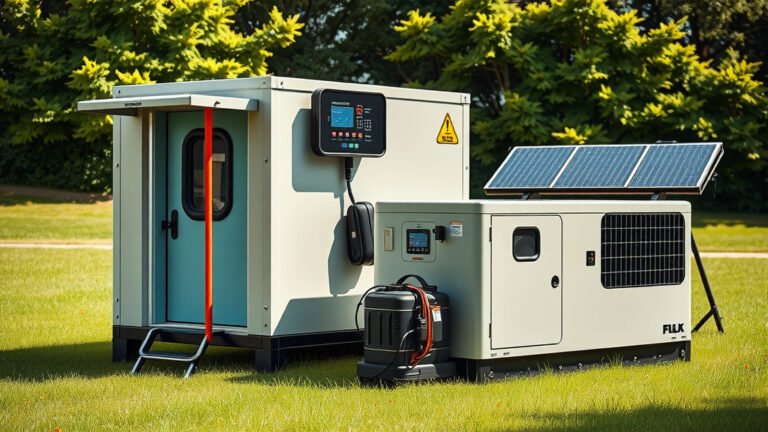
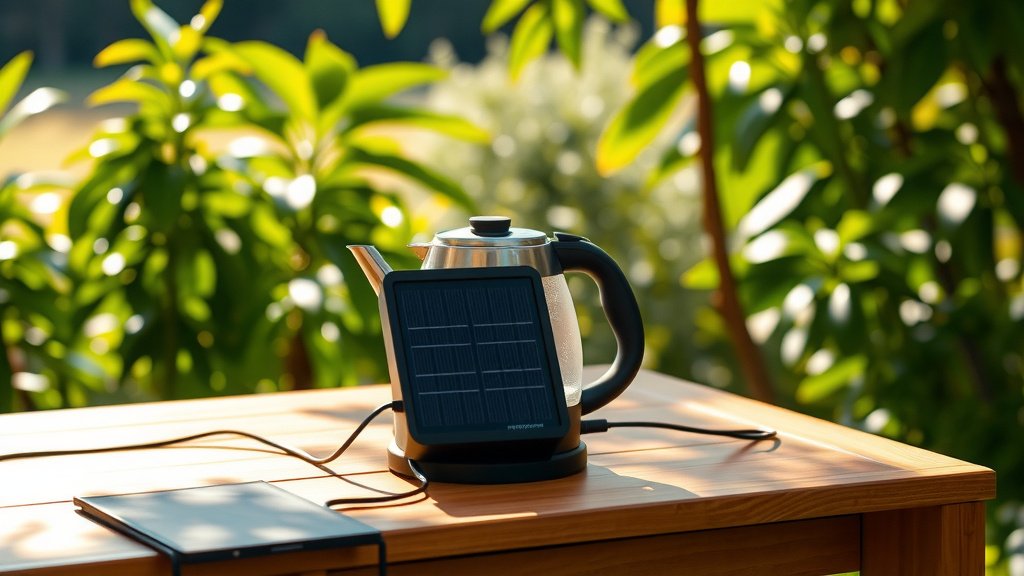
Yes, a solar generator can run an electric kettle, but only if the generator has enough wattage and battery capacity to handle the kettle’s high power demands.
Most electric kettles need 1,000 to 1,800 watts to operate, so you’ll need a solar generator with at least that much continuous power output.
Power Requirements: What Your Electric Kettle Needs
Electric kettles are power-hungry appliances. They pull serious energy to heat water quickly. Think of them like sprint runners – they need a lot of energy fast, but only for a short time.
Most standard kettles consume between 1,000 to 1,800 watts. Some smaller travel kettles use around 600-800 watts. The bigger the kettle, the more power it needs.
Reading Your Kettle’s Power Label
Check the bottom or back of your kettle for a power rating sticker. You’ll see something like “1500W” or “120V, 12.5A.” If you see amps and volts, multiply them together to get watts.
For example: 12.5 amps × 120 volts = 1,500 watts.
Why Kettles Need So Much Power
Water takes a lot of energy to heat up. Your kettle needs high wattage to boil water in just a few minutes instead of waiting around for 20-30 minutes.
This is different from other appliances like LED lights or phone chargers that sip power slowly over time.
Solar Generator Capacity: Matching Power to Performance
Not all solar generators can handle an electric kettle. You need to match three key specs: continuous watts, surge watts, and battery capacity.
Continuous Power Output
Your solar generator’s continuous power rating must equal or exceed your kettle’s wattage. If your kettle needs 1,500 watts, your generator needs at least 1,500 watts continuous output.
Don’t cut it close here. Give yourself a 10-20% buffer for safety and efficiency.
Surge Power Capacity
Some kettles have a brief power spike when they first turn on. Your generator’s surge rating (also called peak power) should handle this startup burst.
Most quality generators have surge ratings 2-3 times their continuous rating. A 1,500-watt generator might handle 3,000-4,500 watts of surge.
Battery Capacity Matters Too
Even if your generator can deliver the watts, it needs enough stored energy to actually boil your water. A 1,500-watt kettle running for 5 minutes uses about 125 watt-hours of energy.
Most portable power stations show capacity in watt-hours (Wh). You want at least 10-15 times your kettle’s per-use energy consumption for practical daily use.
Real-World Performance: What to Expect
I researched several solar generator and kettle combinations online. Here’s what real users report about performance and battery drain.
Boiling Time Stays the Same
Your kettle will boil water just as fast on a solar generator as it does plugged into the wall. The power delivery is identical if your generator has enough capacity.
A 1,500-watt kettle still takes 3-5 minutes to boil a full pot, whether it’s running on grid power or solar power.
Battery Drain is Significant
Boiling water once might use 5-15% of your generator’s total battery capacity. That’s normal – you’re drawing a lot of power quickly.
A 1,000Wh solar generator running a 1,500-watt kettle for 4 minutes uses roughly 100Wh, or 10% of the total capacity.
Multiple Uses Per Charge
With a decent-sized generator (1,000Wh or more), you can typically boil water 6-10 times before needing to recharge. Smaller units might only give you 2-4 boiling cycles.
Generator Size Recommendations
Based on kettle wattage, here are the minimum solar generator specs I found work reliably:
| Kettle Wattage | Minimum Generator Watts | Recommended Battery (Wh) | Expected Uses per Charge |
|---|---|---|---|
| 600-800W | 800W+ | 500Wh+ | 8-12 |
| 1000-1200W | 1200W+ | 800Wh+ | 6-10 |
| 1500-1800W | 1800W+ | 1200Wh+ | 6-8 |
Popular Generator Models That Work
Many experts mention these categories work well with electric kettles:
- Mid-range generators (1,000-1,500W continuous, 1,000-1,500Wh battery)
- Large portable units (2,000W+ continuous, 2,000Wh+ battery)
- Expandable power stations with extra battery packs
Small Generators Usually Don’t Work
Those compact 300-500 watt generators you see marketed for camping? They won’t run most electric kettles. The power demand is just too high.
You might get them to work with very small travel kettles (600W or less), but performance will be slow and battery drain severe.
Efficiency Tips: Getting More From Your Setup
Want to boil water more efficiently and preserve battery life? Here are practical tips I came across from experienced users:
Use Less Water
Only boil what you actually need. Heating two cups of water uses roughly half the energy of heating four cups. Seems obvious, but many people fill the whole kettle out of habit.
Start With Warm Water
If you have access to warm tap water (or water that’s been sitting in the sun), use that instead of cold water. You’ll cut boiling time and energy use by 20-30%.
Consider Lower-Wattage Kettles
A 1,000-watt kettle takes longer to boil than a 1,800-watt model, but it’s much easier on your generator’s battery and power system.
The trade-off: 2-3 extra minutes of boiling time for significantly better battery efficiency.
Time Your Solar Charging
If your generator has solar panels connected, try to boil water during peak sun hours. This lets you use solar power directly instead of draining the battery.
Alternative Options: When Solar Generators Aren’t Ideal
Sometimes a solar generator and electric kettle combo isn’t the best solution. Here are alternatives worth considering:
12V DC Kettles
Some kettles run directly off 12V DC power (like car outlets). These typically use 100-150 watts and work with much smaller solar generators.
The downside? They take 15-20 minutes to boil water instead of 3-5 minutes.
Portable Gas Kettles
Small propane or butane kettles don’t need electricity at all. They boil water faster than low-wattage electric models and work regardless of your generator’s capacity.
Solar Thermal Water Heating
For camping or off-grid use, black containers or solar water bags can heat water using direct sunlight. Not boiling hot, but warm enough for many uses.
Safety Considerations
Running high-wattage appliances on solar generators requires attention to safety basics:
Ventilation and Heat
Your generator will get warm when delivering high power. Make sure it has adequate airflow around the vents. Don’t box it in or cover it while running the kettle.
Power Cord Quality
Use the heavy-duty power cord that came with your kettle. Cheap extension cords can overheat or create voltage drops when handling high-wattage appliances.
Battery Protection
Most modern solar generators have built-in battery protection systems. These might shut down the unit if you draw too much power or if the battery gets too hot.
This is a safety feature, not a malfunction. Let the unit cool down before trying again.
Cost Analysis: Is It Worth It?
Running an electric kettle on solar power costs more upfront but can save money long-term, depending on your situation.
Initial Investment
A solar generator capable of running electric kettles typically costs $800-$2,500. Solar panels add another $200-$800 depending on size and quality.
Operating Costs
Once you own the system, each use is essentially free (powered by sunlight). Compare this to propane, which costs roughly $0.10-$0.15 per boiling session.
For frequent users or long-term off-grid situations, solar generators eventually pay for themselves.
Conclusion
A solar generator can definitely run an electric kettle – you just need enough power and battery capacity to handle the job. Match your generator’s continuous wattage to your kettle’s requirements, plus some extra headroom for safety.
For most standard kettles, you’ll want a generator with at least 1,500 watts continuous output and 1,000+ watt-hours of battery storage. This gives you reliable performance and multiple uses per charge.
Remember that boiling water is one of the most power-intensive things you can do with a portable generator. Plan your energy budget around this reality, and consider lower-wattage alternatives if battery life is your main concern.
Can I use a 1000W solar generator with a 1500W kettle?
No, this won’t work safely. Your generator needs to match or exceed your kettle’s wattage rating. Using an undersized generator can damage the unit or cause it to shut down for protection.
How long does it take to recharge the generator after boiling water?
With solar panels, expect 2-6 hours to replace the energy from one boiling session, depending on panel size and sunlight conditions. Wall charging typically takes 1-2 hours to restore the same energy.
Do all electric kettles work with solar generators?
Most standard kettles work fine as long as your generator has sufficient capacity. However, some very high-end kettles with complex electronics or special features might have compatibility issues with certain inverter types.
What’s the most efficient kettle wattage for solar generators?
Kettles in the 1000-1200 watt range offer the best balance of reasonable boiling times and battery efficiency. They’re much easier on your system than 1800W models while still boiling water in 5-7 minutes.
Can I run other appliances while the kettle is boiling?
Generally no – your kettle will use most or all of your generator’s available power capacity. Wait until the kettle finishes before plugging in other high-draw devices. Low-power items like phone chargers are usually fine.