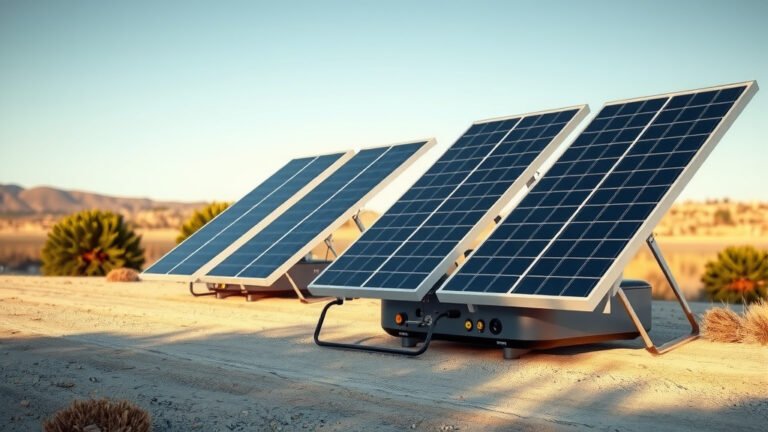
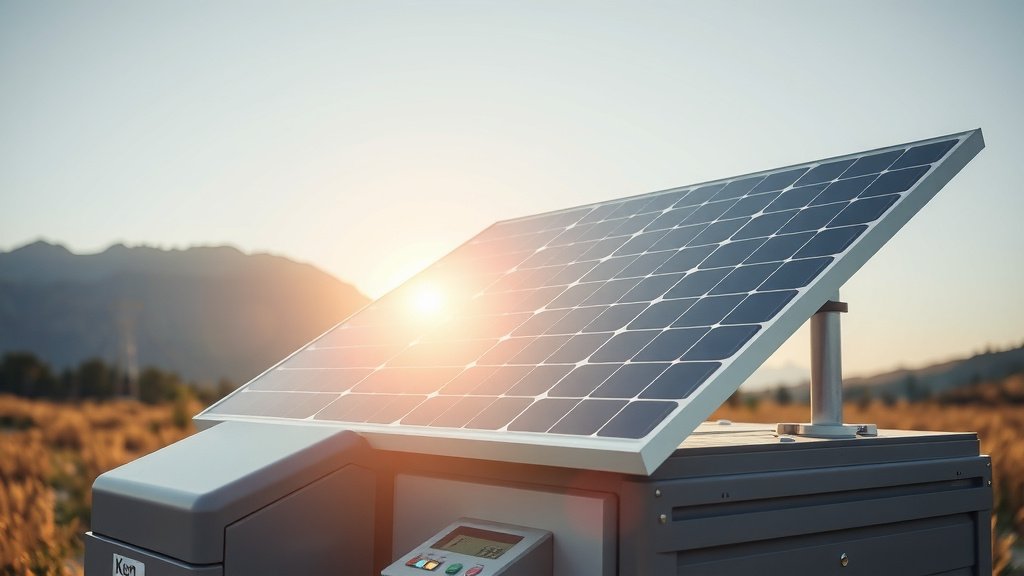
Solar panels for power stations typically operate at 15-22% efficiency, meaning they convert about one-fifth of sunlight into usable electricity.
Most portable solar generators achieve 18-20% efficiency under ideal conditions, with premium models reaching up to 22% efficiency ratings.
What Solar Panel Efficiency Actually Means
Think of solar panel efficiency like a water bucket with holes. The efficiency rating tells you how much sunlight your panel catches versus how much it lets slip away.
When I researched solar technology, I found that efficiency measures the percentage of solar energy converted to electricity. A 20% efficient panel turns one-fifth of available sunlight into power you can use.
Real-World Numbers You Can Expect
Laboratory efficiency ratings differ from real-world performance. Your panels won’t hit peak efficiency every day.
Weather, temperature, and dust affect actual output. I found that most users see 80-90% of rated efficiency in typical conditions.
Types of Solar Panels and Their Efficiency Rates
Different panel types deliver different efficiency levels. Let me break down what you’ll find in portable power stations.
Monocrystalline Solar Panels
These black panels offer the highest efficiency for portable power stations. Research shows they typically achieve 18-22% efficiency.
Monocrystalline panels cost more but take up less space. Perfect when you need maximum power from a compact setup.
Why Monocrystalline Panels Lead the Pack
The manufacturing process creates pure silicon crystals. This purity allows electrons to move more freely, boosting efficiency.
Polycrystalline Solar Panels
These blue-tinted panels offer decent efficiency at lower prices. Most achieve 15-17% efficiency ratings.
You’ll see polycrystalline panels on budget-friendly portable power stations. They work well when space isn’t a major concern.
The Trade-Off With Polycrystalline
Lower manufacturing costs mean accessible pricing. You get reliable power without premium panel expenses.
Thin-Film Solar Panels
These flexible panels sacrifice efficiency for portability. Most thin-film panels achieve 10-12% efficiency.
I found that thin-film panels work great for hiking and camping. They fold up small but need more surface area for the same power output.
Factors That Impact Solar Panel Efficiency
Your panels won’t always perform at rated efficiency. Several factors affect real-world performance.
Temperature Effects on Performance
Hot weather actually reduces solar panel efficiency. Most panels lose 0.3-0.5% efficiency for every degree above 77°F (25°C).
This surprises many people. You’d think blazing sun means maximum power, but cooler sunny days often produce better results.
Managing Heat in Your Setup
Good airflow around panels helps maintain efficiency. Avoid placing panels on hot surfaces like car hoods or concrete.
Sun Angle and Positioning
Panel angle dramatically affects efficiency. Direct perpendicular sunlight delivers peak performance.
Research from renewable energy labs shows that 30-45 degree angles work best in most locations. Adjusting throughout the day can boost output by 25-35%.
Simple Positioning Tips
Face panels south in the Northern Hemisphere. Tilt them toward the sun’s path for your latitude.
Weather and Environmental Conditions
Clouds, dust, and shadows reduce panel efficiency quickly. Even partial shading can drop output significantly.
I found that light clouds might only reduce efficiency by 10-20%, but heavy overcast can drop it by 70-90%.
| Condition | Efficiency Impact | Typical Output |
|---|---|---|
| Bright Sunshine | 100% | Full rated power |
| Light Clouds | 80-90% | Good charging speed |
| Heavy Overcast | 10-30% | Slow charging only |
| Partial Shade | 20-60% | Varies by shaded area |
How Solar Panel Efficiency Affects Power Station Performance
Higher efficiency panels charge your power station faster. This matters when you have limited daylight hours.
Charging Speed Differences
A 22% efficient 100W panel outputs more power than an 18% efficient 100W panel under identical conditions.
The difference might seem small, but it adds up. Over a full day, higher efficiency can mean 20-30% more energy stored.
Real Example: 500Wh Power Station
With high-efficiency panels, you might fully charge in 4-5 hours of good sun. Lower efficiency panels could need 6-7 hours for the same charge.
Space and Weight Considerations
Efficient panels deliver more power per square foot. This matters for portable setups where space is limited.
You can carry fewer panels to achieve the same power output. Less weight, less bulk, easier transport.
Getting Maximum Efficiency From Your Solar Setup
Smart practices help you squeeze every bit of power from your panels. Small changes make noticeable differences.
Proper Cleaning and Maintenance
Dust and dirt block sunlight from reaching solar cells. Regular cleaning maintains peak efficiency.
I found that even a thin layer of dust can reduce output by 5-10%. In dusty areas, cleaning every few days helps a lot.
Safe Cleaning Methods
Use soft cloth and plain water. Avoid harsh chemicals that might damage panel coatings.
Optimal Setup Strategies
Position panels away from shadows throughout the day. Even small shadows from trees or equipment hurt efficiency.
Use panel stands or mounts that let you adjust angles. Following the sun’s path boosts daily energy collection.
Wiring and Connection Tips
Keep wire runs short to minimize power loss. Use proper gauge wires rated for your panel output.
Clean connections prevent resistance that wastes energy. Check terminals regularly for corrosion or loose fits.
When Solar Panel Efficiency Matters Most
Higher efficiency becomes more important in specific situations. Know when it’s worth paying extra.
Limited Space Applications
RV rooftops, small boats, and backpacking setups benefit from high-efficiency panels. Every square inch of space matters.
You might pay 20-30% more for premium panels, but you get significantly more power from limited space.
Extended Cloudy Weather
Efficient panels capture more energy from weak sunlight. This helps during overcast days or winter months.
Research shows that high-efficiency panels maintain better performance ratios in low-light conditions.
Budget Considerations
Weigh efficiency gains against cost increases. Sometimes adding more lower-efficiency panels costs less than buying premium ones.
Future of Solar Panel Efficiency
Solar technology keeps improving. New developments promise higher efficiency ratings.
Emerging Technologies
Perovskite and multi-junction cells show promise for 30%+ efficiency. These technologies might reach consumer markets within 5-10 years.
Bifacial panels capture light from both sides, effectively boosting efficiency by 10-20% in the right conditions.
Conclusion
Solar panel efficiency for power stations ranges from 15-22%, with most quality portable systems achieving 18-20% efficiency. Higher efficiency panels charge your power station faster and work better in limited space, but they cost more upfront.
Your real-world efficiency depends on sun angle, temperature, cleanliness, and weather conditions. Focus on proper positioning, regular maintenance, and choosing the right panel type for your specific needs. Remember that sometimes buying more lower-efficiency panels costs less than premium high-efficiency ones while delivering similar total power.
What happens to solar panel efficiency over time?
Solar panels typically lose 0.5-0.8% efficiency per year through normal degradation. Quality panels maintain 80-90% of original efficiency after 20-25 years of use.
Do solar panels work efficiently in winter?
Solar panels actually work more efficiently in cold temperatures, but shorter days and low sun angles reduce total daily energy output. Snow covering panels stops production entirely until cleared.
Can you mix different efficiency solar panels together?
You can connect different efficiency panels, but the lowest-performing panel in a series string limits the entire string’s output. Parallel connections work better for mixed panel setups.
How does solar panel efficiency compare to other renewable energy sources?
Solar panels at 20% efficiency compete well with small wind turbines, which typically achieve 25-35% efficiency but need consistent strong winds. Hydroelectric systems can exceed 90% efficiency but require flowing water.
Is there a maximum theoretical efficiency limit for solar panels?
Single-junction silicon solar panels have a theoretical maximum efficiency of about 33% due to physics limitations. Multi-junction panels using different materials can potentially exceed 40% efficiency.