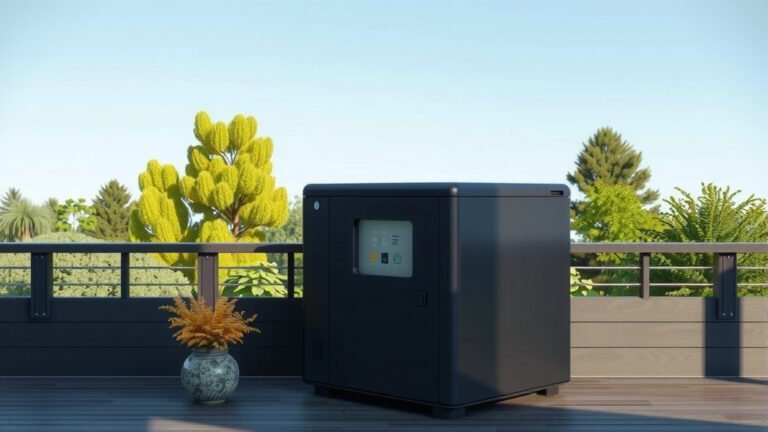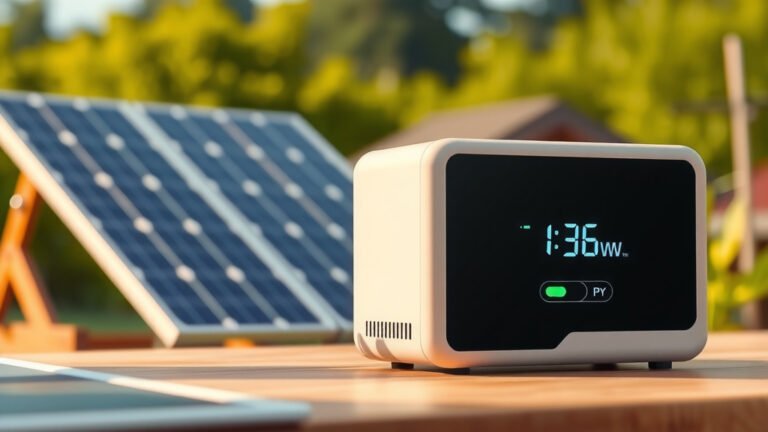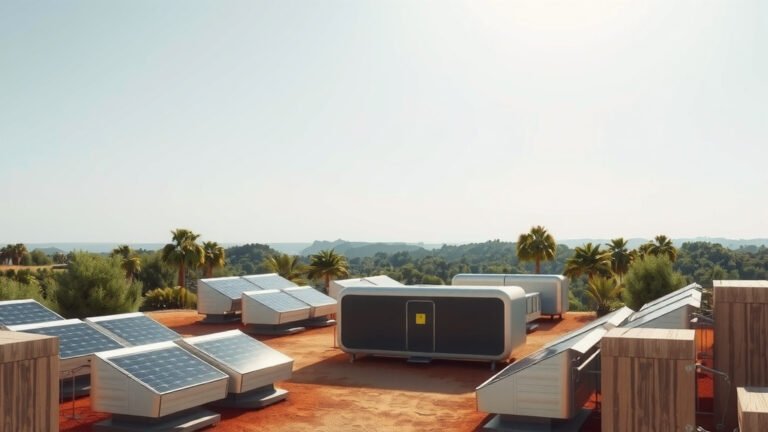

You need approximately 4-6 solar panels rated at 200-250 watts each to efficiently charge a 1000W generator, depending on sunlight conditions and charging time requirements.
The exact number of solar panels for your 1000W generator depends on your daily power needs, available sunlight hours, and how quickly you want to recharge the battery.
Understanding Your 1000W Generator Power Requirements
Your 1000W generator likely has a battery capacity between 800-1200 watt-hours (Wh). Think of this like a fuel tank – the bigger it is, the more energy it stores.
Most 1000W generators can actually output 1000 watts continuously for about 45 minutes to 1.2 hours when fully charged. After that, you need to recharge or connect solar panels.
Battery Capacity vs Power Output
Don’t confuse watts with watt-hours. Your generator’s 1000W rating tells you how much power it can deliver at once. The battery capacity (measured in Wh) tells you how long it can sustain that power.
I found that most portable power stations in this category have these common battery sizes:
- 800Wh batteries (smaller units)
- 1000Wh batteries (most common)
- 1200Wh batteries (larger capacity models)
Solar Panel Output Basics
Solar panels don’t produce their rated power all day. A 200W panel might only generate 150W during peak sun hours due to temperature, angle, and atmospheric conditions.
Peak sun hours vary by location and season. Most areas get 4-6 peak sun hours daily. This means your 200W panel produces about 800-1200Wh per day under good conditions.
Real-World Solar Panel Efficiency
Research shows that solar panels operate at 75-85% efficiency in real conditions compared to laboratory ratings. Weather, dust, and temperature all affect output.
You’ll also lose 10-15% of power during the charging process. Your generator’s charge controller and battery chemistry create this energy loss.
Calculating Solar Panels for Your 1000W Generator
Here’s a simple way to figure out how many panels you need. First, determine your daily energy use and recharge time goals.
Daily Energy Replacement Method
If you use 500Wh per day from your generator, you need solar panels that produce at least 500Wh daily to maintain your battery level.
With 5 peak sun hours and 80% system efficiency, a 200W panel produces about 800Wh per day (200W × 5 hours × 0.8 = 800Wh).
For 500Wh daily replacement, one 200W panel handles this easily with power to spare.
Fast Recharge Method
Want to recharge your 1000Wh battery from empty in one day? You need panels producing 1250Wh daily to account for efficiency losses.
This requires about 1.5 panels at 200W each, so round up to 2 panels for reliable performance.
Quick Calculation Formula
Use this simple formula: (Battery capacity ÷ Peak sun hours) ÷ 0.8 = Minimum solar watts needed.
For a 1000Wh battery with 5 sun hours: (1000 ÷ 5) ÷ 0.8 = 250 watts minimum solar capacity.
Common Solar Panel Configurations
I researched the most popular setups people use with 1000W generators. Here are the configurations that work best in practice.
| Panel Setup | Total Watts | Daily Output | Recharge Time |
|---|---|---|---|
| 1 × 200W | 200W | 800Wh | 1.5 days |
| 2 × 200W | 400W | 1600Wh | Same day |
| 3 × 200W | 600W | 2400Wh | 4-5 hours |
| 4 × 100W | 400W | 1600Wh | Same day |
Single Panel Setup (200W)
One quality 200W panel works if you use your generator lightly. This setup handles daily maintenance charging and slow battery recovery.
Best for weekend camping or emergency backup where you’re not heavily draining the battery daily.
Dual Panel Setup (400W Total)
Two 200W panels give you reliable same-day recharging for most usage patterns. This is the sweet spot for many users.
You can run your generator moderately during the day and still recover to full charge by evening.
Triple Panel Setup (600W Total)
Three panels let you recharge quickly while using your generator simultaneously. Great for RV living or heavy daily use.
This setup provides enough power to run devices directly from solar during peak hours while charging your battery.
Factors That Affect Panel Requirements
Your location and usage patterns change how many panels you actually need. Let’s look at the key factors that matter most.
Geographic Location
Southern locations get more peak sun hours year-round. Arizona might average 6-7 hours while Seattle gets 3-4 hours in winter.
If you live in a lower-sun area, add one extra panel to your basic calculation to ensure reliable charging.
Seasonal Variations
Winter sun angles reduce panel output by 30-50% compared to summer peak performance. Plan your panel array for worst-case seasonal conditions if you use it year-round.
Many experts recommend sizing your system for winter performance, then enjoying the extra power in summer months.
Shading and Weather
Partial shading can reduce panel output dramatically. Even 10% shading can cut power by 50% on some panel types.
Cloudy weather drops output to 20-30% of rated capacity. Build in extra panel capacity if your area has frequent cloudy days.
Daily Usage Patterns
Light users (LED lights, phone charging, small fans) might drain only 300-500Wh daily. Heavy users (power tools, appliances, multiple devices) can use 800-1000Wh daily.
Track your usage for a few days to understand your actual power consumption patterns.
Solar Panel Types for Generator Charging
Not all solar panels work equally well with portable generators. Here’s what I found works best for different situations.
Rigid Panels
Rigid panels offer the best efficiency and durability. They’re perfect if you have fixed mounting space like an RV roof or permanent camp setup.
Most rigid panels last 20+ years and maintain 85% output after decades of use.
Flexible Panels
Flexible panels work great for temporary setups and curved surfaces. They’re lighter and easier to transport but typically cost more per watt.
These panels handle vibration and movement better than rigid ones, making them popular for boat and RV applications.
Portable Folding Panels
Folding solar panel kits are designed specifically for portable power stations. They come with built-in charge controllers and proper connectors.
While convenient, they’re usually more expensive than building your own system with individual panels.
Charge Controller Considerations
Your 1000W generator probably has a built-in charge controller, but understanding its limits helps you choose the right number of panels.
Maximum Input Capacity
Most 1000W generators accept 200-400W of solar input maximum. Check your manual before buying more panels than your system can handle.
Some newer models can handle up to 600W input, but this varies significantly between brands and models.
Voltage Requirements
Your generator needs panels wired to match its input voltage requirements. Most accept 12V, 18V, or 24V panel configurations.
Mismatched voltage can damage your generator or prevent charging entirely. Always verify compatibility before connecting panels.
Cost vs Performance Trade-offs
More panels cost more money, but they provide faster charging and better reliability. Here’s how to find the right balance for your budget.
Minimum Viable Setup
One good 200W panel gets you started for under $150. This handles light usage and maintenance charging adequately.
You can always add more panels later as your needs or budget grow.
Optimal Performance Setup
Two to three 200W panels ($300-450 total) give you reliable daily recharging and weather resilience.
This investment pays off quickly if you use your generator regularly or need dependable power access.
Overkill Territory
More than 600W of panels rarely makes sense unless you’re running high-power devices directly from solar during the day.
Your generator’s input limits and battery capacity become the bottleneck beyond this point.
Installation and Setup Tips
Getting your solar panels connected correctly makes a huge difference in charging performance. Here are the key setup considerations.
Panel Positioning
Face your panels directly toward the sun for maximum output. Even 15 degrees off-angle can reduce power by 10-15%.
Tilt panels at an angle equal to your latitude for year-round optimization, or adjust seasonally for peak performance.
Wiring Configuration
Series wiring adds voltages together while keeping current the same. Parallel wiring adds currents while keeping voltage the same.
Most portable generators work best with parallel wiring to maintain proper voltage levels and reduce shading effects.
Cable Management
Use proper gauge wiring to prevent power loss. Long cable runs need thicker wires to maintain efficient power transfer.
Keep connections clean and tight. Corroded or loose connections can reduce charging efficiency significantly.
Maintenance and Monitoring
Your solar panel system needs minimal maintenance but regular attention keeps it performing well.
Cleaning Panels
Dirty panels can lose 20-30% of their output. Clean them monthly or after dust storms with mild soap and water.
Morning cleaning works best when panels are cool. Hot panels can crack if splashed with cold water.
Monitoring Performance
Track your daily charging rates to spot problems early. Sudden drops in performance often indicate connection issues or panel damage.
Many generators have apps that show charging rates and solar input in real-time.
Conclusion
For most 1000W generators, 2-3 solar panels rated at 200W each provide the best balance of performance, cost, and reliability. This setup ensures you can recharge your battery daily while accounting for real-world efficiency losses and weather variations.
Start with one or two panels if you’re budget-conscious – you can always expand later. Focus on quality panels and proper installation rather than buying the cheapest options available.
Remember that your local sunlight conditions and daily power usage matter more than generic calculations. Monitor your system’s performance and adjust your panel array based on actual results rather than theoretical numbers.
What happens if I connect more solar panels than my generator can handle?
Your generator’s built-in charge controller will limit the input to safe levels, but you’ll waste money on extra panels that can’t contribute power. Check your manual for maximum solar input specifications before buying panels.
Can I mix different brands and sizes of solar panels together?
You can mix panels, but it’s not recommended for optimal performance. Different panels have varying voltages and currents that can reduce overall system efficiency. Stick with matched panels when possible for best results.
How long do solar panels last when used with portable generators?
Quality solar panels typically last 20-25 years with minimal performance degradation. Most panels retain 85% of their original output after 20 years of regular use, making them a worthwhile long-term investment.
Do I need a separate charge controller for my solar panels?
Most 1000W generators have built-in charge controllers designed for direct solar panel connection. Adding an external controller can actually reduce efficiency and isn’t necessary unless you’re building a complex multi-source charging system.
What’s the minimum number of panels needed to keep my generator charged during extended cloudy weather?
During prolonged cloudy periods, even 4-5 panels might not fully recharge your battery daily. Plan for 3-4 days of stored power and consider reducing usage during extended bad weather rather than oversizing your solar array for worst-case scenarios.