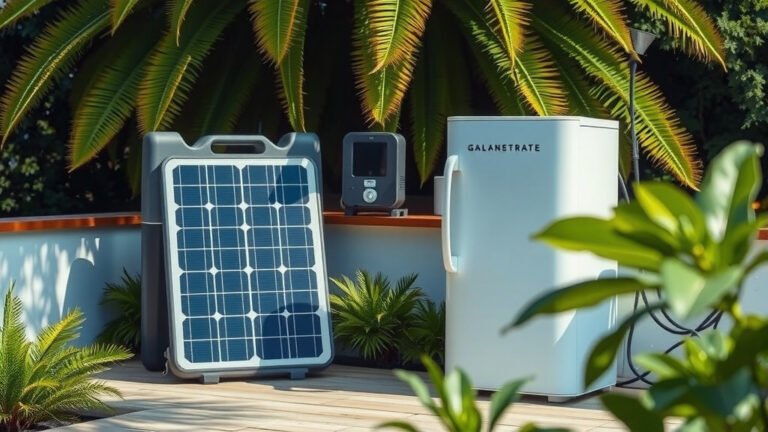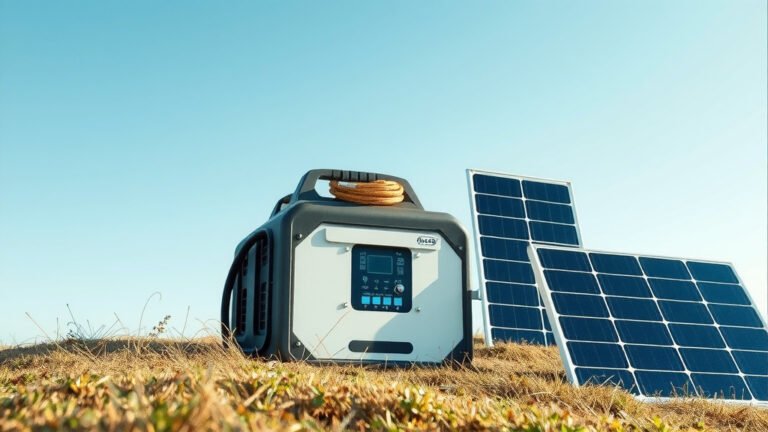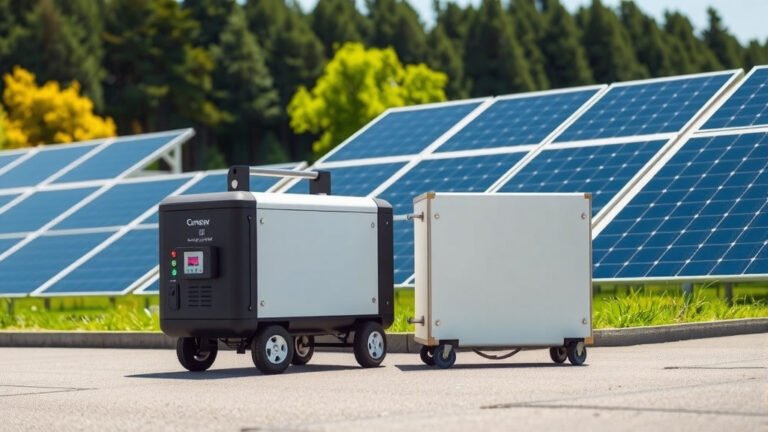

Solar generators can replace gas generators for most residential backup power needs, but they work differently and have distinct trade-offs you should know about.
Your choice between a solar generator and gas generator depends on your power requirements, budget, and how often you need backup electricity.
What Makes Solar Generators Different From Gas Generators
Solar generators don’t actually generate power like gas units do. They’re really just big battery packs that store energy from solar panels or wall outlets.
Gas generators create electricity on demand by burning fuel. Solar generators store electricity for when you need it later.
Think of it like this: a gas generator is like a restaurant kitchen that cooks your meal fresh. A solar generator is like a well-stocked refrigerator with pre-made meals ready to heat up.
How Solar Generators Work
You charge them up ahead of time using solar panels, your car, or a wall outlet. When the power goes out, you flip a switch and use stored energy.
Most solar generators use lithium batteries. These hold their charge for months and can power your devices hundreds of times before wearing out.
How Gas Generators Work
Gas generators burn gasoline, propane, or natural gas to spin an engine. The engine turns a generator head that makes electricity.
You add fuel, pull a cord or press a button, and you get power right away. As long as you have fuel, you get electricity.
Power Output Comparison
Gas generators typically produce more raw power than solar generators in the same price range.
A $1,500 gas generator might give you 7,000 watts. A $1,500 solar generator usually tops out around 2,000-3,000 watts.
What This Means For Your Home
Can you run your whole house? Probably not with most solar generators. But you can keep essentials going: lights, phones, laptops, small appliances, and medical devices.
Gas generators can often power your air conditioner, electric heater, and multiple large appliances at once.
Typical Solar Generator Capacity
- Small units (500-1000Wh): Phones, laptops, small lights for 1-2 days
- Medium units (1000-2000Wh): Refrigerator for 8-16 hours, plus electronics
- Large units (2000Wh+): Several appliances for 1-2 days, limited AC use
Typical Gas Generator Capacity
- Portable (2000-4000W): Refrigerator, lights, electronics, some power tools
- Mid-size (4000-7000W): Most home essentials except central AC
- Large (7000W+): Whole house backup including AC and heating
Cost Analysis Over Time
Solar generators cost more upfront but less over time. Gas generators are cheaper to buy but cost more to run.
| Cost Factor | Solar Generator | Gas Generator |
|---|---|---|
| Initial Purchase | $500-$4,000+ | $200-$2,000+ |
| Fuel Costs | $0 (solar) or minimal (grid charging) | $5-15+ per day of use |
| Maintenance | Nearly zero | $50-200+ per year |
When Solar Generators Save Money
If you use backup power more than a few times per year, solar generators start making financial sense.
Gas costs add up fast. At $10 per day for fuel, you spend $300 after just one month of outages. Plus oil changes, air filters, and tune-ups.
When Gas Generators Make More Sense
For occasional use or high power needs, gas generators often win on pure economics.
If you only need backup power once or twice a year, the lower upfront cost matters more than fuel savings.
Maintenance Requirements
Solar generators need almost no maintenance. Charge them every few months and keep them clean.
Gas generators need regular care like a car: oil changes, air filter replacements, fuel stabilizer, and seasonal tune-ups.
Solar Generator Maintenance
- Charge to 80% every 3-6 months if not used
- Keep batteries at room temperature when possible
- Wipe down solar panels occasionally
- Check connections once per year
Gas Generator Maintenance
- Change oil every 100 hours or annually
- Replace air filter and spark plug yearly
- Add fuel stabilizer for storage
- Run for 30 minutes monthly to keep parts working
- Clean cooling fins and check fuel lines
Noise Levels Matter
Solar generators run completely silent. Gas generators make noise ranging from “loud conversation” to “chainsaw level.”
Your neighbors will notice a gas generator. They won’t know you’re using a solar generator.
Decibel Comparison
Solar generators: 0 decibels (silent operation)
Gas generators: 50-80+ decibels depending on size and load
Many neighborhoods and RV parks have noise rules that ban gas generators during certain hours. Solar generators work anywhere, anytime.
Environmental Impact
Solar generators produce zero emissions during use. Gas generators burn fossil fuels and create exhaust.
From what I read in EPA guidelines, gas generators must stay at least 20 feet from windows and doors to prevent carbon monoxide poisoning.
Indoor Use Safety
You can safely use solar generators indoors. Gas generators kill people every year from carbon monoxide when used inside homes, garages, or enclosed spaces.
The CDC reports dozens of deaths annually from improper generator use during power outages.
Reliability In Different Weather
Gas generators work in any weather as long as you have fuel. Solar generators work in any weather too, but charging depends on sun or grid power.
During extended cloudy periods, solar panels charge slowly. But most people charge their solar generators from wall outlets anyway.
Cold Weather Performance
Lithium batteries lose some capacity in extreme cold but still function. Gas generators can be hard to start in cold weather and need warm-up time.
Both work fine in normal winter conditions with proper care.
Storage And Portability
Solar generators store easily. No fuel, no fumes, no special ventilation needed.
Gas generators need ventilation for stored fuel. Gasoline goes bad and can damage the engine. You need fuel stabilizer and regular maintenance even when not using it.
Moving Them Around
Both come in portable sizes. Large solar generators can be heavy (50+ pounds) but have no liquids to spill.
Gas generators need careful transport to avoid fuel spills. You can’t take them on planes or in many vehicles without special precautions.
Which Should You Choose
Pick a solar generator if you want quiet, clean, low-maintenance backup power for essential devices.
Pick a gas generator if you need maximum power output or can’t afford higher upfront costs.
Solar Generators Work Best For
- Urban and suburban homes with noise restrictions
- RV camping and outdoor activities
- Medical equipment that can’t lose power
- People who want set-it-and-forget-it backup power
- Emergency kits for apartments or condos
Gas Generators Work Best For
- Whole-house backup power needs
- Rural properties with high power demands
- Construction sites and workshops
- Extended outages lasting days or weeks
- Tight budgets for emergency preparedness
Conclusion
Solar generators can replace gas generators for many people, but not everyone. They excel at quiet, clean, maintenance-free power for moderate electrical needs.
Your decision comes down to power requirements and priorities. Do you need maximum watts per dollar? Choose gas. Do you want convenience, quiet operation, and zero maintenance? Choose solar.
Both have earned their place in backup power solutions. The best generator is the one that matches your specific needs and budget.
Can solar generators run air conditioning units?
Most solar generators can run small window AC units or portable AC for limited time, but they struggle with central air systems that need 3,000+ watts to start up.
How long do solar generator batteries last?
Lithium batteries in solar generators typically last 2,000-6,000 charge cycles, which equals 5-15 years of normal use depending on how often you drain and recharge them.
Do solar generators work during winter months?
Solar generators work fine in winter, but solar panel charging is slower due to shorter days and weaker sun. You can still charge them from wall outlets or car chargers year-round.
What size solar generator do I need for my refrigerator?
A typical refrigerator needs 150-400 watts while running. Choose a solar generator with at least 1,000Wh capacity to run your fridge for 8-12 hours, accounting for startup power spikes.
Are solar generators worth the higher upfront cost?
Solar generators pay for themselves over time through zero fuel costs and minimal maintenance if you use backup power regularly. For occasional use, gas generators offer better short-term value.