What Is a Shunt Battery Monitor?
A shunt battery monitor tracks current flowing into and out of a battery through a small, low-resistance resistor called a shunt. It combines that current data with battery capacity settings to estimate the charge remaining.
On this page (8 sections)
- What is a shunt battery monitor?
- How does a shunt monitor track current and remaining charge?
- What information can a shunt battery monitor show?
- How is a shunt installed in a battery system?
- What can make a battery monitor's charge estimate inaccurate?
- How do you choose a shunt monitor for your battery?
- Is a Bluetooth shunt monitor useful?
- What should you remember about shunt battery monitors?
A shunt battery monitor tracks current entering and leaving a battery through a small resistor called a shunt, then uses that data to estimate remaining charge. It can show how much power your system uses and how charging changes the battery's state of charge.
A voltage reading alone gives only a rough picture of battery charge, especially while the battery is charging or powering a load. A shunt monitor adds current tracking over time, which makes it useful for deep-cycle batteries in RVs, boats, and off-grid systems.
What is a shunt battery monitor?
A shunt battery monitor is a meter that measures current through a known low-resistance shunt installed in the battery circuit. The monitor reads the small voltage difference across the shunt and converts it into a current reading.
The display unit usually sits where you can see it, while the shunt is wired near the battery. The wiring arrangement matters: if a load or charger bypasses the shunt, the monitor may not count that current.
If you're still comparing battery types, start with what a deep cycle battery is. A shunt monitor is especially useful when you need to follow repeated charging and discharging rather than just check voltage once.
How does a shunt monitor track current and remaining charge?
The shunt creates a tiny voltage drop as current passes through it. The monitor measures that drop and calculates current direction and amount, showing whether the battery is charging or supplying power.
To estimate remaining charge, many monitors add up current over time and compare the result with the battery capacity setting. For example, current drawn from the battery reduces the displayed charge, while current flowing back in increases it.
This estimate depends on correct setup. Enter the battery capacity and other settings requested by the monitor's manual, and make sure the monitored loads and charging sources are wired so their current passes through the shunt.
What is the difference between a shunt monitor and a voltmeter?
A voltmeter reads battery voltage at that moment. A shunt monitor measures current flow as well as voltage, and can use the current history to estimate capacity remaining.
Voltage still helps you spot broad changes, but it doesn't show how much current a device is drawing. A small voltage change under load can hide substantial energy use, so current information can make power planning clearer.
The bayite meter combines voltage, current, active power, and energy readings on one LCD. Its listed current range is 0–100A, and its voltage range is DC 8–100V.
This is a fit to consider if you want those readings together for an indoor DC project. bayite notes that the display and shunt are included, but wires and accessories are not, and that the unit is for indoor applications.
What information can a shunt battery monitor show?
A shunt monitor can show voltage, current, and an estimate of battery capacity, though the available readings vary by model. Some also track energy consumed or provide alarms when battery capacity crosses a set level.
Use the display to answer practical questions: Is the battery charging right now? How much current is a load drawing?
Has the system used more energy than expected since the last charge?
A monitor doesn't replace battery care or system checks. If your setup has a sudden drop in performance, inspect connections and loads, then use a suitable tester when you need to assess battery condition.
How is a shunt installed in a battery system?
A shunt is installed in the battery circuit so current passes through it before reaching the loads or charging sources being monitored. Many systems place it on the negative side, but you should follow the exact wiring diagram supplied with the monitor.
Disconnect power and follow the battery and monitor instructions before wiring. A wrong connection can damage equipment or produce misleading readings, and some systems carry high current even at low voltage.
Route every monitored load and charger through the system side of the shunt. If a connection goes directly to the battery and skips the shunt, its current won't be included in the monitor's estimate.
If you're choosing a unit, compare the best battery monitor with a shunt for features and system fit. Check voltage and current limits, included cables, display location, and whether the monitor supports your battery type.
What can make a battery monitor's charge estimate inaccurate?
A monitor's estimate can be off if the battery capacity setting is wrong, current bypasses the shunt, or the system hasn't been configured as directed. Battery age and condition can also affect how much usable energy it holds compared with its original capacity.
Some monitors need a full-charge synchronization or other setup step to establish a useful reference point. Follow the maker's instructions for configuring battery capacity and resetting or synchronizing the state-of-charge reading.
Treat the percentage as an estimate, not a guarantee that the battery will run a device for a fixed number of hours. Actual runtime depends on the load, battery condition, temperature, and other system factors.
How do you choose a shunt monitor for your battery?
Choose a shunt monitor that matches your battery system's voltage and expected current, then check whether its settings support your battery chemistry. Confirm the shunt's rating, included wiring, display features, and installation steps before buying.
The Renogy 500A Battery Monitor is designed for 12V, 24V, and 48V battery systems, with a 500A shunt. Renogy says it supports several battery types and displays voltage, current, consumed power, battery capacity, and battery degradation rate.
Consider this monitor if you want a separate display and a long cable to view battery status from a distance. Check the wiring diagram and confirm that its operating range and battery settings suit your system.
A battery tester serves a different purpose. The ANCEL BA101 checks 12V automotive batteries and reports readings such as state of health, state of charge, and voltage; it is not for lithium batteries.
For a tester focused on lithium batteries, see our guide to a 12V lithium battery tester. If your battery is part of a solar generator, our overview explains what a LiFePO4 battery in a solar generator is.
Is a Bluetooth shunt monitor useful?
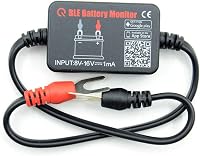
A Bluetooth shunt monitor can send readings to a phone, which helps when the battery or display is out of sight. App features vary, so check which readings are available and whether the connection works at the distance you need.
Bluetooth doesn't change how the shunt measures current. The shunt still needs to be wired correctly, and the monitor still needs accurate battery settings to estimate remaining charge.
Compare options in our guide to the best Bluetooth battery monitors with shunts. For a wired display, see the best 12V lithium battery monitor if you're monitoring a compatible 12V lithium system.
What should you remember about shunt battery monitors?
A shunt battery monitor measures current through a resistor and uses those readings over time to estimate remaining battery charge. It gives a fuller view of a battery system than voltage alone, provided the setup captures the current paths you need to track.
Choose a monitor with a shunt rating and voltage range that fit your system, then install and configure it by its manual. Use a tester when you need to assess battery condition, and use a monitor to follow current and energy during regular operation.
Frequently asked questions
What does a shunt battery monitor measure?
A shunt monitor measures current as it flows through the shunt, along with battery voltage. Many models use that information to estimate energy used and remaining battery capacity.
The exact readings and battery settings depend on the monitor, so follow its manual and enter the correct battery capacity.
Does a shunt battery monitor need to be installed on the negative cable?
Many shunt systems place the shunt in the battery's negative path, but follow the monitor's wiring diagram because layouts differ. The key is that the loads and charging sources the monitor needs to track must connect on the system side of the shunt, rather than bypassing it.
Can a shunt monitor show the exact battery charge?
It estimates remaining charge from measured current and configured battery capacity; the display is not a direct chemical measurement of stored energy. Incorrect capacity settings, missed current paths, or changes in battery condition can make the estimate less useful, so configure and calibrate it as its manual directs.
Is a shunt battery monitor the same as a battery tester?
No. A shunt monitor tracks current over time while a battery tester checks battery condition or performance using a test procedure.
A monitor helps you see energy use in a running system, while a tester can help assess whether a battery is still performing as expected.