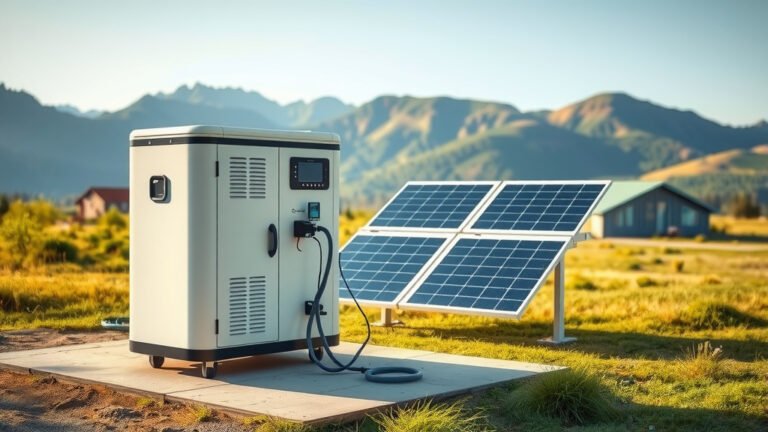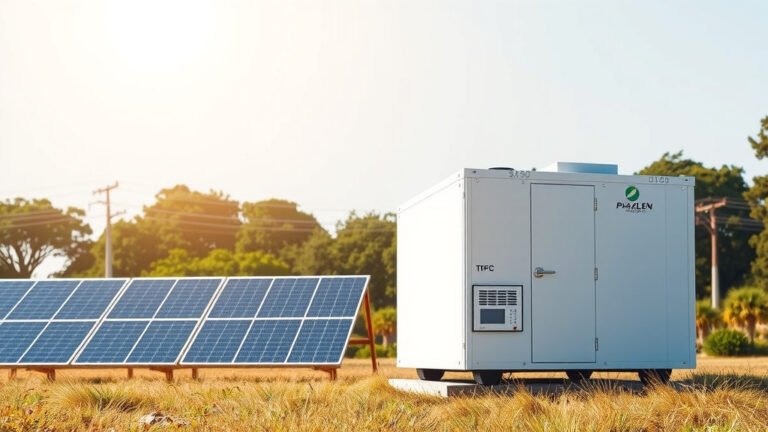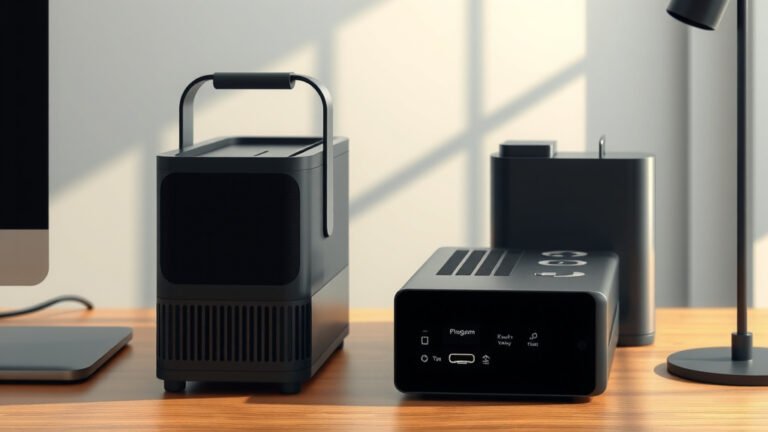
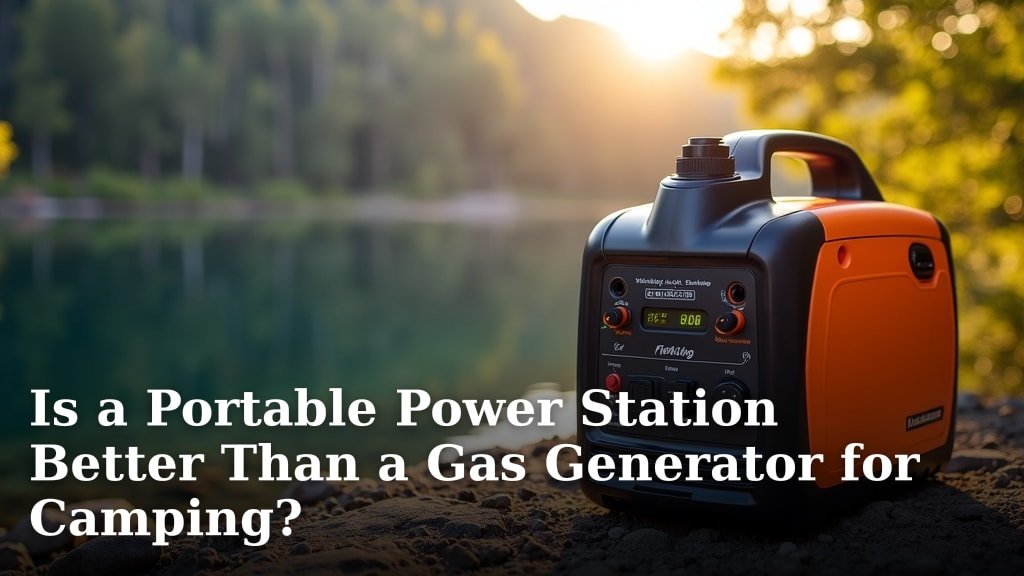
A portable power station is generally better than a gas generator for camping if you value quiet operation, clean energy, and minimal maintenance. We found that gas generators offer more raw power for heavy-duty appliances, but they come with significant drawbacks for typical campers. Your choice depends on your specific camping needs and priorities.
You’re probably wondering which power source will best suit your next outdoor adventure. Do you want something quiet and easy to use, or do you need serious horsepower? Many campers prioritize convenience and a peaceful environment over brute force. We’ve found that both options have their place in the great outdoors.
- Portable power stations are quiet, clean, and low maintenance.
- Gas generators offer more power for heavy use but are noisy.
- Consider your camping style and power needs.
- Power stations are great for charging devices and small appliances.
- Gas generators might be better for power tools or entire RVs.
Let’s walk through the key differences so you can make the best choice for your camping trips.
Portable Power Station vs. Gas Generator: The Camping Showdown
When you’re heading out to the wilderness, choosing between a portable power station and a gas generator comes down to your priorities. Each has distinct advantages for different camping styles. Let’s break down what truly sets them apart.
Power Output and Capacity: How Much Juice Do You Need?
One of the biggest differences is the sheer amount of power each can deliver. Gas generators are often the champions of raw power, especially for larger needs. Portable power stations, while impressive, typically have limits.
Gas Generators: Brute Force for Heavy Loads
Gas generators often boast higher wattage. This means they can run more powerful appliances simultaneously. Think air conditioners, microwaves, or even power tools at a campsite. We found that a typical camping gas generator can offer anywhere from 1,000 to 5,000 watts of continuous power.
This higher output is excellent if you’re planning to power an entire RV or multiple high-draw devices. They’re designed for sustained, heavy use. You can plug in almost anything you’d use at home, within their wattage limits.
Portable Power Stations: Smart Power for Essential Devices
Portable power stations, on the other hand, usually focus on efficiency and smaller loads. They typically range from 200 to 2,000 watts of output. This is perfect for charging phones, laptops, cameras, drones, and running small appliances like portable refrigerators or fans.
They shine when you need power for essentials and don’t plan on bringing your entire kitchen with you. Their capacity, measured in watt-hours (Wh), tells you how long they can run certain devices. A 1,000 Wh power station, for example, could run a 100-watt device for about 10 hours.
Noise and Emissions: Enjoying the Sounds of Nature (or Not)
Imagine sitting by the campfire, listening to the crickets. Now imagine a loud engine droning in the background. Your choice of power source profoundly impacts the peace and quiet of your campsite.
The Quiet Advantage of Portable Power Stations
Portable power stations operate almost silently. They use batteries and inverters, producing no engine noise. This means you can enjoy the natural sounds of your surroundings. Your neighbors at the campsite will appreciate the quiet, too.
Because they run on electricity, there are zero exhaust fumes. This makes them safe to use inside tents or enclosed spaces, provided they have proper ventilation to dissipate any heat. They offer a much cleaner camping experience overall.
Gas Generators: The Rumble and the Fumes
Gas generators, by their very nature, are noisy. They have internal combustion engines that create significant sound. Many campsites have decibel limits, and some generators may exceed these, leading to potential fines or complaints. We found that typical camping generators range from 50 to 70 decibels, which is comparable to a loud conversation or a vacuum cleaner (CDC).
Beyond the noise, they produce carbon monoxide and other exhaust fumes. You should never use a gas generator inside a tent, RV, or any enclosed space. Proper ventilation is critical for safety, as carbon monoxide is a colorless, odorless, and deadly gas (NIH). This limits where and how you can operate them at your campsite.
Fuel and Maintenance: Simplicity vs. Ongoing Chores
Getting your power source ready for a trip and keeping it running involves different levels of effort. Some options are much easier to manage than others.
Portable Power Stations: Plug-and-Play Convenience
These devices are incredibly user-friendly. You simply charge them before your trip, typically from a wall outlet, car charger, or solar panels. Once charged, they’re ready to go. There’s no fuel to store or pour, and no engine to maintain.
Maintenance is minimal: keep it clean, store it in a dry place, and charge it periodically to maintain battery health. You don’t have to worry about oil changes, spark plugs, or fuel filters. This “set it and forget it” nature is a huge plus for many campers.
Gas Generators: Fueling Up and Tuning Up
Gas generators require liquid fuel, usually gasoline. This means you need to carry extra fuel cans, which take up space and can be heavy. Storing gasoline safely requires care, as it’s flammable. You also need to consider fuel consumption; bigger generators use more gas.
They also demand more maintenance. We found that gas generators need regular oil changes, spark plug checks, and air filter cleaning. If you don’t use them for extended periods, you might need to add fuel stabilizers or drain the fuel system to prevent issues. It’s a bit like owning a small engine; it needs regular attention to run reliably.
Portability and Setup: Getting Your Power Where You Need It
How easy is it to move your power source around the campsite? Can you set it up quickly, or does it require a lengthy process?
Power Stations: Lightweight and Ready to Go
Many portable power stations are designed to be carried easily. Some models even have built-in handles and weigh as little as 5-10 pounds for smaller units, up to 30-50 pounds for larger ones. This means you can easily move them from your car to your tent, or even carry them on short hikes to a scenic spot.
Setup is virtually instant. You just turn it on and plug in your devices. There’s no assembly, no pull-starting, and no warm-up time. This makes them ideal for spontaneous adventures or when you need power in a hurry.
Gas Generators: Heavier and More Involved
Gas generators tend to be heavier and bulkier. A typical camping generator might weigh anywhere from 50 to 150 pounds or more. While many have wheels, they aren’t as easy to move around by hand. Their weight often means they stay put once you’ve placed them.
Setup can also be more involved. You need to position them on a level surface, away from tents and ventilation, check the oil, add fuel, and then typically pull-start them. This takes a bit more effort and planning than simply pressing a button.
Cost Considerations: Initial Investment and Long-Term Value
Both options represent an investment. It’s not just about the sticker price; it’s about what you’ll spend over time.
The Price Tag of Power Stations
Initially, portable power stations can seem more expensive per watt than gas generators. Entry-level models might start around $200-$300, with larger, more powerful units reaching $1,000-$2,000 or more. However, their operating costs are very low.
You pay for the electricity to charge them, which is generally inexpensive. If you add solar panels, your fuel cost can drop to zero. Their long lifespan and minimal maintenance mean they can be a cost-effective choice over time.
Gas Generators: Upfront Savings, Ongoing Expenses
Gas generators often have a lower initial purchase price for comparable wattage. You might find a decent camping generator for $300-$800. But don’t forget the recurring costs. You’ll constantly need to buy gasoline, which adds up. We found that fuel costs can easily become a significant expense over many camping trips.
Add to that the cost of oil, spark plugs, filters, and potential repairs, and the long-term cost of ownership can quickly rival or even exceed a portable power station. Also, fuel prices can fluctuate, making your operating costs less predictable.
Environmental Impact: Eco-Friendly Choices for Campers
As campers, we often value nature. The environmental footprint of our gear is becoming an increasingly important factor for many.
| Feature | Portable Power Station | Gas Generator |
|---|---|---|
| Noise Level | Near Silent | Loud (50-70 dB) |
| Emissions | Zero Emissions | Harmful Exhaust Fumes |
| Fuel Type | Electricity (Battery) | Gasoline |
| Maintenance | Minimal | Regular (oil, filters) |
| Portability | Very High (Lightweight) | Moderate (Heavy, bulky) |
| Best Use | Charging devices, small appliances | High-draw appliances, RVs |
| Safety Indoors | Yes (ventilated) | No (Carbon Monoxide Risk) |
The Green Choice: Power Stations
Portable power stations are often seen as the more environmentally friendly option. They produce zero direct emissions during operation. When charged with renewable sources like solar panels, their environmental impact is dramatically reduced. Even when charged from the grid, their efficiency can be quite high.
Many components are also recyclable, and battery technology continues to improve, leading to greener manufacturing processes. If you’re trying to minimize your carbon footprint while enjoying the outdoors, a power station is a strong contender.
Gas Generators: A Larger Footprint
Gas generators rely on fossil fuels, contributing to air pollution and greenhouse gas emissions. The combustion process releases carbon dioxide, nitrogen oxides, and particulate matter into the atmosphere. This is a significant concern for environmentally conscious campers.
While modern generators are becoming more fuel-efficient and cleaner, they still use non-renewable resources. The transport and storage of gasoline also carry environmental risks, like potential spills.
Making Your Choice: A Quick Checklist
To help you decide, consider these points based on your typical camping adventures:
- Do you prioritize quiet camping and fresh air?
- Are you mainly charging small devices and running low-wattage appliances?
- Do you prefer minimal maintenance and easy setup?
- Is portability and lightweight gear important for your trips?
- Are you sensitive to environmental impact and fuel costs?
- Do you camp in areas with noise restrictions?
If you answered “yes” to most of these questions, a portable power station is likely your best bet. If you need serious power for large appliances or an RV, and you don’t mind the noise and maintenance, a gas generator might still be the right choice for you.
Conclusion
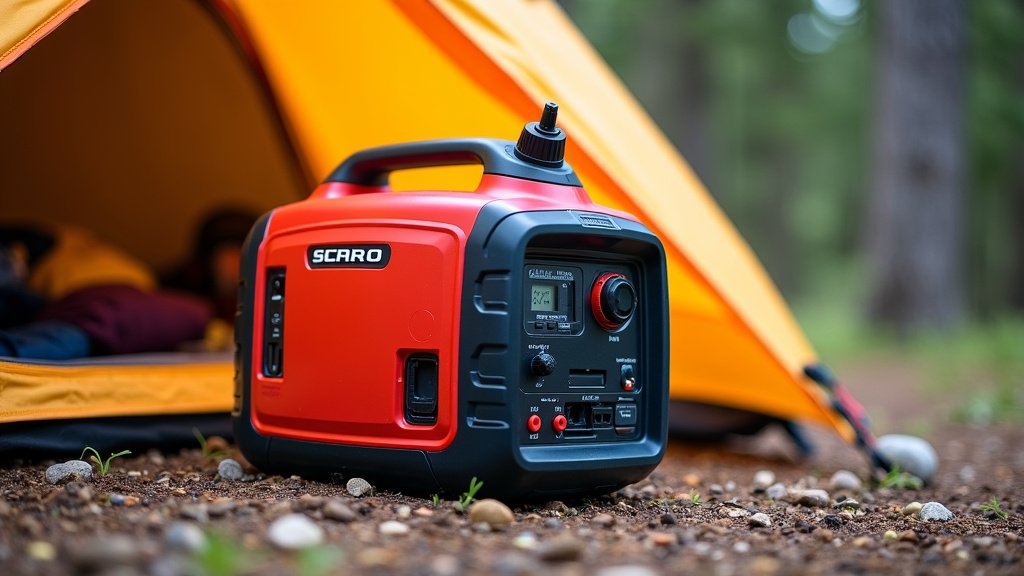
Deciding between a portable power station and a gas generator for camping boils down to your personal priorities. If peace, quiet, and eco-friendliness are at the top of your list, a portable power station is your ideal companion for charging devices and running small appliances. We found they offer unmatched convenience and minimal hassle.
However, if your adventures demand serious wattage for large RV appliances or power tools, a gas generator might still be the practical choice. Weigh your specific power needs against the noise, maintenance, and environmental impact. Choose the option that best enhances your unique outdoor experience.
Frequently Asked Questions
Are portable power stations really silent?
Yes, portable power stations operate with virtually no noise. They use batteries and inverters, so there are no moving engine parts to generate sound. This allows you to enjoy the natural sounds of your campsite without any disruptive humming or roaring.
Can a portable power station run a coffee maker?
Many portable power stations can run a typical coffee maker, but it depends on the coffee maker’s wattage and the power station’s output. Check your coffee maker’s power draw and ensure your power station has a continuous output capacity that exceeds it. Smaller travel coffee makers are usually fine.
How long do portable power stations last on a single charge?
The runtime of a portable power station varies greatly based on its capacity (measured in Wh) and the power draw of your devices. For example, a 1000Wh power station running a 100-watt device would theoretically last about 10 hours. Lower-wattage devices will run much longer.
Is it safe to use a gas generator in a campground?
You can use a gas generator in a campground, but always follow campground rules regarding quiet hours and decibel limits. Crucially, position it outdoors in a well-ventilated area, far from tents or RV windows, to prevent carbon monoxide poisoning. Never use it inside any enclosed space.
Can I charge a portable power station with solar panels while camping?
Absolutely! Most portable power stations are designed to be compatible with solar panels. This is a great way to recharge your unit while off-grid, extending your power supply indefinitely without needing an AC outlet or another power source. Solar charging times vary based on panel size and sunlight. Understanding the factors that influence solar generator charging time can help you plan your off-grid power strategy.