What Is the Difference Between Jackery and Ecoflow While Camping?
On this page (7 sections)
For camping, the main difference between Jackery and EcoFlow is their focus: Jackery often shines for its simplicity and portability, making it great for casual trips, while EcoFlow usually offers more power and advanced features, appealing to those needing serious energy. Both brands provide excellent portable power stations, but they cater to slightly different needs when you’re out in nature.
When you’re trying to pick between these two giants for your next adventure, you’re looking for the best fit for your gear and your trip style. Do you need something light for charging your phone, or a powerhouse for running a mini-fridge? Understanding these core differences helps you make a smart choice for your camping setup, ensuring you have reliable power when you need it most.
- Jackery often focuses on user-friendliness.
- EcoFlow typically offers higher power outputs.
- Consider your specific camping power needs.
- Think about budget and available features.
Ready to figure out which portable power station is your perfect camping companion? Let’s dive into what makes Jackery and EcoFlow stand out from each other.
Comparing Jackery vs. EcoFlow for Your Camping Power Needs
When you’re packing for a camping trip, deciding on a portable power station can feel like choosing between two trusty friends. Both Jackery and EcoFlow have carved out strong reputations, but they definitely have different personalities. Let’s look closer at what makes each brand tick and how that impacts your time outdoors.
Understanding Each Brand’s Core Philosophy
You might wonder, do these companies have a specific goal? We found that, yes, they do. Their design choices and features often reflect these core ideas.
Jackery: Simplicity and Portability for the Casual Adventurer
Jackery often focuses on making things easy to use. Think of them as the friendly, no-fuss option. Their power stations are generally lighter and designed for straightforward charging. We’ve seen many campers gravitate towards Jackery for weekend trips or when they only need to power smaller devices like phones, lights, or even a small fan (Outdoor Gear Lab).
The controls are usually simple, and setup is quick. You won’t find a lot of complex settings, which is great if you just want to plug in and go. This makes Jackery a fantastic choice if you value portability above all else and aren’t planning to run power-hungry appliances.
EcoFlow: Power and Features for the Tech-Savvy Camper
EcoFlow, on the other hand, often aims for more power and advanced technology. They’re like the high-tech wizard of portable power. If you need to run a portable fridge, an electric grill, or even power tools at your campsite, EcoFlow typically offers solutions with higher wattage outputs and larger battery capacities.
They often include features like faster charging, more diverse port options, and even expandable battery systems. This extra capability comes with a bit more complexity and often, a higher price tag. EcoFlow is great for those longer trips or when you want to bring a few more creature comforts from home.
Key Differences in Performance and Features
Beyond their general approach, there are concrete differences in how Jackery and EcoFlow perform. These aspects can truly sway your decision.
Battery Capacity and Power Output
This is where you’ll see some of the biggest contrasts. How much juice do you really need?
- Jackery: Their models often range from smaller units (like 240Wh) perfect for charging phones and cameras, up to larger ones (like 2000Wh) that can handle some basic appliances. They generally offer sufficient AC output for most common camping gadgets.
- EcoFlow: You’ll find many EcoFlow units starting at similar capacities but quickly scaling up to much larger options, sometimes exceeding 3600Wh for a single unit, and even more with expandable batteries. Their AC output can be significantly higher, allowing you to run more demanding electronics simultaneously.
For example, if you just need to keep your phone alive, a smaller Jackery might be perfect. But if you’re running a CPAP machine overnight and a cooler all day, EcoFlow often provides the necessary oomph.
Charging Speed and Methods
How quickly can you recharge your power station in the wild? This is a big deal if you’re off-grid for extended periods.
- Jackery: They offer decent charging speeds, usually through wall outlets, car chargers, and their own solar panels. Recharging times are generally competitive for their size.
- EcoFlow: This is an area where EcoFlow often shines. Many of their models boast incredibly fast AC charging directly from a wall outlet (sometimes from 0-80% in under an hour). They also support robust solar charging and car charging. We found that their X-Stream technology makes a noticeable difference if you need a quick turnaround on power (CNET review data points to this).
If you have limited time to recharge, EcoFlow’s speed could be a game-changer. If you’re trickle charging with solar for days, perhaps it’s less critical.
Portability and Durability
Your power station needs to go where you go, and survive the journey.
- Jackery: Known for being relatively lightweight and having sturdy, integrated handles. Many of their models are designed for easy grab-and-go adventures. The construction is generally solid, but perhaps not as ruggedized as some higher-end options.
- EcoFlow: While some EcoFlow units are compact, their larger, more powerful stations can be quite heavy. They often feature robust builds and sometimes even wheeling kits for easier transport of bigger models. They feel built to withstand tougher conditions.
Consider the terrain you’ll cover. Are you backpacking a few miles to your campsite, or driving right up to it? This greatly impacts your portability needs.
Features and User Experience Considerations
Beyond the raw specs, how does it feel to actually use these power stations?
Output Ports and Connectivity
Do you have enough plugs for everything?
- Jackery: They typically offer a good range of standard ports: AC outlets, USB-A, USB-C, and 12V car ports. They usually cover the essentials for most campers.
- EcoFlow: Often provides a wider array of ports, including more high-power USB-C PD (Power Delivery) ports, more AC outlets, and sometimes even specialized DC ports. They also frequently integrate app control for remote monitoring and management, which Jackery typically does not offer.
If you have many different devices or need advanced control, EcoFlow might offer a better experience. If simplicity is key, Jackery keeps it straightforward.
Expandability and Ecosystem
What if your power needs grow over time?
- Jackery: Generally, their units are standalone. You buy a certain capacity, and that’s what you have. While you can connect multiple solar panels, you typically can’t expand the battery capacity of a single power station unit.
- EcoFlow: Many of their larger Delta series power stations are designed to be expandable. You can often purchase extra battery packs to essentially double or triple your total capacity. This is a huge advantage if you anticipate needing more power down the road without buying a whole new unit.
Are you buying for today, or thinking about future adventures? EcoFlow offers more flexibility for long-term growth.
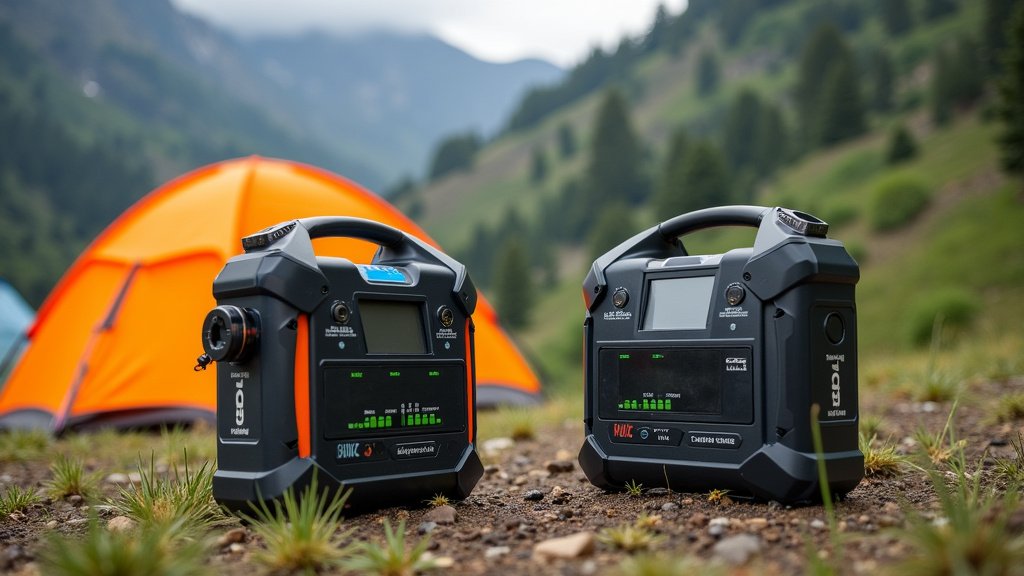
Making Your Choice: A Quick Comparison Table
To help you see the differences at a glance, here’s a brief table summarizing some common distinctions:
| Feature | Jackery (General Tendency) | EcoFlow (General Tendency) |
|---|---|---|
| Battery Capacity | Good range, often smaller to mid-size. | Very wide range, from small to very large. |
| Power Output | Sufficient for essential camping gear. | Higher output, good for power-hungry appliances. |
| Charging Speed | Competitive for their size. | Often significantly faster AC charging. |
| Portability | Lighter, often more “grab-and-go.” | Heavier for larger units, robust build. |
| Expandability | Generally standalone units. | Many models offer expandable battery options. |
| Price Point | Often slightly more budget-friendly for similar capacities. | Can be higher due to advanced features and power. |
| App Control | Rarely included. | Common on many models for remote monitoring. |
Which One Is Right for Your Camping Style?
Ultimately, the “best” choice really depends on you and your camping habits. It’s not about one being definitively better, but about which one fits your specific needs.
Consider Your Camping Habits
Think about your typical trip. Are you a minimalist, or do you bring the kitchen sink?
- Weekend Warrior / Light Camper: If you’re doing short trips, primarily charging phones, headlamps, and maybe a small fan, a Jackery unit might be your ideal companion. Its simplicity and portability make it excellent for these scenarios. You won’t feel burdened by extra weight or complexity.
- Extended Trips / Glamping / RV Users: For longer stays, powering a mini-fridge, a CPAP machine, or multiple devices, EcoFlow often provides the necessary power and features. Its faster charging and expandable capacity can be lifesavers when you’re off-grid for days.
A Checklist for Your Decision
Before you buy, run through these questions. They can help clarify what’s most important to you:
- What specific devices do I need to power (e.g., phone, laptop, fridge, lights)?
- How long do I need power for (e.g., one night, a week)?
- How important is fast recharging to me?
- Will I need to expand my power capacity in the future?
- Is budget a major concern, or am I willing to invest more for features?
- How much weight am I willing to carry to my campsite?
By answering these, you’ll likely find a clear path to your perfect portable power companion. Remember, both brands make reliable products; it’s about finding your match.
Conclusion
Choosing between Jackery and EcoFlow boils down to understanding your personal camping style and power demands. If you prioritize portability and simplicity for casual trips or smaller gadgets, Jackery is often your ideal match. However, if you need serious power for appliances, faster charging, or future expandability for longer adventures, EcoFlow likely offers the robust features you’re looking for. Take a moment to assess your gear and trip duration, and you’ll easily find the perfect power companion to enhance your outdoor experiences.
Frequently Asked Questions
Is Jackery or EcoFlow better for RV camping?
For RV camping, EcoFlow often holds an advantage due to its higher power output, faster charging capabilities, and expandable battery options. These features are very helpful for running multiple appliances or for extended stays off-grid. However, a smaller Jackery can still be great for supplementing power for basic devices.
Can I use solar panels from one brand with a power station from another?
Generally, it’s best to use solar panels from the same brand as your power station to ensure compatibility and optimal performance. While some third-party adapters exist, using mismatched equipment can lead to inefficient charging or potential damage. Always check the voltage and connector types if you’re considering mixing brands.
Which brand offers better customer support or warranty?
Both Jackery and EcoFlow generally offer competitive warranties (typically 2-5 years, depending on the model) and customer support. We found that specific experiences can vary by region and individual case. It’s always a good idea to check recent customer reviews and the brand’s official warranty policy before making a purchase.
Are Jackery and EcoFlow power stations safe to use indoors?
Yes, both Jackery and EcoFlow portable power stations are generally safe for indoor use. They produce no emissions and operate quietly, making them suitable for cabins, RVs, or even as backup home power. Just ensure proper ventilation if charging with solar panels indoors or in a confined space.
Do these power stations require much maintenance?
Neither Jackery nor EcoFlow power stations require extensive maintenance. We found that general care includes keeping them clean, avoiding extreme temperatures, and fully charging them at least every 3-6 months if stored for long periods. This helps to prolong battery life and ensure they’re ready for your next adventure.