9 Best Power Stations for CPAP Camping (October 2026)
The best power stations for camping with a CPAP include the BLUETTI Portable Power Station AC180 for multi-night capacity, the Jackery Explorer 1000 v2 Portable Power Station for high-capacity car camping, and the Jackery Explorer 300 Portable Power Station for lighter short trips.
On this page (7 sections)
- Which power stations fit CPAP camping needs?
- How do you estimate CPAP runtime at a campsite?
- Which CPAP settings affect battery life most?
- How should you plan recharging between camping nights?
- Is an AC or DC power station better for CPAP camping?
- What else should you power from the station?
- Which power station should you choose for CPAP camping?
The BLUETTI Portable Power Station AC180 is the best power station for CPAP camping when you need the most capacity in this group, with 1,152Wh. For a lighter trip, the Jackery Explorer 300 weighs 7.5 lb and holds 292Wh, but your CPAP's settings determine whether that is enough for the night.
A CPAP battery plan starts with your own machine, not a generic runtime claim. Heated humidification, a heated hose, pressure settings and the difference between AC and DC power can all affect how long a station lasts.
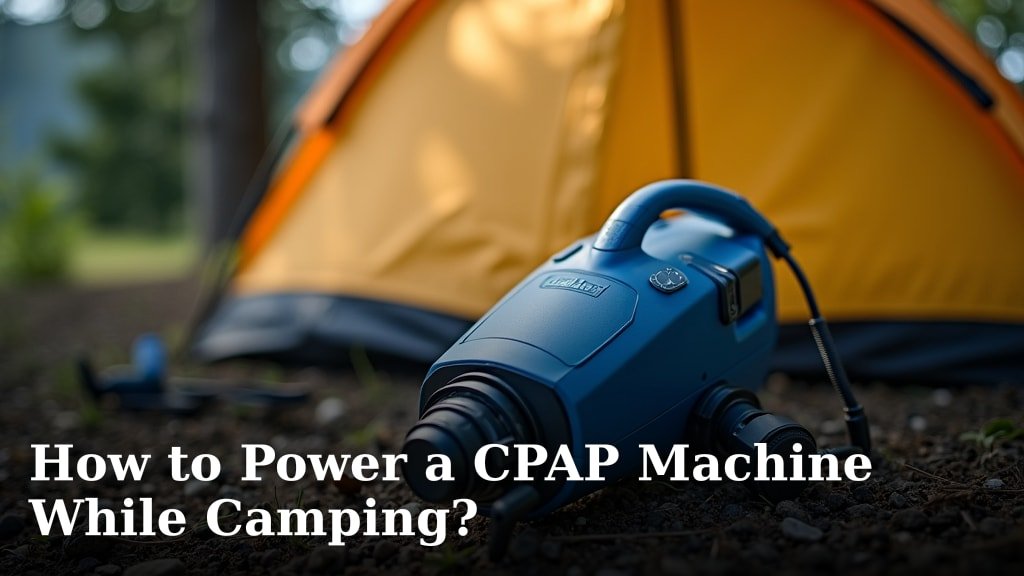
For a broader setup walkthrough, see How to Power a CPAP Machine While Camping?. If you are still sizing your whole camp setup, our How Much Capacity Do I Need For Camping? guide explains how to account for multiple devices.
Our picks at a glance
-
1
 Best for multi-night capacity
BLUETTI Portable Power Station AC180
9.7/10 our score
See it on Amazon -
2
 Best for high-capacity car camping
Jackery Explorer 1000 v2 Portable Power Station
9.6/10 our score
See it on Amazon -
3
 Best for lighter short trips
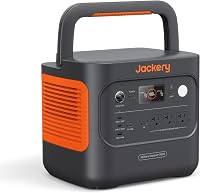
Jackery Explorer 300 Portable Power Station
9.5/10 our score
See it on Amazon
- 4
 Check it
Anker SOLIX C300 DC Portable Power Station
Best for DC-powered CPAP setups - 5
 Check it
Anker SOLIX C300 Portable Power Station
Best for compact AC and USB power - 6
 Check it
ALLWEI Portable Power Station 300W
Best for several charging options - 7
 Check it
EnginStar Portable Power Station 300W 296Wh Solar
Best for two AC outlets in a small unit - 8
 Check it
Westinghouse iGen400s 400 Watt
Best for compact daytime essentials - 9
 Check it
MARBERO Portable Power Station 150Wh Camping Solar
Best for brief low-draw use
Which power stations fit CPAP camping needs?
The best fit depends on the CPAP's real energy use, the number of nights between recharges and how much weight you can carry. The picks below are ordered by score, with capacity, outputs and recharge choices weighed against campsite use.
We compared the published capacity, output types, weight and recharge options for each model. Our score weighs specs, features and buyer feedback against what you're shopping for.
| Product | Best for | Capacity | AC output | Weight | Our score |
|---|---|---|---|---|---|
| BLUETTI Portable Power Station AC180 | multi-night capacity | 1,152Wh | 1,800W | 37.4 lb | 9.7 |
| Jackery Explorer 1000 v2 Portable Power Station | high-capacity car camping | 1,070Wh | 1,500W | 23.8 lb | 9.6 |
| Jackery Explorer 300 Portable Power Station | lighter short trips | 292Wh | 7.5 lb | 9.5 | |
| Anker SOLIX C300 DC Portable Power Station | DC-powered CPAP setups | 288Wh | 2.8 kg | 9.3 | |
| Anker SOLIX C300 Portable Power Station | compact AC and USB power | 288Wh | 300W total | 4.13 kg | 9.2 |
| ALLWEI Portable Power Station 300W | several charging options | 256Wh | 6.4 lb | 8.9 | |
| EnginStar Portable Power Station 300W 296Wh Solar | two AC outlets in a small unit | 296Wh | 300W | 6.5 lb | 8.8 |
| Westinghouse iGen400s 400 Watt | compact daytime essentials | 183Wh | 5 lb | 8.3 | |
| MARBERO Portable Power Station 150Wh Camping Solar | brief low-draw use | 150Wh | 100W | 2.9 lb | 8.0 |
BLUETTI Portable Power Station AC180: Best for multi-night capacity
BLUETTI Portable Power Station AC180: Best for multi-night capacity
- 1,152Wh capacity
- 1,800W output
- 500W solar input
- 37.4 lb
The largest stated capacity in this group gives you more energy to budget for CPAP use and other camp devices. Its 500W solar input can support recharging when conditions and compatible panels allow.
Pros
- Largest stated capacity here
- 500W solar input
- AC and car charging cables included
Cons
- Heaviest pick here
- Actual CPAP runtime depends on machine settings and draw
The 1,152Wh capacity gives the AC180 the largest stated energy reserve among these picks. BLUETTI lists 1,800W output, 8 outlets and a 500W maximum solar input, which gives a car-camping setup room for the CPAP plus selected camp electronics.
This is the heaviest choice here at 37.4 lb. That tradeoff may work for a vehicle-based campsite, where you can move it from the car to the tent or shelter without carrying it far.
BLUETTI says AC charging can reach a full charge in about an hour at 1,440W input. Solar charging is stated at 2.8 to 3.3 hours with 500W of solar input, but actual time depends on panel conditions and the compatible setup.
The extra capacity can help with a second night or other devices, but it does not guarantee a particular CPAP runtime. Work from your machine's average draw, then leave reserve for settings changes and charging loss.
Jackery Explorer 1000 v2 Portable Power Station: Best for high-capacity car camping
Jackery Explorer 1000 v2 Portable Power Station: Best for high-capacity car camping
- 1,070Wh capacity
- 1,500W AC output
- Three AC ports
- 23.8 lb
This station pairs a large capacity with a lower stated weight than the AC180. Its three pure sine wave AC ports and USB and DC outputs leave room for other campsite devices.
Pros
- 1,070Wh capacity
- Three pure sine wave AC ports
- App offers charging modes
Cons
- Solar charging works only with Jackery panels
- Solar panel is not included
The Explorer 1000 v2 offers 1,070Wh in a 23.8 lb body, less capacity than the AC180 but considerably less weight. Its three pure sine wave AC ports can suit CPAPs that require a standard AC plug, while USB and car outputs can serve smaller devices.
Jackery states 1,500W AC output and 3,000W surge peak. That is more than a typical CPAP needs, so capacity and run time matter more than headline output for this use.
The Explorer 1000 v2 can charge from AC, car power or solar. Solar charging is compatible only with Jackery panels, and the panel is not included.
In the app, Jackery offers an emergency one-hour charge mode and a quiet overnight charging mode. This is a useful option when you can recharge between campsite nights, though you should plan around the station's actual starting battery level and available power source.
Jackery Explorer 300 Portable Power Station: Best for lighter short trips
Jackery Explorer 300 Portable Power Station: Best for lighter short trips
- 292Wh capacity
- 300W rated output
- 7.5 lb
- 100W solar charging option
A compact option for short trips or lower-draw setups where its 292Wh capacity fits the night's needs. It has AC, USB-C, USB-A and car outputs.
Pros
- Lightweight at 7.5 lb
- Multiple output types
- Can recharge from a car or optional solar panel
Cons
- Capacity may not cover a full night for every setup
- Solar panel is sold separately
At 7.5 lb and 292Wh, the Explorer 300 is easier to carry than the large-capacity stations. It has two AC outlets, USB-C, USB-A and a 120W car port, so the right connection depends on the CPAP model and the manufacturer's instructions.
Jackery describes 300W rated output with a 600W peak surge. For a CPAP, check the device's startup and operating draw, and remember that AC conversion reduces the energy available from the battery.
The Explorer 300 can recharge by AC, car port or an optional Jackery solar panel. Jackery gives an estimate of about 3.5 hours with its 100W SolarSaga panel, though sunlight and panel placement affect solar charging.
This pick makes more sense for a single night with a known low-draw setup than for an untested multi-night plan. Use your CPAP's actual power information to decide whether its 292Wh capacity leaves enough reserve.
Anker SOLIX C300 DC Portable Power Station: Best for DC-powered CPAP setups
Anker SOLIX C300 DC Portable Power Station: Best for DC-powered CPAP setups
- 288Wh capacity
- 300W output
- USB-C and car socket ports
- 2.8 kg
This DC-focused model has a car socket and several USB-C ports for compatible gear. Check your CPAP's approved power method and connector needs before choosing a DC-only station.
Pros
- Compact 288Wh capacity
- Multiple USB-C ports
- Supports solar and car recharging
Cons
- No AC outlet stated
- CPAP compatibility depends on the machine and required adapter
The C300 DC holds 288Wh and provides 300W of output through USB-C and a 120W car socket. It has no AC outlet stated, so choose it only if your CPAP supports a compatible DC power method.
Anker says it has two 140W two-way USB-C ports, along with additional USB-C and USB-A ports. The unit weighs 2.8 kg and can recharge through USB-C, a car or a compatible solar panel.
The direct DC route can avoid some AC conversion loss, but compatibility is specific to your CPAP. Confirm the needed voltage, cable and power draw with the machine's manual or manufacturer before connecting it.
For a CPAP that needs its AC power brick, another station in this guide may be a better match. The C300 DC is best reserved for a verified DC setup and a runtime that fits its 288Wh capacity.
Anker SOLIX C300 Portable Power Station: Best for compact AC and USB power
Anker SOLIX C300 Portable Power Station: Best for compact AC and USB power
- 288Wh capacity
- 300W output
- Three AC outlets
- 25 dB stated noise
Three AC outlets make this compact station suitable for CPAPs that need a wall-style plug, provided the machine's power draw is within its limits. It also offers USB-C, USB-A and car outputs.
Pros
- Three AC outlets
- 80% wall recharge in 50 minutes stated
- Solar, car and USB-C recharge options
Cons
- 288Wh capacity calls for careful runtime planning
- Solar panel compatibility has specific limits
The standard C300 adds three AC outlets to a compact 288Wh station. Its total AC output is 300W, so confirm that the CPAP and any other device plugged in together stay within that limit.
The station also has USB-C, USB-A and a 120W car socket. Anker gives a 25 dB noise figure from 3.3 ft and says the battery is designed for 3,000 cycles.
Anker states that wall charging reaches 80% in 50 minutes. Solar and car charging are also supported, but the solar input has specific panel voltage and connector requirements, so check those before packing a panel.
The 288Wh capacity calls for a careful runtime estimate, especially if you use heated humidification. It suits a compact campsite setup where the CPAP's measured draw fits one night with reserve.
ALLWEI Portable Power Station 300W: Best for several charging options
ALLWEI Portable Power Station 300W: Best for several charging options
- 256Wh capacity
- 300W continuous output
- Pure sine wave AC outlet
- 6.4 lb
The ALLWEI combines an AC outlet with USB-C, USB-A, DC and car outputs in a 6.4 lb unit. Its capacity is smaller than the larger car-camping picks, so calculate expected use before relying on it overnight.
Pros
- Pure sine wave AC outlet
- Can charge from AC, car or solar
- Pass-through charging is stated
Cons
- 256Wh capacity
- Solar panel is sold separately
The ALLWEI packs 256Wh and 300W continuous output into a 6.4 lb unit. Its pure sine wave AC outlet can power an AC CPAP within the output limit, and the other ports include USB-C, USB-A, DC5521 and a car socket.
ALLWEI says the station supports wall charging, car charging, solar charging and dual AC plus solar charging. It gives 2 to 2.5 hours for a full charge using dual charging, but that depends on the compatible power sources and conditions.
Pass-through charging is also stated, meaning the station can charge while powering devices. For overnight CPAP use, however, base your plan on stored energy and a dependable recharge schedule rather than assuming a charging source will remain available.
At 256Wh, this pick is better for a modest draw or a short trip than for a high-draw setup without a recharge plan. Measure your CPAP use before deciding.
EnginStar Portable Power Station 300W 296Wh Solar: Best for two AC outlets in a small unit
EnginStar Portable Power Station 300W 296Wh Solar: Best for two AC outlets in a small unit
- 296Wh capacity
- 300W AC output
- Two pure sine wave AC outlets
- 6.5 lb
Two pure sine wave AC outlets and a 296Wh battery make this a compact option for a CPAP and a small companion device. Its stated maximum charging speed is 65W, so plan recharge time between nights.
Pros
- Two AC outlets
- 296Wh capacity
- Can recharge from a wall outlet, car or compatible solar panel
Cons
- 65W maximum charging speed stated
- Solar panel is not included
The EnginStar R300 has 296Wh, 300W AC output and two pure sine wave AC outlets. At 6.5 lb, it is a small car-camping option for a CPAP and another low-draw device, provided the combined power stays within its limit.
It also has two regulated DC outputs, USB-A and USB-C. EnginStar says the USB-C port is 18W, so use the AC outlet or another approved power method if your device needs more than that.
The station recharges from a wall outlet, a 12V car socket or a compatible 12–25V solar panel. EnginStar gives a maximum charging speed of 65W and recommends recharging before the battery is fully drained.
That modest recharge rate makes planning between nights important. Treat 296Wh as the starting point for your calculation and include a reserve for AC conversion and other loads.
Westinghouse iGen400s 400 Watt: Best for compact daytime essentials
Westinghouse iGen400s 400 Watt: Best for compact daytime essentials
- 183Wh capacity
- 200W running output
- Two AC outlets
- 5 lb
Its 183Wh capacity is the smallest here, which makes it a limited choice for overnight CPAP use unless your measured setup needs little energy. The light weight and multiple USB ports may suit daytime campsite electronics.
Pros
- Lightweight at 5 lb
- Two AC outlets and several USB ports
- LED display shows battery level and charge time
Cons
- Smallest stated capacity here
- AC power adapter is not included
The iGen400s has 183Wh capacity and 200W running output in a 5 lb unit. It includes two AC outlets, three 30W USB-C ports, a 100W USB-C port, two USB-A ports and a 12V DC port.
That capacity is the smallest in this group, so it needs a particularly low CPAP draw to cover a full night. Westinghouse describes it as suitable for camping and says the display shows battery level and charge time.
The unit can recharge from a 120V outlet, and Westinghouse says it can reach 80% in two hours with a 100W AC adapter. No AC adapter is included, so account for that when planning the recharge kit.
This is a more natural fit for phones and other daytime electronics than a typical overnight CPAP plan. Choose it for CPAP use only after calculating the runtime with your own machine and settings.
MARBERO Portable Power Station 150Wh Camping Solar: Best for brief low-draw use
MARBERO Portable Power Station 150Wh Camping Solar: Best for brief low-draw use
- 150Wh capacity
- 100W AC output
- 2.9 lb
- Four DC ports
This is a very light, small-capacity option for short or low-draw needs. MARBERO estimates 3 to 3.5 hours of CPAP use, so that claim points to limited overnight use rather than a full night for many campers.
Pros
- Lightest pick here
- AC, USB and DC outputs
- Can recharge by wall, car or compatible solar panel
Cons
- 150Wh capacity
- 100W AC output limit
MARBERO's M270 weighs 2.9 lb and has 150Wh capacity with a 100W AC output and 150W peak. The small size is easy to pack, but its limited energy makes it the most restrictive choice for overnight CPAP use.
MARBERO estimates 3 to 3.5 hours of CPAP runtime. That is a brand estimate, not a guarantee for every machine or setting, and it points to short use rather than a full night for many campers.
The M270 includes four DC ports, USB ports and an AC outlet. It can recharge from a wall outlet, car adapter or compatible 15–24V solar panel, with the panel sold separately.
Consider it for brief, low-draw use only after confirming your machine's power requirements. For a full night, a larger station with a tested runtime plan is a safer practical choice.
How do you estimate CPAP runtime at a campsite?
Estimate runtime by dividing usable battery energy by your CPAP's average power draw, then reduce the result for other devices and real-world losses. A quick planning estimate for AC power is station watt-hours × 0.85 ÷ watts.
For example, a 300Wh station gives about 255Wh in that rough calculation before accounting for variation in settings or extra gear. If a CPAP averages 30W, that would suggest about 8.5 hours, but the actual draw can change with pressure, humidifier and hose heat.
Use a power meter at home to measure a full night with the settings you plan to use outdoors, if that is compatible with your equipment and safe to do. Keep a reserve and follow the CPAP maker's guidance for batteries and power supplies.
Which CPAP settings affect battery life most?
Heated humidification and a heated hose can increase energy use, so they often matter more to battery planning than the station's maximum watt output. The exact effect depends on the machine and your prescribed setup.
Check the user manual for battery operation and any approved DC cable options. If you are considering changing treatment settings to save power, ask your clinician rather than making the change based on camping convenience.
How should you plan recharging between camping nights?
Plan a recharge source for every night after the first, such as a vehicle outlet, campsite AC power or a compatible solar setup. Solar panels do not provide a fixed daily amount because shade, cloud cover, angle and daylight hours change the result.
Check the station's charging limits and connector before buying or packing a panel. For other campsite loads, compare options in our guides to the best power station for Starlink and the Best Portable Power Station For Camping Fridges.
Is an AC or DC power station better for CPAP camping?
Use the power method approved for your CPAP, then compare the station's capacity and available connectors. AC is simpler when your machine uses its standard wall plug, while an approved DC cable may reduce conversion loss on a compatible setup.
Never assume a car socket or USB-C port can power a CPAP just because it fits an adapter. Verify voltage, polarity, cable requirements and power draw with the machine maker before relying on a connection outdoors.
What else should you power from the station?
Count the CPAP first, then add phones, lights, a fan or a cooler only if enough capacity remains. A fridge or network device can consume energy that would otherwise be available for overnight therapy, so give each load its own estimate.
For a general explanation of campsite battery units and ports, see What Is a Camping Power Station?. If your trip also includes food storage, our camping fridge power station guide helps you plan that separate load.
Which power station should you choose for CPAP camping?
Choose the AC180 for the largest capacity in this roundup and vehicle-based trips, or the Explorer 1000 v2 for high capacity at a lower stated weight. Pick the Explorer 300 for a lighter short trip only when your measured CPAP use fits its 292Wh reserve.
For a verified DC-powered CPAP, the Anker SOLIX C300 DC offers a compact alternative. If you are comparing full camping setups, see What Is The Best Portable Power Station For Camping? and match capacity to the CPAP first, then to every other device.
Our top 3 picks at a glance
-
1
Best for multi-night capacity
BLUETTI Portable Power Station AC180
9.7/10 our score
See it on Amazon -
2
Best for high-capacity car camping
Jackery Explorer 1000 v2 Portable Power Station
9.6/10 our score
See it on Amazon -
3
Best for lighter short trips
Jackery Explorer 300 Portable Power Station
9.5/10 our score
See it on Amazon
Frequently asked questions
How many watt-hours do I need for a CPAP while camping?
Start with your CPAP's measured average power draw in watts, then multiply by the hours you plan to sleep. Add a reserve because conversion losses and changing pressure or humidity settings can raise energy use.
For an AC-powered setup, a rough estimate is station watt-hours × 0.85 ÷ CPAP watts.
Confirm the actual draw with your machine and its manufacturer guidance.
Will a 300Wh power station run a CPAP all night?
It may, if your CPAP's average draw is low enough and your settings fit the available energy. A 300Wh station does not provide 300Wh of usable AC energy, so include conversion loss and any other devices.
Test your planned configuration at home and follow the CPAP maker's power guidance before relying on it outdoors.
Should I use a CPAP humidifier while camping?
Humidification can change the power your CPAP needs, so check the machine's manual and ask your clinician what settings are appropriate for you. If you can safely camp without heated humidification, compare the machine's stated energy needs in that mode.
Don't change prescribed treatment settings based only on battery limits.
Can I recharge a camping power station with a solar panel?
Yes, if the station supports solar input and the panel matches its voltage, connector and wattage limits. Actual charging depends on sunlight, panel angle, shade and how much power you use while charging.
For a trip with multiple nights, plan a backup recharge method and don't count on a panel's peak rating as a guaranteed daily energy total.
Can I use a DC cable instead of the CPAP power brick?
Sometimes, but only when the CPAP maker approves the DC method and you have the exact compatible cable or converter. A DC connection may use energy more efficiently than an AC adapter, but connector fit and voltage requirements matter.
Check your machine manual before connecting it to a station's car or DC port.