
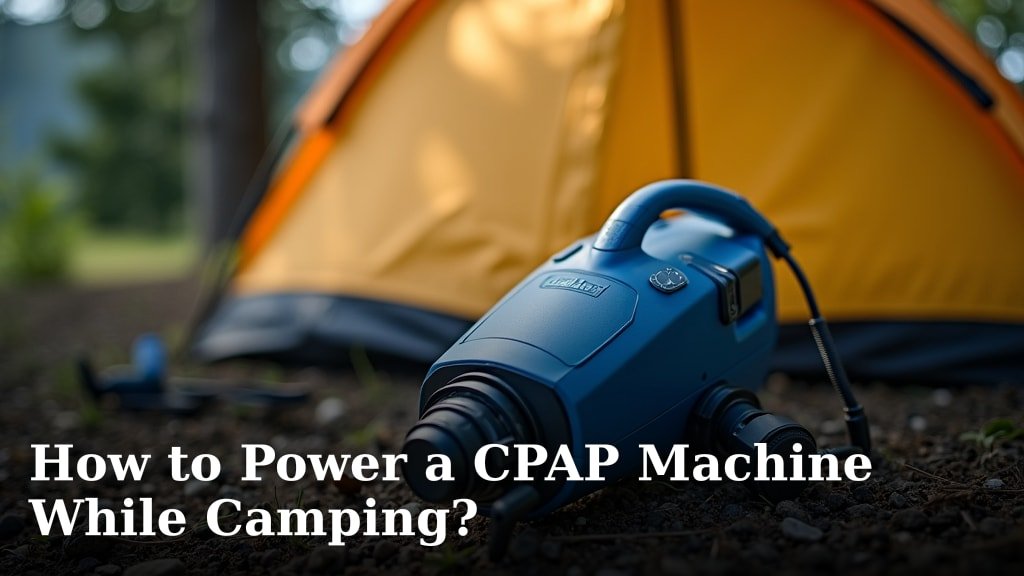
You can power a CPAP machine while camping using a few reliable methods, primarily focusing on portable power stations, deep-cycle batteries, or specialized CPAP battery packs. Selecting the right option ensures your sleep therapy continues uninterrupted, even in the great outdoors.
Ensuring you have power for your CPAP machine is essential for health and peace of mind when camping. We found that most solutions involve a portable power source that can keep your device running all night, offering you restful sleep away from home.
- How power banks and batteries work for CPAP.
- Choosing the right size and type of power source.
- Tips for extending battery life while camping.
- Safety considerations for using electronics outdoors.
- Specific CPAP models and their power needs.
Ready to figure out your camping power setup? Let’s walk through exactly how to choose the best way to power your CPAP machine for your next adventure.
Ensuring Your CPAP Stays Powered While Outdoors
Ensuring your CPAP machine has reliable power while camping is all about preparation. You need to match your CPAP’s needs with a suitable power source that can last through the night.
Understanding Your CPAP’s Power Needs
Before you choose a power solution, you need to know your CPAP machine’s specific power consumption. This will help you select a power source with enough capacity.
Checking Your CPAP’s Wattage
Look at the power brick or the back of your CPAP machine for its wattage. It’s usually listed in watts (W) or volts (V) and amps (A). For example, a ResMed AirSense 10 typically uses around 30-60 watts.
If you only see volts and amps, multiply them together to get the wattage. For instance, 12V * 5A = 60W. This number tells you how much power your machine uses each hour.
Considering Humidifier and Heated Hose Use
Do you use a humidifier or a heated hose with your CPAP? These accessories significantly increase power consumption. A humidifier alone can double your CPAP’s power draw.
Many campers choose to forgo the humidifier and heated hose when camping to conserve power. If you need them, you’ll need a much larger battery capacity.
Top Power Solutions for Camping CPAP Use
We’ve found three main categories of power solutions for CPAP machines in the wild: portable power stations, deep-cycle batteries, and specialized CPAP battery packs.
Portable Power Stations (Power Banks)
Portable power stations are often the easiest and most versatile option. They are essentially large battery packs with multiple outlets, including AC (wall-style) and DC (car-style) ports.
These devices come in various sizes and capacities, measured in watt-hours (Wh). A higher Wh rating means longer run times. Many models also feature USB ports for charging other devices.
We found that a good rule of thumb is to choose a power station with at least 2-3 times your CPAP’s estimated nightly power consumption to be safe. For example, if your CPAP uses 60Wh over 8 hours (480Wh total), look for a 1000Wh unit.
Deep-Cycle Batteries
Deep-cycle batteries, like those used in RVs or marine applications, are designed for sustained power discharge. They are a robust, though heavier, option.
You’ll need a power inverter to convert the battery’s DC power to AC for your CPAP. Make sure the inverter’s wattage rating exceeds your CPAP’s peak draw.
We’ve seen many campers pair a deep-cycle battery with a solar panel for recharging during longer trips. This setup is great for remote, extended stays.
Specialized CPAP Battery Packs
Several companies make battery packs designed specifically for CPAP machines. These are typically compact and often come with adapters for popular CPAP models.
These specialized packs are convenient for their size and ease of use. However, they may have lower capacity than general portable power stations, potentially limiting run time for humidified CPAP use.
Check the compatibility carefully. Many CPAP battery packs offer a DC output cable, which can be more efficient than using an AC inverter with a standard battery.
Here’s a quick look at general suitability:
| Power Solution | Pros | Cons | Best For |
|---|---|---|---|
| Portable Power Station | Easy to use, versatile, multiple outlets, expandable with solar. | Can be heavy, initial cost can be higher. | Most campers, varied device charging. |
| Deep-Cycle Battery + Inverter | High capacity, durable, good for long trips. | Heavy, requires separate inverter, complex setup. | Experienced campers, extended off-grid stays. |
| Specialized CPAP Battery Pack | Compact, lightweight, integrated adapters. | Lower capacity, often single-use (CPAP only). | Short trips, minimal power needs, weight-conscious. |
Maximizing Your CPAP Battery Life While Camping
Even with a robust power source, you’ll want to get the most out of your battery. A few smart adjustments can significantly extend your run time.
Ditch the Humidifier and Heated Hose
This is the most impactful way to save power. We found that turning off these features can extend battery life by 50% or more. Consider using a saline nasal spray for dryness instead (Cleveland Clinic).
Most CPAP machines have settings to disable the humidifier and heated hose. Refer to your machine’s manual for specific instructions.
Use a DC Converter When Possible
When powering your CPAP from a 12V battery or portable power station, using a DC converter (often sold separately) is more efficient than an AC inverter.
Converting DC power to AC and back to DC (what your CPAP uses) loses energy. A direct DC-to-DC connection cuts out a conversion step, preserving battery life.
Check for “Auto Start” Features
Some CPAP machines have an “auto start” feature that turns the machine on as soon as you breathe into the mask. While convenient, it might accidentally activate if your hose shifts in the night, draining power unnecessarily. Turn it off if possible.
Charge Other Devices Separately
Resist the urge to charge your phone or other gadgets from your CPAP power source during the night. Use separate power banks for those devices, or charge them during the day when you might have solar charging available.
Safety Tips for Outdoor CPAP Power
Bringing electronics into the wilderness requires some precautions. Your safety and the longevity of your equipment are paramount.
-
Keep Electronics Dry
Protect your power source and CPAP machine from rain, dew, and spills. Use waterproof bags or containers when not in use, and keep them elevated off damp ground.
-
Ensure Proper Ventilation
Batteries and power stations generate heat during use and charging. Make sure they have adequate airflow to prevent overheating, especially if charging via solar.
-
Monitor Battery Levels
Don’t wait until your battery is completely dead. Many power stations have clear display screens for battery life. Plan to recharge before it runs critically low.
-
Use Correct Voltage/Wattage
Always double-check that your power source and any adapters match your CPAP’s requirements. Using the wrong voltage can damage your machine.
-
Avoid Extreme Temperatures
Batteries perform best within a certain temperature range. Extreme cold can reduce efficiency, while extreme heat can damage batteries and electronics. We found that most manufacturers recommend avoiding temperatures below freezing or above 100°F (38°C).
Pre-Trip Checklist for CPAP Camping
A little planning goes a long way. Before you head out, run through this quick checklist to ensure a smooth, restful camping experience.
- Test your CPAP with your chosen power source for a full night at home.
- Pack all necessary cables, adapters, and a DC converter if using one.
- Charge your power source to 100% before leaving.
- Consider a backup battery or small solar panel for longer trips.
- Bring a waterproof bag or case for your CPAP and power supply.
- Ensure your mask and tubing are clean and in good repair.
Conclusion
Powering your CPAP machine while camping is completely achievable with the right planning. By understanding your machine’s power needs and choosing a suitable power source, like a portable power station or a specialized CPAP battery, you can ensure restful sleep outdoors. Remember to optimize battery life by ditching the humidifier and using DC converters. Your next adventure doesn’t have to mean sacrificing your CPAP therapy. Prepare well, and you’ll enjoy the stars fully recharged.
Frequently Asked Questions
Can I use a car battery to power my CPAP machine?
Yes, you can use a car battery, which is a type of deep-cycle battery, to power your CPAP. You will need a power inverter to convert the 12V DC power from the battery to the AC power your CPAP uses. Ensure the inverter can handle your CPAP’s wattage.
How long does a typical CPAP battery last on a single charge?
The duration depends on the battery’s capacity (watt-hours) and your CPAP’s power consumption, especially if you use a humidifier. Without a humidifier, many specialized CPAP batteries can last 1-3 nights. Larger portable power stations can last even longer.
Is it safe to recharge a portable power station with solar panels while camping?
Absolutely, many portable power stations are designed with solar charging capabilities. We found this is an excellent way to replenish power during longer trips. Just make sure the solar panel’s output matches the power station’s input requirements.
Will my CPAP machine work if I use it with a power source smaller than recommended?
Your CPAP machine might turn on, but it could struggle to maintain pressure or might not last through the entire night. Using an undersized power source could also potentially damage the battery over time due to excessive discharge. Always aim for a capacity 2-3 times your estimated nightly use.
What’s the difference between a portable power station and a CPAP-specific battery pack?
A portable power station is a versatile, multi-purpose battery with various outlets (AC, DC, USB) for many devices. A CPAP-specific battery pack is generally more compact, lighter, and designed with adapters optimized for CPAP machines, often sacrificing overall capacity for portability and direct CPAP compatibility.
