
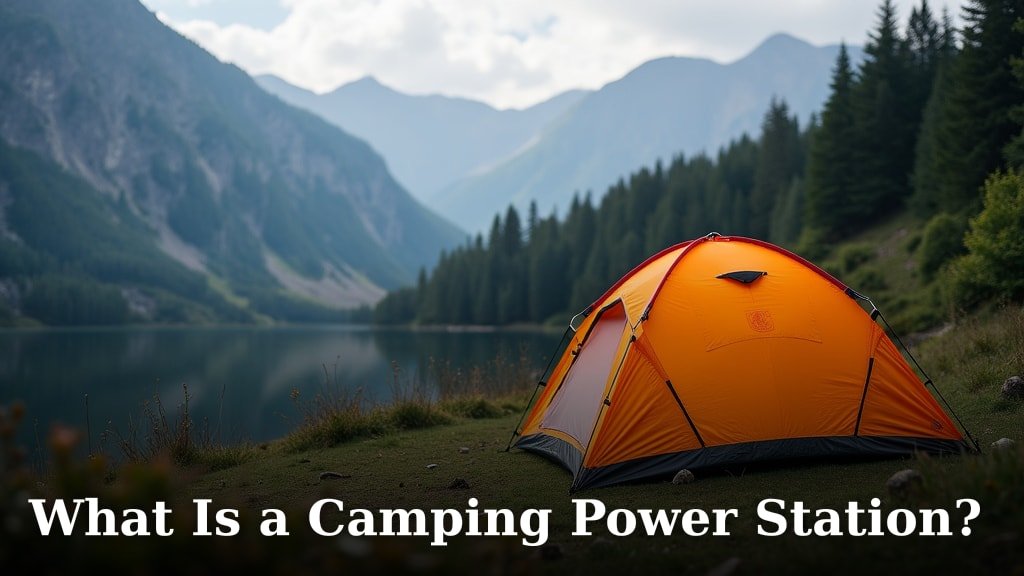
A camping power station is a portable battery that stores electricity for your outdoor adventures. It lets you power your devices, lights, and small appliances even when you are far from home. Think of it as a giant, rechargeable power bank for all your campsite needs.
These handy devices are often called portable power stations or solar generators. They offer a clean, quiet way to get electricity, unlike noisy gas generators. We find they are perfect for everything from tent camping to tailgating.
- A camping power station is a large, portable battery.
- It provides electricity for devices and appliances.
- These are quiet and clean, unlike gas generators.
- Great for camping, road trips, and emergencies.
Ready to upgrade your outdoor experience? Let’s dive into all you need to know about these essential camping gadgets and how they can supercharge your next trip.
What Exactly Are These Portable Powerhouses?
A camping power station is essentially a large, rechargeable battery in a portable enclosure. It’s designed to provide electricity for your devices and small appliances when you’re away from traditional power outlets. Think of it as a robust, silent generator that runs on a battery.
These units store energy and then convert it into usable AC (alternating current) and DC (direct current) power. This means you can plug in anything from your phone charger to a portable mini-fridge. They’ve become incredibly popular for outdoor enthusiasts.
How Do Camping Power Stations Work?
Understanding how these handy devices operate can help you choose the right one. It’s simpler than you might think!
The Core Components
Every power station has four main parts: a battery, an inverter, a charge controller, and various output ports.
- The battery stores the energy. Most modern units use lithium-ion batteries, similar to those in your phone or laptop but much larger.
- The inverter converts DC power to AC power. AC is what most household electronics use.
- A charge controller manages how the battery recharges. It protects it from overcharging or undercharging, which extends the battery’s life.
- Output ports allow you to connect your devices. These often include AC outlets, USB-A, USB-C, and 12V car ports.
Charging Your Power Station
You have several ways to recharge a camping power station. This flexibility is a major benefit!
- Wall Outlet (AC): This is the fastest way to charge your unit before a trip. Just plug it into a standard home wall outlet.
- Solar Panels (DC): Many power stations can connect to portable solar panels. This lets you recharge using sunlight while you’re off-grid. It’s a clean, sustainable option for longer trips.
- Car Charger (DC): You can often charge your power station from your car’s 12V outlet. This is convenient for road trips between campsites.
Why Choose a Camping Power Station Over a Gas Generator?
This is a common question, and we found there are clear reasons why many campers prefer power stations.
- Quiet Operation: Gas generators are notoriously loud. Power stations, however, are nearly silent, creating a much more peaceful camping environment.
- No Fumes: Gas generators produce carbon monoxide fumes, making them unsafe to use indoors or in enclosed spaces. Power stations produce no emissions, so they are safe to use anywhere.
- Less Maintenance: You don’t need to worry about oil changes, spark plugs, or fuel filters with a power station. Just charge it and go.
- Portability: While some gas generators are portable, power stations tend to be lighter and more compact for their power output.
- Clean Energy: Especially when paired with solar panels, power stations offer a greener alternative, reducing your carbon footprint.
Key Features to Look For
When you’re ready to buy, what features should you prioritize? We found these are the most important considerations:
Capacity (Watt-Hours)
This tells you how much energy the battery can store. It’s measured in watt-hours (Wh). A higher Wh means more power for a longer time.
- A small unit (200-300 Wh) might charge phones and small electronics for a weekend.
- A medium unit (500-1000 Wh) can run a mini-fridge or CPAP machine overnight.
- Large units (1500+ Wh) can power multiple appliances for extended periods.
To estimate your needs, look at the wattage of your devices and how long you plan to run them. Multiply watts by hours to get watt-hours. For example, a 60W portable fridge running for 10 hours needs 600 Wh.
Output Power (Watts)
This indicates how much power the station can deliver at any given moment. It’s measured in watts (W).
- Continuous Power: This is the maximum wattage the station can put out constantly.
- Peak/Surge Power: Some appliances, like those with motors, need a quick burst of extra power to start up. The peak power rating shows if the unit can handle these surges.
Ensure the continuous output power rating is higher than the wattage of your most power-hungry device. If you plan to run multiple items simultaneously, add up their wattages.
Types of Output Ports
Make sure the power station has the right ports for your gear. You’ll likely want a good mix:
- AC Outlets: For standard household plugs. Look for pure sine wave inverters, which are safer for sensitive electronics (National Electrical Code mentions this for reliable operation).
- USB-A and USB-C Ports: For charging phones, tablets, and laptops. Look for fast charging (PD or Quick Charge) ports.
- 12V DC Car Ports: Useful for running car accessories like coolers or air pumps.
Understanding Battery Chemistry: LiFePO4 vs. Li-ion
The type of battery inside matters for longevity and safety. You’ll primarily see two main types:
- Lithium-ion (Li-ion): These are common, lighter, and often cheaper. We found they generally offer good performance but have a shorter cycle life (number of recharges) than LiFePO4.
- Lithium Iron Phosphate (LiFePO4): These batteries are heavier and more expensive but offer a much longer lifespan and better safety characteristics. Many experts say they are more stable and less prone to thermal runaway (e.g., overheating).
For long-term use and peace of mind, LiFePO4 batteries are often a better choice, though Li-ion units are perfectly fine for casual use.
What Can You Power with a Camping Power Station?
The possibilities are quite extensive, depending on the unit’s capacity. Here’s a quick look:
- Small devices: Phones, tablets, laptops, cameras, drones.
- Camp appliances: Portable fans, electric blankets (low wattage), LED lights, headlamps.
- Kitchen gear: Mini-fridges, blenders, small coffee makers, electric kettles (check wattage carefully!).
- Medical devices: CPAP machines (very popular use), oxygen concentrators.
- Tools: Small power tools (e.g., drills for minor repairs).
Always check the wattage requirements of your devices against the power station’s output. Overloading the power station can trigger its safety features and shut it down.
A Quick Checklist for Your Next Adventure
Before you head out, make sure you’re ready to roll with your power station:
- Is your power station fully charged?
- Do you have all the necessary charging cables?
- Have you tested it with your essential devices at home?
- Do you have a plan for recharging (solar panels, car charger)?
- Is it protected from direct sunlight and extreme temperatures?
- Do you know the wattage of the devices you plan to use?
Getting these basics right will ensure a smooth, powered-up trip.
Common Misconceptions to Clear Up
We often hear a few misunderstandings about camping power stations. Let’s clarify them:
- “They are the same as power banks.” Not quite. Power banks are small, handheld devices for charging phones. Power stations are much larger, with higher capacities and versatile output ports.
- “They are just for camping.” While ideal for camping, they are also incredibly useful for tailgating, backyard events, emergency home backup power during outages, and even working remotely from odd locations.
- “They are complicated to use.” Most modern power stations are plug-and-play. You charge them, turn them on, and plug in your devices. Their digital displays often show remaining battery life and output wattage.
They are generally very user-friendly devices built for convenience.
Safety and Maintenance Tips
Like any electronic device, proper care makes a difference. Keeping safety in mind is also keen.
Always follow the manufacturer’s instructions for charging and usage. We found this is the most important advice for reliable operation.
- Store in a cool, dry place: Avoid extreme heat or cold, as this can degrade the battery over time.
- Keep it charged: Don’t leave the battery completely depleted for long periods. It’s better to keep it partially charged (around 50-80%) when not in use.
- Avoid overcharging/over-discharging: Most modern units have built-in protection, but it’s still best practice.
- Protect from elements: While many are durable, keep them out of heavy rain or direct moisture.
- Use appropriate cables: Always use the cables provided or recommended by the manufacturer.
Choosing the Right Size for Your Needs
How do you pick the perfect power station from the many options out there? It comes down to your personal use case. We find it helpful to think about what you need to power.
| Scenario | Recommended Capacity (Wh) | Example Devices |
|---|---|---|
| Overnight camping/Day trips | 200-500 Wh | Phones, lights, small speaker |
| Weekend camping/RV backup | 500-1000 Wh | CPAP, mini-fridge, laptops, drone |
| Extended camping/Emergency home backup | 1000+ Wh | Multiple appliances, medical devices, small tools |
Consider your longest trip or worst-case scenario. It’s often better to have slightly more capacity than you think you’ll need.
Conclusion
You now understand that a camping power station is a versatile, clean energy solution for your outdoor adventures. It offers quiet operation, zero emissions, and the convenience of powering almost any device on the go. By checking capacity, output, and battery chemistry, you can find the perfect unit.
These portable powerhouses mean you no longer have to compromise on comfort or connectivity, even far from civilization. Ready to experience a new level of freedom? Use what you’ve learned to select a power station that will truly enhance your next trip.
Frequently Asked Questions
How long does a camping power station typically last on a single charge?
The duration depends greatly on the power station’s capacity (measured in Watt-hours) and the devices you’re powering. A small unit might keep a phone charged for days, while a large one could run a mini-fridge for an entire weekend. Always match the unit’s capacity to your expected power usage.
Can I leave my portable power station charging all the time?
Most modern camping power stations have advanced battery management systems to prevent overcharging. However, for optimum battery health and longevity, we found it is often best to unplug them once fully charged, especially if they use lithium-ion batteries. Store them partially charged when not in use.
Are camping power stations weatherproof?
While many power stations are built to be durable for outdoor use, most are not fully waterproof. They can typically handle light splashes or dust, but you should avoid exposing them to heavy rain or submerging them in water. Always check the manufacturer’s IP rating for specific protection levels.
What’s the best way to store a camping power station when not in use?
For optimal battery life, store your power station in a cool, dry place, away from direct sunlight and extreme temperatures. It’s best to store it with a charge level between 50% and 80%, topping it up every 3-6 months if it sits unused for long periods.
Can a camping power station power a full-sized RV or travel trailer?
Generally, smaller camping power stations are not designed to power an entire RV, which requires much higher continuous wattage and capacity. You would need very large, expensive units or multiple units to run the high-draw appliances in a full-sized RV. They are perfect for smaller electronics or backup power in an RV, but not usually for the whole rig.
