
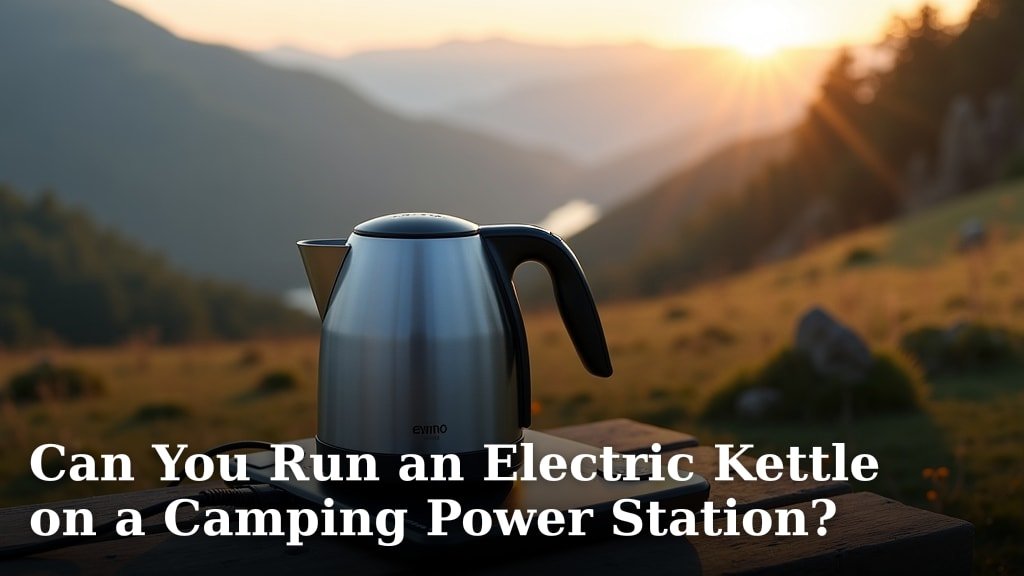
Yes, you can often run an electric kettle on a camping power station, but with a few important considerations. The main factor is whether your power station has enough wattage to handle the kettle’s power draw, which is usually quite high. You’ll need to check the kettle’s wattage and compare it to your power station’s continuous output rating to ensure it can handle the load without tripping.
Running an electric kettle is one of the most power-hungry tasks you can do while camping off-grid. Many smaller power stations may struggle or be unable to power a standard electric kettle. It’s vital to understand your equipment’s capabilities to avoid disappointment or damage, ensuring you can still enjoy that hot cup of coffee or tea.
- Electric kettles can work with camping power stations.
- You must match the kettle’s wattage to the power station’s output.
- Most kettles need a high continuous wattage rating.
- Check your power station and kettle specs carefully.
- Consider a lower-wattage kettle or a different heating method if needed.
Let’s get into the details of what you need to look for and how to make sure your camping trip includes that much-needed hot beverage.
Powering Your Camp Kettle: What You Need to Know
Running an electric kettle from your camping power station is totally possible. It’s a fantastic way to enjoy some of the comforts of home in the great outdoors. But here’s the catch: it’s not as simple as just plugging it in. The biggest hurdle you’ll face is power. Electric kettles are energy hogs, and not all power stations can handle their appetite.
Understanding Wattage: The Key to Success
Wattage is the measure of electrical power. Think of it like the horsepower of a car. Your electric kettle has a certain wattage, and your power station has a maximum wattage it can deliver. You absolutely must match these two numbers.
Most standard electric kettles require between 1000 to 1500 watts to heat water effectively. Some might even go higher. If your power station can’t provide that much continuous power, your kettle simply won’t work, or it might even damage your equipment. It’s like trying to start a lawnmower with a bicycle!
Checking Your Power Station’s Specs
Before you even think about boiling water, you need to know your power station’s capabilities. Look for two key numbers: continuous output and peak/surge output.
The continuous output is the wattage your power station can supply constantly. This is the most important number for an electric kettle because it needs consistent power for several minutes. The peak or surge output is the maximum it can handle for a very short burst. You need a power station with a continuous output that is equal to or greater than your kettle’s wattage requirement.
We found that many smaller camping power stations, often those under 500Wh (watt-hours), have continuous output ratings well below 1000 watts. This means they are simply not designed to power appliances like electric kettles. Always check the manufacturer’s specifications carefully.
Continuous vs. Peak Wattage Explained
Imagine your power station is a faucet. The continuous output is how much water can flow steadily from the tap. The peak output is like a brief gush of water you might get if you suddenly twist the handle all the way.
An electric kettle needs that steady flow for a while. It’s not just a quick burst. So, if your power station says it can handle a 2000-watt surge but only 500 watts continuously, it’s not suitable for a 1200-watt kettle. The surge power is often for starting motors, not for sustained heating.
What About Kettle Wattage?
Where do you find your kettle’s wattage? It’s usually printed on a small label on the bottom of the kettle or sometimes on the base or power cord.
It might say something like “120V ~ 60Hz, 1250W”. That 1250W is the number you need to focus on. If you can’t find it, a quick online search for your specific kettle model should tell you. If you’re buying a new kettle specifically for camping, look for models that advertise low wattage.
Matching Your Gear: The Power Station and Kettle Dance
This is where the rubber meets the road. You’ve checked your kettle, you’ve checked your power station. Now, you need to see if they can dance together without tripping over each other’s feet (or circuits).
If your kettle is 1500 watts, you need a power station that can deliver at least 1500 watts continuously. It’s a good idea to have a little extra headroom. Aim for a power station that can output about 10-20% more than your kettle’s requirement.
For example, if your kettle is 1200 watts, a power station with a 1300-1500 watt continuous output would be a much safer bet. This buffer prevents the power station from running at its absolute limit, which can lead to overheating or premature wear. It also accounts for slight fluctuations in power draw.
When Your Power Station Isn’t Powerful Enough
What happens if your power station’s continuous output is lower than your kettle’s wattage? For instance, you have a 500-watt continuous power station and a 1200-watt kettle.
Unfortunately, the kettle simply won’t work. The power station’s internal safety mechanisms will likely detect the overload and shut down to protect itself. You might hear a beep or see an error light. Trying to force it won’t help; it could actually damage your power station.
Don’t despair! This doesn’t mean you’re doomed to cold coffee. There are several good options. You might need to consider a different heating method or a different type of kettle.
Low-Wattage Kettles for Camping
Some manufacturers design electric kettles specifically for RVs, boats, or camping, and these often have lower wattage. You can find kettles that operate at 600-800 watts. These are much more likely to work with a wider range of camping power stations.
A 750-watt kettle is a dream for many power station owners. It requires significantly less power. This makes it a much more realistic option for off-grid adventures. Always check the product description for “low wattage” or the specific wattage rating.
Alternative Heating Methods
If a dedicated electric kettle isn’t in the cards for your current power setup, think about traditional methods. These might take a little longer but are very reliable.
- Propane or butane stoves are excellent for boiling water. They use portable fuel canisters and are very efficient. You can heat water in a regular pot or a stovetop kettle.
- An electric percolator or drip coffee maker might also be an option if you’re just making coffee. These often have lower wattage than a full electric kettle. However, they still require a decent power output.
- A thermos filled with hot water from a campground’s shared facility (if available) can also work for instant coffee or tea.
Battery Capacity and Runtime: How Long Will It Last?
Beyond just wattage, you also need to think about your power station’s battery capacity, measured in watt-hours (Wh). This tells you how much energy it can store.
Heating water takes a lot of energy. Even if your power station has enough wattage, running an electric kettle will drain its battery very quickly. A full battery might only power a 1000-watt kettle for a short amount of time.
For example, a 500Wh power station powering a 1000-watt kettle would theoretically last about 30 minutes (500Wh / 1000W = 0.5 hours). In reality, it’s often less due to inefficiencies.
Calculating Your Runtime
To estimate how long you can run your kettle, you can use this simple formula:
Runtime (in hours) = Battery Capacity (Wh) / Appliance Wattage (W)
Remember, this is a theoretical maximum. Real-world usage is usually shorter. You also need to consider other devices you might be charging or running simultaneously.
Tips for Efficient Kettle Use
If you are able to run an electric kettle, here are some ways to make the most of your power station’s battery:
- Only boil the water you need. Don’t fill the kettle to the brim if you only need one cup.
- Insulate your water. Pour the hot water immediately into an insulated mug or thermos to keep it hot longer.
- Run it when the sun is out (if solar charging). If your power station has solar input, try to run the kettle during peak sun hours to recharge simultaneously.
- Minimize other power draws while the kettle is running. Turn off lights and other devices.
Safety First: Protecting Your Gear and Yourself
Using high-wattage appliances like electric kettles with a power station requires attention to safety. It’s not just about making tea; it’s about preventing problems.
Overloading your power station can lead to overheating, which can shorten its lifespan or even cause damage. Some power stations have built-in fans that might run constantly and loudly when under heavy load. Always ensure your power station has good ventilation.
Never block the vents on your power station. If it feels excessively hot to the touch, unplug the kettle and let the power station cool down. Reading the user manual for both your kettle and power station is a smart move.
What to Do If It Doesn’t Work
So, you’ve plugged in your kettle, and nothing happened. What’s your next step?
1. Double-check the wattage. Ensure you noted the correct numbers for both devices. 2. Verify the connection. Make sure the plug is fully seated in the power station’s outlet. 3. Consult the manuals. Look for troubleshooting sections in your power station’s guide. 4. Consider the power station’s battery level. Some devices won’t operate if the battery is too low, even if it has enough wattage. 5. Accept it might not be compatible. If all checks fail, your power station might simply be too small for the kettle. Time to explore those alternative heating methods we discussed!
A Quick Checklist for Success
Here’s a handy checklist to guide you:
- Confirm Kettle Wattage: Find the exact wattage rating on your electric kettle.
- Check Power Station Continuous Output: Locate the continuous wattage specification for your power station.
- Compare Wattage Needs: Ensure the power station’s continuous output meets or exceeds the kettle’s wattage.
- Assess Battery Capacity: Understand how long your power station’s battery will last under that load.
- Prioritize Ventilation: Make sure your power station has adequate airflow.
- Have a Backup Plan: Know your alternative heating methods if the kettle doesn’t work.
Conclusion
Running an electric kettle on your camping power station is achievable, but it’s not a plug-and-play solution. Your power station needs a robust continuous wattage output, often 1000 watts or more, to match the kettle’s demand. Always verify the specifications of both your kettle and your power station before you go. If your current setup can’t handle it, don’t fret! Explore low-wattage kettles or reliable alternative heating methods. With a little planning, you can ensure hot drinks are part of your outdoor adventures.
Frequently Asked Questions
Will a small camping power station run an electric kettle?
Generally, most small camping power stations, especially those under 500 watt-hours or with low continuous wattage ratings (below 1000W), will struggle or be unable to power a standard electric kettle. You must check the continuous output of your power station against the kettle’s wattage requirement.
How can I tell if my power station can run my electric kettle?
Look for the continuous wattage rating on your power station’s specifications. This number must be equal to or higher than the wattage listed on your electric kettle, which is usually found on a label on the bottom. It’s wise to have at least 10-20% more wattage capacity than your kettle requires.
What happens if my power station doesn’t have enough wattage for the kettle?
If your power station’s continuous output is too low, the kettle will likely not work. Your power station’s safety features will probably shut it down to prevent overload and potential damage. You may see an error light or hear a beep indicating this.
Are there electric kettles designed for camping that use less power?
Yes, there are! Look for low-wattage electric kettles specifically marketed for RVs, boats, or camping. These often operate in the 600-800 watt range, making them much more compatible with a wider variety of camping power stations.
How can I conserve battery power if I do run an electric kettle?
To maximize your battery life, only boil the exact amount of water you need. Pour hot water immediately into an insulated mug or thermos to retain heat. If your power station has solar charging, try to run the kettle when the sun is out to get some recharge simultaneously.
