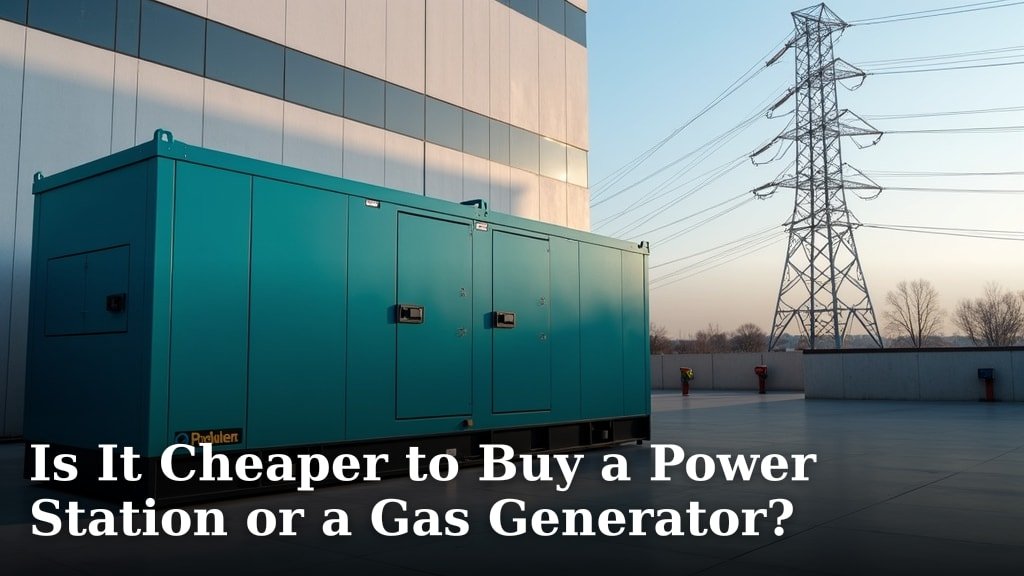
Comparing a power station to a gas generator, gas generators are typically cheaper to buy upfront, but power stations often cost less over time due to fuel savings and lower maintenance. Your best choice depends on your specific needs, like how often you’ll use it and for what purposes.
You’re probably weighing the initial purchase price against long-term operational costs, right? We found that while a gas generator might save you money on day one, a power station offers different benefits that can add up. Think about factors like noise, emissions, and fuel availability when making your decision.
- Gas generators usually cost less to purchase initially.
- Power stations generally have lower running costs over time.
- Consider fuel type, noise, and maintenance for your situation.
- Think about environmental impact and ease of use.
- Your best option depends on your specific energy needs.
Let’s walk through the key differences so you can decide which option is truly cheaper and better for your home or adventures.
Comparing the Costs: Power Stations vs. Gas Generators
You’re trying to figure out which option makes more sense for your wallet, right? We’ve found that the “cheaper” choice isn’t always the one with the lower price tag upfront. It’s about looking at the bigger picture.
When you’re comparing a power station to a gas generator, you need to consider more than just the purchase price. We’re talking about things like fuel, maintenance, and even the lifespan of the unit. Let’s break it down so you can see where your money really goes.
Initial Purchase Price: Gas Generators Win (Usually)
Generally speaking, a gas generator will cost you less to buy from the start. You can find small, basic models for a few hundred dollars. Larger, more powerful gas generators might run you over a thousand, but they often still beat a comparable power station on day one.
Why is this? Gas generators have been around for a long time, and their technology is well-established. This often means lower manufacturing costs, which translates to a lower price for you. You’re paying for a proven, if a bit older, technology.
Power stations, especially those with larger capacities, often come with a higher initial price tag. You’re paying for newer battery technology, advanced inverters, and often a more compact, user-friendly design. Think of it as investing in a more modern solution.
Long-Term Operating Costs: Where Power Stations Shine
Here’s where the tables turn quite a bit. The true cost of owning a power source goes beyond what you pay at the store. You have to consider what it takes to keep it running.
Power stations tend to be much cheaper to operate over time. Why? Because they run on electricity. You charge them from a wall outlet, a car charger, or solar panels. The “fuel” cost for a power station is essentially your electricity bill or free sunlight.
Gas generators, on the other hand, need gasoline. And gasoline costs money, often a lot of it, especially if you’re using your generator frequently or for extended periods. We’ve found that these fuel costs can add up quickly, sometimes surpassing the initial savings you made on the purchase price.
- Power Station: Charges from an outlet or solar. Very low “fuel” cost.
- Gas Generator: Requires gasoline. Fuel costs are ongoing and can be substantial.
Maintenance and Longevity: Less Hassle, Less Cost for Power Stations
Maintenance is another big factor in your overall cost. Gas generators, with their engines, need more care. You’ll need to change the oil, replace spark plugs, clean air filters, and perform regular tune-ups. This isn’t just about time; it’s about money for parts and possibly mechanic fees.
We’ve found that gas generators also require fuel stabilizers if you’re storing them, and you have to be careful about stale fuel. All these little tasks and expenses contribute to the overall cost of ownership. Plus, the engine parts can wear out over time.
Power stations, because they don’t have moving engine parts, require very little maintenance. You might occasionally clean the exterior or check the charging cables, but that’s about it. This means fewer trips to the store for parts and no mechanic bills.
Their lifespan can also be quite good. We found that modern power stations are built with durable battery cells designed for many charging cycles. While the battery capacity might degrade slightly over many years, the unit itself can last a long time with minimal fuss.
Fuel Availability and Storage: A Key Difference
Thinking about fuel is important. Gasoline isn’t always easy to get, especially during a widespread power outage when gas stations might be closed or out of fuel. Storing gasoline also comes with safety risks. It’s flammable, emits fumes, and needs to be kept in approved containers away from living spaces (EPA).
Power stations don’t have these fuel headaches. You just need an electrical outlet or sunlight. We’ve seen many people appreciate the simplicity of recharging a power station compared to lugging heavy gas cans. This convenience translates to less stress and more peace of mind.
Noise and Emissions: Consider Your Environment
This isn’t strictly a “cost” in dollars, but it definitely impacts your quality of life and where you can use your power source. Gas generators are noisy and produce exhaust fumes. This means you can’t run them indoors, and they can disturb neighbors or your own peace and quiet.
Power stations are virtually silent and produce no emissions. You can use them indoors, in tents, or in quiet campgrounds without worry. This flexibility means you might use a power station more often for a wider range of activities, making it a more versatile investment for some.
Environmental Impact: A Growing Concern
For many, the environmental footprint is a real consideration. Gas generators burn fossil fuels, contributing to air pollution and carbon emissions. If you’re looking for a greener option, a power station is the clear winner.
Charging a power station from renewable sources like solar panels makes it an even more environmentally friendly choice. We’ve seen a growing trend towards sustainable power solutions, and power stations fit right into that movement.
Portability and Ease of Use: Factors for Your Lifestyle
How easy is it to move and use your power source? Gas generators can be heavy, especially larger models, and require care when refueling. They’re also often bulky and can be a bit awkward to transport.
Power stations are generally designed for portability. Many are compact, have built-in handles, and are relatively lightweight for their power output. They’re also incredibly easy to use – just plug in your devices and turn them on. This user-friendliness can be a huge benefit, especially for camping or emergency situations where you don’t want to mess with complicated setups.
Understanding Power Needs: What Are You Running?
Before you commit, think about what you actually need to power. Are you just charging phones and laptops, or do you need to run a refrigerator and power tools? This will heavily influence the size and type of unit you need, which then impacts the cost.
Small power stations can handle electronics with ease. For larger appliances, you’d need a more robust power station or a mid-to-large gas generator. Matching the power source to your specific needs prevents you from overspending on something too big or being frustrated by something too small.
Quick Comparison: Power Station vs. Gas Generator
Here’s a snapshot to help you quickly weigh the pros and cons related to cost and usage:
| Feature | Power Station | Gas Generator |
|---|---|---|
| Initial Cost | Higher | Lower |
| Running Cost | Very Low (electricity/solar) | High (gasoline) |
| Maintenance | Very Low | Moderate to High |
| Fuel Storage | None needed | Hazardous, limited shelf life |
| Noise Level | Silent | Loud |
| Emissions | None | Harmful fumes |
| Portability | Often high | Varies, can be heavy |
| Indoor Use | Yes | No (risk of CO poisoning) (CDC) |
Your Decision Checklist: Finding Your Best Value
To help you decide which option offers the best value for your unique situation, ask yourself these questions:
- How often will you use it? Occasional use might favor a cheaper gas generator, while frequent use makes a power station’s low running costs attractive.
- What are your primary uses? Charging small devices is different from powering a well pump.
- Is quiet operation important to you? For camping or home backup, silence can be golden.
- Do you have easy access to gasoline during an outage? Fuel accessibility is a major factor.
- Are environmental concerns a priority? Power stations offer a cleaner energy solution.
- Are you comfortable with regular maintenance tasks? Gas generators demand more hands-on care.
By considering these points, you can move beyond the sticker price and understand the true cost and benefits of each option. Your best choice is the one that aligns with your lifestyle and budget, both now and in the future.
Conclusion
Deciding between a power station and a gas generator ultimately comes down to your personal priorities and how you plan to use it. While a gas generator often saves you money upfront, we’ve seen that a power station typically offers greater long-term savings through lower running costs and minimal maintenance. Consider your need for quiet operation, environmental impact, and fuel convenience.
By carefully weighing your initial budget against ongoing expenses and usage benefits, you can confidently choose the power solution that truly aligns with your lifestyle and provides the best value over time. Your ideal choice is the one that fits your specific energy demands perfectly.
Frequently Asked Questions
Is a power station powerful enough to run a refrigerator?
Yes, many larger power stations are designed to run refrigerators and other essential appliances during an outage. You’ll need to check the power station’s output wattage and battery capacity to ensure it meets your appliance’s demands and desired run time.
How long does it take to fully charge a power station?
Charging time varies significantly based on the power station’s battery size and the charging method. We’ve found smaller units might charge in a couple of hours, while larger ones could take 8-10 hours from a wall outlet. Solar charging will depend on sunlight conditions and panel efficiency. For more details on how long it takes to recharge, consult our guide on solar generator charging time.
Can I use a power station to start a car?
Some power stations come with a jump-starter feature, but not all do. If you need this capability, look for models specifically advertised as having car jump-starting functions. These are generally smaller, dedicated units or multi-functional power stations.
What is the typical lifespan of a power station battery?
Most modern power stations use lithium-ion batteries designed for many charge cycles. We’ve found that they often maintain 80% of their original capacity after 500 to 2,000 charge cycles, which can translate to several years of regular use depending on how often you charge and discharge it.
Are there any safety concerns with storing a power station?
Power stations are generally very safe to store. Unlike gas generators, they don’t involve flammable fuels or produce fumes. We recommend storing them in a cool, dry place away from direct sunlight and keeping them partially charged (around 50-80%) for optimal battery health.