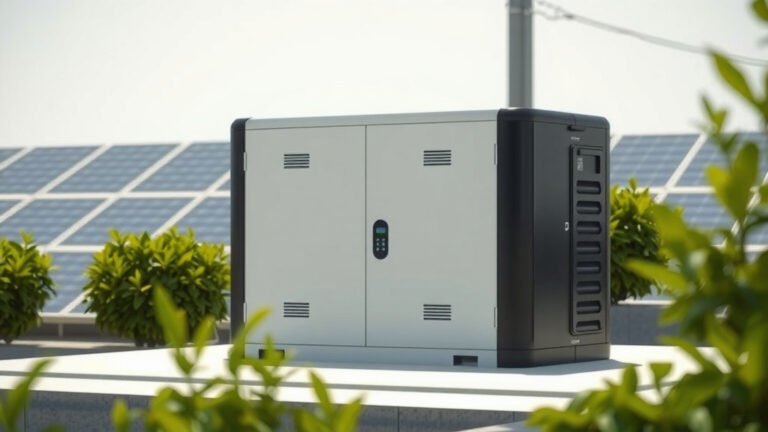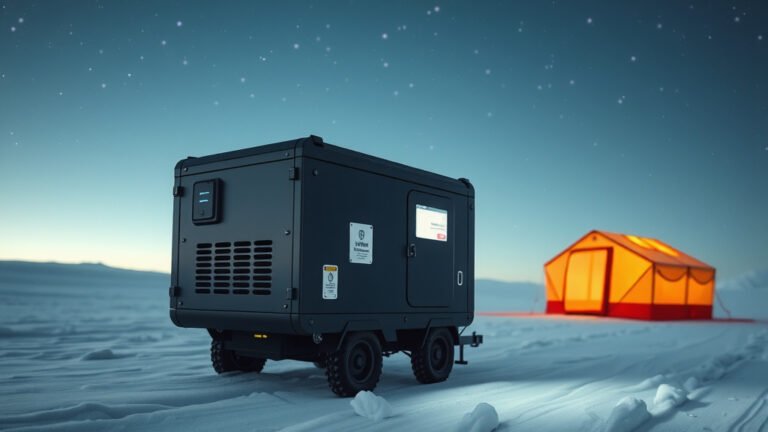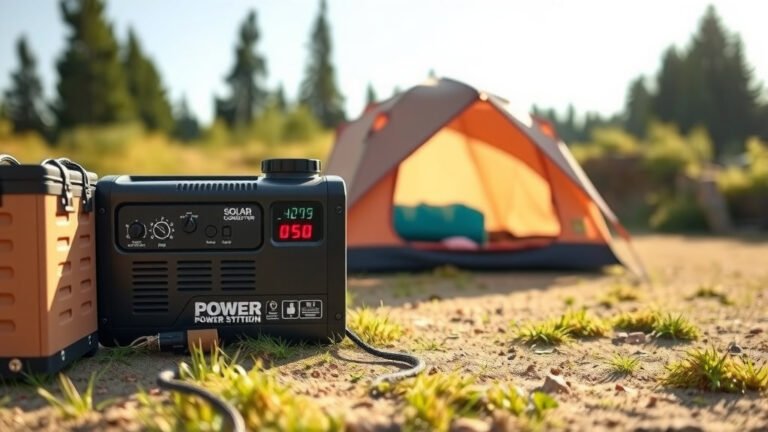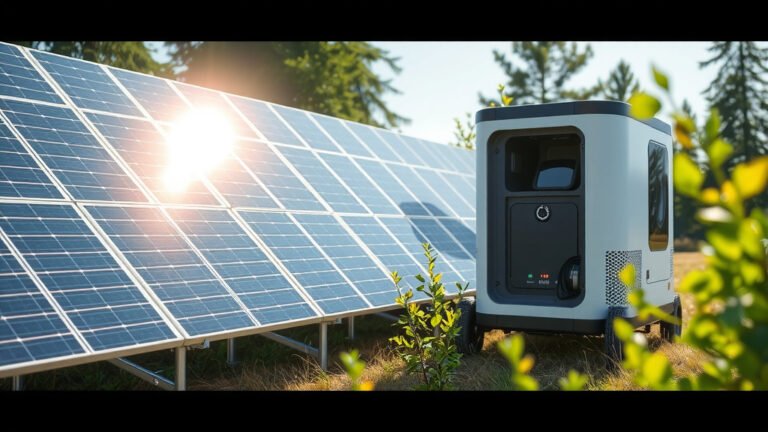
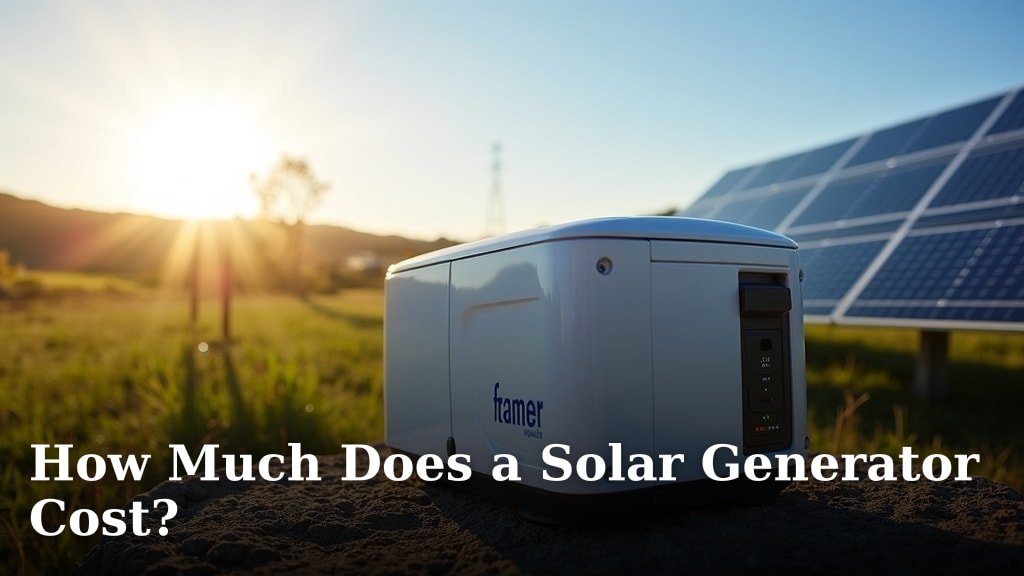
A solar generator can cost anywhere from $200 to over $7,000, though most people will find a good option between $500 and $2,000. The price mainly depends on its power output, battery size, and extra features. Think about what you need it for.
You’re looking for a reliable power source, right? We’ve found that the right solar generator for you depends on your specific needs, like if you’re powering a few camping lights or a whole off-grid cabin. There’s a big range in capabilities and prices.
- Prices range from ~$200 to $7,000+.
- Most popular models are between $500 and $2,000.
- Cost varies by power output (watts/watt-hours).
- Features like portability and charging speed add to the price.
- Your specific use case drives the final cost.
Let’s dive into what makes these devices tick and help you understand where your money goes when investing in a solar power solution. We’ll explore the factors that impact the price and guide you to an informed decision.
Understanding Solar Generator Pricing: What Impacts the Cost?
The cost of a solar generator isn’t a single, fixed number. It’s a spectrum, heavily influenced by several key factors. Think of it like buying a car; a compact sedan will cost less than a luxury SUV, and for good reason. Each offers different capabilities and features. For solar generators, these factors relate directly to how much power you need, for how long, and what conveniences you desire.
Power Output and Battery Capacity: The Core Drivers
When you look at solar generators, two terms pop up constantly: watts (W) and watt-hours (Wh). Understanding these is essential for deciphering the price tag. They tell you exactly what the generator can do.
Watts (W): How Much Power It Can Deliver Right Now
Watts refer to the instantaneous power output a generator can provide. This is crucial for running your devices. For example, a refrigerator might need 600W to start, but only 150W to run. If your generator can’t hit that 600W peak, your fridge won’t turn on.
- Lower power (200W-500W): These entry-level units typically cost $200-$500. They’re great for charging phones, laptops, and running small electronics like a fan or a few LED lights. Think of them as your personal power bank on steroids.
- Mid-range power (500W-1500W): Expect to pay anywhere from $500-$1,500 for these. They can handle more demanding appliances, such as a small mini-fridge, a TV, or power tools. These are popular for RVs, camping, and short power outages.
- High power (1500W+): These are the heavy hitters, often ranging from $1,500 to $7,000+. They can power a significant portion of a home during an outage, run larger appliances, or support off-grid living more consistently. Some even have 2000W output or more.
Watt-Hours (Wh): How Long It Can Deliver That Power
Watt-hours indicate the battery’s capacity, telling you how long the generator can sustain its output. It’s like the gas tank of your car. A bigger tank means you can drive longer. A unit with 500Wh means it can deliver 500W for one hour, 100W for five hours, or 50W for ten hours.
- Small capacity (200Wh-500Wh): These models usually match the lower wattage generators in the $200-$500 range. They’re perfect for day trips or keeping essential devices charged for a short time.
- Medium capacity (500Wh-1500Wh): In the $500-$1,500 bracket, these offer a good balance of runtime and portability. They’re suitable for weekend camping or powering key items during a moderate outage. You might keep your CPAP machine running all night with one of these.
- Large capacity (1500Wh+): These high-capacity units can go from $1,500 up to $7,000 and beyond. They are built for extended use, providing power for multiple days or acting as a substantial backup for your home. We’ve seen some with over 5000Wh capacity, designed for serious off-grid applications (Home Power Magazine cited this trend in their product reviews).
Generally, both watts and watt-hours tend to move together. A generator with higher instant power (watts) will almost always have a larger battery (watt-hours) to support it, making it more expensive.
Battery Chemistry: A Major Cost Factor
Not all batteries are created equal, and the type of battery inside your solar generator significantly impacts its price, lifespan, and safety profile. You’ll mainly find two types in modern solar generators.
Lithium-Ion (Li-ion) Batteries
Most portable solar generators use lithium-ion batteries. They are lightweight, compact, and offer good energy density. They charge relatively quickly and have a decent cycle life (how many times they can be charged and discharged before losing significant capacity).
However, they can be more expensive to manufacture and, under rare circumstances, pose a thermal runaway risk if not properly managed. Most reputable brands incorporate advanced Battery Management Systems (BMS) to mitigate these risks.
Lithium Iron Phosphate (LiFePO4 or LFP) Batteries
LiFePO4 batteries are gaining popularity, especially in higher-end units. They are generally more expensive upfront than standard lithium-ion batteries. What do you get for that extra cost?
- Longer lifespan: They can handle significantly more charge cycles (2,000-6,000 cycles compared to 500-1,000 for standard Li-ion). This means they last much longer.
- Improved safety: They are more thermally stable and less prone to overheating, making them a safer choice.
- Better performance: They maintain consistent power output even as their charge dwindles.
If you’re looking for a generator that will last for many years and provide dependable power, the higher initial cost of an LFP battery might be a worthwhile investment for you.
Solar Panel Inclusion and Quality
When you buy a “solar generator,” sometimes it comes as a complete kit, including the solar panels, and sometimes it’s just the power station itself. This is a big factor in the overall price.
- Generator only: If you already have solar panels or prefer to buy them separately, you’ll pay only for the power station. This price could be lower initially, but remember you’ll still need panels to harness solar energy (as found in various product comparisons by Consumer Reports).
- Kit with portable panels: Many brands offer bundles where the generator comes with foldable or portable solar panels. These kits are often more expensive, perhaps adding $100 to $500 or more, depending on the panel wattage. They offer convenience because everything is designed to work together.
- Panel type: Panels themselves vary in price. Monocrystalline panels are generally more efficient and pricier than polycrystalline panels. The wattage of the panels also matters; a 200W panel will cost more than a 100W panel.
Always check whether the price includes panels or if you need to factor that into your budget separately.
Extra Features and Brand Reputation
Beyond the core power and battery, several other elements can push the price up or down. Think of these as the convenience and reliability factors.
Portability and Design
Do you need something you can easily carry on a hiking trip, or will it mostly stay in your garage? Smaller, lighter units with rugged handles and compact designs often command a slightly higher price. We’ve seen premium brands invest heavily in aerodynamic and durable casings that stand up to the elements. Units with wheels and extendable handles, like luggage, are also becoming popular for larger capacities, adding to the manufacturing cost.
Charging Speed and Multiple Charging Options
A generator that can fully charge in an hour or two from a wall outlet (AC fast charging) will typically cost more than one that takes 6-8 hours. The ability to charge via solar, AC, and a car cigarette lighter (DC charging) is standard, but the speed at which it does so varies significantly. Some advanced models even feature simultaneous dual charging (AC + solar) for super-fast replenishment, influencing the price.
Outlets and Connectivity
How many AC outlets does it have? Are there plenty of USB-A, USB-C (especially Power Delivery – PD), and 12V outputs? Generators with a wider variety and higher power output ports (like 100W USB-C PD) tend to be more expensive. Integrated UPS (Uninterruptible Power Supply) functionality, which allows the generator to act as a bridge between your wall outlet and your delicate electronics, is another premium feature.
Brand Reputation and Warranty
Well-established brands with a proven track record for reliability, customer service, and strong warranties (e.g., 5-year warranties) often have higher price points. You’re paying for peace of mind, knowing that if something goes wrong, you’re covered. Think about it: would you rather buy a no-name brand with a 6-month warranty or a trusted brand with a 3-5 year one? Many consumers opt for the latter, especially for an investment like a solar generator.
What Do YOU Need? A Quick Checklist
Before you commit to a price range, ask yourself these questions. Your answers will guide you to the right type of generator and help you avoid overspending or underbuying.
- What specific items do you need to power? (e.g., phone, laptop, mini-fridge, power tools, home appliances)
- How long do you need to power them? (e.g., a few hours, overnight, multiple days)
- How often will you use it? (e.g., occasional camping, emergency backup, daily off-grid use)
- Is portability a top priority, or will it mostly stay in one place?
- What’s your budget range from “want” to “absolute maximum”?
- Do you need new solar panels, or do you have some already?
Solar Generator Cost Comparison Table (Examples)
Let’s look at some generalized examples to give you a clearer picture of how features align with price ranges. Please remember these are rough estimates and actual prices can vary widely based on sales, specific models, and retailers.
| Category | Typical Price Range | Approx. Watt-Hours (Wh) | Approx. AC Output (W) | Common Uses |
|---|---|---|---|---|
| Entry-Level / Small | $200 – $500 | 150 – 400 Wh | 150 – 300 W | Charging phones, laptops, drone batteries, small fan, LED lights. |
| Mid-Range / Portable | $500 – $1,500 | 400 – 1000 Wh | 500 – 1000 W | Camping, RVs, powering mini-fridge, TV, CPAP machine, basic power tools. |
| High-Capacity / Home Backup | $1,500 – $3,000 | 1000 – 2000 Wh | 1000 – 2000 W | Extended camping, moderate home backup (fridge, some lights, router), small off-grid cabins. |
| Premium / Large-Scale | $3,000 – $7,000+ | 2000+ Wh | 2000+ W | Significant home backup, extensive off-grid living, powering multiple major appliances, professional use. |
As you can see, the jump in watt-hours and AC output directly correlates with higher prices. What might surprise you is how much utility you can get even from a mid-range unit. It’s all about matching the tool to the job.
Conclusion
As you’ve seen, the cost of a solar generator is more than just a number; it’s a reflection of its capabilities, battery type, and features. We’ve explored how everything from wattage to premium brand options impacts the final price tag. The good news is there’s a solar generator for every need and budget, ranging from basic phone chargers to robust home backup systems. Your ideal choice isn’t about spending the most, but about finding the right balance of power, capacity, and durability for your specific lifestyle and requirements.
Ready to power your life? Take a moment to assess your priorities using our checklist, then compare models that fit your power needs and budget. Researching reviews and comparing warranties will help you make a truly informed decision. Trust your requirements, and you’ll find the perfect solar companion.
Frequently Asked Questions
How much does it cost to run a whole house on a solar generator?
Running an entire house on a solar generator typically requires a very large, high-capacity system, often costing $5,000 to $10,000 or more. This estimate includes multiple large power stations, significant battery storage, and numerous solar panels. It’s usually more practical for essential circuits or specific appliances rather than powering everything simultaneously.
Are expensive solar generators worth the money?
Often, yes. More expensive solar generators usually offer larger battery capacities, higher power output, and durable LiFePO4 batteries with longer lifespans. They also tend to have faster charging, more diverse output ports, and better warranties. For frequent use, critical power needs, or long-term reliability, the extra investment can pay off over time.
Can a cheap solar generator really charge my phone and laptop?
Absolutely. An entry-level solar generator in the $200-$500 range is perfectly capable of charging phones, tablets, and laptops. These units typically provide enough watt-hours to fully charge multiple small devices several times. They are great for personal use, short trips, or minor power outages.
Do solar generators come with solar panels included in the price?
It varies significantly by product. Some solar generators are sold as standalone power stations, meaning you buy panels separately. Others are offered as convenient bundles that include matching solar panels, which often increases the overall price. Always confirm what’s included before making a purchase.
What’s the main reason for the big price difference between models?
The primary drivers of solar generator cost are power output (watts) and battery capacity (watt-hours). A unit capable of powering large appliances for extended periods will naturally be more expensive than one designed for basic charging. Battery chemistry (LiFePO4 vs. Li-ion) and advanced features also play a significant role.