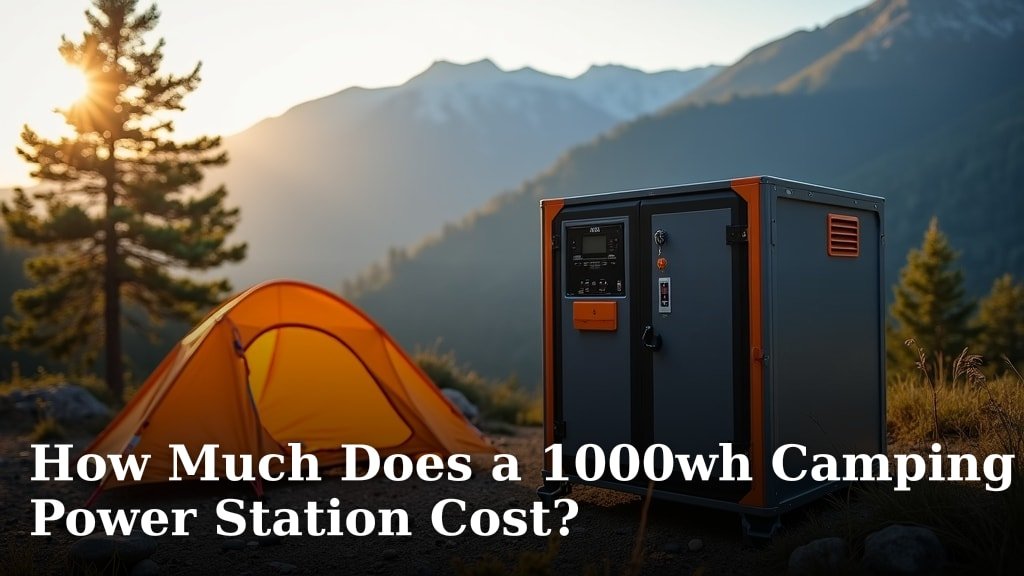
A 1000Wh camping power station typically costs between $500 and $1,500. The exact price for a 1000Wh camping power station can vary quite a bit.
Factors like the brand, features, and battery type play a big role in the final price. You’ll find options for every budget, whether you need something basic or a top-of-the-line model with all the bells and whistles.
- Expect to pay $500 – $1,500 for a 1000Wh power station.
- Brand reputation affects the price.
- Extra features like fast charging increase cost.
- Battery chemistry (LiFePO4 vs. NMC) impacts durability and price.
- Sales and promotions can offer savings.
Ready to find out why these prices are all over the map? Let’s dive into what makes a 1000Wh camping power station worth every penny and how to choose the best one for your adventures.
The True Cost of a 1000Wh Camping Power Station
A 1000Wh camping power station typically costs between $500 and $1,500. This range covers many options, from basic models to those with advanced features and premium brands.
What Influences the Price Tag?
Many things affect how much you’ll pay for a 1000Wh power station. It’s like buying a car; you have different brands, features, and engine types. We’ve looked into the market and found several key factors that drive these price differences.
Brand Reputation and Warranty
You’ll often find that well-known brands carry a higher price. Companies like Jackery, Goal Zero, and EcoFlow have built a strong reputation for reliability and customer support. This often means you’re paying for peace of mind, knowing you have a quality product.
A longer or more comprehensive warranty can also add to the cost. Reputable brands usually offer better warranties, sometimes up to 5 years, which protects your investment. This is a big plus if you plan to use your power station often.
Battery Chemistry: LiFePO4 vs. NMC
The type of battery inside your power station makes a huge difference in cost and performance. The two main types you’ll encounter are Lithium Iron Phosphate (LiFePO4) and Nickel Manganese Cobalt (NMC).
-
LiFePO4 batteries are generally more expensive upfront. However, they offer a much longer lifespan, often lasting 2,500 to 3,500 charge cycles before their capacity drops significantly. This means you might save money in the long run.
-
NMC batteries are typically cheaper to manufacture. They usually offer around 500 to 1,000 charge cycles. While more affordable initially, you might need to replace the unit sooner if you’re a heavy user.
Think about how often you’ll use it. If you’re a weekend warrior, NMC might be fine. For full-time RVers or frequent campers, LiFePO4 could be a smarter choice (Energy Sage).
Output Power (Wattage) and Surge Capability
A 1000Wh power station tells you its capacity, but not how much power it can deliver at once. The continuous wattage output is very important. A unit that can output 1000W or more continuously will cost more than one that maxes out at 600W, even if both have a 1000Wh battery.
Surge capability is another factor. This is the temporary burst of power a device can provide for appliances that need extra juice to start, like a refrigerator or power tool. Higher surge ratings often mean more robust internal components, which adds to the price.
Key Features That Add to the Price
Just like with any gadget, extra features make a power station more expensive. We’ve seen some amazing innovations that truly improve the user experience, but they come at a cost.
Fast Charging Technology
Nobody wants to wait forever for their power station to recharge. Many higher-priced models now include advanced fast-charging technology. This means you can often recharge the unit from 0% to 80% in just an hour or two, rather than six to eight hours.
This convenience is a game-changer for those who need quick turnarounds, like campers moving from site to site or people preparing for an unexpected power outage. This speedy recharge capability uses more sophisticated charging circuits, adding to the unit’s cost.
Multiple Output Ports and Wireless Charging
The number and variety of output ports affect the price. More AC outlets, USB-A, USB-C (especially Power Delivery enabled), and 12V DC ports allow you to power more devices simultaneously. Some premium models even offer wireless charging pads on top.
Having a wide array of port options means greater versatility for your devices, but it also means more components and complexity in the unit’s design. Think about what you plan to charge. Do you need to run a mini-fridge, charge a laptop, and power your phone all at once?
Smart Features and App Connectivity
Many modern power stations come with smart features. These often include a companion smartphone app that lets you monitor battery levels, control output ports, and even update firmware remotely. This level of control and information is incredibly useful.
Some even integrate with your home solar setup or have energy management features. These smart capabilities require additional hardware and software development, which, you guessed it, increases the price.
Understanding Value: What Do You Really Need?
When you’re looking at different price points, it’s easy to get overwhelmed. The trick is to match your needs with the power station’s capabilities. Don’t pay for features you won’t use.
| Feature/Aspect | Lower Cost ($500-$800) | Mid-Range ($800-$1200) | Higher Cost ($1200-$1500+) |
|---|---|---|---|
| Brand | Lesser-known, emerging brands | Well-established, good reputation | Premium, industry leaders |
| Battery Type | Often NMC, shorter cycle life | Mix of NMC and LiFePO4 | Typically LiFePO4, long cycle life |
| Output Wattage | ~600W-800W continuous | ~800W-1000W continuous | 1000W+ continuous, high surge |
| Charging Speed | Slower, 6-8+ hours to full | Moderate, 3-5 hours to full | Fast, 1-2 hours to 80% |
| Ports | Fewer AC/USB ports | Good variety of ports | Abundant, USB-C PD, wireless |
| Smart Features | Basic display, no app | Basic app connectivity | Advanced app, smart energy management |
| Warranty | 1-2 years | 2-3 years | 3-5 years |
We found that many people overestimate their power needs. A simple checklist can help you narrow down your choices and find the sweet spot between price and function.
Budget-Friendly Options and When to Splurge
You don’t always need the most expensive model to have a great camping experience. Sometimes, a more affordable unit does the job perfectly. On the other hand, there are times when investing more makes perfect sense.
Finding Deals and Discounts
We often see sales and promotions, especially around holidays like Black Friday, Prime Day, or during camping season. Subscribing to newsletters from your favorite brands can give you early access to these discounts. We’ve also noticed that some retailers offer bundles, pairing a power station with solar panels at a reduced price.
Refurbished units, often sold directly by the manufacturer, can also be a fantastic way to save money. These units are typically inspected and certified, coming with a warranty, so you still get peace of mind.
When a Higher Price is Justified
Consider a more expensive model if you plan on heavy, long-term use. If you’re a full-time RVer, regularly boondocking, or if you need it for critical home backup during outages, the extra durability and longer lifespan of a LiFePO4 battery are worth the investment. Think of it as buying a tool that will truly last.
If you rely on your power station for medical devices, or if you simply value the convenience of fast charging and smart features, then splurging on a premium model might enhance your overall experience significantly. It’s about how much you value those extra layers of comfort and reliability.
Your Power Station Checklist
Before you make a purchase, ask yourself these questions:
- Do I need a long-lasting battery (LiFePO4) or is a cheaper option (NMC) enough?
- What’s the maximum wattage I need to run my most power-hungry device?
- How quickly do I need the power station to recharge?
- Are advanced features like app control or wireless charging important to me?
- What’s my budget, and can I wait for a sale to get a better deal?
Answering these questions will help guide you toward the best 1000Wh camping power station for your adventures and your wallet.
Conclusion
Choosing the right 1000Wh camping power station means balancing your budget with your actual needs. We’ve shown that prices range from $500 to $1,500, influenced by brand, battery type, and features like fast charging or smart connectivity. Don’t pay for what you won’t use, but also recognize when a higher price offers better long-term value and reliability.
By considering your usage habits and prioritizing key features, you can find a power station that perfectly fits your adventures. Use our checklist to guide your decision and make a smart investment for years of powered outdoor fun.
Frequently Asked Questions
Is a 1000Wh power station enough for camping?
For most weekend campers, a 1000Wh power station is a great sweet spot. It can typically run essential items like lights, charge phones and laptops multiple times, and even power a portable fridge for a day or two. Your specific needs will dictate if it’s truly sufficient.
Why are some 1000Wh power stations so much more expensive than others?
The price differences mainly come down to the battery type (LiFePO4 is pricier but lasts longer), the brand’s reputation, and advanced features. Models with faster charging, more output ports, higher surge wattage, or smart app control will naturally cost more due to better components and technology.
Can I charge a 1000Wh power station with solar panels?
Yes, nearly all 1000Wh camping power stations are designed to be charged via solar panels. This is a popular option for off-grid camping, though the charging speed depends on the panel’s wattage and sunlight conditions. Most brands offer compatible solar panels.
How long do 1000Wh power station batteries typically last?
The battery lifespan is measured in charge cycles. NMC batteries usually offer 500-1,000 cycles, while LiFePO4 batteries last much longer, often 2,500-3,500 cycles. A cycle is one full charge and discharge. This means LiFePO4 models provide many more years of use.
Are cheaper 1000Wh power stations safe to use?
Generally, yes, most power stations sold by reputable retailers meet safety standards. However, cheaper models might use lower-quality components or have fewer built-in safety protections compared to premium brands. Always check for certifications and read user reviews before purchasing a budget option.