
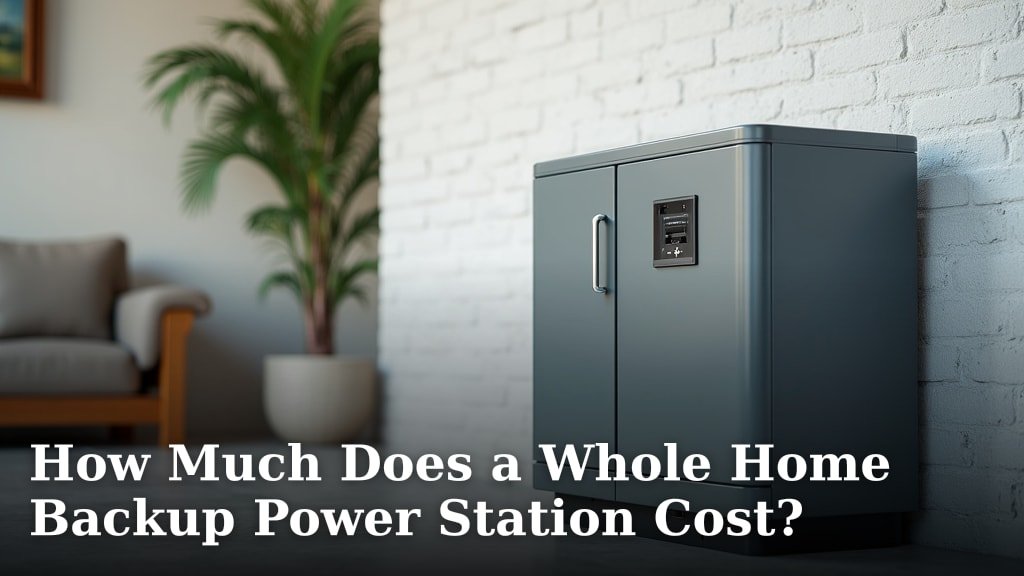
A whole home backup power station can cost anywhere from $2,000 to over $10,000 for the unit itself, with installation adding another $1,000 to $5,000 or more. The final price depends on its power capacity and features.
You’re looking at a pretty wide range, aren’t you? We found that prices vary greatly based on factors like battery size, brand reputation, and smart features. Are you aiming to power just a few essentials or your entire home?
TL;DR:
- Units alone range from $2,000 to $10,000+.
- Installation can add $1,000 to $5,000+.
- Cost depends on power capacity.
- Battery size and brand affect price.
- Consider what you need to power.
Let’s break down exactly what goes into the cost of a whole home backup power station, helping you budget wisely for your energy peace of mind.
Understanding the Investment in a Home Backup Power System
A whole home backup power station is a significant investment. You’re buying peace of mind and protection from outages.
We found that the cost varies widely based on several key factors. Thinking about what you truly need is the first step.
Key Factors Influencing Your Power Station’s Price
Many things can affect the final price tag of your home backup system. It’s more than just the unit itself.
You’ll want to consider the power capacity, battery chemistry, and brand. Each plays a big role in your budget.
Power Capacity and Output Needs
How much power do you actually need? This is perhaps the most critical question for your wallet.
Do you just want to keep your fridge running, or do you need to power your entire house, including your AC?
Larger homes or those with high-demand appliances will need a higher capacity system. This always costs more.
A smaller, essential-only system might be 2,000-5,000 watts. A full home system could be 10,000 watts or more.
Battery Chemistry and Lifespan
The type of battery inside your power station greatly impacts its cost and longevity.
Most modern units use lithium-ion (LiFePO4) batteries. These are more expensive upfront but last longer.
Older lead-acid batteries are cheaper but have a shorter lifespan. They also require more maintenance.
We found that LiFePO4 batteries offer thousands of charge cycles. This means you get many years of reliable power.
Brand Reputation and Features
Just like with cars, certain brands command higher prices. You often pay for reliability and customer support.
Well-known brands might include Dometic, EcoFlow, Jackery, and Goal Zero. They offer robust warranties and features.
Advanced features like app control, solar input optimization, or rapid charging also add to the price.
Do you need all the bells and whistles, or just a dependable power source? Consider your priorities.
Breaking Down the Cost Components
The total cost isn’t just the unit price. You need to budget for several other components.
Installation, accessories, and maintenance all add up. Don’t forget these hidden costs.
Unit Price Ranges by Capacity
Let’s look at some typical price ranges for the power station units themselves. These are estimates, of course.
We found these ranges through research of popular models and current market prices.
| Capacity (Watt-Hours) | Approximate Price Range (Unit Only) | Typical Use Case |
|---|---|---|
| 2,000 Wh – 5,000 Wh | $2,000 – $4,500 | Essential circuits, small appliances, lights, fridge |
| 5,000 Wh – 10,000 Wh | $4,500 – $8,000 | Medium home, multiple appliances, some AC use |
| 10,000 Wh – 20,000+ Wh | $8,000 – $15,000+ | Whole home, heavy AC, electric vehicles |
Remember, these are just for the power station unit. Your specific needs will dictate which category you fall into.
Installation Costs: What to Expect
Installation is a major part of the overall expense. It’s not usually a DIY project.
You’ll likely need a licensed electrician. This ensures safety and compliance with local codes.
Transfer Switch and Wiring
A critical component is the transfer switch. This safely disconnects your home from the grid during an outage.
It’s required to prevent backfeeding electricity to the grid. This protects utility workers (OSHA guidelines).
Installation of a manual transfer switch might cost $1,000-$2,500. An automatic switch can be $2,000-$5,000 or more.
The wiring required to connect the power station to your home’s electrical panel also adds to labor costs.
Labor and Permits
Electrician labor rates vary by region. We found that hourly rates can be $75-$150 per hour or more.
The complexity of your home’s electrical system affects installation time. Older homes might be more challenging.
You’ll also need permits from your local municipality. These costs are usually a few hundred dollars.
Permits ensure the work meets safety standards. This protects you and your property.
Optional Accessories and Upgrades
Do you plan to charge your power station with solar panels? That’s an added cost.
Solar panel kits can range from a few hundred dollars for small portable panels to thousands for a roof array.
Other accessories might include extra battery packs for extended runtime. These can add $1,000-$3,000 per pack.
Consider a durable cover or wheeled cart for portability if you plan to move your unit often.
Maximizing Value: Getting the Most for Your Money
How can you get the best backup solution without overspending? Smart planning is key.
You want to balance your needs with your budget. Don’t pay for more than you’ll use.
Assess Your True Power Needs
Before you even look at prices, make a list of essential appliances. What absolutely must stay on during an outage?
Think about your refrigerator, lights, internet router, and maybe a medical device. Then consider other comforts.
We recommend calculating the wattage of these items. You can often find this on appliance labels.
This helps you determine the minimum capacity you need. You might be surprised by how little is truly essential.
Consider Hybrid Solutions
Perhaps a whole home solution isn’t right for you. Maybe a hybrid approach makes more sense.
You could get a smaller power station for critical items. Then, a portable generator for larger occasional needs.
This can save you money upfront. It also gives you flexibility for different types of outages.
Many homeowners find this a practical compromise. It offers power without the top-tier investment.
Checklist: What to Ask Before Buying
Before you commit, ask these questions. They will help you choose wisely.
- What’s the total wattage I need to run my essential appliances?
- How many hours or days do I need backup power for?
- Is a manual or automatic transfer switch best for my home?
- Does the price include all necessary cables and connectors?
- What’s the warranty on the unit and the battery?
- Are there any local incentives or rebates for backup power systems?
Taking your time to research and ask questions will pay off. You’ll avoid buyer’s remorse and get the right system for your home.
Conclusion
Navigating the cost of a whole home backup power station involves balancing your budget with your unique power needs. You’ve seen how factors like capacity, battery type, and installation complexities significantly impact the final price. While the investment can range from a few thousand to well over ten thousand dollars, remember you’re investing in reliable power and peace of mind.
By carefully assessing your essentials, considering hybrid solutions, and asking the right questions, you can find a system that fits your home without overspending. Take the time to plan now, and you’ll be well-prepared for any future outages.
Frequently Asked Questions
Is a whole home backup power station worth the cost?
For many homeowners, the security and convenience of a whole home backup power station are well worth the investment. It protects against food spoilage, keeps essential medical equipment running, and maintains comfort during extended outages. Your personal need for continuous power will determine its value.
Can I install a whole home backup power station myself to save money?
We strongly recommend against DIY installation for whole home backup power stations. Connecting to your home’s electrical system requires a licensed electrician to ensure safety and compliance with local codes. Improper installation can be dangerous and void warranties.
How long do whole home backup power station batteries last?
Most modern whole home backup stations use lithium iron phosphate (LiFePO4) batteries, which can last for 10-15 years or more. They typically offer thousands of charge cycles, meaning many years of reliable use before significant degradation. Lifespan depends on usage and maintenance.
Do whole home backup power stations require maintenance?
Compared to traditional generators, whole home battery backup systems require minimal maintenance. You’ll primarily need to keep them charged, ensure vents are clear, and occasionally check connections. We found that most systems have self-monitoring features for easier upkeep.
Will a whole home backup power station increase my home’s value?
While difficult to quantify precisely, a whole home backup power station can enhance your home’s appeal and value, especially in areas prone to power outages. It’s seen as a desirable upgrade, offering modern convenience and security to potential buyers.
