Is Anker or Jackery Better?
On this page (3 sections)
When comparing Anker versus Jackery, we found that Anker generally offers better value for money and a wider range of smaller power banks, while Jackery excels with larger, more robust portable power stations for outdoor adventures. Your best choice depends on your specific power needs and budget.
We understand you’re looking for reliable portable power, whether it’s for a camping trip, an emergency backup, or just keeping your devices charged on the go. Both brands are popular, but they each have different strengths and specialties. Knowing these differences helps you make a smart purchase.
- Anker: Often better for everyday charging and smaller devices.
- Jackery: Great for heavy-duty outdoor use and larger appliances.
- Price: Anker usually offers more budget-friendly options.
- Portability: Anker’s smaller devices are highly portable.
- Capacity: Jackery offers higher capacity in its power stations.
Let’s dive deeper into what makes each brand unique, helping you decide which one truly fits your lifestyle.
Comparing Anker and Jackery for Your Power Needs
Deciding between Anker and Jackery boils down to understanding what you need most from a portable power solution. Are you charging your phone at a coffee shop or powering a mini-fridge in the wilderness? Both brands offer excellent products, but their sweet spots are quite different.
Anker: Your Everyday Power Companion
Anker has built a strong reputation for its wide array of charging accessories. We often find their products in backpacks, briefcases, and home offices. They focus on making power accessible and convenient for daily use. Think of Anker as your reliable sidekick for all things digital.
What Anker Does Best
When we look at Anker’s strengths, a few things stand out. They are masters of portability and everyday convenience. Need to charge your phone quickly? Anker probably has a solution. Have a tablet that always runs out of juice? Anker’s got you covered.
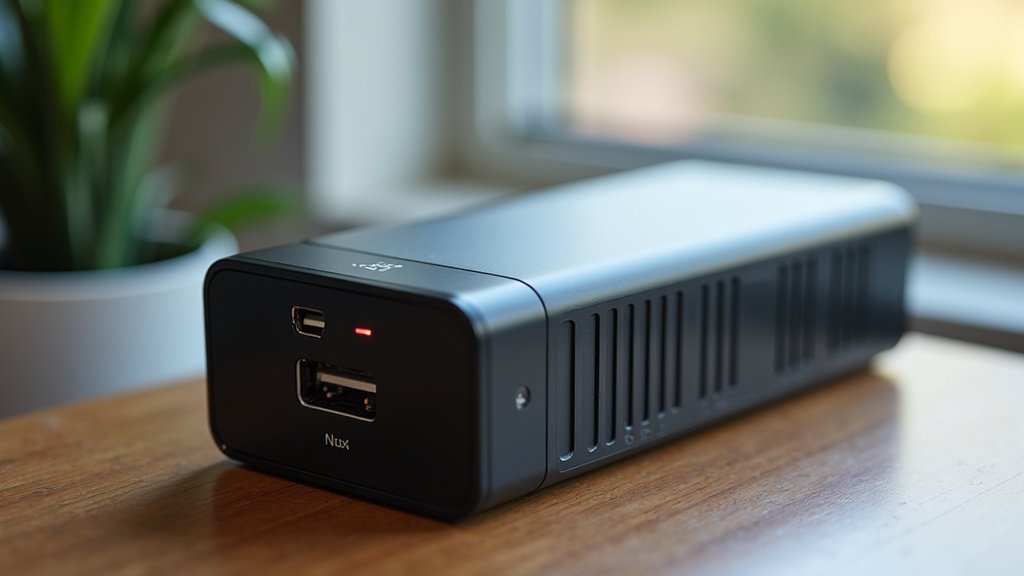
- Power Banks: Anker’s power banks are legendary. They come in various sizes, from pocket-friendly lipstick-sized chargers to larger bricks that can charge multiple devices.
- Wall Chargers: Their GaN (Gallium Nitride) chargers are incredibly compact yet powerful. You can charge laptops and phones simultaneously with a single, small adapter.
- Cables: Durable charging cables that stand up to daily wear and tear are another Anker staple. They often outlast the standard cables that come with your devices.
- Value: For the features and quality, Anker products frequently offer excellent value for your money. You get reliable performance without breaking the bank.
Anker’s Limitations
While Anker excels in many areas, it’s important to understand where it might not be the best fit. If you’re planning a multi-day camping trip off-grid, a small Anker power bank likely won’t be enough. Their focus is not on powering large appliances or providing extensive backup power for an entire home.
- Limited High Capacity: While Anker has some larger power stations, they generally don’t reach the immense capacities that Jackery offers.
- Outdoor Ruggedness: Many Anker products are designed for indoor or light outdoor use. They might not withstand harsh weather or rough handling as well as some of Jackery’s gear.
- AC Output: Smaller Anker power banks typically lack AC outlets, which means you can’t plug in standard household appliances.
Jackery: The Outdoor Adventurer’s Choice
Jackery has carved out its niche in the world of outdoor power solutions. When you’re thinking about camping, RV trips, or emergency home backup, Jackery often comes to mind. They specialize in portable power stations that can handle more demanding tasks. Jackery is like your sturdy utility vehicle, ready for adventure.
What Jackery Does Best
Jackery’s power stations are built for situations where you need serious power on the go. They prioritize high capacity and versatile output options. Imagine powering a blender at your campsite or keeping essential medical equipment running during a power outage.
- Portable Power Stations: This is Jackery’s bread and butter. They offer a range of power stations from smaller units to large, high-capacity models that can power refrigerators or power tools.
- AC Outlets: Most Jackery power stations include multiple AC outlets, allowing you to plug in standard appliances just like at home.
- Solar Compatibility: Jackery heavily promotes its solar generators, which combine their power stations with foldable solar panels. This lets you recharge your unit using sunlight, perfect for extended off-grid stays.
- Durability: Their products are often designed with a more robust, outdoor-friendly build, ready for the bumps and scrapes of an adventure.
Jackery’s Limitations
While Jackery is fantastic for heavy-duty use, it has its own set of trade-offs. You wouldn’t typically carry a Jackery power station in your pocket for a quick phone charge. Their products are geared towards different scenarios.
- Price Point: Jackery power stations, especially the higher capacity models, tend to be more expensive than most Anker products. You’re paying for serious power.
- Portability (Size & Weight): These units can be quite large and heavy. While “portable,” they are meant to be carried to a campsite or loaded into a vehicle, not slipped into a small bag.
- Everyday Charging: For simply charging a phone or tablet multiple times, a Jackery power station can be overkill and less convenient than a small Anker power bank.
Key Differences: Anker vs. Jackery
Let’s break down the main distinctions to help clarify which brand aligns better with your expectations. It’s not about one being definitively “better,” but rather which one is better for your specific needs.
| Feature | Anker | Jackery |
|---|---|---|
| Primary Focus | Everyday charging, small devices, mobility | Outdoor adventure, emergency backup, larger appliances |
| Typical Product | Power banks, wall chargers, cables | Portable power stations, solar generators |
| Capacity Range | Smaller (e.g., 5,000 mAh – 25,600 mAh for power banks) | Larger (e.g., 240 Wh – 3,000 Wh for power stations) |
| AC Outlets | Rarely on smaller units, some larger power stations | Common on almost all power stations |
| Price Point | Generally more affordable | Higher, especially for larger capacities |
| Best For | Commuting, travel, home use, light outdoor activity | Camping, RVing, tailgating, power outages, worksites |
| Ruggedness | Standard consumer electronics durability | Often designed for outdoor resilience |
When Should You Choose Anker?
You should lean towards Anker if your primary goal is to keep your personal electronics charged regularly. Consider Anker if:
- You need a portable charger for your smartphone, tablet, or earbuds.
- You travel frequently and want a compact, reliable charging solution for your devices.
- You’re looking for fast-charging wall adapters for your home or office.
- Your budget is a significant concern, and you want great value.
- You mostly charge devices with USB-A or USB-C connections.
- You value compact size and lightweight design above all else for daily carrying.
When Should You Choose Jackery?
Opt for Jackery when your power needs extend beyond small personal electronics. Jackery is likely your best bet if:
- You plan on camping, RVing, or spending extended time off-grid.
- You need to power larger items like a cooler, portable fan, lights, or even some small power tools.
- You want a reliable emergency power backup for essential home appliances during outages.
- You’re interested in integrating solar panels for sustainable recharging.
- You require multiple AC outlets to plug in standard household items.
- You prioritize high capacity and robust construction for demanding environments.
A Note on Quality and Safety
Both Anker and Jackery are reputable brands that adhere to safety standards. We found that both companies consistently receive positive reviews for the quality and reliability of their products. When you’re dealing with electricity, safety is paramount, and it’s reassuring to know both brands prioritize this. They invest in safety features like surge protection, temperature control, and overcharge protection (National Electrical Code).
Making Your Final Decision: A Checklist
To help you solidify your choice, ask yourself these questions:
- What devices will you primarily charge? (Small electronics vs. larger appliances).
- Where will you be using it most often? (Daily commute vs. remote wilderness).
- How much capacity do you truly need? (A few phone charges vs. days of power).
- Is AC output a must-have? (Do you need to plug in standard wall items?).
- What’s your budget? (Are you looking for budget-friendly or a premium investment?).
- How important is portability vs. raw power? (Pocket-sized vs. suitcase-sized).
Conclusion
Choosing between Anker and Jackery truly depends on your lifestyle and power demands. We’ve seen that Anker shines for its everyday convenience and affordability, perfect for keeping your personal devices charged. Jackery, on the other hand, is your go-to for serious power needs outdoors or during emergencies.
Before you buy, take a moment to consider your most frequent power scenarios. Do you need a pocket-sized boost or a robust energy hub? Once you clarify your primary use case, you’ll easily find the right power solution that fits your specific adventures and daily routines.
Frequently Asked Questions
Can I use an Anker power bank to charge a laptop?
Many Anker power banks, especially their larger models with USB-C Power Delivery, can indeed charge compatible laptops. Always check the power bank’s output specifications and your laptop’s charging requirements to ensure compatibility and sufficient power.
Are Jackery power stations waterproof for outdoor use?
While Jackery power stations are designed to be durable for outdoor environments, they are generally not waterproof. They can withstand light splashes or dust, but you should protect them from heavy rain or submersion to prevent damage.
Which brand offers faster charging speeds?
Both Anker and Jackery offer fast-charging capabilities, but for different devices. Anker often has faster charging for small electronics like phones and tablets. Jackery power stations offer rapid charging for larger devices and can be quickly recharged themselves via wall outlets or solar.
Is it safe to leave Anker or Jackery products plugged in all the time?
Both brands incorporate safety features to prevent overcharging. However, for battery longevity and overall safety, it’s generally best practice to unplug devices once they are fully charged. Avoid leaving them plugged in for extended periods when not in use.
Can I connect solar panels from one brand to the other’s power station?
It’s usually best to use solar panels from the same brand as your power station to ensure full compatibility and efficiency. While some universal connections exist, using mismatched panels might lead to slower charging or potential damage if voltage and current requirements don’t align perfectly.