7 Best Battery Box Heaters (November 2026)
The best battery box heaters include the Zerostart 2800063 Electric Battery Blanket Battery Heater for large truck batteries, the Facon 8-1/2'' x 5-1/2'' Silicone Battery Heater for under-battery pads, and the DAHTEC 1500W Electric Space Heater for Indoor for warming the space around the battery.
On this page (10 sections)
- Best battery box heaters for cold weather, compared by size and power
- Best battery box heater picks at a glance
- How we compared these battery box heaters
- What size battery box heater fits your battery?
- Which battery chemistry can you heat safely?
- How much wattage do you need for cold weather?
- Thermostat control: what the numbers mean
- Can you run a heater from a power station or generator?
- How do you install and care for a battery heater?
- Which battery box heater should you buy?
The best battery box heater for most readers is the Zerostart 2800063, because its 36-inch wrap covers large batteries that smaller pads miss. Our score weighs specs, features and buyer feedback against what you are shopping for.
Cold weather lowers cranking power and slows charging. A heater helps maintain suitable battery temperatures during cold-weather outdoor use, so the battery sits warmer before you start the engine or draw power.
Cold also thickens engine oil and makes starter motors work harder. That is why some buyers pair a battery warmer with an oil pan pad.
Each tool solves only part of the winter start problem.
Start by checking your battery type. If you are unsure what you own, our guide on what is a deep cycle battery explains lead-acid, AGM and lithium differences that affect heater choice.
Measure before you buy. Record battery length, width, height and circumference, plus tray size and distance to the nearest outlet.
Those four numbers decide fit more than brand names do.
Our picks at a glance
-
1
 Best for large truck batteries
Zerostart 2800063 Electric Battery Blanket Battery Heater
9.7/10 our score
See it on Amazon -
2
 Best for under-battery pads
Facon 8-1/2'' x 5-1/2'' Silicone Battery Heater
9.5/10 our score
See it on Amazon -
3
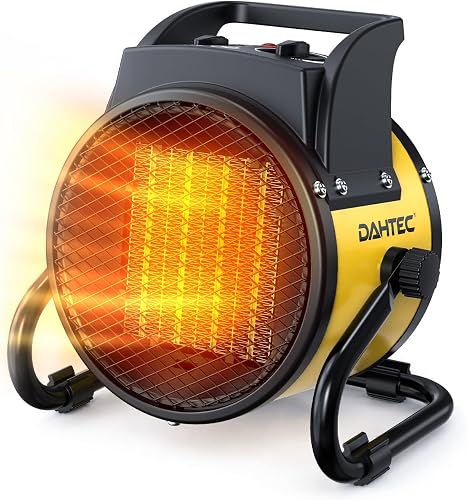 Best for warming the space around the battery
DAHTEC 1500W Electric Space Heater for Indoor
9.2/10 our score
See it on Amazon
- 4
 Best for engine oil warmthCheck it
- 5
 Check it
Maichis 8-1/2'' x 7-7/8'' Silicone Battery Heater
Best for wider battery trays - 6
 Check it
Kat's 22400 60 Watt 5.5"x 8.5" Battery
Best for simple car and truck pads - 7
 Check it
Walfront 4 Pcs Silicone Rubber Heating Pad
Best for 12 volt DIY setups
Best battery box heaters for cold weather, compared by size and power
Each pick below solves a different job. Wraps cover sides, pads heat from below, and the space heater warms a room.
Match the form to your battery box before you compare wattage.
Zerostart 2800063 Electric Battery Blanket Battery Heater: Best for large truck batteries
- 36-inch blanket wrap, 80 watts, 120 volts
- Thinsulate thermal insulation
- Fits series 24, 25, 27, 31, 34, 35, 38 and 74 batteries
- CSA approved
A 36-inch wrap-around blanket for large vehicle batteries, with insulation to hold warmth around the case.
Pros
- Fits many large battery series
- Insulated wrap design
- CSA approved
Cons
- Needs 120 volt AC power
- Wrap fit depends on battery circumference
Zerostart suits owners of large vehicle batteries in series 24, 24F, 24H, 24R, 24T, 25, 27, 27F, 27H, 31, 34, 34R, 35, 38 and 74. Its 36-inch length and 5-inch height wrap around the case, so heat reaches the sides instead of only the base.
The blanket uses Thinsulate thermal insulation to help maintain battery temperature in warm or cold weather. Zerostart says the wrap warms the battery core to 60 to 70 degrees Fahrenheit above ambient temperature for quick starts.
It runs at 80 watts on 120 volts, with a 30-inch ground cord and a 120 volt 15 amp plug type. That draw is modest for a shore outlet, and far lower than a space heater, which helps when you plug in overnight.
The dimensions are 36 by 5 by 0.5 inches and the weight is 11.36 ounces, so it adds little bulk around the battery. The 1 year manufacturer warranty is also worth noting if you compare build support.
The trade-off is fit. You must measure battery circumference and match it to the listed series.
A wrap that is too short leaves exposed sides, and one that is too long folds over itself.
If your battery is lithium, pause here. Several pads in this guide exclude lithium-ion, so check chemistry before you choose any warmer.
Facon 8-1/2'' x 5-1/2'' Silicone Battery Heater: Best for under-battery pads
- 8-1/2 x 5-1/2 in silicone pad, 60 watts, 120 volts
- Thermostatically controlled with auto shut-off
- 72-inch cord
- 1.8mm thin pad
A thin under-battery pad that warms to about 68 degrees Fahrenheit, then shuts off by thermostat.
Pros
- Thermostat auto shut-off
- Thin pad fits under battery
- Long 72-inch cord
Cons
- For lead-acid and AGM only, per Facon
- Not for insulated battery boxes, per Facon
Facon suits lead-acid and AGM batteries that sit in an open tray. Its 8-1/2 by 5-1/2 inch pad slides under the battery, and at 1.8mm thin it needs no tools or extra hardware.
Facon says the pad warms the battery to about 68 degrees Fahrenheit in 10 to 30 minutes. A built-in thermostat then turns off automatically, so you do not need to watch it or guess when to unplug.
It runs at 60 watts on 120 volts, with a 72-inch cord and a 2-prong plug. The long cord helps reach an outlet from a tray or box edge, which is useful when the battery is at the back of a truck bed or under a hood.
The waterproof silicone coating resists oil, battery acid and wear. That matters under a hood or in a battery box that sees leaks, splashes and road grime through the season.
The limit is chemistry and placement. Facon states this pad is not for lithium-ion, Ni-Cd, ABS plastic cases or insulated battery boxes.
Do not use it above 50 degrees Fahrenheit, per Facon.
DAHTEC 1500W Electric Space Heater for Indoor: Best for warming the space around the battery
- 1500 watts high, 750 watts low, 20 watts fan-only
- Ceramic PTC heating, rooms up to 200 sq ft
- ETL certified, thermostat and overheat protection
- 15-degree adjustable tilt, 80-inch cord
A portable indoor space heater that warms a small room or work zone, not a battery directly.
Pros
- Fast warm air in 3 seconds
- Three modes including fan-only
- Thermostat and overheat protection
Cons
- Indoor use only
- High power draw compared with battery pads
DAHTEC suits a garage, workshop, greenhouse or tent where the battery sits in cold air. This is a space heater, not a battery pad, and it warms the room around the battery rather than touching the case.
It offers 1500 watts high, 750 watts low and 20 watts fan-only. Ceramic PTC heating pushes warm air in 3 seconds, aimed with a 15-degree tilt, and 140 CFM of airflow moves heat across the space.
DAHTEC says it warms small to medium rooms up to 200 square feet. Use the 750 watt setting to hold a milder room, and 1500 watts for a fast warm-up before you work or start a vehicle.
Safety features include a thermostat and overheat protection, with ETL certification for indoor use. The steel body weighs 3.8 lb, has an 80-inch cord, and runs at 12.5 amps on the high setting.
The trade-off is power draw and placement. At 1500 watts it uses far more power than a 60 watt pad.
Keep it on a flat, stable floor, away from fabrics and foot traffic.
PAMASE Oil Pan Heater Pad: Best for engine oil warmth
- 2-pack oil pan heater pads, 150 watts, 120 volts
- Built-in thermal protector, 140 to 158 degrees Fahrenheit range
- Silicone, waterproof and oil-proof
- 5 x 4 x 0.1 in per pad
Two peel-and-stick pads for oil pans, heating oil to help the engine lubricate in cold weather.
Pros
- Two pads included
- Automatic thermal protector
- Waterproof silicone
Cons
- Heats oil pan, not battery directly
- Not for plastic engine surfaces
PAMASE suits cold starts where thick oil, not just a cold battery, slows the engine. These two pads stick to the oil pan and warm the oil before you start, so oil flows and lubricates with less drag.
Each pad runs at 150 watts on 120 volts. A built-in thermal protector keeps temperature around 140 to 158 degrees Fahrenheit, powers off at 194 degrees Fahrenheit, and restarts near 122 degrees Fahrenheit.
The silicone pads are waterproof, oil-proof, low-temperature resistant and hard-wearing. Each measures 5 by 4 by 0.1 inches, the set weighs 9.6 ounces, and the set includes 2 pcs for a pan or a second spot.
Use is simple. Clean grease and grime from the pan, peel the backing, press the pad flush to metal, then plug in the cord.
PAMASE warns against plastic engine surfaces and the air box intake.
The trade-off is scope. This warms oil, not a battery in a box.
If your main problem is a battery that will not crank, a battery pad or wrap will help more directly.
Maichis 8-1/2'' x 7-7/8'' Silicone Battery Heater: Best for wider battery trays
- 8-1/2 x 7-7/8 in silicone pad, 60 watts, 120 volts
- Thermostat on at 32 degrees Fahrenheit, off at 122 degrees Fahrenheit
- 2-prong cord
- Place in battery tray under battery
A wider silicone pad for standard battery trays, with a thermostat that cycles on at freezing.
Pros
- Wider pad covers more tray area
- Thermostat cycles at 32 degrees Fahrenheit
- 60 watts keeps power use modest
Cons
- Not for lithium-ion, Ni-Cd, ABS cases or insulated boxes
- No ground on cord
Maichis suits standard battery trays that need wider coverage than an 8-1/2 by 5-1/2 inch pad. This pad measures 8-1/2 by 7-7/8 inches, so it covers more of the tray base under a large case.
It runs at 60 watts on 120 volts, with a 2-prong cord and no ground. Place the pad in the tray, set the battery on top, and plug it into a power source for hassle-free operation.
The thermostat turns on at 32 degrees Fahrenheit and off at 122 degrees Fahrenheit. That cycle prevents constant heating and helps limit energy use in mild spells, while still starting heat at freezing.
Silicone construction suits automotive battery heating applications and resists the damp, dirty conditions around a tray. The pad weighs 7.83 ounces and is 0.07 inches thick, so it adds little height under the battery.
The limits mirror Facon. Maichis states this pad is not for lithium-ion or nickel cadmium batteries, ABS cases, or insulated battery boxes.
Check chemistry before ordering.
Kat's 22400 60 Watt 5.5"x 8.5" Battery: Best for simple car and truck pads
- 60 watt pad, 5-1/2 x 8-1/2 in
- Silicone covered, acid and oil resistant
- Pliable, place under vehicle battery
- Made in the USA
A straightforward 60 watt under-battery pad for most car and truck batteries.
Pros
- Simple place-under install
- Acid and oil resistant silicone
- Made in the USA
Cons
- No thermostat stated
- Needs 120 volt outlet
Kat's suits car and truck owners who want a simple pad with no controls to learn. Place it under the vehicle battery, plug into a 120 volt outlet, and let it warm the base through the night.
It measures 5-1/2 by 8-1/2 inches and runs at 60 watts. The silicone cover resists acid and oil, which helps in under-hood and tray use where leaks happen.
Kat's says it fits most car and truck batteries. The pliable pad installs without special skills, needs no mechanical ability, and it is made in the USA.
The listed product weight is 6.7 ounces, so it is easy to position.
The trade-off is control. No thermostat is stated for this model, so you must manage plug time yourself.
That is fine for a nightly plug-in routine, but less hands-off than thermostat models.
Compare it with Facon if you want auto shut-off. Compare it with Zerostart if your battery needs side coverage from a wrap.
Walfront 4 Pcs Silicone Rubber Heating Pad: Best for 12 volt DIY setups
- 4-pack silicone pads, 20 watts, 12 volts
- About 50 x 150mm per pad
- Max temperature 200 degrees Celsius
- Thin and flexible, nickel chromium wire element
Four small 12 volt silicone pads for DIY wrapping or industrial thermal needs, with a separate adapter required.
Pros
- Runs on 12 volts
- Four pads in one set
- Flexible for wrapping
Cons
- Adapter required, not for direct 110 or 200 volt use
- Higher max temperature needs care
Walfront suits DIY builders who run 12 volt systems and want small pads to wrap tubes, tanks or battery sides. This set includes 4 pcs of silicone rubber pads for mixing and thermal insulation work.
Each pad measures about 50 by 150mm and runs at 20 watts on 12 volts. A separate power adapter is required, and the pads cannot connect directly to 110 or 200 volt supplies.
The silicone rubber exterior gives insulation, and nickel chromium alloy wire inside transfers heat to the surface. Walfront states a maximum temperature of 200 degrees Celsius, with working ranges around 120 to 150 degrees Celsius.
That high heat range is the main caution. Small 20 watt pads can still get very hot, so keep them on suitable surfaces, watch the setup, and use a rated adapter for the job.
The trade-off is DIY skill. This is not a plug-in battery warmer with a thermostat.
It suits tinkerers who understand 12 volt wiring, not readers who want a ready-made pad for a tray.
Best battery box heater picks at a glance
Use this table to narrow by form first, then by power. Wraps suit large batteries, pads suit trays, and the space heater suits rooms.
| Product | Best for | Length | Power | Height | Our score |
|---|---|---|---|---|---|
| Zerostart 2800063 Electric Battery Blanket Battery Heater | large truck batteries | 36 in | 80 watts, 120 volts | 5 in | 9.7 |
| Facon 8-1/2'' x 5-1/2'' Silicone Battery Heater | under-battery pads | 60 watts, 120 volts | 9.5 | ||
| DAHTEC 1500W Electric Space Heater for Indoor | warming the space around the battery | 1500 watts | 9.2 | ||
| PAMASE Oil Pan Heater Pad | engine oil warmth | 150 watts, 120 volts | 9.0 | ||
| Maichis 8-1/2'' x 7-7/8'' Silicone Battery Heater | wider battery trays | 60 watts, 120 volts | 8.7 | ||
| Kat's 22400 60 Watt 5.5"x 8.5" Battery | simple car and truck pads | 60 watts | 8.5 | ||
| Walfront 4 Pcs Silicone Rubber Heating Pad | 12 volt DIY setups | 20 watts, 12 volts | 8.3 |
Read the table from left to right by job. If your battery is large, start with the wrap row.
If it sits in a tray, start with pad size and thermostat rows.
If your garage is the problem, start with the space heater row. If your oil is thick, start with the oil pan row.
That order saves time.
How we compared these battery box heaters
We compared specs, features and buyer feedback against what a cold-weather shopper needs. Form came first, because a pad under a battery and a wrap around it do different work.
We checked size, wattage, voltage, cord length and thermostat ranges from the product data. We also noted chemistry limits, because several pads exclude lithium-ion and ABS cases.
Our score weighs specs, features and buyer feedback against what you're shopping for. Higher scores went to products with clear fit guidance, safer controls and broader battery coverage.
We did not test these heaters. Maker claims are labeled with the brand name, and buyer patterns are noted as such.
What we did not compare
We did not rank by price or by star rating alone. Price and rating change often, and a cheap pad that fits poorly helps no one.
We also did not treat a space heater and an oil pan pad as battery heaters. They warm the room and the oil, so they sit in separate rows in the table.
What size battery box heater fits your battery?
The right size depends on tray and case dimensions, not just wattage. Measure length, width and height before you order any pad or wrap.
Measure twice because battery boxes hide the bottom edge. A pad that looks right on top can fold under a wider case base.
Under-battery pads for trays and boxes
Facon at 8-1/2 by 5-1/2 inches and Kat's at 5-1/2 by 8-1/2 inches fit many car and truck trays. Maichis at 8-1/2 by 7-7/8 inches covers a wider base.
A pad should sit flat under the battery without folding. Folds create hot spots and waste heat on empty tray space.
Check tray lips and hold-downs too. A thick pad can lift the battery and change cable tension, so keep total stack height low.
Wraps for large batteries
Zerostart at 36 inches wraps the sides of series 24 to 38 batteries. Measure circumference, because a short wrap leaves cold sides exposed.
A wrap works best when wind hits the sides. Insulation on the wrap then helps hold the heat you add around the case.
Small DIY pads
Walfront pads at about 50 by 150mm suit wrapping small parts, not a full battery base. Use them only where the size truly fits.
Four small pads can cover sides or cables in a DIY build. Plan the layout first so gaps do not leave cold stripes.
Which battery chemistry can you heat safely?
Chemistry limits decide more than brand. Some pads are for lead-acid and AGM only, and they say so in plain terms.
Facon states its pad is for standard lead-acid and AGM batteries. It is not for lithium-ion, Ni-Cd, ABS plastic cases or insulated battery boxes.
Maichis states the same limits for lithium-ion, nickel cadmium, ABS cases and insulated boxes. Respect those limits even if the size looks right.
If you use lithium, look at self-heating lithium batteries and 12 volt lithium batteries with heaters instead. Those designs heat from inside the battery case.
A lithium battery heating pad or a pad for 12 volt lithium batteries may suit lithium better, but only check the maker's compatibility note first.
When in doubt, read the battery label and the heater box before you plug anything in. Chemistry is a safety check, not a preference.
How much wattage do you need for cold weather?
Wattage sets heat output and power draw. Battery pads here run at 60 to 80 watts, while the space heater runs at up to 1500 watts.
A 60 watt pad under a battery warms the base slowly and uses little power. An 80 watt wrap adds side heat for larger cases.
The PAMASE oil pads run at 150 watts each, because they heat oil in a metal pan. That is a different job from warming a battery box.
The DAHTEC space heater at 1500 watts can raise room air fast. It also draws about 25 times the power of a 60 watt pad, so check your circuit and outlet.
Low wattage does not mean weak for a battery. A battery is small and enclosed, so 60 watts for hours can add useful warmth with low draw.
High wattage does not mean better for a battery. A space heater spreads heat into air, so most of it never reaches the battery case.
Thermostat control: what the numbers mean
A thermostat cycles heat on and off at set temperatures. That saves energy and lowers overheating risk.
Facon says its pad warms to about 68 degrees Fahrenheit in 10 to 30 minutes, then shuts off. Maichis says its thermostat turns on at 32 degrees Fahrenheit and off at 122 degrees Fahrenheit.
PAMASE says its thermal protector holds around 140 to 158 degrees Fahrenheit, powers off at 194 degrees Fahrenheit, and restarts near 122 degrees Fahrenheit.
Kat's states no thermostat, so you control plug time. Zerostart states insulation and a warming range, but no auto shut-off in the data.
A thermostat that starts at 32 degrees makes sense for batteries. It waits for freezing, then heats, then stops well before the case gets hot.
Manual pads need a routine. Plug in at night, unplug before you drive, and check the pad by hand for heat and damage.
Can you run a heater from a power station or generator?
You can, but check continuous wattage and runtime first. A 60 watt pad is easy for most sources, while a 1500 watt space heater is a heavy load.
Our guide on portable power stations for space heaters shows which stations handle high wattage. Read it before pairing a space heater with a station.
For general questions, can you run a space heater on a portable power station explains load limits and safety checks.
Battery pads at 60 watts draw far less than a space heater. Still, check outlet type, cord length and runtime before you rely on a station overnight.
Generators add fuel and noise trade-offs. A pad that runs all night on a generator may cost more in fuel than it saves in a failed start.
How do you install and care for a battery heater?
Install starts with a clean, dry battery and tray. Wipe away acid, oil and grime so pads sit flat and wraps hug the case.
Place a pad under the battery or in the tray, then set the battery on top. For a wrap, center it on the sides and secure it so it does not slip.
Plug into a suitable 120 volt outlet and check the cord path. Keep cords away from hot engine parts, moving belts and sharp edges.
Inspect silicone pads for cracks, cuts or melted spots before each cold season. Replace a damaged pad rather than patching it with tape.
Store pads flat and dry when not in use. Unplug heaters before battery service, and never place pads on plastic engine surfaces.
Check the plug and cord for wear each time you use it. A frayed cord is a reason to stop and replace the heater.
Which battery box heater should you buy?
Pick the Zerostart 2800063 if you own a large series 24 to 38 battery and want side coverage with insulation. Pick Facon if you want a thin thermostat pad for lead-acid or AGM trays.
Pick Maichis for a wider tray base with a 32 degree Fahrenheit start point. Pick Kat's for a simple 60 watt pad with no controls to manage.
Pick PAMASE if thick oil is your main cold-start problem, and pick DAHTEC if the room around the battery needs heat. Pick Walfront only for 12 volt DIY projects where you control the setup yourself.
Measure your battery, check chemistry, then match form to job. That order prevents most returns and keeps the heater doing useful work all winter.
Our top 3 picks at a glance
-
1
Best for large truck batteries
Zerostart 2800063 Electric Battery Blanket Battery Heater
9.7/10 our score
See it on Amazon -
2
Best for under-battery pads
Facon 8-1/2'' x 5-1/2'' Silicone Battery Heater
9.5/10 our score
See it on Amazon -
3
Best for warming the space around the battery
DAHTEC 1500W Electric Space Heater for Indoor
9.2/10 our score
See it on Amazon
Frequently asked questions
What is the best battery box heater?
The best battery box heater depends on battery size and chemistry. For large lead-acid truck batteries, a 36-inch wrap gives broad coverage.
For smaller trays, a thermostat pad under the battery is simpler.
Can I use a battery heater with lithium batteries?
Check the heater first. Facon and Maichis state their pads are not for lithium-ion batteries.
If you use lithium, start with a guide to what is a deep cycle battery and check heater compatibility.
Do battery heaters protect against freezing?
A heater adds warmth but does not guarantee winter protection. Pair it with insulation, a full charge and shelter from wind.
Placement under or around the battery matters more than raw wattage.
How long should I leave a battery heater plugged in?
Follow the maker's instructions. Thermostat models cycle on their own.
Manual pads and wraps need your checks so the battery does not overheat or drain your outlet.


