5 Best Portable Power Stations for Phone Charging (October 2026)
The best portable power stations for phone charging include the HOWEASY Portable Power Station for a light travel kit, the Anker SOLIX C200 DC Portable Power Station for several USB devices, and the DaranEner Portable Power Station for mixed phone and AC charging.
On this page (8 sections)
- Best portable power stations for phone charging
- How much battery capacity do phone charging trips need?
- Which ports work best for charging phones?
- Should you choose USB, AC or wireless charging?
- What matters when using a power station during an outage?
- Which portable power station fits travel and outdoor use?
- How we chose these phone charging picks
- Which power station should you choose for phone charging?
The Anker SOLIX C200 DC Portable Power Station is the best portable power station for phone charging when you want a 192Wh battery with five USB charging ports. Pick the BLAVOR if you want a wireless charging pad, or the HOWEASY if low weight and an AC outlet matter more.
A power station can keep phones topped up through a road trip, a campsite stay or a home outage. The right choice depends on how many phones need power, which cables you carry and how easy it is to recharge the station.
These picks differ in capacity, charging ports and weight. We compared those details for repeated phone charging, then considered features that matter when you share power with other small devices.
Our picks at a glance
-
1

-
2
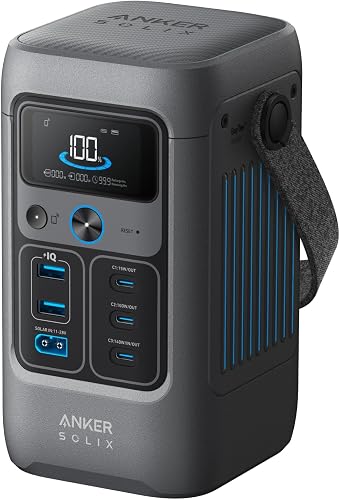 Best for several USB devices
Anker SOLIX C200 DC Portable Power Station
9.6/10 our score
See it on Amazon -
3
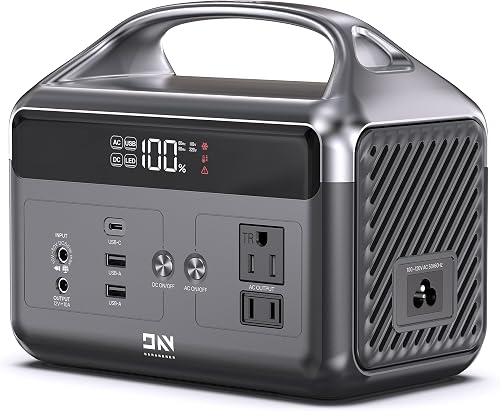 Best for mixed phone and AC charging
DaranEner Portable Power Station
9.2/10 our score
See it on Amazon
- 4
 Best for wireless phone chargingCheck it
- 5
 Check it
BailiBatt Portable Power Station 300W
Best for a group charging setup
Best portable power stations for phone charging
The Anker SOLIX C200 DC is the strongest match for several USB devices, while each other pick adds a different advantage. Choose by the way you expect to charge phones, not by capacity alone.
HOWEASY Portable Power Station: Best for a light travel kit
- 88Wh capacity
- 2.3 lb weight
- USB-C and USB-A ports
- 2 AC sockets
At 2.3 lb, this is the lightest pick here. Its USB ports and AC sockets offer several ways to charge a phone, and its 88Wh capacity suits a compact emergency or travel kit.
Pros
- Lightest pick here
- Three ways to recharge the station
- Built-in LED lighting
Cons
- Smallest stated capacity here
- AC output is limited to 120W
The HOWEASY is a compact choice when you want an emergency or travel power source that is easy to carry. At 2.3 lb, it's the lightest model in this group, and its stated dimensions are 6.6 x 4 x 3 inches.
Its 88Wh capacity is the smallest here, so it makes more sense for a small charging kit than a long trip with several people. The USB-C port is rated at 18W, and it also has two QC 3.0 USB ports and one 5V/2.4A USB port.
Two AC sockets add a way to power a phone charger or another compatible device. The station's AC output is rated at 120W, with 240W peak, so check the device's power needs before plugging it in.
HOWEASY gives three recharge options: an AC outlet, a compatible 15V–24V solar panel, or a 12V/24V car socket. The solar panel is sold separately, and the built-in LED has steady, flash and SOS modes.
Choose it for a light travel kit with a modest number of phones to recharge. If you expect extended use away from a wall outlet, compare its 88Wh capacity with the larger stations below.
Anker SOLIX C200 DC Portable Power Station: Best for several USB devices
- 192Wh capacity
- Three USB-C ports
- Two USB-A ports
- 140W two-way USB-C port
Five USB charging ports give a phone and other small devices several connection options. Its 192Wh capacity is among the larger options here, though the station has no AC outlet.
Pros
- Five USB charging ports
- 192Wh battery
- Up to 100W solar input
Cons
- No AC outlet
- USB-C charger is not included
The Anker SOLIX C200 DC is the best fit when several phones or small USB devices may need charging at once. It has five USB charging ports: three USB-C ports and two USB-A ports.
Its 192Wh battery gives it more stated capacity than the HOWEASY, while the design has no AC outlet. That makes it a focused option for USB-powered devices, rather than for gear that needs a standard wall plug.
The USB-C ports have different output ratings, including one rated up to 140W and another up to 100W. The 140W port supports two-way charging, and Anker says the station can recharge to 80% in 1.3 hours with a 140W USB-C PD 3.1 port.
The station can also recharge from solar or a car. Solar panels are sold separately, and Anker specifies 11–28V panels with an XT60 connector; it also warns against using panels over 100W.
One practical point: a USB-C charger is not included. Anker says to use a USB-C PD charger rated at 18W or higher, with a 140W charging port needed for full-speed charging.
Choose it for a USB-first charging setup with several devices. If you need to power a mix of phones and gear with AC plugs, the DaranEner or BailiBatt may suit your setup better.
DaranEner Portable Power Station: Best for mixed phone and AC charging
- 192Wh capacity
- 300W output
- USB-C PD up to 60W
- Two AC outlets
This station combines USB charging with two AC outlets, so it can support a phone alongside devices that need a wall-style plug. Its 192Wh capacity and 5.73 lb weight make it a middle-sized option.
Pros
- USB-C PD port up to 60W
- Two AC outlets
- Three recharging methods
Cons
- Solar panel and car charging cable are not included
- AC output is limited to 300W
The DaranEner suits buyers who want USB charging and AC outlets in one station. Its 192Wh capacity is paired with a 300W output and two AC outlets, giving you options for a phone, a light or another compatible device.
For phone charging, the station has a USB-C PD port rated up to 60W and two QC 3.0 USB-A ports rated at 18W. A 12V DC output adds another option for compatible equipment.
At 5.73 lb, it weighs more than the HOWEASY and Anker, but still fits the portable category. The built-in light offers four modes, including SOS, which can be useful during a nighttime outage or campsite setup.
DaranEner supports AC, car and compatible solar recharging. Solar input is limited to 60W, and the solar panel and car charging cable are not included.
The station's AC output is intended for devices within its 300W limit, not high-power appliances.
Choose it for a blend of phone charging and AC power in one unit. If most of your devices use USB and you want to reduce cable clutter, consider the wireless pad on the BLAVOR instead.
BLAVOR Power Bank Station: Best for wireless phone charging
- 236.8Wh capacity
- 15W wireless charging pad
- Two USB-C ports
- IP67 rating with silicone cover closed
The 15W wireless charging pad can charge a compatible phone without a cable. Its 236.8Wh capacity and five charging outputs suit travel or camping when multiple devices need power.
Pros
- Wireless charging pad
- Largest stated capacity here
- Built-in lantern
Cons
- Wireless charging requires a compatible phone
- Solar panel is sold separately
The BLAVOR is the best match here if you want to set down a compatible phone for wireless charging. Its 15W wireless pad works alongside two USB-C ports and two USB-A ports, for a total of five device charging options.
Its stated capacity is 236.8Wh, more than the other options in this group. That reserve can help when a trip includes several phones, headphones or tablets, though actual charge counts vary by device and charging conditions.
The station weighs 4.5 lb and includes a 360-degree lantern with three warm-light modes. BLAVOR says the lantern can run up to 59 hours on its low mode, but that lighting use draws from the same battery you need for phone charging.
BLAVOR describes the casing as shockproof and rated IP67 when the silicone cover is closed. Treat the cover as part of that rating, and keep charging ports protected from water and debris.
It can recharge through USB-C or a compatible solar panel, which is sold separately. If you use several ports at once, BLAVOR says the combined output from USB-C2 and USB-A is limited to 45W.
Choose it for cable-free charging when your phone supports Qi wireless charging. For travelers carrying several wired devices or needing more output ports, compare the BailiBatt's layout.
BailiBatt Portable Power Station 300W: Best for a group charging setup
- 266Wh capacity
- Seven output ports
- Two USB-C PD ports
- 300W output
Seven output ports give a group several ways to connect phones and other gear at once. The 266Wh capacity is the largest stated here, but this is also the heaviest pick.
Pros
- Seven output ports
- Two USB-C PD ports
- 266Wh capacity
Cons
- Heaviest pick here
- Solar panel is sold separately
The BailiBatt is built for a shared setup with several devices plugged in at once. It has seven output ports, including two USB-C PD ports, two QC3.0 USB-A ports, a 12V car port, a DC output and an AC outlet.
Its 266Wh capacity is the largest stated in this group, and the station is rated for 300W output. At 6.5 lb, it is also the heaviest pick, so it is better suited to a car, campsite or emergency kit than a bag you carry all day.
The two USB-C ports are rated at 24W and 18W. The AC outlets are described as pure sine wave, and the LCD shows input and output wattage along with remaining battery.
A built-in LED offers bright, strobe and SOS modes. The package includes an AC wall adapter and the solar panel is sold separately; the provided product information does not specify solar input details, so confirm compatibility before planning to recharge this way.
Choose it for group charging when multiple phones and other gear will share one station. If your main priority is keeping the weight down, the HOWEASY is a more compact alternative.
How much battery capacity do phone charging trips need?
Capacity helps you estimate how much stored energy is available, but it can't promise a set number of phone charges. Phone battery sizes vary, and power is lost as energy moves from the station to the phone.
The options here range from 88Wh to 266Wh. A short outing with one phone may not need the same reserve as a family trip, repeated charging during an outage or a setup that also powers lights and other devices.
Think about how often you'll have access to a wall outlet or car socket. If you can recharge each evening, a smaller station may be enough; if you expect longer stretches away from power, more capacity gives you a larger reserve.
Phone charging also competes with other uses. A lantern, tablet or camera connected to the same station draws from its battery, so leave room for those needs when you choose a capacity.
Which ports work best for charging phones?
USB ports are the simplest choice for most phones because they let you connect directly with a compatible cable. Check the port type and output rating against your phone and cable, especially if fast charging matters to you.
The Anker has three USB-C and two USB-A ports, while the BLAVOR adds a wireless charging pad. HOWEASY and DaranEner combine USB ports with AC sockets, and BailiBatt has a seven-port mix for a shared setup.
A station's total output and the output of a single port are different details. For example, a port may support a higher output by itself, while the station's combined output across several ports can be limited.
If you plan to charge a phone and a laptop together, check the device requirements and the station's port limits first. Our guide to charging a laptop and phone at once explains the main compatibility points.
Should you choose USB, AC or wireless charging?
USB charging is usually the most direct route for a phone, while AC outlets help when you also need a standard plug. Wireless charging can reduce cable use, but it only works with a compatible phone and can make placement on the station more important.
For a wired setup, keep the phone's cable and charging needs in mind before choosing a station. The best outdoor portable power station for laptop charging is a useful next comparison if your phone will share power with a laptop.
The BLAVOR's pad offers a wireless option for Qi-compatible phones. See how wireless charging works in a portable power station if you want to understand what to check before relying on a pad.
What matters when using a power station during an outage?
For an outage, choose a station you can recharge with an option available at home or nearby. AC charging is common across these picks, while solar and car charging can help when grid power is unavailable, provided you have compatible equipment.
Check which cables and adapters you'll need before an outage. The Anker does not include a USB-C charger, and the solar panels for the Anker, DaranEner and BLAVOR are sold separately.
Keep the station's output limits in view, especially if you plan to power more than phones. The HOWEASY AC output is 120W, while DaranEner and BailiBatt are rated at 300W; those ratings do not mean every device will be suitable.
A bright display or built-in light can help when you need to check remaining power or find a cable in the dark. HOWEASY, DaranEner, BLAVOR and BailiBatt include lighting features, each with its own modes.
Which portable power station fits travel and outdoor use?
For travel, weight, shape and charging access matter alongside battery capacity. The HOWEASY weighs 2.3 lb, while the BLAVOR weighs 4.5 lb, the DaranEner 5.73 lb and BailiBatt 6.5 lb; the Anker weighs 1.9 kg.
The Anker's USB-only design may fit a trip where phones and other USB devices are the main concern. If your kit includes cameras, our guide to portable power stations for cameras can help you compare what camera gear may need.
For remote work outside, you may need to account for both a phone and a laptop, plus the time between recharge opportunities. See our picks for the best outdoor portable power station for remote workers if your charging setup needs to support a workday.
Measure the space where you'll store the unit, including room for its cables and adapters. A station that fits in a car trunk may be more practical for road travel than one you plan to carry in a day pack.
How we chose these phone charging picks
We compared stated battery capacity, phone charging options, weight and recharge methods. We also considered whether each station adds features that may matter during travel or outages, such as AC outlets, wireless charging, a light or multiple device ports.
Our score weighs specs, features and buyer feedback against what you're shopping for. The order follows the scores supplied for these products, while each pick's badge highlights a different phone charging use.
Which power station should you choose for phone charging?
Choose the Anker SOLIX C200 DC for several USB devices and a 192Wh battery, or the BLAVOR if a wireless pad and higher stated capacity fit your plans. Pick HOWEASY for the lightest option, DaranEner for USB and AC flexibility, or BailiBatt for a shared seven-port setup.
Before buying, match the station's ports to your phone cables, consider how many devices will draw power, and plan how you'll recharge the battery. For repeated phone charging during travel and outages, the best fit is the one whose capacity, output and weight suit the way you'll use it.
Our top 3 picks at a glance
-
1
-
2
Best for several USB devices
Anker SOLIX C200 DC Portable Power Station
9.6/10 our score
See it on Amazon -
3
Best for mixed phone and AC charging
DaranEner Portable Power Station
9.2/10 our score
See it on Amazon
Frequently asked questions
What should I check before buying a power station for phone charging?
Check the station's USB ports, battery capacity, weight and recharge options. USB-C and USB-A ports let you connect phones directly, while a wireless pad can help if your phone supports Qi charging.
For travel, compare weight and dimensions with the space you have.
For outages, consider how many phones you need to charge and how you'll recharge the station afterward.
How many times can a portable power station charge a phone?
The number depends on the station's usable energy, your phone's battery size and charging losses. Capacity in watt-hours gives you a useful way to compare stations, but it doesn't translate directly into an exact number of phone charges.
Leave some reserve for other devices and avoid relying on an estimate as a guarantee.
Can I charge a phone while recharging the power station?
Some stations support charging the battery while powering devices. HOWEASY says its station supports simultaneous charging, but check the instructions for the model you choose before relying on pass-through charging.
For a longer outage, plan how you'll recharge the station and keep phones connected without blocking its input.
Is a power station with an AC outlet better for phones?
A USB port is usually the direct option for phone charging, so an AC outlet isn't required if the station has a compatible USB port. AC outlets can help when you also need to power gear with a standard plug.
For a phone-only kit, compare the USB ports and battery capacity first.