8 Best Solar Generators for Refrigerators (October 2026)
The best solar generators for refrigerator backup include the Jackery Solar Generator 1000 v2 and 200W for most household fridges, the EF ECOFLOW Solar Generator Delta 3 Classic for fast recharge, and the BLUETTI Elite 200 V2 Solar Generator for longer backup.
On this page (8 sections)
- How we chose solar generators for refrigerator backup
- Which solar generator fits your refrigerator?
- What should you check before buying a solar generator for a refrigerator?
- How much battery capacity is enough for refrigerator backup?
- Why does refrigerator startup surge matter?
- Can solar panels keep a refrigerator running during an outage?
- How should you use a solar generator for food safety?
- Which solar generator should you choose for refrigerator backup?
The Jackery Solar Generator 1000 v2 is the best solar generator for most refrigerators, with 1,070Wh capacity, 1,500W AC output and a 3,000W surge peak. For a longer outage, the BLUETTI Elite 200 V2 has a 2,073.6Wh battery, while compact stations are better suited to smaller fridges and shorter backup.
A refrigerator's startup surge matters as much as its normal draw. Check the appliance label or manual for its running power and startup needs before choosing a station.
Our picks at a glance
-
1
 Best for most household fridges
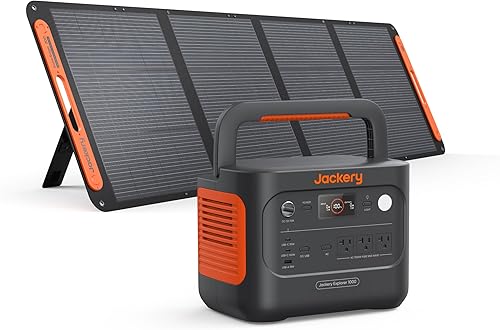
Jackery Solar Generator 1000 v2 and 200W
9.7/10 our score
See it on Amazon -
2

-
3

- 4
 Check it
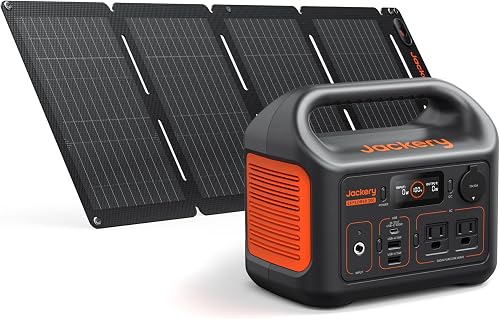
Jackery Solar Generator 300 and 40W Solar
Best for a small fridge - 5
 Check it
BLUETTI Elite 30 V2 Portable Power Station
Best for compact emergency backup - 6
 Check it
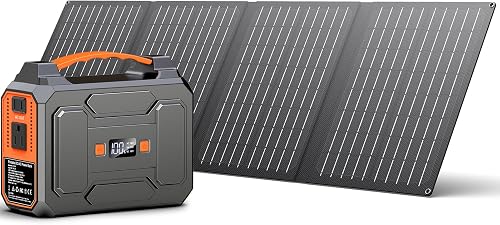
Apowking Solar Powered Generator 100W
Best for very small cooling loads - 7
 Best for built-in solar convenienceCheck it
- 8
 Check it
DYNESS Portable Power Station 300W
Best for mini fridges
How we chose solar generators for refrigerator backup
The best solar generator for refrigerator use needs enough continuous output for normal operation and enough surge capacity for the compressor to start. We compared stated battery capacity, AC output, peak or surge power, and solar charging options.
A high output rating alone doesn't promise long runtime. Battery capacity and the refrigerator's cycling pattern both affect how long food stays cold, so use these picks as a shortlist and estimate your own load.
For outage planning beyond the power station, see our guide on keeping food cold during a power outage with a camping power station. If you also need freezer backup, read whether a solar generator can run a freezer.
| Product | Best for | Capacity | AC output | Solar panel | Our score |
|---|---|---|---|---|---|
| Jackery Solar Generator 1000 v2 and 200W | most household fridges | 1,070Wh | 1,500W, 3,000W surge peak | 200W included | 9.7 |
| EF ECOFLOW Solar Generator Delta 3 Classic | fast recharge | 1,024Wh | 1,800W, 3,600W surge | 220W included | 9.6 |
| BLUETTI Elite 200 V2 Solar Generator | longer backup | 2,073.6Wh | 2,600W, 3,900W power lifting | 9.5 | |
| Jackery Solar Generator 300 and 40W Solar | a small fridge | 292Wh | 300W, 600W peak | 40W included | 9.5 |
| BLUETTI Elite 30 V2 Portable Power Station | compact emergency backup | 288Wh | 600W, 1,500W power lifting | Optional; compatible panels vary | 9.4 |
| Apowking Solar Powered Generator 100W | very small cooling loads | 146Wh | 100W, 200W peak | 40W included | 8.7 |
| BLAVOR 1600W Solar Generator | built-in solar convenience | 1,024Wh | 1,600W, 3,200W peak | Built-in 40W; up to 200W external input | 8.4 |
| DYNESS Portable Power Station 300W | mini fridges | 256Wh | 300W, 600W starting wattage | Optional, compatible 18V panels | 8.1 |
Which solar generator fits your refrigerator?
The Jackery 1000 v2 balances capacity and output for many household refrigerators. If you need longer backup, compare the larger battery options, and match compact units only with appliances that fit their power limits.
Jackery Solar Generator 1000 v2 and 200W: Best for most household fridges
- 1,070Wh capacity
- 1,500W AC output
- 3,000W surge peak
- Includes 200W solar panel
A balanced option for refrigerator backup, with more than 1kWh of capacity and a 3,000W surge peak for startup loads. The included 200W panel gives you a solar charging option.
Pros
- High surge rating
- Panel included
- Three pure sine wave AC ports
Cons
- Solar panel and station may ship separately
- Runtime depends on refrigerator use
The Jackery 1000 v2 has 1,070Wh of capacity, 1,500W of AC output and a 3,000W surge peak. That combination puts it near the top of this group for a household refrigerator, though actual runtime depends on the fridge's energy use and how often its compressor cycles.
The package includes a 200W solar panel, giving you a way to recharge when sunlight is available. Jackery says the panel can charge the station to 80% in 6 hours under its stated conditions, and the panel and station may ship separately.
Three pure sine wave AC ports let you connect appliances, while USB and car outputs can serve smaller devices. Keep the refrigerator on its own outlet if you want a clearer view of its load and backup needs.
Choose it for a balance of usable capacity, strong startup headroom and an included panel. For a focused look at a different brand's fridge use, see whether a Rockpals solar generator can run a refrigerator.
EF ECOFLOW Solar Generator Delta 3 Classic: Best for fast recharge
- 1,024Wh capacity
- 1,800W output
- 3,600W surge
- Includes 220W solar panel
Its 1,800W output and 3,600W surge rating suit many refrigerator loads, while AC charging can reach 80% in 45 minutes. The 220W panel supports solar recharging.
Pros
- Strong output and surge ratings
- Fast AC recharge claim
- Under-10ms UPS feature
Cons
- Solar panel and station may arrive separately
- Runtime depends on refrigerator use
The EcoFlow Delta 3 Classic offers 1,024Wh capacity, 1,800W output and a 3,600W surge rating. Its 220W solar panel is included, and the stated AC charging rate reaches 80% in 45 minutes.
That quick recharge can help between outage periods when grid power returns. EcoFlow also describes an under-10ms UPS switchover, which may matter if you need connected electronics to keep receiving power during a changeover.
The station and panel may arrive separately, so plan setup around both pieces. For refrigerator use, confirm the appliance's starting draw fits the surge limit and remember that faster charging doesn't increase stored energy.
Choose this model if rapid wall recharge and a higher output rating are priorities. The solar panel can help replenish the battery, but sunshine and placement determine real input.
BLUETTI Elite 200 V2 Solar Generator: Best for longer backup
- 2,073.6Wh capacity
- 2,600W continuous AC power
- 3,900W power lifting mode
- Includes two 200W panels
Its 2,073.6Wh battery provides the largest stated capacity in this group, which can help extend backup time. Two 200W panels are included for solar charging.
Pros
- Largest capacity here
- High continuous output
- Two panels included
Cons
- Heavier at 53.4 lb
- Panels may ship separately
The BLUETTI Elite 200 V2 stands out for 2,073.6Wh of capacity, nearly twice the stored energy of several other picks here. Its stated 2,600W continuous output and 3,900W power lifting mode also provide room for higher demand, subject to the appliance's startup needs.
For BLUETTI models with 240V support, see BLUETTI 240V power stations.
The kit includes two 200W solar panels, and BLUETTI says they can recharge the station in 5.5 hours under suitable conditions. At 53.4 lb, it is the heaviest choice in this roundup, so it makes more sense for a home backup spot than frequent carrying.
BLUETTI describes a low standby draw and a LiFePO4 battery rated for more than 6,000 cycles. These are maker specifications; your refrigerator's use and charging conditions will affect practical backup time.
Choose it when stored energy is the priority and the station can remain in place. For general household backup planning, read whether a solar generator can power a house.
Jackery Solar Generator 300 and 40W Solar: Best for a small fridge
- 292Wh capacity
- 300W rated output
- 600W peak surge
- Includes 40W solar panel
This compact station may suit a small refrigerator only if its running and startup demands stay within the 300W output and 600W peak. Its 292Wh capacity points to shorter backup than the larger picks.
Pros
- Compact 292Wh capacity
- 40W panel included
- Two AC outlets
Cons
- Limited capacity for extended fridge backup
- Startup draw must fit its peak rating
The Jackery Solar Generator 300 pairs a 292Wh battery with 300W rated output and a 600W peak surge. That makes it a better candidate for a compact refrigerator or very short backup than for keeping a full-size kitchen refrigerator cold through a long outage.
Its included 40W panel offers a recharge option, though Jackery says that panel reaches 80% in about 7.5 hours under its stated conditions. The station has two AC outlets plus USB and car charging ports for small devices.
Check the fridge's compressor start rating carefully. A refrigerator can exceed a small station's peak even if its average running draw appears low.
Choose this model only when your appliance fits both power limits and you accept the shorter capacity. For more context, see how long a solar generator can run a fridge.
BLUETTI Elite 30 V2 Portable Power Station: Best for compact emergency backup
- 288Wh capacity
- 600W continuous output
- 1,500W power lifting mode
- 10ms UPS feature
The 600W output and 1,500W power lifting mode give this compact station more output flexibility than its 288Wh capacity suggests. Check your refrigerator's startup draw and expect shorter backup than with larger batteries.
Pros
- Compact 9.5 lb station
- Power lifting mode
- UPS feature
Cons
- Small battery for long refrigerator outages
- Solar panel not included
The BLUETTI Elite 30 V2 has 288Wh capacity and a 600W continuous output, with a 1,500W power lifting mode. Its compact 9.5 lb weight makes it easier to move than the larger stations, but the battery size points to limited refrigerator runtime.
BLUETTI says the unit supports a 10ms UPS switchover and several charging methods, including solar with compatible panels. The panel is optional, so choose a matching panel and cable based on the station's requirements.
Treat the power lifting figure as a feature to verify against your appliance, not a guarantee that every compressor will start. Compare the refrigerator's stated startup draw with the station's limits before relying on it for food storage.
Choose it for a compact emergency setup where the fridge has modest demand and the outage plan is short. A larger battery is a more suitable fit for an overnight or multi-day outage.
Apowking Solar Powered Generator 100W: Best for very small cooling loads
- 146Wh capacity
- 100W rated output
- 200W peak
- Includes 40W solar panel
This 146Wh unit is best kept to very small cooling loads whose running and startup draw remain below its 100W rating and 200W peak. It is not a general fit for a full-size refrigerator.
Pros
- Small and light at 3.3 lb
- 40W panel included
- Seven output options
Cons
- Low capacity for refrigerator backup
- 100W rated output limits appliance choice
The Apowking 100W station has a 146Wh battery, 100W rated output and 200W peak, so its refrigerator use is narrow. It may suit a very small cooling device with low running and startup demands, but it is not a general choice for a household fridge.
A 40W solar panel is included, along with AC, USB and DC outputs. The station weighs 3.3 lb, which helps portability, but that small battery offers little stored energy for a compressor that cycles through the day.
Confirm both the fridge's running wattage and startup surge. If either exceeds this station's limits, choose a more capable unit rather than relying on the peak figure alone.
Choose it only for a low-draw cooling load after checking the appliance requirements. For a full refrigerator, move up to a higher-capacity model.
BLAVOR 1600W Solar Generator: Best for built-in solar convenience
- 1,024Wh capacity
- 1,600W rated output
- 3,200W peak
- Built-in 40W solar panel
The 1,024Wh battery and 1,600W output make this a capable refrigerator backup candidate when startup draw stays under its 3,200W peak. Its built-in 40W panel is intended mainly for emergency top-ups.
Pros
- Useful battery capacity
- Built-in panel
- External solar input up to 200W
Cons
- Built-in panel is small for fast recharging
- Confirm compressor startup demand
The BLAVOR S1600 provides 1,024Wh capacity, 1,600W rated output and 3,200W peak power. Its built-in 40W solar panel can collect energy without a separate panel, while the station accepts up to 200W of external solar input.
BLAVOR says the built-in panel is mainly for emergency top-ups. For faster solar recharging, an external compatible panel or AC power is the more practical route, and panel performance depends on sunlight and setup.
The 26 lb station includes a carrying case and adapter connectors. Its output ratings fit many refrigerator loads, but compressor startup varies, so compare the appliance's surge needs with the 3,200W peak.
Choose it if you value an integrated panel and a substantial battery in one unit. For normal home use, consider how you'll position it near the refrigerator and recharge it during an extended outage.
DYNESS Portable Power Station 300W: Best for mini fridges
- 256Wh capacity
- 300W continuous output
- 600W starting wattage
- Solar panel optional
This 256Wh station is a compact option for a mini fridge that stays within its 300W continuous and 600W starting limits. Solar panels are optional, so account for a compatible panel separately.
Pros
- LiFePO4 battery
- 300W continuous output
- Several charging methods
Cons
- Limited capacity for long outages
- Solar panel optional
The DYNESS 300W station combines a 256Wh LiFePO4 battery with 300W continuous output and 600W starting wattage. Its compact capacity and output make it a possible match for a mini fridge, provided the fridge stays within both limits.
A solar panel is optional, and DYNESS says compatible 18V panels from 60W to 100W can recharge the unit. It also supports wall, car and dual-input charging, giving you options when solar isn't available.
DYNESS gives a runtime formula based on battery capacity and device watts, but refrigerator demand changes as the compressor cycles. Use the formula only as a rough estimate and allow for inverter use and real operating conditions.
Choose this model for a small refrigerator and modest backup needs. Skip it for a full-size fridge unless the appliance's running and startup figures fit its output ratings.
What should you check before buying a solar generator for a refrigerator?
Check the refrigerator's running watts, startup surge and daily energy use before choosing a solar generator. These figures determine whether the station can start the compressor and how long its battery may support the appliance.
Look at the appliance label, manual or energy guide for wattage and voltage details. If only annual energy use is available, divide that figure by 365 to estimate daily watt-hours, then add a margin for conversion losses and changing use.
A refrigerator doesn't draw its full starting power all day. The compressor cycles, door openings add heat, and room temperature affects how often it runs, so a simple wattage division is only a first estimate.
How much battery capacity is enough for refrigerator backup?
More battery capacity generally gives you more stored energy for an outage. In this roundup, the 2,073.6Wh BLUETTI has the largest battery, while the 1,024Wh to 1,070Wh models offer a middle ground.
A rough runtime estimate is usable battery watt-hours divided by the fridge's average power draw. Inverter losses, cycling and other connected devices reduce the real time, so leave a buffer instead of planning around the full rated capacity.
A compact 256Wh to 292Wh station may make sense for a mini fridge or a brief outage. For longer food protection, consider a larger battery and a way to recharge it.
Why does refrigerator startup surge matter?
A refrigerator compressor may briefly need more power to start than it uses while running. The solar generator's peak or surge rating must cover that initial demand, while its continuous rating must support normal operation.
Compare the fridge's startup figure with the station's surge rating, and check whether the surge limit lasts long enough for startup if the maker specifies a duration. Don't assume a high continuous output alone guarantees compatibility.
If the startup demand is unknown, contact the appliance maker or use a suitable watt meter to measure it. A safety margin helps avoid overload shutdowns during a power cut.
Can solar panels keep a refrigerator running during an outage?
Solar panels can recharge a power station during daylight, but their output changes with shade, weather, angle and temperature. They may slow battery drain, yet they don't guarantee enough energy to match a refrigerator's use throughout the day.
A larger panel can reduce recharge time when the station supports its input. Check both the station's solar input limits and the panel's voltage and connector requirements before connecting equipment.
Plan for cloudy periods and nighttime by sizing the battery for the time without solar input. Keep panels in a clear, secure location and follow their setup instructions.
How should you use a solar generator for food safety?
Keep refrigerator doors closed during an outage and monitor the food temperature with an appliance thermometer. A power station can extend cooling, but it doesn't replace temperature checks or safe food handling.
Connect only the refrigerator and essential devices needed for the backup period. Avoid running heaters, kettles or other high-draw appliances from the same station unless you have accounted for their load.
Read how a Rockpals solar generator may run a refrigerator for another model-specific discussion, and use a solar generator freezer guide if frozen food is also part of your plan.
Which solar generator should you choose for refrigerator backup?
Choose the Jackery 1000 v2 for a balanced mix of capacity, output and an included panel. Pick the BLUETTI Elite 200 V2 when longer backup matters most, or the EcoFlow Delta 3 Classic if fast AC recharge is a priority.
For a mini fridge, a compact station can work when its running and startup figures fit the output limits. Check your refrigerator's energy use first, then size the battery for the hours you need and plan a recharge method for longer outages.
For a broader explanation of the system behind these power stations, read how a solar generator works.
Our top 3 picks at a glance
-
1
Best for most household fridges
Jackery Solar Generator 1000 v2 and 200W
9.7/10 our score
See it on Amazon -
2
-
3
Frequently asked questions
What size solar generator do I need for a refrigerator?
Choose by both the refrigerator's running watts and its startup surge, then estimate the hours of backup you need. A unit's continuous output must cover the running load, and its surge rating must handle compressor startup.
Battery capacity in watt-hours shapes runtime, but cycling, temperature and other loads change the result.
How long can a solar generator run a refrigerator?
Runtime depends on the refrigerator's actual energy use, how often its compressor runs, and the power station's usable capacity. A rough estimate divides usable watt-hours by average watts, then allows for inverter losses and changing demand.
For a step-by-step estimate, see how long a solar generator can run a fridge.
Can a small portable power station run a refrigerator?
Sometimes, if the refrigerator's running draw fits the station's continuous output and its startup surge fits the peak limit. Small stations often have limited battery capacity, so they may keep a mini fridge running for less time than a full-size unit.
Check the appliance label or manual before connecting it.
Can I recharge a solar generator while it runs a refrigerator?
Many power stations support charging while powering devices, but confirm this for the specific model and charging method. Solar input also changes with shade, sun angle, panel temperature and weather.
Keep the station and panels set up according to their manuals, and don't rely on panel output to match a refrigerator's demand at every moment.