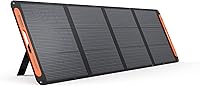
How to Choose a 500W Bifacial Solar Panel
A 500W bifacial solar panel is a large module, so choose by usable roof space and rear gain, not by the front rating alone. You need a mount with rear clearance, an inverter that can take the extra rear power, and a layout that keeps the back in sun. If any of those fail, a smaller panel often works better.
On this page (13 sections)
- Why the front rating is only half the story
- What does bifacial mean on a large solar module?
- How do cell types compare on 500W panels?
- What size and weight should you expect from 500W?
- How much rear gain can you plan for?
- What mounts and roof clearances do bifacial panels need?
- How do temperature and hot roofs affect output?
- What inverter and charge controller limits matter?
- What cables, connectors and fuses do you need?
- What are the real trade-offs versus portable kits?
- How do you compare 500W bifacial panels before you buy?
- How do you install and care for a large bifacial panel?
- Which 500W bifacial choice fits your home best?
Choose a 500W bifacial panel by total usable power, which means front output plus a realistic rear gain. A 500W rating describes the front under standard test conditions.
The rear adds power only when sun reaches the back.
That changes the buying process. You are not just matching a watt label to a budget.
You are matching a large glass-glass module to a roof, a mount, a cable run and an inverter.
Our team compared panel types, mounting options and portable kits that show the same principles at a smaller scale. For a broad start, read Solar Panels: The Complete Buying Guide before you narrow the field.
Why the front rating is only half the story
A 500W bifacial solar panel search often starts with a single question: how much power will I get. The honest answer has two parts.
The front gives the rated power in full sun. The rear gives a bonus that depends on your setup.
Rear gain is not free power. It needs light, space and time.
A raised ground mount over pale gravel will collect more rear light than a panel fixed close to a dark asphalt roof.
Planning with front power alone is the safe rule. If the system works well on front output, rear gain becomes a useful extra.
If the system only works when you assume a large rear bonus, the design is too fragile.
Rule: Buy the panel for its front rating and treat rear gain as a bonus you plan for but do not depend on.
What does bifacial mean on a large solar module?
Bifacial means the panel can make power from both faces. The front faces the sun directly.
The rear collects reflected and scattered light. For a portable bifacial example, read the EcoFlow 220W solar panel review.
That is the core difference from a standard monofacial panel.
Many large bifacial modules use glass on both sides. That glass rear sheet lets light in.
It also makes the panel heavier and more rigid than a plastic-back panel of the same front rating.
Cell type matters inside that glass. Many 500W bifacial designs use N type cells, built for good low-light behaviour and long service life.
Our guide to a What Is an N Type Bifacial Solar Panel? explains the cell design in plain terms.
Front glass, rear glass and frame
A framed bifacial panel has an aluminium frame around the edge. The frame gives clamps a place to grip.
It also sets the panel thickness and changes how wind loads the module.
Check the panel dimensions before you fall for the watt label. A 500W module is often more than 2 metres long.
That length can force awkward string layouts on a roof with vents, chimneys or shade lines.
Rule: Choose bifacial for rear power, then confirm the frame, thickness and length fit your mounts. For a more adaptable roof option, see 400W flexible solar panels.
How do cell types compare on 500W panels?
Cell type sets how the panel behaves in heat, low light and long service. The main choices you will see are PERC, TOPCon and HJT.
N type is a family label that covers more than one design.
PERC bifacial panels are common and usually sit at the lower price end. TOPCon panels often aim for higher efficiency in a similar size.
HJT panels often target strong temperature behaviour and bifacial gain.
Compare the data sheet numbers that affect your design. Open-circuit voltage and short-circuit current set string length and wire size.
Temperature coefficients show how much power falls on hot days.
A panel with high front efficiency in a smaller frame may beat a larger panel with lower efficiency on a tight roof. A panel with strong bifaciality may win on a raised ground mount even if its front rating is the same.
Rule: Compare efficiency, voltage, current and bifaciality together, and never choose by cell name alone.
What size and weight should you expect from 500W?
Expect a 500W bifacial panel to be large, heavy and stiff. Check whether solar panels are waterproof before planning for exposed installation.
That size shapes every other choice, from roof layout to the number of helpers needed on install day.
Do not plan a solo lift from a ladder.
Large modules often use 144 half cells or a similar layout to keep cell current manageable. The result is a long panel with a high watt rating per panel.
Fewer panels means fewer clamps and less wiring, but each panel covers more area and catches more wind.
We checked portable kits to show how power scales with size. The DOKIO 100W Portable Foldable Solar Panel Kit folds to 19 x 26 in and weighs 6 lb for travel use.
A fixed 500W panel will be far larger and heavier by design.
Roof space math for a 500W module
Work out usable area, not roof area. Subtract walkways, fire access paths, vents and shade from trees or nearby buildings.
Then fit whole panels into the remaining rectangles.
A panel that is 10 cm too long can break a row layout. That break can add a whole extra string or force a less efficient inverter choice.
Measure the roof in the same orientation as the panel.
Allow room for clamps and cables at the panel edges. Tight rows look neat, but they can block rear light and make maintenance harder.
Space between rows also helps air flow, which keeps cells cooler.
Rule: Fit whole panels to the measured usable rectangles, and reject any layout that needs the panel to bend the rules.
How much rear gain can you plan for?
Plan rear gain as a range, not a promise. The real number depends on albedo, which is how reflective the surface below the panel is.
Pale gravel, light concrete and snow reflect more light than dark soil or asphalt.
Mount height matters just as much. A panel 1 metre off the ground lets more light reach the rear than a panel 10 cm off a roof.
Row spacing matters too. Rows that are too close shade each other and cut rear light.
Orientation changes the mix. A south-facing tilted panel gets strong front power and moderate rear power.
A vertical panel facing east or west gets useful power on both faces through the day.
The DOKIO 200W Portable Foldable Solar Panel Kit weighs 9.7 lb and folds to 20 x 27 x 1.1 in. It is a portable kit, not a 500W bifacial module, but its setup shows the same principle: placement in direct sun matters more than the label alone.
Rule: Size the inverter and wires for front power, then leave headroom for the rear bonus.
What mounts and roof clearances do bifacial panels need?
Bifacial panels need rear clearance. A flush roof mount can block most rear light and waste the main reason to buy a bifacial design.
The mount must hold the panel up and keep the back open to sky and reflected light.
Ground mounts give you the most control. You can set height, tilt and row spacing to balance front power, rear gain, wind load and access.
Carport and pergola mounts work well too because the panel height lets light reach both faces.
Roof mounts need more care. Raised mounts cost more and add wind load.
Low-profile mounts save cost but cut rear gain. Some roofs cannot take the extra height due to setback rules, snow load or wind limits.
Our pallet guide helps when you plan several large modules at once. Read How to Choose Bifacial Solar Panels by the Pallet if you compare bulk supply, freight and frame counts for a bigger array.
Rule: Pick a mount that gives the rear real light, or choose a cheaper monofacial panel instead.
How do temperature and hot roofs affect output?
Heat cuts output. Every panel loses power as cell temperature rises.
A dark roof in summer can push cell temperature far above air temperature. That loss hits on the exact days when you want the most power.
Bifacial gain can soften heat loss a little because the rear collects extra light. It does not cancel heat loss.
Cell design and temperature coefficients still set how much power drops on a hot afternoon.
Air flow helps. Raised mounts let wind cool the rear face.
Tight roof mounts trap heat under the panel. That trapped heat lowers front output and can speed wear on cables and connectors over time.
Check the temperature coefficient on the data sheet, not just the watt rating. A panel with a slightly lower front rating but a better temperature coefficient can produce more energy across a hot summer.
Rule: On a hot roof, favour airflow, raised mounts and a good temperature coefficient over a small front-rating edge.
What inverter and charge controller limits matter?
Your inverter must handle front power plus rear gain. An inverter sized tight to the front rating can clip on bright days when the rear adds extra power.
Clipping wastes energy, but it can also protect the system from overload if the design allows it.
Check voltage limits before you count panels. String voltage rises on cold mornings.
If the string voltage passes the inverter limit, the system will not start safely. The opposite error is a string voltage that is too low for the inverter to track well.
Portable power stations have much tighter limits. Our guide on What Can A 500W Solar Generator Run? shows why a 500W label needs a careful check against input caps.
Many small stations cap input far below 500W.
The portable kits in this guide show the same rule at small scale. The DOKIO 100W kit has a standalone PWM controller for 12V battery charging.
That controller protects against reverse polarity, overcharge, overload and short circuit.
Rule: Confirm voltage, current and watt limits for the whole chain before you buy the panel.
What cables, connectors and fuses do you need?
Cable size sets power loss and safety on long runs. Thin cable on a long run wastes power as heat.
That heat can damage insulation and connectors over time. Large bifacial arrays need cable that matches the full current, including rear gain.
The BougeRV 20 Feet 10AWG Solar Extension Cable uses tin-coated pure copper for good conductivity and corrosion resistance. BougeRV rates it for -40℉ to 194℉, with an IP67 waterproof ring on the male connector.
The 10AWG size helps limit power loss compared with 14AWG or 12AWG on longer runs.
Connectors matter too. Panels in one string need matched connectors and a firm lock.
Loose or mixed connectors can arc, overheat and fail outdoors. Keep connector pairs from the same maker and rating where you can.
Fuses and disconnects protect the system. Place them where the code requires and where you can reach them for service.
Label strings clearly so a later installer knows which cables feed which array.
Rule: Size cable for full current plus rear gain, and use matched connectors with proper fuses and disconnects.
What are the real trade-offs versus portable kits?
A 500W bifacial panel wins on power per panel, but it loses on mobility and simplicity. You need a fixed mount, a large inverter and roof or ground space.
Portable kits win on setup speed and flexibility, but they give far less power.
The 100W DOKIO kit folds to 19 x 26 in and weighs 6 lb. Its 9.84ft cable lets you place the panel in sun while the controller stays shaded.
It suits RVs, vans, tents and emergency backup. A 500W fixed panel cannot move between sites like that.
The 200W DOKIO kit weighs 9.7 lb and folds to 20 x 27 x 1.1 in. It gives more power for a boat, trailer or van, but it still depends on a 12V system and a power station input limit.
Even in full sun, the panel cannot exceed the input cap of the device it feeds.
For campsite power, our Best Solar Panel For Camping guide compares portable options. For a fixed home array, a 500W bifacial module often gives more energy per clamp and per metre of cable.
Rule: Choose a fixed 500W bifacial panel for steady home power, and choose a portable kit when you need to move the panel.
How do you compare 500W bifacial panels before you buy?
Compare panels on energy per metre, not just watts per panel. A high watt panel that forces extra strings or extra roof work may cost more per kilowatt-hour than a slightly smaller panel that fits cleanly.
Check efficiency, dimensions, weight, voltage, current, temperature coefficients and bifaciality side by side. Add mount cost, cable length, inverter size and install labour.
That full cost shows the real price of each option.
Look at the Best Bifacial Solar Panels roundup for a wider field of designs. Use it to see how different sizes and cell types trade off.
Then return to your roof measurements to see which designs actually fit.
A simple checklist for the shortlist
Make a shortlist of three or four panels. Score each one on fit, rear gain, temperature behaviour and total system cost.
Throw out any panel that fails on voltage, mount height or roof fit.
Ask the installer or supplier for a layout drawing. The drawing should show panel orientation, row spacing, cable runs and inverter placement.
If the drawing is vague, the quote is vague too.
Rule: Shortlist by measured fit and total system cost, and reject any panel that only wins on the front watt label.
How do you install and care for a large bifacial panel?
Install a 500W bifacial panel with two people and proper clamps. The panel is large, stiff and heavy.
A single slip can crack glass or bend a frame. Use suction handles or a helper at each end for every lift.
Mount the panel to the rated clamp zones only. Clamping outside those zones can crack cells and void the warranty.
Torque clamps to the maker spec. Loose clamps let the panel move in wind and wear the frame.
Keep the rear face clean. Dust, leaves and shade on the rear cut rear gain fast.
Clean both faces with soft water and a non-abrasive cloth. Check mounts, cable ties and connectors each year for wind wear and heat damage.
Bifacial glass needs extra care in handling. Store panels flat, dry and covered until install day.
Do not stack extra weight on a panel. Keep the frame edges protected during transport.
Rule: Use two people, rated clamp zones and clean both faces, or the rear gain you paid for will fade.
Which 500W bifacial choice fits your home best?
Pick a 500W bifacial panel when you have space for rear light and a system built for extra power. Raised ground, carport and raised roof mounts give the best return.
A flush dark roof gives the worst return.
Pick a smaller monofacial panel when the rear will stay shaded. You will pay less for the panel and the mount.
You will also avoid oversizing wires and inverters for gain you will never collect.
Pick a portable kit when your power need moves with you. The DOKIO 100W and 200W kits fold small and weigh under 10 lb.
They suit camping, van life and backup power where a fixed 500W module cannot go.
Our closing rule for bifacial solar panels 500w is simple. Use front power for design, rear power for bonus, and roof fit for the final call.
Frequently asked questions
Is a 500W bifacial panel better than a 500W monofacial panel?
A bifacial panel can add rear power when light reaches the back, while a monofacial panel only uses the front. The extra output depends on roof height, ground or roof colour and spacing.
If the rear will stay shaded, the bifacial advantage may be small.
What does N type mean on a 500W bifacial panel?
N type describes the silicon cell design used in many bifacial modules. It can affect temperature behaviour and degradation.
Check the full panel data for efficiency, voltage and current rather than relying on the cell label alone.
Can a power station use a 500W panel directly?
Many portable power stations cap input well below 500W, so the extra watts may not be used. Check the input voltage and watt limit first.
A separate charge controller or a larger inverter may be needed for a full-size array.
How much rear gain should I expect?
Rear gain varies with setup, from a small extra under a dark roof to a larger gain over a light, reflective surface. Treat any single percentage as a planning range.
Size wires and inverters for the front rating first, then allow headroom for rear power.
Do I need special mounts for bifacial panels?
Yes, mounts must hold the panel high enough for light to reach the rear. Low-profile roof mounts can block much of that light.
Ground mounts, carport mounts and raised roof mounts usually give the rear more access than a flush mount.