9 Best Solar Panels for Goal Zero Yeti (November 2026)
The best Goal Zero Yeti solar panels include the Renogy 400W Portable Solar Panel for Power for fast Yeti charging, the Renogy 220W Portable Solar Panel for RV and overlanding carry, and the Goal Zero Boulder 50 Watt Monocrystalline Solar for a single Goal Zero panel.
On this page (8 sections)
- Best Goal Zero Yeti solar panels for each Yeti size
- How do these panels compare on wattage, weight and connector?
- What solar input does your Yeti accept?
- Which connector fits your Yeti, 8mm or MC4?
- How much wattage do you need for a Yeti station?
- Folding, flexible or rigid: which format suits your trip?
- How should you set up and care for a portable solar panel?
- Verdict: which Goal Zero Yeti solar panel should you buy?
The best Goal Zero Yeti solar panels match your Yeti input limits first, then your carry needs. A high watt panel that exceeds your Yeti voltage or current limit will not charge it properly.
In the first 100 words, the short answer is simple. Pick wattage you can actually use, pick the right connector, and pick a weight you will carry.
Our score weighs specs, features and buyer feedback against what you are shopping for. That keeps a 400W blanket ahead of a 5W USB panel for Yeti charging, even though both are good panels.
If you are new to solar, start with what is the best solar panel before you compare connectors. That guide explains wattage, voltage and efficiency in plain terms.
For camping use, Is Goal Zero Yeti Good For Camping? helps you size the station before you size the panel. A small station may not need a 400W panel.
Wattage alone does not tell the full story for Yeti owners. Connector type can decide whether a panel works straight from the box.
Weight can also decide whether you actually use the panel on a trip.
Voltage deserves the same care as wattage in this comparison. Two panels with similar watts can suit different Yeti models because their open circuit voltage differs.
Always read the panel label and the Yeti manual side by side.
Efficiency is another filter that matters in real sun. Higher efficiency cells can give more power from a smaller surface area.
That helps when your campsite has limited space for a large panel.
Our picks at a glance
-
1
 Best for fast Yeti charging
Renogy 400W Portable Solar Panel for Power
9.7/10 our score
See it on Amazon -
2
 Best for RV and overlanding carry
Renogy 220W Portable Solar Panel
9.5/10 our score
See it on Amazon -
3
 Best for a single Goal Zero panel
Goal Zero Boulder 50 Watt Monocrystalline Solar
9.3/10 our score
See it on Amazon
- 4
 Check it
Goal Zero Boulder 200 Briefcase
Best for Goal Zero briefcase power - 5
 Check it
Renogy 100 Watt ShadowFlux Flexible Solar Panel
Best for curved RV roofs - 6
 Check it
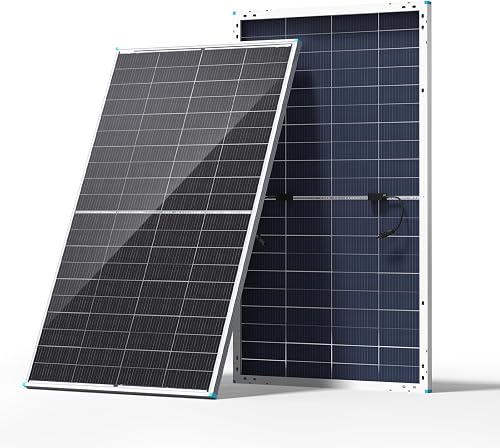
Renogy Bifacial Solar Panel 200W N-Type
Best for bifacial rooftop gain - 7
 Check it
Goal Zero Nomad 100 Watt Monocrystalline Portable
Best for light Goal Zero folding - 8
 Best for phones and small USB gearCheck it
- 9
 Check it
RENOGY REGO 200W Portable Solar Panel
Best for USB charging plus MC4
Best Goal Zero Yeti solar panels for each Yeti size
The right pick changes with your Yeti model, because each Yeti has its own solar input limit. Check your Yeti manual for maximum voltage and current before you order.
Small Yeti units usually need smaller panels and lower voltage. Large Yeti units can accept more watts, but only when voltage and current stay inside the stated range.
That is why this list pairs a 400W blanket with 100W and 50W options. The goal is to match panel output to station size, not to buy the largest panel by default.
Renogy 400W Portable Solar Panel for Power: Best for fast Yeti charging
- 400 watts
- 25% high efficiency
- 16.09 lb solar blanket
- Folds to 16.54 x 15.83 x 4.13 in
- MC4 output only
- UL 61730 certified
A 400W foldable blanket that folds small for SUVs and vans, with MC4 output for compatible power stations that meet its voltage and current needs.
Pros
- Highest wattage in this roundup
- Folds to a backpack size
- 25% N-Type efficiency
Cons
- MC4 output only and adapter sold separately
- 39.2 volts may exceed some Yeti inputs
This Renogy 400W blanket suits owners of larger Yeti stations who want the fastest charge in this list. EcoFlow owners can compare 400W DELTA Pro 3 panels.
It weighs 16.09 lb and folds to 16.54 x 15.83 x 4.13 in, which fits in an SUV, van or camper.
Renogy says 16BB N-Type cells deliver 25% high efficiency, so you get more power from the same sunlight. You can fold it to 300W, 200W or 100W along its seams when space is tight.
It uses MC4 output only, and the 4-in-1 adapter is sold separately. That means you must confirm connector fit and input limits for your exact Yeti.
It also carries UL 61730 certification, with a 2-year material and workmanship warranty from Renogy. Real output still varies with sun angle, temperature, shade and cable length.
Its 39.2 volts and 13.1 amps are central to the trade off against the others here. That output can suit large stations, yet it can exceed smaller Yeti inputs.
It also includes two shoulder straps, which helps when you carry it from a vehicle to a sunny patch.
Renogy 220W Portable Solar Panel: Best for RV and overlanding carry
- 220 watts
- 23% efficiency
- 15.87 lb
- Folds to 27.17 x 18.11 x 3.15 in
- Includes carry case
- MC4 output only
A 220W suitcase with kickstands and a carry case, built for RV, van and camping use with compatible power stations.
Pros
- One minute setup claim from Renogy
- Carry case included
- Partial shade support through parallel wiring
Cons
- MC4 output only and adapter sold separately
- 23.7 volts needs checking against your Yeti
This Renogy 220W suitcase suits RV, van and overlanding owners who want a ready to carry panel. For a Jackery-branded 200W option, read the SolarSaga 200W panel review.
It weighs 15.87 lb and folds to 27.17 x 18.11 x 3.15 in, with a carry case included for transport.
Renogy says fiberglass, ETFE coating and A+ monocrystalline cells support 23% efficiency in rugged outdoor use. Rust proof kickstands and IP68 waterproof connectors support a one minute setup claim.
Parallel wiring helps reduce the impact of individual shadows from trees or clouds. That helps when a campsite has partial shade across part of the panel.
It uses MC4 output only, with the 4-in-1 adapter sold separately. Renogy backs it with a 5-year output warranty and material and workmanship warranty.
At 23.7 volts and 11.5 amps, it sits in a middle ground against the others here. It offers far more power than a 100W panel, without the bulk of the Boulder 200.
Its trade off is adapter cost and a need to check voltage, in return for a true suitcase format with a case.
Goal Zero Boulder 50 Watt Monocrystalline Solar: Best for a single Goal Zero panel
- 50 watts
- 22.6% efficiency
- 12.4 lb
- Built in kickstand
- Tempered glass and aluminum frame
- Charges Yeti power stations
A 50W Goal Zero panel with a built in kickstand, tempered glass and an aluminum frame for portable Yeti charging.
Pros
- Goal Zero native design
- Built in kickstand
- Can chain multiple Boulder panels
Cons
- Only 50 watts
- Heavier per watt than foldable panels
This Goal Zero Boulder 50 suits buyers who want a simple Goal Zero panel for a Yeti station. It delivers 50 watts at 22.6% efficiency, with a built in kickstand for positioning.
The frame is anodized aluminum with corner protection and tempered glass. Goal Zero calls it weatherproof and lightweight, and it can be mounted on vans, vehicles or sheds.
It charges Yeti power stations or Sherpa power banks, according to Goal Zero. You can chain multiple Boulder panels for greater solar capacity when you need more watts.
At 12.4 lb, it is heavier per watt than foldable panels here. That trade off buys a rigid, framed build that stands up to regular handling.
Goal Zero backs it with a 2-year warranty. Use it as a steady 50W source, not as a fast charger for a large Yeti.
At 22 volts and 3.5 amps, it is easier to match to modest Yeti inputs than the 400W blanket. Its trade off is speed, since 50 watts fills a station slowly.
It suits backup, shed mounting, or a first Goal Zero panel where simple native use matters more than fast charging.
Goal Zero Boulder 200 Briefcase: Best for Goal Zero briefcase power
- 200 watts in title
- Two 100 watt panels hinged together
- 42 lb
- 42 x 26.75 x 3.5 in
- Tempered glass and aluminum frame
- Built in legs with stake down loops
A hinged 200W Goal Zero briefcase with legs and corner protection, made to integrate with a Goal Zero power station.
Pros
- Native Goal Zero briefcase design
- Legs stabilize in wind
- Canvas bag included
Cons
- 42 lb is heavy to carry
- 21% efficiency is lower than newer N Type picks
This Goal Zero Boulder 200 Briefcase suits van life and RV owners who want a large Goal Zero folding panel. It combines two 100 watt panels with a hinge, for 200 watts in total.
Tempered glass and an aluminum frame provide the structure, with added corner protection. Built in legs pop out to stabilize the panel and fasten flat for transport.
Each leg has a stake down loop for added security in wind. A protective canvas bag is included for storage when the briefcase is folded.
At 42 lb, it is the heaviest pick here by a wide margin. You gain capacity and stability, but you lose easy one hand carry.
Goal Zero says it integrates with a Goal Zero portable power station for maximum energy efficiency. It carries a 1 year limited warranty and 21% efficiency.
Against the others here, it trades efficiency and weight for native Goal Zero integration and a stable briefcase stance. The Renogy 220W suitcase is lighter and more efficient, while this briefcase offers hinged 100 watt sections and stake loops.
It suits basecamp use at a fixed campsite, where you set it up once and leave it in place for the day.
Renogy 100 Watt ShadowFlux Flexible Solar Panel: Best for curved RV roofs
- 100 watts
- 25% N-Type efficiency
- 4.19 lb
- 0.1 in thin
- Bends up to 270 degrees
- IP68 rated
A 100W flexible N-Type panel that is 4.19 lb and bends up to 270 degrees for curved RV and marine surfaces.
Pros
- Ultra light flexible build
- Anti shading bypass diodes
- IP68 rated protection
Cons
- 33.6 volts needs checking against your Yeti input
- Flexible format suits fixed mounts more than carry use
This Renogy 100W ShadowFlux panel suits RV, boat and marine owners who need a flexible mount. It weighs only 4.19 lb at 0.1 in thick, so one person can carry and install it.
16BB A+ grade N-Type cells deliver up to 25% conversion efficiency. Up to 27 bypass diodes help maintain output when part of the panel is shaded.
It bends up to 270 degrees to conform to curved roofs and uneven surfaces. UV resistant TPO material and glass fiber reinforcement help resist aging and cracking.
IP68 rated protection covers rain, snow and dust. That suits fixed outdoor mounts better than panels you fold and carry daily.
At 33.6 volts, it fits 12V and 24V solar systems, according to Renogy. Check that voltage against your Yeti input before you plan to charge a station with it.
Its 48 cells and 3.66 amps make it a fixed mount choice, not a camp carry choice. Against the others here, it wins on weight and flexibility, while it loses on total watts and folding storage.
It makes most sense when a curved roof or boat deck is the real constraint, and a rigid suitcase simply will not fit that surface.
Renogy Bifacial Solar Panel 200W N-Type: Best for bifacial rooftop gain
- 200 watts
- 25% N-Type efficiency
- 22.7 lb
- Bifacial design
- 16BB N-Type cells
- IP68 rated
A 200W bifacial N-Type panel that captures light from both sides, with a dual module design for partial shade.
Pros
- Up to 30% more energy claim from reflected light
- Anti shade dual zones
- 10 year product warranty from Renogy
Cons
- Rigid 200W panel, not foldable
- 25 volts needs checking against your Yeti input
This Renogy Bifacial 200W panel suits fixed rooftop installs where reflected light can add power. It captures sunlight from both sides, generating up to 30% more energy from surfaces like snow, sand or concrete.
16BB N-Type cells deliver up to 25% cell efficiency. A dual module parallel design creates two independent power zones, so shade on one section leaves the other producing.
At 22.7 lb, it is a rigid panel for RVs, campers, trailers, boats and cabins. Its compact footprint helps where roof space is limited.
IP68 rated construction and a reinforced frame support demanding outdoor use. Renogy backs it with a 10-year product warranty and a long term power output commitment.
Buy it for a fixed bifacial mount. Skip it if you need a foldable panel to carry to a sunny spot away from your Yeti.
At 25 volts and 8 amps, with 80 cells, it offers a different trade off from foldable 200W panels. It gains rear side capture and shade resilience, while it gives up portability and easy repositioning.
That makes sense for a permanent roof, where reflected light from the surface below is available all day. For a weekend campsite, a suitcase you can move to follow the sun is usually more useful.
Goal Zero Nomad 100 Watt Monocrystalline Portable: Best for light Goal Zero folding
- 100 watts
- 18 to 22 volts
- Folds to 20 x 15 x 2 in
- 8mm Goal Zero connector
- Built in charging cables for Yeti
- Chainable with combiner cable
A 100W foldable Goal Zero panel with an 8mm connector for plug and play use with Yeti stations.
Pros
- 8mm Goal Zero connector built in
- Folds compactly
- Chainable for more wattage
Cons
- Only 100 watts per panel
- 12 month warranty
This Goal Zero Nomad 100 suits mobile basecamp users who want native Goal Zero connection. It delivers 100 watts at 18 to 22 volts, with an 8mm Goal Zero connector.
The panel folds down to 20 x 15 x 2 in, which is compact enough to pack flat. Built in charging cables serve Yeti stations and Sherpa power packs.
It weighs about 10 lb in Goal Zero description, with listed item weight at 12 lb. Either way, it carries far easier than the Boulder 200 Briefcase.
You can chain multiple Nomad 100 panels together for more power. Chaining needs an 8mm to app combiner cable, sold separately.
Goal Zero backs it with a 12 month warranty. For a true plug and play Yeti panel, this is the cleanest fit in the list.
Against the others here, it trades total watts for native connection and simple setup. The Renogy 220W gives more than double the watts, yet it needs an MC4 adapter and a voltage check.
This Nomad 100 gives a clean Goal Zero path, with an 18 volt output that is simple to understand. It suits buyers who value easy connection over maximum charge speed.
Goal Zero Nomad 5 Solar Panel: Best for phones and small USB gear
- 5 watts
- USB-A output
- Built in adjustable kickstand
- Lightweight at 360 g
- Monocrystalline laminate
- Charges phones and small USB devices
A 5W USB solar panel built to charge a phone, headlamp or small USB device directly from the sun.
Pros
- Direct USB charging
- Very light to carry
- Adjustable kickstand
Cons
- 5 watts will not charge a Yeti station
- Made for small devices only
This Goal Zero Nomad 5 suits hikers and travelers who need to charge small USB devices. It delivers 5 watts of monocrystalline laminate in a rugged enclosure.
A built in adjustable kickstand helps you aim it at the sun. The USB-A port charges a mobile phone or small device directly from the sun.
It weighs 360 g, so it packs into a daypack without adding real weight. You can pair it with a power bank for an all in one solar charging setup.
It is ideal for smartphones, headlamps, fitness trackers, lanterns and small USB-A devices. It will not charge a Yeti power station in any useful time frame.
Buy it as a small device charger. Skip it if your goal is Yeti solar input, because 5 watts is far too small for that job.
At 1 amp and a USB connector, it sits apart from every station panel here. Its trade off is clear, since it gives direct phone charging and tiny carry weight, while it gives almost no power for a Yeti.
That makes it a companion panel for a hike, not a replacement for a 100W or 200W station panel. Buy it for trail use, and pair it with a larger panel for basecamp.
RENOGY REGO 200W Portable Solar Panel: Best for USB charging plus MC4
- 200 watts
- 23.5% efficiency
- USB-C PD 45W
- Dual USB-A ports
- MC4 output cables only
- IP65 splash resistant
A foldable 200W Renogy panel with USB-C and dual USB-A ports, plus MC4 output for compatible power stations.
Pros
- Charge three devices at once
- Foldable with magnetic design
- 2 year warranty and 12 year output warranty from Renogy
Cons
- MC4 output only for station charging
- IP65 means splash resistant, not for soaking
This RENOGY REGO 200W panel suits campers who want both station charging and USB charging. It uses Grade A solar cells for 23.5% power conversion efficiency, with ETFE and aluminum in the build.
USB-C PD 45W and dual USB-A ports let you charge 3 devices at once. That covers phones, tablets, laptops, GPS units and cameras.
For station charging, it has MC4 output cables only. The Renogy 4-in-1 adapter cable is sold separately, so budget for that if your Yeti needs it.
Four mounting holes, a magnetic design, buckles and Velcro straps help with car rooftops, RVs and trees. IP65 splash resistance means handle splashes, but avoid prolonged soaking.
Renogy backs it with a 2-year warranty and a 12-year output warranty at minimum 80% of rated power.
At 200 watts and a folded size of about 23 by 24 inches, it rivals the Renogy 220W suitcase on watts. Its trade off is IP65 protection instead of IP68, in return for built in USB ports that other MC4 panels lack.
That extra USB section helps at a campsite table, where phones and cameras need power while the station charges. For pure station charging, the 220W suitcase remains a simpler single purpose pick.
How do these panels compare on wattage, weight and connector?
The comparison below shows the trade offs in one view. Wattage drives charge speed, weight drives carry ease, and connector type drives setup ease.
| Product | Best for | Maximum power | Maximum voltage | Efficiency | Our score |
|---|---|---|---|---|---|
| Renogy 400W Portable Solar Panel for Power | fast Yeti charging | 400 watts | 39.2 volts | 25% | 9.7 |
| Renogy 220W Portable Solar Panel | RV and overlanding carry | 220 watts | 23.7 volts | 23% | 9.5 |
| Goal Zero Boulder 50 Watt Monocrystalline Solar | a single Goal Zero panel | 50 watts | 22 volts | 22.6% | 9.3 |
| Goal Zero Boulder 200 Briefcase | Goal Zero briefcase power | 200 watts | 9.0 | ||
| Renogy 100 Watt ShadowFlux Flexible Solar Panel | curved RV roofs | 100 watts | 33.6 volts | 25% | 8.8 |
| Renogy Bifacial Solar Panel 200W N-Type | bifacial rooftop gain | 200 watts | 25 volts | 25% | 8.6 |
| Goal Zero Nomad 100 Watt Monocrystalline Portable | light Goal Zero folding | 100 watts | 8.4 | ||
| Goal Zero Nomad 5 Solar Panel | phones and small USB gear | 5 watts | 8.1 | ||
| RENOGY REGO 200W Portable Solar Panel | USB charging plus MC4 | 200 watts | 23.5% | 8.1 |
We compared specs, connector types, folded size and weight across all nine panels. We also checked which panels use native Goal Zero connectors and which use MC4 output only.
MC4 output only panels need an adapter for many Yeti inputs. Native Goal Zero panels with an 8mm connector plug in directly, which saves time at camp.
Voltage matters as much as wattage. A 39.2 volt panel and a 23.7 volt panel will not suit the same Yeti input, even if both are strong panels.
What stands out in the comparison table?
The 400W blanket leads on watts, while the Nomad 5 trails at 5 watts for direct USB use. Weight spreads from 360 g for the Nomad 5 to 42 lb for the Boulder 200 Briefcase.
Efficiency ranges from 21% for the Boulder 200 to 25% for several Renogy N-Type panels. That gap reflects newer cell designs, not a simple quality judgment.
Folded size also changes the daily experience in a big way. A panel that folds to backpack size can live in a van, while a large rigid panel needs roof space or a truck bed.
Connector type is the hidden divider in this table. Native 8mm Goal Zero panels reduce adapter cost and setup steps.
MC4 panels widen your brand options, yet they add a separate adapter purchase.
What solar input does your Yeti accept?
Your Yeti manual sets the limit for panel voltage and current. Exceeding that limit can stop charging or cause damage, so check it first.
How do I find my Yeti solar input limit?
Look for maximum solar input watts, maximum voltage and maximum current in your Yeti manual. Use those three numbers as your filter for every panel here.
Check both the panel voltage and the panel current against those limits. A panel can match on watts and still fail on voltage alone.
What happens if a panel is too strong for my Yeti?
An oversized panel may charge at your Yeti limit, or it may not charge at all if voltage is too high. Safer to pick a panel inside both limits.
Our best Goal Zero solar panel guide covers Goal Zero native options in more depth. Compare that list with the third party MC4 panels here.
Which connector fits your Yeti, 8mm or MC4?
Goal Zero Nomad panels use an 8mm connector for plug and play Yeti use. Most Renogy panels here use MC4 output only.
When is MC4 the better choice?
MC4 is standard across many power stations, so MC4 panels give you more brands to choose from. You will often need a 4-in-1 adapter, sold separately.
MC4 also keeps spare cables and adapters easy to find across brands. That helps if you already own MC4 leads for another station or battery setup.
When is an 8mm Goal Zero connector better?
An 8mm connector saves you buying an adapter and guessing at fit. The Nomad 100 is the clearest example in this roundup.
If you compare brands, Which Is Better Bluetti AC200 Vs Goal Zero Yeti? shows how connectors and inputs differ across brands.
How much wattage do you need for a Yeti station?
Wattage sets how fast your Yeti refills in good sun. A 50W panel suits small stations, while 200W to 400W suits larger stations.
What does 100W mean in daily use?
A 100W panel charges a small Yeti over a day of good sun, and it tops up a larger Yeti slowly. It is a good balance for camping.
What does 400W mean in daily use?
A 400W panel refills a large Yeti much faster in good sun. It also needs a Yeti input that can accept its voltage and current.
How do I choose between 200W and 400W?
Choose 200W when carry weight and setup space matter most. Choose 400W when your Yeti input accepts it and fast refill is the priority.
For other station brands, Best Solar Panels for DJI Power 1000 shows how input limits change the pick.
Folding, flexible or rigid: which format suits your trip?
Folding panels like the best folding solar panels carry well and let you chase the sun. Rigid and flexible panels suit fixed mounts on RVs and boats.
Which format is best for camping?
Folding panels win for camping, because you can move them to a sunny patch and pack them flat. The Nomad 100 and Renogy 220W fit this use well.
Which format is best for an RV roof?
Flexible panels like the ShadowFlux 100W suit curved roofs. Bifacial rigid panels like the Renogy 200W suit flat roofs with reflective surfaces below.
For newer cell tech, Best Portable N-Type Solar Panels explains N-Type efficiency and why it matters in shade and heat.
How should you set up and care for a portable solar panel?
Set the panel where it gets direct sun, then angle it toward the sun and adjust it as the sun moves. Keep the panel surface clean and free of shade.
How do I secure a panel in wind?
Use tie downs, stakes or weights, as Renogy describes for its 400W blanket. The Boulder 200 legs have stake down loops for the same reason.
How do I store a folding panel?
Fold it along its seams, use its carry case or canvas bag, and keep connectors dry. Always coil cables loosely and avoid sharp bends.
How do I keep shade from hurting output?
Move the panel when trees, tents or other gear cast shadows. Partial shade panels help, yet direct sun still gives the best result.
Verdict: which Goal Zero Yeti solar panel should you buy?
The best Goal Zero Yeti solar panels for most owners are the Renogy 400W for speed, the Goal Zero Nomad 100 for native plug and play use, and the Renogy 220W for carry friendly RV use.
Pick the Renogy 400W if your Yeti input accepts 39.2 volts and you want the fastest charge. Pick the Nomad 100 if you want an 8mm Goal Zero connector in the box.
Pick the Renogy 220W if you want a lighter suitcase with a carry case. Pick the Boulder 200 Briefcase if you want a large Goal Zero briefcase and do not mind 42 lb.
Pick the Nomad 5 only for phones and small USB gear, not for Yeti charging. Check your Yeti input limits first, then choose by wattage, connector and weight.
Our top 3 picks at a glance
-
1
Best for fast Yeti charging
Renogy 400W Portable Solar Panel for Power
9.7/10 our score
See it on Amazon -
2
Best for RV and overlanding carry
Renogy 220W Portable Solar Panel
9.5/10 our score
See it on Amazon -
3
Best for a single Goal Zero panel
Goal Zero Boulder 50 Watt Monocrystalline Solar
9.3/10 our score
See it on Amazon
Frequently asked questions
What connector do Goal Zero Yeti solar panels use?
Goal Zero Nomad panels use an 8mm Goal Zero connector for plug and play use with Yeti stations. Many third party panels use MC4 output only.
Check your Yeti manual for its input voltage, current limit and connector before you buy an adapter.
Can a 400W panel charge a small Yeti?
A 400W panel can exceed the solar input limit on a small Yeti, even when the connector fits. Match the panel voltage and current to your Yeti input range first.
Use a panel that stays within both limits for safe charging.
Are folding panels better than rigid panels for camping?
Folding panels carry and store more easily for camping, while rigid panels suit fixed rooftop mounts. Folding panels also let you move the panel to follow the sun.
Rigid or flexible panels can stay mounted for RV and marine use.


