
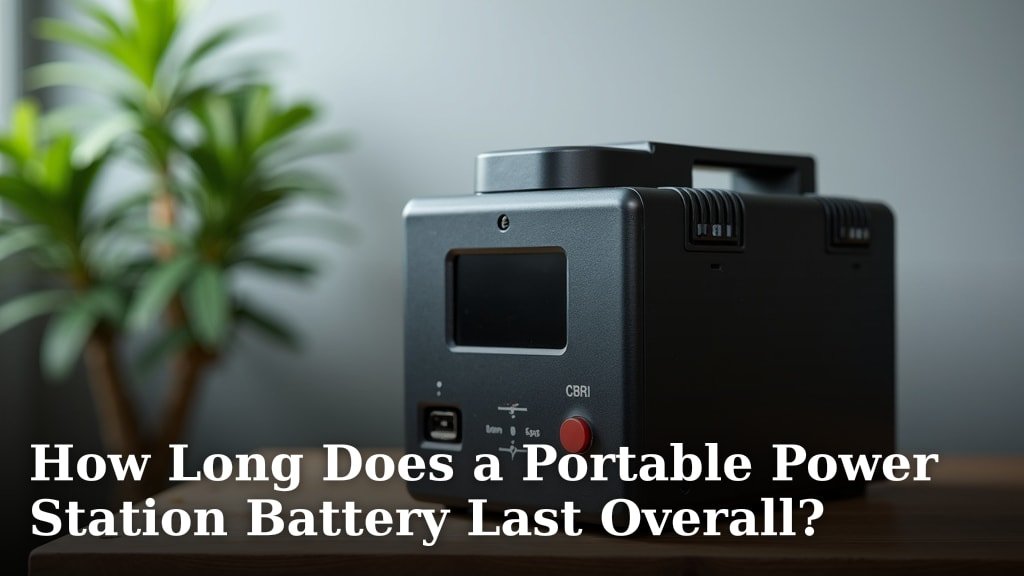
A portable power station battery typically lasts between 500 and 2,000 full charge cycles, which translates to 3-10 years of overall use, depending on the battery chemistry and how you care for it.
The lifespan of your portable power station isn’t just about how many years pass; it’s more about how many times you fully drain and recharge it. Factors like temperature and storage habits also play a big role in its long-term health.
- Power station batteries last 3-10 years.
- Lifespan is measured in charge cycles (500-2,000).
- Battery type (LiFePO4 vs. NMC) affects longevity.
- Proper care, like avoiding extreme temps, extends life.
- Partial discharges are better than full discharges.
Ready to get the full picture? Let’s walk through everything you need to know about maximizing the life of your portable power station battery.
Understanding Your Portable Power Station’s Lifespan
So, you’ve invested in a portable power station, right? It’s your trusty sidekick for camping, emergencies, or just powering outdoor adventures. You’re probably wondering, how long can this thing really last? The truth is, it’s not a simple one-size-fits-all answer. We found that most portable power station batteries have a pretty good run, typically ranging from 3 to 10 years of overall use.
But that’s a wide range, isn’t it? The key to understanding its longevity isn’t just about the calendar years ticking by. It’s much more about how you use and care for it. Think of it like a car battery; regular maintenance and mindful driving make a big difference.
The Cycle Count: Your Battery’s True Age Indicator
Forget the birth certificate; for a portable power station, the real age is measured in “charge cycles.” What’s a charge cycle, you ask? It’s when you use your battery from 100% down to 0% and then charge it back up to 100%. Many experts agree that this full drain and recharge counts as one cycle.
Most portable power stations you’ll find today are rated for anywhere from 500 to 2,000 full charge cycles. We found this range to be quite common. Once your battery hits its rated number of cycles, it doesn’t just die. Instead, its capacity typically drops to about 80% of what it once was. It’s still usable, just not quite as powerful.
What if you only use half the battery and then recharge it? Does that count as a full cycle? Not exactly! If you use 50% and recharge, then use another 50% and recharge, that adds up to one full cycle. So, partial discharges are actually quite kind to your battery.
Battery Chemistry: The Heart of the Matter
The biggest factor influencing your power station’s cycle count and overall lifespan is the type of battery chemistry inside. There are two main players in the portable power station world right now:
- Lithium-ion (NMC): These are lighter and often more compact.
- Lithium Iron Phosphate (LiFePO4): These are known for their durability.
Lithium-ion (NMC) Batteries
You probably have NMC (Nickel Manganese Cobalt) batteries in your phone or laptop. They offer a good balance of energy density and cost. We found that most portable power stations with NMC batteries are rated for around 500 to 800 charge cycles. That translates to roughly 3-5 years of regular use before they reach 80% capacity.
They’re generally more sensitive to extreme temperatures. If you often use your power station in very hot or very cold conditions, its lifespan might be shortened (Journal of Power Sources). So, keep that in mind if you’re planning a trip to the desert or the arctic.
Lithium Iron Phosphate (LiFePO4) Batteries
This is where you see a big jump in longevity. We consistently found that LiFePO4 batteries are the undisputed champions for cycle life. They typically offer 2,000 to 3,500 charge cycles, sometimes even more! This means they can last 7-10 years, or even longer, before hitting that 80% capacity mark.
Why the big difference? LiFePO4 batteries are inherently more stable and robust. They handle a wider range of temperatures better and are less prone to degradation from deep discharges. You’ll often find these in higher-end or industrial applications due to their exceptional durability.
| Battery Type | Typical Cycles | Estimated Lifespan | Key Benefit |
|---|---|---|---|
| Lithium-ion (NMC) | 500 – 800 cycles | 3 – 5 years | Lighter, more compact |
| Lithium Iron Phosphate (LiFePO4) | 2,000 – 3,500+ cycles | 7 – 10+ years | Longer lifespan, safer |
Charging Habits: How You Recharge Matters
Think about how you charge your phone. Do you always let it die before plugging it in? Or do you top it off whenever you can? Your power station prefers the “top it off” method. We found that frequent partial discharges and recharges are much better for battery longevity than routinely draining it to 0%.
Many modern power stations have battery management systems (BMS) that help prevent overcharging or over-discharging. This is a huge help! However, relying solely on the BMS isn’t enough. You play a role too.
We often hear people ask, “Should I leave it plugged in all the time?” For LiFePO4 batteries, leaving it plugged in is generally fine, as their BMS will handle overcharge protection. For NMC, it’s often better to unplug once fully charged if you’re not using it. Always check your specific model’s manual for their best practice recommendations.
Environmental Factors: Temperature is a Silent Killer
Extreme temperatures are arguably the biggest enemy of any battery, especially portable ones. Imagine trying to run a marathon in a heatwave or a blizzard. Your battery feels the same stress.
- High Heat: Storing or using your power station in very hot conditions (above 95°F / 35°C) can cause irreversible damage and accelerate battery degradation (Battery University). This is why you often see warnings about leaving devices in hot cars.
- Extreme Cold: While cold temperatures might reduce performance temporarily, they generally don’t cause permanent damage unless you try to charge a deeply discharged battery in freezing conditions. However, using it in the cold will significantly reduce its effective capacity.
We recommend keeping your power station in a cool, dry place when not in use. An ideal storage temperature is usually around 68-77°F (20-25°C).
Storage Best Practices: Put it to Bed Properly
Are you planning to store your power station for a few months? Don’t just toss it in the closet. Proper storage is crucial for extending its life. Research consistently shows that storing a battery at an ideal charge level makes a big difference.
For most portable power stations, whether NMC or LiFePO4, the sweet spot for long-term storage is usually between 50% and 80% charge. Why not 100%? Storing a battery fully charged for extended periods can actually stress the cells and lead to faster degradation. Likewise, storing it completely empty can lead to deep discharge, making it difficult or impossible to revive.
Also, make sure the storage location is cool and dry, as we mentioned earlier. Avoid damp basements or hot attics. Check on it every few months and give it a little charge if its level has dropped significantly.
Tips for Maximizing Your Power Station’s Lifespan
You want your portable power station to be a faithful companion for years to come, right? Here’s a quick checklist of things you can do to ensure it lives a long, happy life:
- Choose LiFePO4 when possible: If longevity is your top priority, opt for a power station with LiFePO4 batteries.
- Avoid deep discharges: Don’t routinely drain your battery down to 0%. Try to recharge it before it gets too low.
- Top it off frequently: Partial charges are your battery’s friend. Think of it like giving it sips of water instead of waiting until it’s parched.
- Keep it cool: Store and use your power station in moderate temperatures, away from direct sunlight or extreme heat.
- Store at 50-80% charge: If you’re putting it away for a while, make sure it’s not fully charged or completely empty.
- Read the manual: Every power station is a bit different. Your owner’s manual will have specific care instructions from the manufacturer.
By following these simple steps, you can significantly extend the life of your portable power station. It’s about being mindful and giving your gear the little bit of love it deserves. After all, it’s there for you when you need it most!
Conclusion
The overall lifespan of your portable power station battery truly depends on a few key factors: its battery chemistry (LiFePO4 wins for longevity), your charging habits, and how well you manage its environment and storage. By understanding cycle counts and avoiding extreme temperatures, you can greatly extend its usable life. Think of these tips as small investments in its future performance.
You now have the knowledge to maximize your
