
Yes, you can absolutely power a TV during a camping trip! The best way involves using a portable power station or a deep-cycle battery combined with an inverter. These solutions provide enough electricity to run your television without needing a traditional generator, keeping your campsite quiet. You’ll want to ensure your chosen power source has enough A portable power station is a versatile option for powering your TV and other devices while camping.wattage for your TV’s needs.
Bringing a taste of home entertainment to the great outdoors is totally achievable. Many campers want to enjoy a movie night or catch a game while away from it all. We found that understanding the power requirements of your TV and matching it with the right portable power solution is key to success. Don’t worry, it’s simpler than you might think to get your TV running.
TL;DR:
- Portable power stations are a great option.
- Deep-cycle batteries with inverters work well too.
- Check your TV’s wattage needs first.
- Avoid noisy generators for a peaceful camp.
Ready to set up your outdoor cinema? Below, we’ll walk you through the different ways to power your TV while camping, so you can enjoy your favorite shows under the stars.
Powering Your TV While Camping: A Practical Guide
Bringing entertainment to your campsite doesn’t have to mean sacrificing peace and quiet. You can absolutely power your TV outdoors. We found that the most popular and effective methods involve portable power solutions. These are much quieter than traditional generators. Let’s break down how you can enjoy your favorite shows under the stars.
Understanding Your TV’s Power Needs
Before you buy any equipment, you need to know how much power your television actually uses. This is the most important first step. TVs vary widely in their power consumption. A small, older CRT TV might use more power than a large, modern LED TV. You’ll typically find the power consumption listed in watts (W) on a sticker on the back of your TV. It might also be in the owner’s manual.
Finding Your TV’s Wattage
Look for a label on the back of your TV. It often says “Power Consumption” or “Watts.” If you can’t find it, search online for your specific TV model’s specifications. Many modern LED TVs use between 50 to 150 watts. Older or larger TVs could use 200 watts or more. Knowing this number helps you choose the right power source.
Calculating Total Power Usage
Don’t forget about other devices. Will you be using a streaming stick, a game console, or a soundbar? Add their power needs to your TV’s wattage. A streaming stick might only use 5 watts, but a game console could use 100 watts or more. We found that adding up these small amounts makes a big difference over time.
Top Power Solutions for Your Campsite TV
There are several great ways to power your TV without a noisy gas generator. We’ve researched the most common and effective methods. Each has its pros and cons, so consider what works best for your camping style and the length of your trip.
Portable Power Stations: The Modern Choice
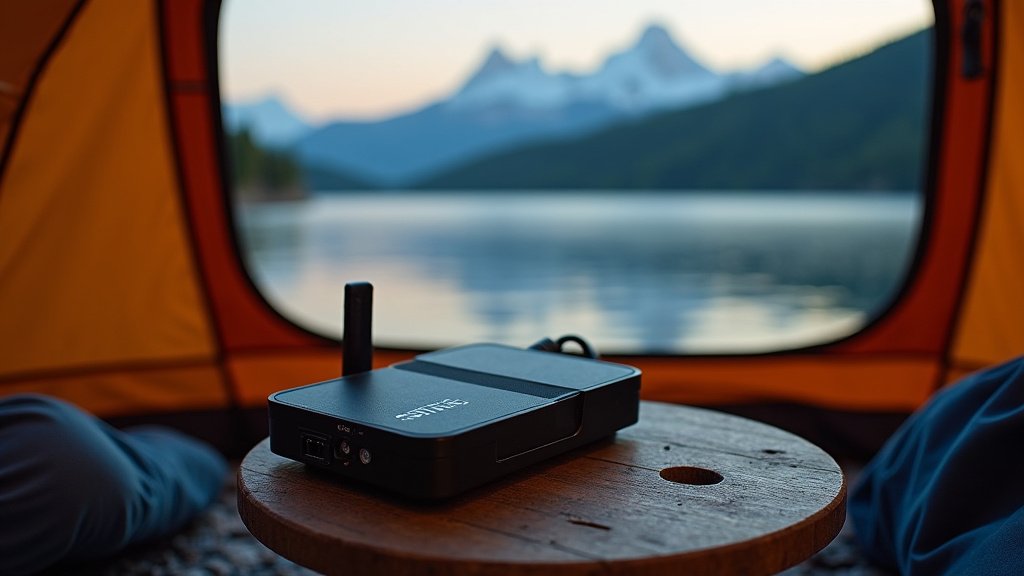
Portable power stations are essentially large rechargeable batteries with multiple outlets. They are becoming increasingly popular for camping. They’re quiet, easy to use, and come in various sizes. Think of them like a giant power bank for all your electronics. They often have AC outlets, USB ports, and sometimes even DC ports.
How They Work
These stations contain lithium-ion batteries. You charge them at home before your trip. At the campsite, you simply plug your TV into the AC outlet on the power station. We found that checking the station’s continuous output wattage is key. It must meet or exceed your TV’s needs. Its peak output is also important for devices that draw a surge of power when starting up.
Choosing the Right Size
Power stations are rated by their battery capacity (in watt-hours, Wh) and their output wattage. For a typical 100W TV, a power station with at least a 500Wh capacity and a 300W continuous output would be a good starting point. This would allow you to run the TV for several hours. We found that models with 1000Wh or more offer more flexibility for longer viewing times or powering multiple devices.
Recharging Your Power Station
Many power stations can be recharged at home via a wall outlet. Some also support solar charging, which is perfect for camping. You can use portable solar panels to keep your power station topped up while you’re out in the sun. We found this extends your TV viewing time significantly, especially on longer trips. Consider solar charging to keep your power station topped up during your trip.
Deep-Cycle Batteries with Inverters: The DIY Approach
This method involves a deep-cycle battery (like those used in RVs or boats) and a power inverter. An inverter converts the battery’s direct current (DC) power into alternating current (AC) power, which your TV uses. It’s a bit more hands-on than a power station, but it can be a very robust solution.
What is a Deep-Cycle Battery?
Unlike car batteries (which are designed for short, powerful bursts of energy), deep-cycle batteries can be discharged significantly without damage. This makes them ideal for powering devices over extended periods. Lead-acid and lithium deep-cycle batteries are common. Lithium batteries are lighter and last longer but are more expensive.
Understanding Power Inverters
You’ll need an inverter with enough wattage to handle your TV’s power draw. Like power stations, inverters have continuous and peak wattage ratings. A 300W continuous / 600W peak inverter is often sufficient for a standard TV. Make sure the inverter has a pure sine wave output if your TV or any connected devices are sensitive to power fluctuations. Modified sine wave inverters are cheaper but can cause issues with some electronics.
Connecting Everything
You connect the inverter directly to the battery terminals using heavy-gauge cables. Then, you plug your TV into the AC outlet on the inverter. It’s crucial to use cables that are rated for the amount of current you’ll be drawing. We found that improper wiring can be dangerous. Always follow the manufacturer’s instructions carefully. You might also need a battery box to protect the battery and keep things tidy.
Battery Management is Key
Deep-cycle batteries need to be managed carefully. You don’t want to discharge them too deeply, as this can shorten their lifespan. You’ll need a way to recharge the battery. This could be via a solar panel setup, a portable generator (used only for charging, not running the TV), or by swapping it for a charged battery. Many campers who use this method have a battery monitor to track the charge level.
Comparing Power Options: A Quick Glance
To help you decide, we’ve put together a quick comparison of the main methods. This should give you a clearer picture of what each option offers for your camping adventures.
| Feature | Portable Power Station | Deep-Cycle Battery + Inverter | Generator (for context) |
|---|---|---|---|
| Noise Level | Very Quiet | Silent (when not charging) | Loud |
| Ease of Use | Very Easy (plug and play) | Moderate (requires setup) | Moderate (requires fueling, maintenance) |
| Portability | Varies by size, generally good | Can be heavy, especially batteries | Heavy, often on wheels |
| Environment | Clean, no emissions | Clean, no emissions | Emissions produced |
| Initial Cost | Moderate to High | Moderate to High (depending on battery type) | Low to Moderate |
| Runtime | Limited by battery capacity | Limited by battery capacity and charging | Limited by fuel capacity |
Setting Up Your Outdoor Cinema: Checklist
Ready to make it happen? Here’s a quick checklist to ensure you have everything you need for your TV-powered camping trip.
- Confirm TV wattage: Check the label on your TV.
- Select power source: Choose a power station or battery/inverter combo.
- Verify output wattage: Ensure it matches or exceeds your TV’s needs.
- Pack necessary cables: Extension cords, AC adapters, battery cables.
- Consider charging method: Solar panels, car adapter, home charging.
- Test everything at home: Make sure it all works before you leave.
Conclusion
You can absolutely bring your favorite shows to the campsite! We’ve shown you that powering a TV doesn’t require a noisy generator. Your best options are a portable power station or a deep-cycle battery with an inverter. Remember to always check your TV’s wattage first. This ensures your chosen power solution can handle the load. With the right setup, you’ll be enjoying movie nights under the stars. Ready to plan your ultimate outdoor viewing experience? Start by checking your TV’s power needs and then compare the portable power options we discussed.
Frequently Asked Questions
Can I power a TV using my car battery?
You can, but it’s not ideal for long viewing sessions. Car batteries are designed for short, powerful bursts and can be drained quickly by a TV. It’s better to use a deep-cycle battery or a portable power station designed for continuous use. If you do use your car, ensure your engine is running periodically to recharge the battery.
How long will a portable power station last for watching TV?
This depends entirely on the power station’s capacity (measured in watt-hours) and your TV’s power consumption. A 500Wh power station might power a 100W TV for about 4-5 hours. For longer viewing, you’ll need a larger capacity station or a way to recharge it, like solar panels.
Are modified sine wave inverters bad for TVs?
Modified sine wave inverters are cheaper but can sometimes cause issues with sensitive electronics like TVs. They might lead to humming noises, reduced performance, or even damage over time. For your TV, a pure sine wave inverter is always the safer and recommended choice to ensure clean power.
What happens if my power source’s wattage is too low for my TV?
If the continuous output wattage of your power station or inverter is lower than your TV’s requirement, your TV likely won’t turn on, or it might shut off intermittently. Some devices might also suffer damage from underpowering. Always match or exceed your TV’s wattage needs.
Can I recharge my power station while using it to power my TV?
Yes, many portable power stations allow pass-through charging, meaning you can plug them into a power source (like solar panels or a car adapter) to recharge them while simultaneously powering your TV. This is a great way to extend your viewing time significantly.
