
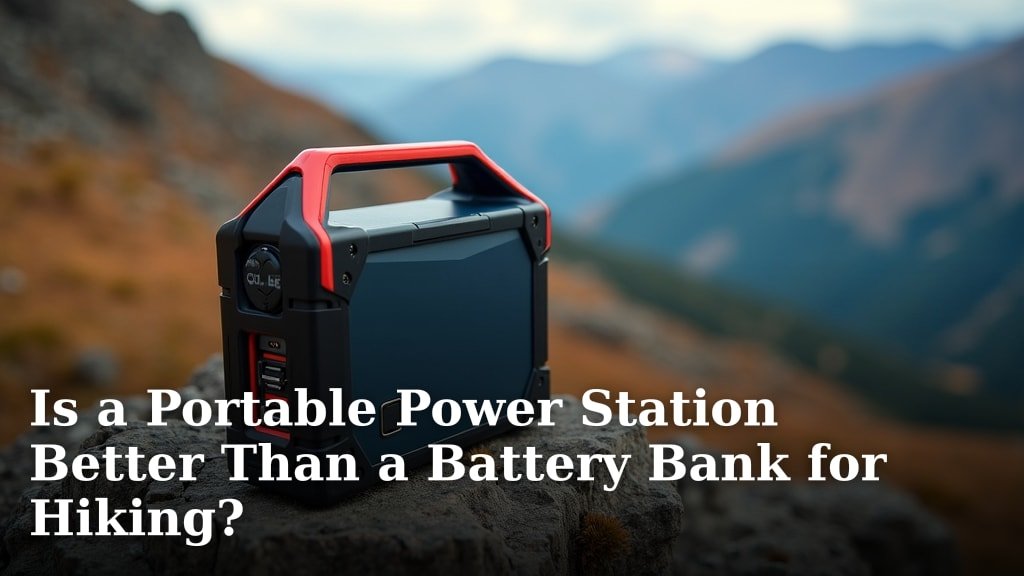
For your hiking adventures, a portable power station is generally a better choice than a battery bank. This is because power stations offer more power and versatility for charging multiple devices, even those with higher energy needs. They are designed for outdoor use, providing a more robust and efficient power solution.
Think of it this way: a battery bank is like a simple extension cord, while a portable power station is like a mini generator. We found that while battery banks are great for topping up a phone, power stations can run appliances, charge cameras, and keep all your gadgets juiced up on extended trips. It’s about having the right tool for the job.
- Portable power stations offer more charging capacity.
- They can power a wider range of devices.
- Power stations are often more durable for outdoor use.
- Battery banks are simpler and lighter for short trips.
So, let’s break down exactly why a portable power station might be your new best trail buddy.
You’re heading out on the trail, ready to disconnect and recharge in nature. But what about recharging your devices? Keeping your phone, camera, GPS, or even a small fan powered up can make a big difference on longer hikes. You might be wondering if your trusty battery bank is enough, or if it’s time to upgrade to a portable power station. Let’s figure out which one is your better trail buddy.
Portable Power Station vs. Battery Bank: Which is Right for Your Hiking Needs?
For most hikers, a portable power station is often the better choice over a standard battery bank. They offer more power, flexibility, and can handle a wider range of devices. Think of them as a step up from just charging your phone.
Understanding the Basics: What’s the Difference?
It’s easy to get these two confused. But they really serve different purposes. A battery bank is designed to be simple. It holds a charge and delivers it to one or two devices, usually via USB. Portable power stations are more like mini generators. They have larger batteries and can output power in various ways.
Battery Banks: The Pocket-Sized Chargers
You probably know these well. Battery banks, or power banks, are compact. They’re great for topping up your smartphone on a day hike. They’re lightweight and easy to slip into a pocket or small bag. Their primary function is simple: store power and release it.
Portable Power Stations: The All-in-One Power Hubs
Portable power stations are larger. They contain a bigger battery and often have multiple output ports. You’ll find AC outlets, DC ports, and USB ports. This means you can charge multiple devices simultaneously. Some can even power small appliances like mini-fridges or CPAP machines, though that’s usually more for camping than intense hiking.
Power Capacity: How Much Juice Do You Need?
When you’re out in the backcountry, having enough power is key. This is where power stations really shine. They store a lot more energy than typical battery banks.
mAh vs. Wh: Decoding the Numbers
Battery banks are usually rated in milliampere-hours (mAh). You’ll see numbers like 10,000 mAh or 20,000 mAh. Portable power stations often use watt-hours (Wh). This rating gives you a clearer picture of total energy capacity. A 500 Wh power station holds significantly more energy than a 20,000 mAh battery bank.
For example, a 20,000 mAh battery bank at 3.7V is about 74 Wh. So, a 500 Wh power station holds nearly seven times the energy! This difference is huge for longer trips or if you need to power more than just your phone.
Recharging Multiple Devices
Do you carry a smartphone, a GPS device, and a camera? Maybe a headlamp with a rechargeable battery? A battery bank might struggle to keep all of these topped up on an extended trip. A power station can handle this load much more easily. You can plug in your camera battery charger, your phone, and your GPS all at once.
Device Compatibility: Beyond Just Your Phone
Your hiking gear is getting smarter and more power-hungry. Think about what you bring along. A power station opens up possibilities that a battery bank just can’t match.
What Can a Power Station Power?
Beyond your standard USB devices like phones and tablets, power stations can power things with higher energy demands. This includes:
- Laptop chargers
- Rechargeable camera batteries
- GPS devices
- Drone batteries
- CPAP machines (for sleep apnea)
- Small fans or lights
- Even a portable blender for that well-deserved trail smoothie (maybe!)
Battery Banks: Limited to Low-Power Devices
Battery banks are generally limited to devices that charge via USB. They don’t have the output ports or the power capacity for anything more. Trying to charge a laptop directly from most battery banks isn’t feasible. You’d need a power bank with a built-in AC inverter, which is rare.
Durability and Features for the Outdoors
Hiking means facing the elements. Your gear needs to be tough. Portable power stations are often built with outdoor use in mind.
Built Tough for the Trail
Many portable power stations feature rugged casings designed to withstand bumps and drops. They often have better protection against dust and water than typical consumer electronics. Some even come with built-in LED lights, which can be incredibly useful at your campsite.
Recharging Your Power Source
A big advantage of power stations is their recharging flexibility. You can often recharge them using solar panels. This is a game-changer for multi-day trips where access to wall outlets is impossible. You can lay out a solar panel during the day and keep your power station topped up. You can often recharge them using solar panels, which is a game-changer for multi-day trips.
While some high-end battery banks can be recharged by solar, it’s far more common and efficient with power stations. Many experts suggest solar recharging is essential for off-grid power (National Renewable Energy Laboratory).
Battery Banks: Simple and Portable
Battery banks are simple. Their main feature is their portability. They are usually lightweight and very compact. You’ll recharge them at home before your trip. They don’t typically offer advanced features like solar input or multiple output types.
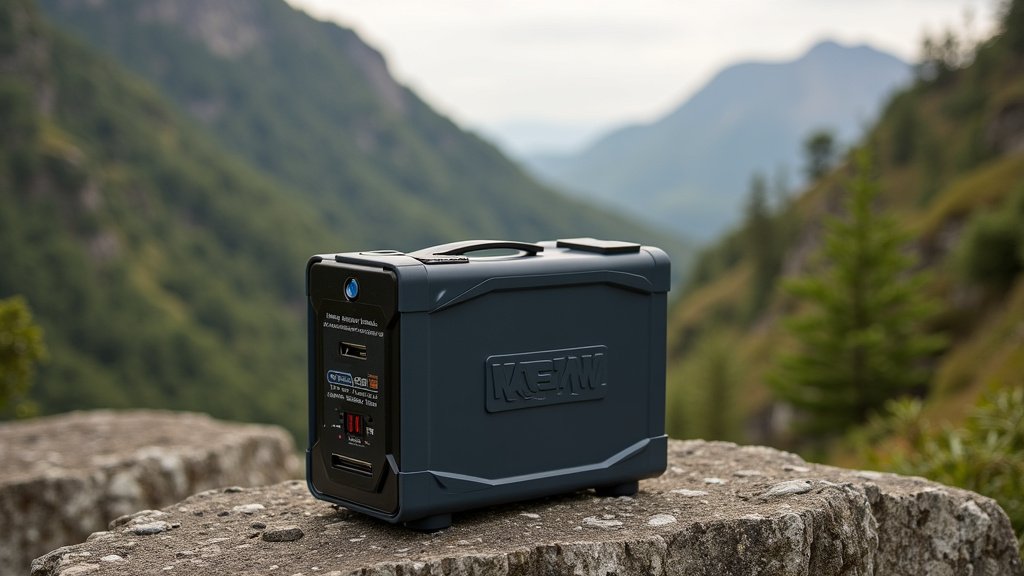
Weight and Portability Considerations
Let’s talk about weight. This is where battery banks often win for short trips.
The Weight Factor
A small 10,000 mAh battery bank might weigh around half a pound. A larger 20,000 mAh model could be a pound or so. This is easily manageable for most hikers.
Portable power stations vary wildly. A small 150 Wh station might weigh 3-5 pounds. A larger 500 Wh station can easily weigh 10-15 pounds or more. For serious backpacking, this extra weight can be a significant factor.
When Weight Matters Most
If you’re on a day hike or a short overnight trip where you only need to charge your phone a couple of times, a battery bank is perfectly adequate. It’s light and easy to carry. Adding several extra pounds for a power station might be overkill.
When Power is Worth the Weight
For longer expeditions, multi-day treks, or if you’re part of a group that needs to share power, the extra weight of a power station can be justified. The ability to recharge devices, run essential equipment, or even power a small light for the tent is worth the trade-off.
Cost Comparison: What’s Your Budget?
Price is always a consideration. You can find battery banks very affordably. Power stations represent a larger investment.
Battery Banks: Budget-Friendly Options
You can buy a decent 10,000 mAh battery bank for $20 to $50. Even larger ones are often under $100. They offer great value for basic charging needs.
Portable Power Stations: A Bigger Investment
Portable power stations start around $100 for very small models. A mid-range 300-500 Wh unit will likely cost $300 to $600. Larger, higher-capacity stations can cost $1,000 or more. The cost reflects the larger battery, more advanced electronics, and greater output capabilities.
Making Your Choice: A Quick Checklist
Still on the fence? Ask yourself these questions to help decide.
- How long are your typical hikes? Day trips or multi-day expeditions?
- What devices do you need to charge? Just your phone, or also cameras, GPS, laptops?
- How much power do you actually use? Do you need to power multiple devices at once?
- Is recharging in the field important? Do you want to use solar power?
- What’s your budget? Are you looking for a simple charger or a complete power solution?
- How much extra weight can you comfortably carry?
Many hikers find that for any trip longer than a weekend, or if they have power-hungry gadgets, a portable power station offers a significantly better experience. While a battery bank is great for your commute or a short day out, a power station is built for the demands of the trail.
Conclusion
When you’re choosing power for your hikes, a portable power station often wins for anything beyond a quick day trip. We found they offer superior capacity and versatility compared to basic battery banks. They can recharge more devices, handle higher power needs, and many even support solar charging for true off-grid adventures. While battery banks are great for light use, a power station provides a more robust power solution for longer treks or if you carry more gear. Consider your trip length and device needs to make the best choice for your next outdoor escape.
Frequently Asked Questions
Can I really recharge a portable power station with solar panels while hiking?
Yes, you absolutely can. Many portable power stations are designed with solar input ports, allowing you to connect compatible solar panels. This is a fantastic way to keep your power station topped up during multi-day trips when you’re away from electrical outlets.
How much heavier is a portable power station compared to a battery bank?
Portable power stations are generally heavier. A typical battery bank might weigh under a pound, while even smaller power stations can range from 3 to 5 pounds. Larger, higher-capacity power stations can easily weigh 10 to 15 pounds or more, so weight is a key consideration for backpacking.
Is a portable power station overkill for a simple day hike?
For most day hikes where you just need to keep your phone charged, a portable power station is likely overkill. A small battery bank is lighter and more practical for these shorter outings. Power stations are best suited for longer trips or when you need to power multiple devices or higher-draw items.
What’s the main advantage of a power station’s Wh rating over a battery bank’s mAh rating?
The watt-hour (Wh) rating on power stations provides a more direct measure of total energy capacity. It accounts for both voltage and amperage, giving you a clearer picture of how much power it can deliver, especially for devices that use AC power. mAh alone can be misleading without knowing the voltage.
Can a portable power station power my laptop on the trail?
Yes, most portable power stations can easily power and recharge a laptop. They typically feature AC outlets or DC ports specifically designed for laptops and other higher-draw electronics that standard USB battery banks cannot support.
