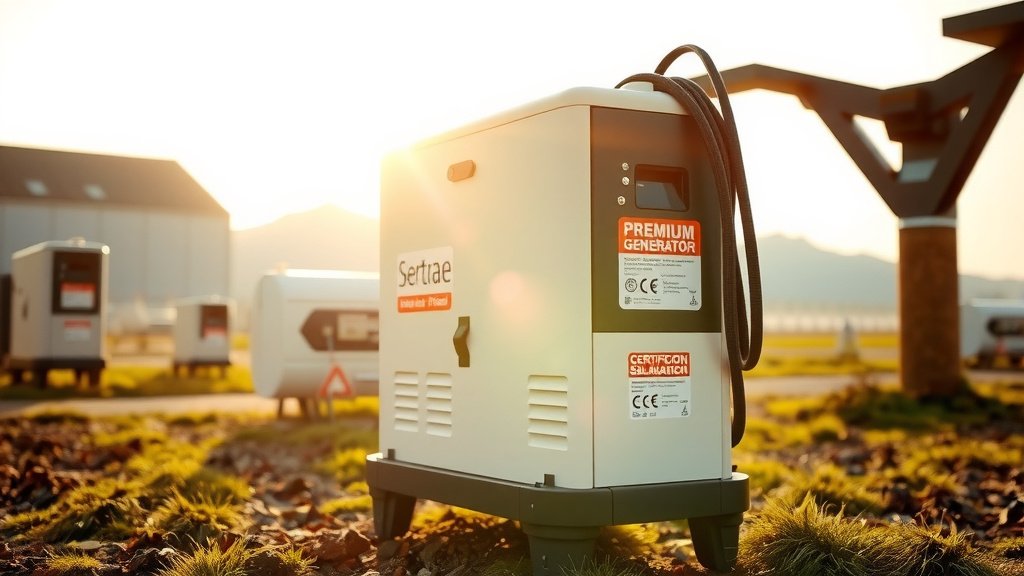
A solar generator should prominently display certifications like UL 2743 for electrical safety and UN38.3 for battery transport. These ensure your device meets strict safety and performance standards.
Look for symbols such as CE for European markets, FCC for electromagnetic compatibility, and RoHS for hazardous substance restrictions to guarantee a reliable and safe solar generator experience.
TL;DR:
- Always check for certified solar generators to ensure safety and quality.
- Look for UL (especially UL 2743) and UN38.3 markings as key indicators.
- CE and FCC certifications confirm international and electromagnetic standards.
- RoHS compliance means fewer hazardous materials in your device.
- Choosing certified products protects your investment and provides peace of mind.
What Certifications Should Solar Generator Have?
When you’re looking for a solar generator, knowing the right certifications to seek is a smart move. These markings mean your device has been tested for safety, quality, and performance.
They provide an important layer of assurance, helping you pick a product that works as promised.
Why Certifications Matter for Your Peace of Mind
Think of certifications as a seal of approval from independent experts. They tell you that a product has met specific criteria. For something like a solar generator, this is a big deal.
You’re dealing with electricity and batteries, so safety is paramount. We found that these certifications help prevent accidents and ensure long-term reliability.
Understanding the “Alphabet Soup” of Certifications
You might see many different letters and symbols on product packaging. It can feel a bit overwhelming, right? We’re here to help you make sense of these acronyms.
Each certification focuses on a different aspect, from electrical safety to environmental impact. Understanding them helps you make a truly informed choice.
The Gold Standard: UL Certification
UL stands for Underwriters Laboratories. This organization is a global leader in safety science. When you see a UL mark, it means the product has undergone rigorous safety testing.
It’s a highly respected certification, especially for electrical products. Many experts say it’s one of the most important to look for (Consumer Reports).
UL 2743: Your Portable Power Station’s Safety Check
For portable power stations, which include many solar generators, UL 2743 is the key standard. This specific certification covers safety for portable power packs.
It ensures the internal battery, charging system, and overall electrical components are safe to use. You really want to see this one.
Keeping Batteries Safe: UN38.3 Certification
Solar generators contain powerful lithium-ion batteries. These batteries need to be safe, especially when being transported. That’s where UN38.3 comes in.
This certification confirms that the battery has passed tests for pressure, impact, and extreme temperatures. It’s essential for safe shipping and handling, meaning your battery is more likely to be stable.
European Standards: The CE Mark
The CE mark stands for “Conformité Européenne,” which means “European Conformity.” This mark indicates that a product sold within the European Economic Area meets health, safety, and environmental protection standards.
If you live outside Europe, it still shows a commitment to global safety standards. It’s a good sign of a well-made product, even if not strictly required in your region.
Electromagnetic Harmony: FCC Certification
The Federal Communications Commission (FCC) certification is about electromagnetic compatibility. This means your solar generator won’t interfere with other electronic devices nearby.
It also means other devices won’t interfere with its operation. It’s important for devices that produce radio frequency energy, like most electronics. Nobody wants their radio to get static from their power station!
Eco-Conscious Choices: RoHS Compliance
RoHS stands for “Restriction of Hazardous Substances.” This directive restricts the use of specific hazardous materials in electrical and electronic products.
It helps ensure that your solar generator is manufactured with fewer harmful chemicals. This is good for the environment and potentially better for your health.
Quality Management: ISO Standards
While not a product certification, an ISO 9001 certification for the manufacturer shows a commitment to quality management. It means the company has systems in place for consistent production and customer satisfaction.
Many reliable brands will proudly display their ISO certifications. It speaks to the company’s overall operational quality.
Other Certifications to Consider
Sometimes you might see other marks, like ETL or CSA. These are also safety testing organizations similar to UL. They operate in different regions but confirm similar safety standards.
Another might be PSE for the Japanese market. The key takeaway is to look for a reputable safety testing body.
How to Spot Authentic Certifications
How do you know if a certification is real? Always check the product description and the manufacturer’s website. Reputable brands will clearly list their certifications.
You can also often look up certifications on the certifying body’s website, like UL’s online certification directory. If it’s hard to find, that might be a red flag.
Don’t Skip This Step: Your Checklist
Before you buy that shiny new solar generator, run through this quick checklist:
- Is UL 2743 clearly listed for portable power?
- Does it have UN38.3 for battery safety?
- Is there a CE mark if you’re in Europe or for general quality?
- Does it show FCC compliance for electromagnetic harmony?
- Is the product RoHS compliant for hazardous materials?
- Does the manufacturer have a good reputation for quality?
What Happens Without Certifications?
Choosing a solar generator without proper certifications can be risky. You might end up with a device that could overheat, short-circuit, or even catch fire. This isn’t just a minor inconvenience.
It can lead to property damage or even injury. Plus, a non-certified device might not work as advertised, leaving you stranded without power when you need it most. Your safety and satisfaction are worth the extra check.
| Certification | What It Means | Why It’s Important |
|---|---|---|
| UL 2743 | Portable power pack electrical safety | Protects against fire, shock, and explosion risks |
| UN38.3 | Lithium battery transport safety | Ensures battery stability during shipping and use |
| CE | European conformity standards | Meets health, safety, and environmental protection |
| FCC | Electromagnetic compatibility | Prevents interference with other electronics |
| RoHS | Restriction of hazardous substances | Reduces toxic materials in manufacturing |
Conclusion
Choosing a solar generator with the right certifications is not just a suggestion; it’s a necessary step for your safety and peace of mind. Certifications like UL 2743, UN38.3, CE, FCC, and RoHS are more than just letters on a box.
They represent a commitment to quality and rigorous testing. By knowing what to look for, you protect your investment and ensure a safe, reliable power source. So, when you’re ready to power your adventures, make sure your generator has earned its stripes. You deserve a product you can trust.
Are all solar generator certifications equally important?
Not all certifications carry the same weight for every aspect. For safety, UL 2743 and UN38.3 are often seen as the most critical because they directly relate to electrical and battery hazards. Others, like FCC or RoHS, are important for compatibility and environmental impact, but maybe not direct safety. It depends on what matters most to you.
Can I trust a solar generator with only one certification?
Relying on just one certification might be risky. A comprehensive set of certifications, especially UL 2743 for the unit and UN38.3 for the battery, offers far greater assurance. A single certification might only cover one aspect, leaving other potential issues unaddressed.
Do certifications expire on solar generators?
The certifications themselves, like the UL mark on a specific model, don’t typically “expire” in the sense that your milk does. However, standards can be updated, and manufacturers must re-certify new versions of their products against the latest guidelines. Always check for the most recent standard when possible.
What if a solar generator doesn’t list any certifications?
If a solar generator doesn’t list any recognizable certifications, it’s generally a red flag. It might mean the product hasn’t been tested to safety standards, or the manufacturer is not transparent. We recommend avoiding such products to prevent potential safety risks and performance issues. Always prioritize certified options.
Are there different certification requirements for solar generators of different sizes?
While the core safety principles remain consistent, larger or more powerful solar generators might undergo additional, more stringent tests due to higher energy outputs. For instance, a very large industrial-grade system might have different requirements than a small portable one, but key standards like UL 2743 still apply to portable units regardless of modest size differences.