How to Choose a 2000-Watt Propane Generator
Choose a 2000 watt generator propane model by its running watts first, then check surge watts, fuel use, noise, outlets and safety features. A generator rated near 2000 running watts may suit lights, electronics and small appliances, but starting loads can require much more.
On this page (11 sections)
- What should you check first in a 2000 watt generator propane model?
- How much power do you need from a propane generator?
- Does a propane generator produce 2000 watts on propane?
- Is a 4000-watt generator too large for a 2000-watt need?
- What makes inverter output useful for electronics?
- How should you compare propane, gasoline and dual fuel?
- What outlets should a small propane generator have?
- How quiet should a 2000 watt generator be?
- What safety steps matter for propane generator use?
- How do you maintain a small fuel generator?
- Which 2000 watt generator propane option fits your plan?
A 2000 watt generator propane setup should be chosen by running watts first, then surge watts, fuel use, noise, outlets and safe outdoor placement. A generator near 2000 running watts can support selected lights, electronics and small appliances, but a motor may need much more power for a few seconds when it starts.
The phrase “2000 watt” can describe either the continuous output or the larger startup figure. Read both numbers carefully before you compare models, especially if you need to start a refrigerator, pump, fan, air conditioner or power tool.
This guide explains how to size a propane generator, how to compare gasoline and dual-fuel options, and what the three example products show about choosing beyond the headline wattage. For a broader look at fuel-powered equipment, see our fuel generators complete buying guide.
What should you check first in a 2000 watt generator propane model?
Check the running-watt rating before the surge rating. Running watts are the output a generator can sustain, while surge watts are the short-term capacity available during startup.
A generator advertised with 2000 surge watts may produce much less than 2000 running watts. That difference affects whether it can keep an appliance operating after the motor starts.
Use this simple order:
- List the devices you want to run together.
- Find each device's running watts.
- Identify the largest startup demand.
- Add the running loads.
- Compare the total with the generator's running-watt rating.
- Confirm that the largest combined startup event fits the surge rating.
- Leave room for small changes in load.
A phone charger, LED light and laptop usually have a modest running demand. A refrigerator or pump may have a lower running demand but a much larger startup requirement.
Do not assume that a 2000 watt label means the generator will run 2000 watts continuously. The model's rated or running output is the number to use for sustained loads.
Why do running watts matter more than surge watts?
Running watts determine whether the generator can keep your devices powered after they start. Surge watts matter during startup, but they don't replace continuous capacity.
For example, a generator with 2350 surge watts and 1900 rated watts is not a 2350 running-watt machine. Its practical continuous limit is the lower number.
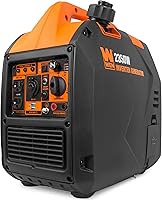
The WEN example makes this distinction clear. It produces 2350 surge watts and 1900 rated watts, so it fits buyers who need clean inverter power and portability around a 1900-watt continuous ceiling.
The WEN weighs 39 pounds and measures 17.3 x 11.5 x 17.5 in, so its size and weight suit transport and storage. Its gasoline engine has a 79 cc displacement, and the unit provides two 120V receptacles, one 12V DC receptacle and two 5V USB ports.
WEN describes it as extremely quiet, with operation comparable to a normal conversation. Its description also gives a 51 dB figure at quarter load, but noise varies with load and placement.
The unit includes a fuel shutoff that uses remaining fuel in the carburetor before shutdown. That feature can help reduce stale-fuel buildup during storage, but you still need to follow the manual's care instructions.
This is not a propane generator. It is useful here as a reference for the lower-output end of the comparison, where a buyer may prefer a small gasoline inverter over a larger dual-fuel model.
How much power do you need from a propane generator?
You need enough running watts for the devices that stay on, plus enough surge capacity for the largest startup event. Write down the actual loads instead of using household size as a shortcut.
A practical load list might include:
| Device group | What to check |
|---|---|
| Electronics | Continuous draw and sensitivity to voltage changes |
| Refrigerator | Running watts and compressor startup surge |
| Lights | Total wattage for all lamps used together |
| Fan or pump | Motor startup demand |
| Microwave or hot plate | High continuous draw |
| Power tools | Startup and operating demand |
| RV equipment | Receptacle type and total load |
Add only the devices you expect to use at the same time. A generator does not need to support every appliance in the home if your emergency plan uses a smaller group.
Start motor-driven equipment one at a time when possible. This reduces the chance that two startup surges arrive together.
If your plan includes an RV, check the connection before choosing the generator. For a home connection, review generator extension cord guidance before running a cord indoors.
A household receptacle may not serve the same purpose as an RV-ready outlet. Compare Honda EU2200i models to review the outlet options.
Does a propane generator produce 2000 watts on propane?
A propane generator may produce a different output on propane than on gasoline, so check fuel-specific running and surge ratings. Dual-fuel equipment can offer flexibility, but the propane figures are the ones that matter for your intended setup.
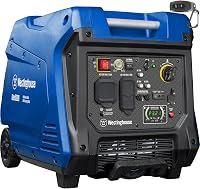
The Champion example is rated at 4000 starting watts and 2700 running watts on propane. Compare more 4000-watt portable generator options if you need similar output.
On gasoline, it provides 4000 starting watts and 3000 running watts.
The Champion weighs 51.8 pounds and measures 17.9 x 11.7 x 19.7 in. Its 149 cc, 4-stroke engine runs on gasoline or propane, and the product includes engine oil, an oil funnel and a propane hose.
Its propane runtime can reach up to 25 hours at 25% load with a 20-pound propane tank, while gasoline runtime can reach up to 10 hours at 25% load. These figures apply to the stated load conditions, not to full output.
The unit includes a 120V 25A TT-30R outlet, a 120V 20A household duplex outlet, a 12V automotive-style outlet and parallel outlets. It also includes CO Shield carbon monoxide auto shutoff.
The Champion is larger than a compact 2000-watt-class generator, but its propane running capacity gives more headroom for appliances and RV use. Choose it only if its extra size, weight and output fit your plan.
Is a 4000-watt generator too large for a 2000-watt need?
A 4000-watt generator can be too large if you only need light loads and easy transport. It can also be a sensible choice if your appliances have high startup demands or you want more reserve capacity.
The Aceup Energy example provides 4000 peak watts and 3200 rated watts from a 149 cc, 4-stroke gasoline engine. It is not a propane model, but it shows how a larger gasoline inverter changes the available headroom.
The Aceup Energy weighs 48 pounds and measures 19.68 x 11.8 x 17.7 in. It uses recoil start and has a 1.32-gallon tank with up to 5 hours of runtime at half load.
Its control display tracks voltage, runtime, gasoline level, hertz and power output. It also includes a low-oil LED and an economic mode.
The outlets include a 120V 20A outlet, an RV receptacle and a 12V DC 8.3A car charger outlet. The generator is parallel ready, but the parallel kit is sold separately.
Aceup Energy gives a noise figure of about 60 dB in Eco mode at 23 feet with a 25% load. The inverter output has total harmonic distortion below 1.5%, which suits buyers who want cleaner power for electronics.
Choose this model when the extra continuous capacity solves a real load problem. If your priority is propane fuel, this gasoline-only option does not meet that requirement.
What makes inverter output useful for electronics?
Inverter technology can provide cleaner, more stable power for sensitive electronics than some conventional generator designs. Check the stated total harmonic distortion and connect only the devices your load plan supports.
The WEN description gives less than 0.3% total harmonic distortion at no load and less than 1.2% at full load. Aceup Energy gives below 1.5% total harmonic distortion.
Champion gives less than 3% total harmonic distortion and identifies its output as clean electricity. These figures are different, but all three products are presented as inverter generators.
Clean output does not remove the need for safe operation. For weather protection during operation, see generator covers for running and follow the cover maker’s instructions.
Keep the generator dry, use suitable cords and avoid overloading the receptacles.
If you are comparing quiet inverter units, our guide to the best quiet 2000 watt generators covers the sound and capacity questions that often follow the wattage search.
How should you compare propane, gasoline and dual fuel?
Compare fuel storage, output, runtime, connection needs and availability. Propane may suit a planned emergency reserve, gasoline may fit everyday access, and dual fuel gives you more than one operating option.
Propane storage still requires safe handling and an approved connection. Confirm the generator's hose setup, tank connection and operating instructions before you rely on it.
Gasoline can be convenient for general equipment, but stored fuel needs proper containers and rotation. A fuel shutoff, like the one on the WEN, can support storage care by reducing fuel left in the carburetor.
Dual-fuel models can change output and runtime by fuel type. The Champion's propane rating is 2700 running watts, compared with 3000 running watts on gasoline.
For another comparison of fuel choices and generator styles, read how to choose between a solar generator and an inverter generator. A solar generator has a different charging and runtime model, so compare the use case rather than treating it as a direct fuel substitute.
What outlets should a small propane generator have?
Choose outlets that match your cords, appliances and RV connection. More outlets do not automatically mean more usable power because the generator still has one total output limit.
For basic home and camping use, look for the receptacle types required by your equipment. A 12V DC outlet may help with compatible automotive-style loads, while USB ports can simplify small electronics charging.
The Champion includes a 120V 25A TT-30R outlet for RV use, a 120V 20A household duplex outlet, a 12V automotive-style outlet and parallel outlets. That layout suits a buyer with both household and RV connections.
Aceup Energy includes an RV receptacle, a 120V 20A outlet and a 12V DC 8.3A car charger outlet. Its parallel capability requires a separately sold kit.
WEN includes two three-prong 120V receptacles, one 12V DC receptacle and two 5V USB ports. Its layout suits small electronics and ordinary 120V connections, but it does not provide the propane operation or RV-ready outlet described for the Champion.
If electric start is part of your plan, see can you get a 2000 watt generator with electric start. Starting method is separate from fuel type and continuous wattage.
How quiet should a 2000 watt generator be?
Choose a noise rating based on distance, load and location, not one number alone. Sound usually changes as the generator works harder, and nearby walls can reflect noise toward a campsite or home.
WEN describes its generator as extremely quiet and gives 51 dB at quarter load. Aceup Energy gives about 60 dB in Eco mode at 23 feet with a 25% load.
Champion gives 64 dBA from 23 feet.
These numbers are not identical test conditions, so avoid treating them as a perfect ranking. Placement, load and surrounding surfaces affect what you hear.
Use a long enough approved cord to place the generator safely away from occupied areas, while keeping the cord within its rated use. Never move the generator indoors to reduce noise.
What safety steps matter for propane generator use?
Use a fuel generator only outdoors in a well-ventilated location, with exhaust directed away from people and openings. Carbon monoxide can collect indoors even when the door or window is partly open.
Keep the generator away from doors, windows, vents and combustible materials. Follow the manual for fuel connection, grounding, extension cords, maintenance and shutdown.
The Champion includes CO Shield carbon monoxide auto shutoff. That feature adds protection, but it does not make indoor operation safe or replace carbon monoxide alarms.
Let the generator cool before refueling. Keep fuel and propane connections away from ignition sources, and inspect cords and hoses before use.
During an outage, connect only the equipment in your plan. Do not connect a portable generator directly to household wiring unless a qualified professional has installed the proper transfer equipment.
How do you maintain a small fuel generator?
Maintain it by following the manual's schedule, keeping fuel systems clean and storing the unit in a dry place. Good storage care matters as much as the initial wattage choice.
Use the correct fuel and oil instructions for the model. Check oil before operation, keep air openings clear and inspect the spark plug and filters at the intervals specified by the manufacturer.
Run the generator safely often enough to keep your emergency plan familiar, but do not operate it in an enclosed space. Record fuel rotation and test the cords or loads you expect to use.
The WEN fuel shutoff uses remaining carburetor fuel before shutdown. Aceup Energy combines fuel shutoff with a 5-in-1 knob, while Champion includes an EZ Start dial and describes Cold Start Technology for cold weather.
Those features can simplify operation, but they do not remove routine care. Read the manual before the first emergency because unfamiliar controls slow down setup.
Which 2000 watt generator propane option fits your plan?
Choose the WEN if your priority is a lightweight gasoline inverter with 1900 rated watts, clean output and USB charging. Choose the Champion if propane operation, RV connections and higher running capacity matter more than compact size.
Choose the Aceup Energy if your loads need 3200 rated watts and you prefer a gasoline inverter with a digital display. It is not a propane model, so it should not be your first choice for a propane-only plan.
The key rule is simple: compare running watts for sustained use, surge watts for startup, and fuel-specific output for the fuel you will actually use. Then confirm outlets, noise, storage and outdoor safety before you buy.
Frequently asked questions
What does a 2000 watt generator mean?
A 2000 watt generator usually refers to its running or continuous output, but some products use the larger surge rating in the name. Check both numbers before buying.
Running watts support appliances after startup, while surge watts cover the brief extra power needed by motors, compressors and other starting loads.
Can a 2000 watt propane generator run a refrigerator?
A 2000 watt propane generator may run a refrigerator if its running demand and startup surge fit within the generator's ratings. Check the refrigerator's label or manual, add the starting needs of anything else connected, and leave reserve capacity instead of treating the generator's maximum as a target.
Is propane better than gasoline for a small generator?
Propane can suit buyers who want a stored fuel option and a dual-fuel setup, while gasoline may offer broader everyday availability and different output figures. Compare the actual running watts, runtime, storage plan and included connection parts rather than choosing from the fuel name alone.
How many watts should I leave unused?
Leave practical headroom after adding the running watts of your connected devices and the largest startup surge. The exact margin depends on the equipment, but a generator should not be selected by adding loads right up to its advertised maximum.
Start fewer motor loads at once when possible.
Can I use a propane generator indoors?
No. Use a fuel generator outdoors, away from doors, windows and vents, because combustion produces carbon monoxide.
Follow the generator manual and local safety guidance, keep the exhaust clear, and use carbon monoxide alarms inside the home.
Never use a portable fuel generator in a garage, shed or enclosed area.