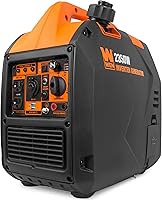
Best 4000-Watt Portable Generators: Top 8 Picks (November 2026)
The best 4000 watt portable generators include the Aceup Energy 4000 Watt Gas Inverter Generator for compact clean power, the Oxseryn Power Equipment 4400 Watts Inverter Generator for longer light-load runtime, and the Champion 4000-Watt Dual Fuel RV Ready Portable for gasoline and propane choice.
On this page (14 sections)
- The best 4000 watt portable generators for different loads
- 1. Aceup Energy 4000 Watt Gas Inverter Generator: Best for compact clean power
- 2. Oxseryn Power Equipment 4400 Watts Inverter Generator: Best for longer light-load runtime
- 3. Champion 4000-Watt Dual Fuel RV Ready Portable: Best for gasoline and propane choice
- 4. PowerSmart 4000 Watt Portable Inverter Generator: Best for quiet camping connections
- 5. Pulsar PGD40ISCO Ultra Light Quiet 4000W Portable: Best for the lightest carry
- 6. WEN Quiet and Lightweight 4800-Watt RV-Ready Portable: Best for 4000 rated watts
- 7. Westinghouse 4650 Peak Watt Portable Generator: Best for long gasoline runtime
- 8. Evernexta 4000W Gas-Powered Inverter Generator: Best for simple RV backup
- How much power does a 4000 watt generator really provide?
- What outlets should a 4000 watt generator have?
- Is a 4000 watt inverter generator quiet enough for camping?
- How should you set up and care for a portable generator?
- Which 4000 watt portable generator should you choose?
The best 4000 watt portable generator for most buyers is the Aceup Energy 4000 Watt Gas Inverter Generator. Compare other RV-ready generators if an RV connection is your main priority.
It combines 4000 peak watts, 3200 rated watts, a 48 lb weight, RV-ready connections and less than 1.5% THD for cleaner power to electronics.
Choose the Champion if you want gasoline or propane. Choose WEN when 4000 rated watts matters most, or Westinghouse when a large fuel tank and long runtime are more important than low weight.
For fuel basics, start with our gas generator complete buying guide. If your expected load is smaller, compare the best 2000 watt portable generator options before carrying extra weight and fuel.
Our picks at a glance
-
1
 Best for compact clean power
Aceup Energy 4000 Watt Gas Inverter Generator
9.5/10 our score
See it on Amazon -
2
 Best for longer light-load runtime
Oxseryn Power Equipment 4400 Watts Inverter Generator
9.5/10 our score
See it on Amazon -
3
 Best for gasoline and propane choice
Champion 4000-Watt Dual Fuel RV Ready Portable
9.4/10 our score
See it on Amazon
- 4
 Check it
PowerSmart 4000 Watt Portable Inverter Generator
Best for quiet camping connections - 5
 Check it
Pulsar PGD40ISCO Ultra Light Quiet 4000W Portable
Best for the lightest carry - 6
 Check it
WEN Quiet and Lightweight 4800-Watt RV-Ready Portable
Best for 4000 rated watts - 7
 Check it
Westinghouse 4650 Peak Watt Portable Generator
Best for long gasoline runtime - 8
 Check it
Evernexta 4000W Gas-Powered Inverter Generator
Best for simple RV backup
The best 4000 watt portable generators for different loads
The best 4000 watt portable generator depends on sustained watts, starting watts, fuel choice, runtime and connections. Inverter models suit sensitive electronics better, while open-frame models can offer larger tanks or higher running output.
Sustained output in this group ranges from 3000 running watts on gasoline for the Champion to 4000 rated watts for the WEN. That spread matters more than the shared 4000 watt label when you plan everyday loads.
Most picks run on gasoline only, while the Champion can switch between gasoline and propane. Runtime figures also need care because some models list hours at 25% load and others at half-load.
Our score weighs specs, features and buyer feedback across output, runtime, outlets, portability, noise and safety. Connections decide which loads run without extra adapters, so RV users should look for a TT-30R or RV outlet and home backup users for household and twist-lock outlets.
Weight ranges from 47.3 lb for the Pulsar to 100.6 lb for the Westinghouse open-frame model. Quieter inverter models suit campsites better, while higher decibel ratings may still work for home backup away from living areas.
Safety features add useful safeguards alongside power, but they do not replace safe outdoor placement. For most buyers, the goal is a match between sustained watts, outlet types, runtime at your likely load, weight you can move, and noise you can accept.
| Product | Best for | Output | Runtime | Weight | Our score |
|---|---|---|---|---|---|
| Aceup Energy 4000 Watt Gas Inverter Generator | compact clean power | 4000 peak watts, 3200 rated watts | Up to 5 hours at half-load | 48 lb | 9.5 |
| Oxseryn Power Equipment 4400 Watts Inverter Generator | longer light-load runtime | 4400 peak watts, 3400 running watts | Up to 14 hours at 25% load | 56 lb | 9.5 |
| Champion 4000-Watt Dual Fuel RV Ready Portable | gasoline and propane choice | Up to 10 hours on gasoline or 25 hours on propane at 25% load | 51.8 lb | 9.4 | |
| PowerSmart 4000 Watt Portable Inverter Generator | quiet camping connections | 4000 peak watts, 3200 rated watts | Up to 8 hours at 25% load | 9.3 | |
| Pulsar PGD40ISCO Ultra Light Quiet 4000W Portable | the lightest carry | 4000 peak watts, 3200 rated watts | Up to 4 hours at half-load | 47.3 lb | 9.3 |
| WEN Quiet and Lightweight 4800-Watt RV-Ready Portable | 4000 rated watts | 4800 surge watts, 4000 rated watts | 72.7 lb | 9.1 | |
| Westinghouse 4650 Peak Watt Portable Generator | long gasoline runtime | 4650 peak watts, 3600 running watts | Up to 14 hours per tank | 100.6 lb | 9.0 |
| Evernexta 4000W Gas-Powered Inverter Generator | simple RV backup | 4000 starting watts, 3400 running watts | Up to 9 hours | 8.3 |
1. Aceup Energy 4000 Watt Gas Inverter Generator: Best for compact clean power
Aceup Energy 4000 Watt Gas Inverter Generator: Best for compact clean power
- 4000 peak watts and 3200 rated watts
- Up to 5 hours at half-load
- 48 lb weight
- Less than 1.5% THD
A compact gasoline inverter generator with clean power, a digital gauge and RV-ready connections.
Pros
- 48 lb weight
- Less than 1.5% THD
- Parallel ready
Cons
- Gasoline only
- Parallel kit sold separately
Aceup is the top pick because it combines useful output with the lowest listed weight among the first several inverter models. Its 4000 peak watts and 3200 rated watts can cover a mix of lights, chargers, small appliances and other loads when their combined demand stays within the rated output.
The 149cc 4-stroke OHV engine runs for up to 5 hours at half-load from a 1.32 gallon gasoline tank. Its intelligent gauge tracks voltage, runtime, gasoline level, hertz and power output, so you have more information than a simple fuel dial.
The control panel includes a 120V 20A outlet, an RV receptacle and a 12V DC 8.3A car charger outlet. Aceup also makes this model parallel ready, although the parallel kit is sold separately.
At 48 lb, it is easier to move than the larger open-frame choices below. Eco mode and about 60 dB at 23 ft with a 25% load support quieter light-load use.
Its inverter output is listed below 1.5% THD.
Choose Aceup for a compact gasoline generator with clean output and a useful display. Its shorter 5-hour half-load runtime makes it less suited to buyers who want to refuel as rarely as possible.
2. Oxseryn Power Equipment 4400 Watts Inverter Generator: Best for longer light-load runtime
Oxseryn Power Equipment 4400 Watts Inverter Generator: Best for longer light-load runtime
- 4400 peak watts and 3400 running watts
- Up to 14 hours at 25% load
- 2 gallon tank
- 56 lb weight
The Oxseryn combines a higher 4400-watt peak rating with a 2 gallon tank and several outlet types.
Pros
- Long light-load runtime
- 3400 running watts
- RV outlet
Cons
- Open-frame design
- Noise rated under 72 dBA
Oxseryn stands out for its 4400 peak watts, 3400 running watts and up to 14 hours at 25% load. The 2 gallon tank and Eco mode make it a strong choice for light home backup, camping or RV use when the connected load remains modest.
Its outlet layout includes 2 120V AC ports, a 12V DC port and an RV port. A fuel gauge shows the level at a glance, which helps when the generator may run for much of the day.
At 56 lb, it remains portable for its output class. The open-frame design is listed at under 72 dBA from 23 ft, so it is less focused on quiet camping than the lower-decibel inverter models.
The 3400 running-watt figure gives it more sustained capacity than several 3200-watt picks here. Keep the difference between peak and running watts in mind when you plan appliances.
Choose Oxseryn for long light-load runtime and 3400 running watts. Pick a quieter model if noise at a campsite or near living areas is your first concern.
3. Champion 4000-Watt Dual Fuel RV Ready Portable: Best for gasoline and propane choice
Champion 4000-Watt Dual Fuel RV Ready Portable: Best for gasoline and propane choice
- 4000 starting watts
- 3000 running watts on gasoline
- Up to 25 hours on propane
- CO Shield auto shutoff
Champion adds dual-fuel flexibility, RV connections and a carbon monoxide auto shutoff system.
Pros
- Dual-fuel operation
- CO Shield
- 64 dBA from 23 ft
Cons
- 3000 running watts on gasoline
- Parallel kit sold separately
Champion is the clearest choice when you want to switch between gasoline and propane. On gasoline, it produces 4000 starting watts and 3000 running watts, with up to 10 hours at 25% load.
On propane, it produces 2700 running watts and can run up to 25 hours at 25% load.
The 51.8 lb generator includes a 120V 25A TT-30R RV outlet, a 120V 20A household duplex outlet, a 12V automotive-style outlet and parallel outlets. The optional parallel kit can connect it with another compatible Champion inverter or power station.
Champion lists operation at 64 dBA from 23 ft and clean electricity below 3% THD. The CO Shield system automatically shuts the generator off when carbon monoxide reaches dangerous levels.
The included propane hose, engine oil and oil funnel reduce the number of setup items to gather. Its dual-fuel design also gives you a choice when gasoline storage is inconvenient.
Choose Champion for fuel flexibility, RV use and CO protection. If push-button starting matters, compare 3000-watt generators with electric start.
Its running output is lower than WEN's 4000 watts and its propane rating is lower than its gasoline rating.
4. PowerSmart 4000 Watt Portable Inverter Generator: Best for quiet camping connections
PowerSmart 4000 Watt Portable Inverter Generator: Best for quiet camping connections
- 4000 peak watts and 3200 rated watts
- Up to 8 hours at 25% load
- 59 dBA at 23 ft
- 30A twist-lock outlet
PowerSmart is a quiet gasoline inverter generator with a useful mix of household, twist-lock, DC and USB ports.
Pros
- 59 dBA at 23 ft
- Digital display
- Parallel ready
Cons
- Gasoline only
- Parallel kit not included
PowerSmart suits camping and light home backup where quiet operation and varied connections matter. It produces 4000 peak watts and 3200 rated watts, with up to 8 hours at 25% load from a 1.3 gallon gasoline tank.
The panel includes a 120V 30A L5-30R twist-lock outlet, a 120V 20A household duplex outlet, a 12V 8A DC port and dual 5V 2.1A USB ports. That mix covers household plugs, a twist-lock connection and smaller charging needs without extra adapters for every device.
PowerSmart lists 59 dBA at 23 ft at 25% load. Its clean power is listed below 3% THD, making it a reasonable match for smartphones, tablets and laptops when the total load stays within the generator's limits.
The digital display, low-oil shutdown and overload protection add useful operating information. It is also parallel ready, but the parallel kit is not included.
Choose PowerSmart for quiet operation and a flexible control panel. Aceup is lighter and lists lower THD, while PowerSmart offers longer stated runtime at 25% load.
5. Pulsar PGD40ISCO Ultra Light Quiet 4000W Portable: Best for the lightest carry
Pulsar PGD40ISCO Ultra Light Quiet 4000W Portable: Best for the lightest carry
- 4000 peak watts and 3200 rated watts
- 47.3 lb weight
- 59 dB operation
- Up to 4 hours at half-load
Pulsar focuses on low weight and quiet operation for camping, RV use, emergency power and sensitive electronics.
Pros
- Lightest model here
- 59 dB operation
- Parallel ready
Cons
- Shortest stated runtime
- Outlet details need confirmation before purchase
Pulsar is the lightest generator in this group at 47.3 lb. It produces 4000 peak watts and 3200 rated watts, making it suitable for buyers who expect to move the unit between storage, a vehicle and a campsite.
Its 1 gallon gasoline tank provides up to 4 hours at half-load. That is the shortest stated runtime among these picks, so it fits shorter outings or buyers who accept more frequent refueling to keep the carry weight low.
Pulsar lists operation at 59 dB and identifies the unit for emergency power, RV use, sensitive electronics and air-conditioning units up to 13,500 BTU. Confirm your air conditioner's starting and running demand before connecting it.
The generator is parallel ready. Its published dimensions are 18.9 x 11.4 x 17.3 in, which gives you a compact footprint for transport and storage.
Choose Pulsar when weight and quiet operation come before runtime. Choose Aceup or PowerSmart if you want more detailed outlet and display information in the product data.
6. WEN Quiet and Lightweight 4800-Watt RV-Ready Portable: Best for 4000 rated watts
WEN Quiet and Lightweight 4800-Watt RV-Ready Portable: Best for 4000 rated watts
- 4800 surge watts and 4000 rated watts
- 224cc engine
- CO shutdown sensor
- Wheels and telescoping handle
WEN is the strongest fit when sustained output matters more than carrying weight.
Pros
- 4000 rated watts
- RV receptacle
- Fuel shutoff
Cons
- Heaviest inverter model here
- Larger 23.8 x 12.6 x 22 in size
WEN is the best match here when you need 4000 rated watts, not just a 4000-watt peak label. Its 224cc engine produces up to 4800 surge watts and 4000 rated watts, giving it the highest sustained output in this roundup.
The fully enclosed generator includes onboard wheels and a telescoping pull handle. At 72.7 lb and 23.8 x 12.6 x 22 in, it needs more storage space and is less convenient to lift than the lighter models.
Its connections include four three-prong 120V receptacles, one TT-30R RV receptacle, one 12V DC receptacle and two 5V USB ports. That layout suits a larger group of household or RV loads when their combined demand stays below 4000 running watts.
WEN includes a CO shutdown sensor and a fuel shutoff. The fuel shutoff uses remaining fuel in the carburetor before the generator stops, which can help reduce stale-fuel buildup during storage.
Choose WEN for sustained output, wheels and a broad outlet panel. Choose Pulsar or Aceup when low carry weight is more important than maximum running watts.
7. Westinghouse 4650 Peak Watt Portable Generator: Best for long gasoline runtime
Westinghouse 4650 Peak Watt Portable Generator: Best for long gasoline runtime
- 4650 peak watts and 3600 running watts
- Up to 14 hours per tank
- 4 gallon tank
- CO and low-oil shutdown
Westinghouse offers a large fuel tank and strong running output, but its open-frame design is much heavier.
Pros
- 3600 running watts
- 4 gallon tank
- RV-ready 30A outlet
Cons
- 100.6 lb weight
- Not an inverter generator
Westinghouse is the long-runtime choice for buyers who can accept an open-frame generator and a 100.6 lb weight. It provides 4650 peak watts and 3600 running watts, plus up to 14 hours from its 4 gallon gasoline tank.
The control panel includes two 5-20R 120V household duplex receptacles, an RV-ready TT-30R 30A receptacle and an L5-30R 30A receptacle. Rubber covers protect all outlets from the environment during storage and outdoor use.
Its 212cc 4-stroke OHV engine includes a cast iron sleeve, automatic low-oil shutdown and carbon monoxide shutdown. A fuel gauge helps you check the large tank without opening the fuel cap.
The supplied engine oil, oil funnel, tool kit and manual support initial setup. Minimal assembly is required, but the generator's weight makes a two-person move or a suitable transport plan sensible.
Choose Westinghouse for high running output and long gasoline runtime. Choose an inverter model when clean power, lower weight or quieter operation better matches your use.
8. Evernexta 4000W Gas-Powered Inverter Generator: Best for simple RV backup
Evernexta 4000W Gas-Powered Inverter Generator: Best for simple RV backup
- 4000 starting watts and 3400 running watts
- Up to 9 hours of runtime
- 2 gallon tank
- 30A outlet
Evernexta keeps the layout simple with a 30A outlet, two AC outlets and a 12V port for camping or home backup.
Pros
- 3400 running watts
- 30A outlet
- 55 lb weight
Cons
- Gasoline only
- Noise rated under 72 dBA
Evernexta keeps the connection layout simple with one 30A outlet, two 120V AC outlets and one 12V DC port. Its 208cc engine produces 4000 starting watts and 3400 running watts, giving it useful sustained output for camping and residential backup.
The 2 gallon tank provides up to 9 hours of runtime, with the exact duration depending on load. The product data also gives up to 6.5 hours at 50% load, so heavier appliance use will shorten the time between refuels.
At 55 lb, it is easier to move than Westinghouse and WEN. The open-frame design is rated under 72 dBA from 23 ft, so it is better suited to practical backup than quiet campsite use.
Evernexta lists under 3% THD, overload protection, an AC breaker and low-oil shutdown. The generator is gasoline powered and uses a 4-stroke engine.
Choose Evernexta for a straightforward 30A RV connection and 3400 running watts. Choose Champion for propane, or PowerSmart for a quieter stated noise level and USB ports.
How much power does a 4000 watt generator really provide?
A 4000 watt generator may provide less than 4000 watts continuously, depending on the model. Aceup, PowerSmart and Pulsar list 3200 rated watts, Champion lists 3000 running watts on gasoline, and WEN lists 4000 rated watts.
Oxseryn and Evernexta list 3400 running watts, and Westinghouse lists 3600 running watts. Those figures show why the peak label alone is not enough for load planning.
Peak or starting watts help with brief surges from motor-driven appliances. Running or rated watts show the output the generator is meant to sustain over time.
Add the running watt demand of everything you plan to connect, including lights, chargers, fans, refrigerators, pumps, tools and RV appliances that may run at the same time. Then check motor-driven appliances such as refrigerators, pumps and air conditioners because startup demand can briefly exceed running demand.
Do not treat peak watts as a continuous load allowance. Keep your planned running load below the rated figure and leave room for startup surges.
Leave headroom for loads that change during the day, such as a refrigerator cycling on or a charger drawing more power as a battery fills. For RV use, check the appliance label before connecting an air conditioner, as Pulsar specifically identifies units up to 13,500 BTU.
Sensitive electronics need clean power as well as enough watts. Aceup lists less than 1.5% THD, while Champion and PowerSmart list less than 3% THD, which matters for phones, tablets, laptops and TVs.
Fuel also affects usable output on dual-fuel models, as the Champion lists 3000 running watts on gasoline and 2700 running watts on propane. Runtime changes with load too, with light loads stretching fuel time and heavy loads shortening it.
For home backup, list essentials first and leave nonessential loads off the plan. For camping, think in smaller groups of loads across the day rather than running everything at once.
If your total running demand is close to a model limit, step up a class for more margin. Plan by running watts first, then check starting watts second.
What outlets should a 4000 watt generator have?
Choose outlets based on the equipment you will connect. An RV user may need a TT-30R outlet, while home backup may call for household 120V receptacles and a twist-lock connection for equipment that uses one.
The Champion, Oxseryn, Evernexta and Westinghouse models include RV-style connections. PowerSmart adds an L5-30R twist-lock outlet, while Aceup includes an RV receptacle and a 12V DC car charger outlet.
USB and 12V ports are useful for small electronics, but they don't replace a 120V outlet for larger appliances. Write down your intended plugs before choosing the generator.
For a different approach to combining fuel and inverter operation, read what a hybrid inverter generator is.
Is a 4000 watt inverter generator quiet enough for camping?
Noise depends on the model, load and measurement distance. Pulsar and PowerSmart list 59 dB or 59 dBA, Aceup lists about 60 dB in Eco mode at 23 ft with a 25% load, and Champion lists 64 dBA from 23 ft.
Those numbers are not directly interchangeable across brands because test loads, distance and rating labels differ. Treat small gaps as less certain than large ones.
Oxseryn and Evernexta list noise under 72 dBA from 23 ft. Those models may fit practical outdoor use, but they are not the strongest choices when campsite noise is your main concern.
WEN lists 62 decibels at quarter load for its fully enclosed 4800-watt model. Westinghouse does not list a decibel figure in the product data used here, and its open-frame design and 100.6 lb weight point more toward home backup than close campsite use.
For camping, noise is not only about the number. Distance from tents, wind direction, ground surface and nearby hard surfaces can change how loud the generator feels at night.
Use Eco mode when the generator supports it and the connected load is light, as it can lower engine speed and may reduce noise and fuel use. Keep the generator outdoors and away from doors, windows and vents, following the safety instructions for the specific model.
Place the unit so exhaust and sound travel away from sleeping areas when possible. A short extra distance can matter more at a quiet campsite than a small rating difference on paper.
Run only the loads you need at the same time to keep engine speed lower. For overnight use, choose a model with enough runtime at light load, such as PowerSmart at up to 8 hours at 25% load or Champion at up to 25 hours on propane at 25% load.
Oxseryn lists up to 14 hours at 25% load despite its higher noise rating, so runtime and noise may pull you toward different models. Aceup at about 60 dB and 48 lb makes placement easier, while Pulsar at 59 dB and 47.3 lb suits buyers who carry the generator to the site.
Champion lists 64 dBA from 23 ft and includes CO Shield auto shutoff, but that safety feature does not make indoor or tent-side operation safe. For home backup, a higher noise rating may be acceptable if the unit sits outside and away from doors and windows.
For close camping, prioritize stated noise, Eco mode and placement together.
How should you set up and care for a portable generator?
Set the generator outdoors in a dry, open area with plenty of space around it. Never operate a gasoline or propane generator inside a home, garage, tent or enclosed RV because carbon monoxide can build up quickly.
Before use, check the fuel, oil and connections specified by the manufacturer. Connect equipment only after the generator is running and disconnect loads before shutting it down.
Allow the unit to cool before refueling. Use the low-oil shutdown, overload protection and CO protection features as added safeguards, not as a replacement for safe placement and load planning.
For storage, follow the model's fuel-shutoff and fuel-drain instructions. Aceup, WEN and other models include features intended to help with fuel management, but the correct steps depend on the generator.
Which 4000 watt portable generator should you choose?
Pick Aceup if you want the best balance of low weight, clean inverter power, RV connections and a digital gauge. Its 4000 peak watts and 3200 rated watts suit mixed light loads when the total stays within that rated output.
Pick Oxseryn if long light-load runtime and 3400 running watts matter most. It lists up to 14 hours at 25% load from a 2 gallon tank, with Eco mode for lighter use.
Pick Champion for gasoline and propane flexibility, PowerSmart for quiet camping connections, and Pulsar for the lightest carry. Champion adds CO Shield, PowerSmart lists 59 dBA at 23 ft, and Pulsar weighs 47.3 lb.
Pick WEN for 4000 rated watts, Westinghouse for a 4 gallon tank, or Evernexta for a simple 30A RV layout. WEN gives the highest sustained output here, Westinghouse gives 3600 running watts, and Evernexta lists 3400 running watts.
If your load is closer to 3000 watts, compare the best 3000 watt portable generator options before choosing a larger and heavier unit. A smaller model may be easier to carry, store and refuel for your actual needs.
For quieter 4000-watt choices, see the best quiet 4000 watt generator roundup. That is a useful next step if campsite noise matters more than maximum running watts.
Our top 3 picks at a glance
-
1
Best for compact clean power
Aceup Energy 4000 Watt Gas Inverter Generator
9.5/10 our score
See it on Amazon -
2
Best for longer light-load runtime
Oxseryn Power Equipment 4400 Watts Inverter Generator
9.5/10 our score
See it on Amazon -
3
Best for gasoline and propane choice
Champion 4000-Watt Dual Fuel RV Ready Portable
9.4/10 our score
See it on Amazon
Frequently asked questions
What is the best 4000 watt portable generator?
The Aceup Energy 4000 Watt Gas Inverter Generator is the best 4000 watt portable generator for most buyers in this group. It combines 4000 peak watts, 3200 rated watts, a 48 lb weight, RV connections and less than 1.5% THD.
Choose Champion if propane access matters more than gasoline-only operation.
How many watts should a 4000 watt generator run?
Check the rated or running watt figure, not only the peak number. The generators here provide about 3000 to 4000 running watts, depending on the model.
Add the running watts of your appliances, then allow room for motors that need extra starting power.
Can a 4000 watt generator run an RV air conditioner?
Some models may suit an RV air conditioner, but the answer depends on the air conditioner's starting and running demand. Pulsar specifically identifies air-conditioning units up to 13,500 BTU.
Check the RV appliance label and generator outlet before connecting.
Are inverter generators better for sensitive electronics?
Inverter generators are usually the better match for sensitive electronics because they can produce cleaner, steadier power. Aceup lists less than 1.5% THD, Champion lists less than 3% THD, and PowerSmart lists less than 3% THD.
Use the stated THD and load limits as your guide.
What is the difference between peak and running watts?
Peak watts cover the short surge some motor-driven appliances need when starting. Running watts are the output a generator can sustain.
For daily load planning, add the running watts of your appliances and keep the total below the generator's rated running watt figure.