How to Choose a 3000-Watt Generator with Electric Start
Choose a 3000 watt generator with electric start by checking running watts first, then confirm the starting method, fuel type, noise level, weight and outlets. The products below show why a generator near this power class can favor portability, fuel flexibility or higher output.
On this page (7 sections)
A 3000 watt generator with electric start should be chosen by its continuous rated output, starting method and intended load. That order matters because a generator that cannot sustain your normal load will not serve you well, even if it starts easily.
Check the running watts of your essentials first, then compare fuel options, noise, weight, outlets and storage needs. Running watts describe what a device needs once it is already on, so they form the base of any honest load list.
The products in this guide cover nearby power classes rather than identical output ratings. That makes them useful for comparing the trade-offs between a compact 2350-watt inverter and larger 4000-watt models.
A close comparison can be more helpful than a list of near-identical units. It shows what you gain in continuous power when you step up, and what you give up in weight, size or fuel flexibility.
If you want the basic fuel and storage decisions explained first, read our fuel generators complete buying guide. That background can help you decide whether gasoline, propane or a mix of both fits your routine.
For a smaller comparison, see 2000 watt generator electric start options. A smaller class may be enough for campsite or light backup use, but it sets a lower ceiling for household essentials.
Think about where the generator will live when it is not running. A unit that fits a closet or truck bed may suit you better than a stronger model that needs a garage shelf.
Think too about who will move it and how far. Easy starting helps, but a generator that is hard to lift or awkward to carry can become a chore in daily use.
This guide keeps the focus on the practical details that affect ownership. Rated output, starting method, inlet layout, noise and weight should guide the choice more than headline peak figures.
Use the products below as reference points for those details. They illustrate how different priorities lead to different fits, even within a similar power class.
How do you choose a 3000 watt generator with electric start?
Choose the generator that keeps your normal load below its rated watts and gives you a starting method you can manage. Electric start can add convenience, but it does not replace the need to check output, fuel and safe placement.
Start by listing the devices you expect to run together. A generator transfer switch installation guide can help explain how a properly installed switch connects selected circuits.
Include refrigerators, lights, fans, chargers, tools or RV equipment, then account for the extra surge some motor-driven devices need when they start.
A generator close to this class may have different advertised numbers. The WEN produces 1900 rated watts and 2350 surge watts, while the Aceup Energy produces 3200 rated watts and 4000 peak watts.
The Champion produces 3000 running watts and 4000 starting watts on gasoline.
Does a 3000 watt generator with electric start need more than 3000 watts?
It may, if your appliances have high starting demands. Use rated watts for the ongoing load and starting watts for the brief motor surge.
Add the running watts of the devices you plan to use at the same time. Then identify which items start with a motor, compressor or heating element.
Keep enough headroom so a refrigerator or pump does not compete with every other connected load.
Starting convenience is a separate question. The Aceup Energy and Champion data specify recoil start.
The WEN data specifies an electronic ignition system, but the supplied product information does not identify it as electric start. Confirm the exact starting method before buying if push-button starting is essential.
Which product fits this power class?
The best match depends on whether you value low weight, more continuous output or dual-fuel flexibility. We compared the stated power, size, weight, outlets, fuel and operating features for three options.
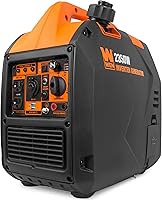
WEN Super Quiet 2350-Watt Portable Inverter Generator
The WEN weighs 39 lb and measures 17.3 x 11.5 x 17.5 in. It produces 1900 rated watts and 2350 surge watts, so it suits lighter essential loads rather than a full 3000-watt demand.
Its gasoline-powered 79cc 4-stroke engine has a fuel shutoff that uses remaining carburetor fuel before shutdown. That feature is mainly about care, since it helps use fuel left in the carburetor instead of letting it sit there.
The generator includes two 120V receptacles, one 12V DC receptacle and two 5V USB ports. The USB ports suit phones and small devices, while the household receptacles suit lights, fans, chargers and small appliances within the rated limit.
WEN describes operation as comparable to a normal conversation, and the product data gives a 51-decibel figure at quarter load. Noise rises with load on any generator, so quarter load is the gentlest part of that picture.
That combination of size and noise can work well for camping, tailgating or compact backup storage. A campsite user may value the low weight more than extra headroom, especially when moving the unit between a vehicle and a tent.
The WEN is also a sensible pick for someone who needs power for phones, tablets, a television or a computer. Its clean-power design is aimed at sensitive electronics, but you should still stay within the stated rated watts.
Set-up is straightforward in concept, although you should still add oil, check fuel and read the manual before first use. Keep the unit outdoors, on level ground, with space around it for airflow.
Care matters more than it might seem with a small engine. Using the fuel shutoff as directed, storing it with the right fuel preparation and checking oil before runs can help protect the carburetor and engine over time.
The trade-off is clear: this is the easiest model here to move, but it has the lowest rated output. Choose it when your measured load stays below 1900 watts, and leave margin for devices that draw more at start-up.
If your essentials add up to more than that, do not expect this model to stretch. A larger inverter will give you more continuous headroom, though it will also ask more from you when you lift and store it.
What does a larger 4000-watt inverter add?
A larger inverter can provide more running headroom, but it may also weigh more and use a larger engine. The Aceup Energy adds 3200 rated watts, while the Champion adds 3000 running watts plus dual-fuel operation.
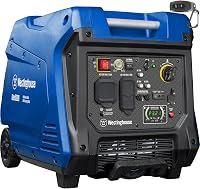
Aceup Energy 4000 Watt Gas Inverter Generator
The Aceup Energy uses a 149cc 4-stroke OHV engine to produce 4000 peak watts and 3200 rated watts. It weighs 48 lb and measures 19.68 x 11.8 x 17.7 in.
Its intelligent gauge tracks voltage, run time, gasoline level, hertz and power output. It also has a low-oil LED and an economy mode.
The generator uses recoil start, so it does not match a strict electric-start requirement based on the information available here.
The outlet set includes a 120V 20A outlet, an RV receptacle and a 12V DC 8.3A car charger outlet. Aceup Energy also describes parallel readiness for connecting 2 generators with a separately sold parallel kit.
At 25% load in Eco mode and from 23 ft, the stated noise level is about 60 decibels. Choose it when you need more continuous output than the WEN and prefer a gasoline inverter with a digital operating display.
Champion 4000-Watt Dual Fuel RV Ready Portable
The Champion produces 4000 starting watts and 3000 running watts on gasoline. On propane, it produces 4000 starting watts and 2700 running watts.
Its 149cc 4-stroke engine uses gasoline or propane, and the generator weighs 51.8 lb.
The Champion runs for up to 10 hours on gasoline and up to 25 hours on propane at 25% load. Its outlets include a 120V 25A TT-30R RV receptacle, a 120V 20A household duplex outlet, a 12V automotive-style outlet and parallel outlets.
It operates at 64 decibels from 23 ft and includes CO Shield carbon monoxide auto shutoff. The product data specifies recoil start, not electric start, so verify the starting method if that feature is non-negotiable.
Choose the Champion when an RV-ready outlet, dual-fuel operation and 3000 gasoline running watts are the main priorities. Its 51.8-lb weight makes it less convenient to carry than the WEN.
How important is rated output?
Rated output is more important than the headline starting number for everyday use. A 4000-watt peak figure does not mean the generator can continuously power 4000 watts.
Use this comparison to match the generator to your measured load:
| Product | Starting or peak watts | Rated or running watts | Fuel | Weight |
|---|---|---|---|---|
| WEN 2350 | 2350 | 1900 | Gasoline | 39 lb |
| Aceup Energy 4000 | 4000 | 3200 | Gasoline | 48 lb |
| Champion 4000 | 4000 | 3000 gasoline, 2700 propane | Gasoline or propane | 51.8 lb |
Leave room below the rated figure for startup surges and changing loads. A refrigerator, pump or power tool may need extra power for a short moment, and that brief demand can matter as much as the steady draw.
If you need to power several essential devices at once, the Aceup Energy and Champion provide more continuous output than the WEN. More rated watts do not mean unlimited use, but they do give a wider margin for everyday combinations.
Match the generator to a measured load rather than a guess. Add the running watts for each device you plan to use together, then check that the total stays below the rated figure.
Peak or starting watts have a different job. They cover the short burst when a motor begins, while rated watts cover what the generator can keep supplying during normal use.
That distinction explains why two generators with the same peak number can behave differently. One may hold a steadier load for longer, while the other may be better suited to brief or lighter use.
For more product comparisons in this output range, browse our best 3000 watt portable generator guide. It can help you see how this class compares with other portable options.
If sound is your main concern, compare best 3000 watt generator quiet options. Noise level depends on load and distance, so use the stated conditions as a guide rather than a promise for every setting.
How should portability affect your choice?
Choose portability based on how often you will move the generator, not only on the cabinet dimensions. A unit you carry from a shed to a campsite needs a different balance than one that stays in a garage for occasional backup.
The WEN is 39 lb, the Aceup Energy is 48 lb and the Champion is 51.8 lb. Those weights are dry figures from the product data, so consider fuel and any accessories you will carry with the unit.
The WEN's 17.3 x 11.5 x 17.5 in body is the smallest and lightest of the three. That can simplify storage and short-distance transport, but its 1900 rated watts limit the loads it can support.
For a camper, the WEN may be the easiest to move between a vehicle and a pitch. For a household user, the same lightness helps when space is tight and the generator is stored away between outages.
The Aceup Energy measures 19.68 x 11.8 x 17.7 in. It adds rated output while staying lighter than the Champion, making it a middle option for buyers who need more power but still expect to move the unit.
Its size is close to the WEN in two dimensions, but the extra weight is noticeable when you lift it by one handle for a longer carry. That difference matters more on stairs, soft ground or uneven paths.
The Champion measures 17.9 x 11.7 x 19.7 in. It weighs the most here, but the dual-fuel design and RV-ready TT-30R outlet may reduce the need for extra equipment in an RV setup.
In an RV setting, fewer adapters and a direct outlet can offset some of the effort of moving a heavier unit. The value depends on whether you plug in at the pitch often or mainly use the generator at home.
Measure the storage shelf, doorway and path to the operating location before choosing. A generator that fits in storage may still be awkward to manoeuvre through a door or up a step.
For safely powering selected household circuits, see generator transfer switch use. A transfer switch is a separate installation step, so check what is approved for your home and your generator before planning that route.
Never run a fuel generator indoors, in a garage or in another enclosed space. Keep it outdoors and away from openings where exhaust could enter a building.
Should you choose gasoline, propane or inverter power?
Choose gasoline for the output and run-time figures you use most often, or propane if fuel flexibility is a central part of your backup plan. Inverter technology also matters when you want cleaner power for sensitive electronics.
The WEN and Aceup Energy use gasoline. The Champion can run on gasoline or propane, with different running-watt and run-time figures for each fuel.
All 3 products are inverter generators. The WEN describes clean power for phones, tablets, televisions and computers.
Aceup Energy gives a total harmonic distortion figure below 1.5%, while Champion gives less than 3% THD for its clean-electricity output.
Fuel shutoff and economy modes can affect care and fuel use. The WEN has fuel shutoff and an eco-mode switch.
Aceup Energy has a fuel control knob and economic mode. If you want both fuel flexibility and remote operation, compare dual-fuel generators with remote start.
Champion has an EZ Start dial and dual-fuel switching.
If you are comparing fuel generation with battery-based equipment, read how to choose between solar generator and inverter generator. For a specific kettle question, see can a solar generator run an electric kettle.
What is the final choice?
Pick the WEN if 1900 rated watts covers your load and low weight matters most. It is the lightest and smallest of the three, and its quiet operation suits camping, tailgating and compact storage.
Pick the Aceup Energy if you need 3200 rated watts, a digital gauge and an RV receptacle in a gasoline inverter. Its gauge can help you track voltage, run time, fuel level, hertz and power output during use.
Pick the Champion if you need 3000 running watts on gasoline, dual-fuel flexibility, a TT-30R outlet and CO Shield. On propane it gives 2700 running watts, so check which fuel you expect to use most before you judge its output.
None of the three product data sets confirms electric start, so verify that feature before ordering a generator marketed specifically for electric-start convenience. The Aceup Energy and Champion specify recoil start, while the WEN data does not identify its electronic ignition as electric start.
That point is worth repeating because starting convenience is often the reason buyers look at this class. If push-button starting is essential, look for a model whose product information states it clearly.
For the rest of the choice, stay with your measured load. A generator that matches your needs with some headroom will be easier to live with than one that is pushed to its limit.
Frequently asked questions
What should I look for in a 3000 watt generator with electric start?
Start with rated watts because they describe the power the generator can maintain. Then check whether the model truly has electric start, its fuel type, tank run time, noise level, weight, outlets and safety features.
Compare starting watts separately because motors can need extra power when they begin.
Is a 3000 watt generator enough for home backup?
A generator near 3000 running watts can support selected essentials, but not every appliance at once. Add the running watts of your planned devices, allow for motor starting surges and use only the outlets and connections approved for the generator.
Keep the unit outdoors and follow its safety instructions.
Are inverter generators better for sensitive electronics?
Inverter generators are designed to produce cleaner power than many conventional generators, but compare the stated total harmonic distortion and the maker's intended uses. The WEN, Aceup Energy and Champion models here are inverter generators, with clean-power claims or specifications included in their product data.
What is the difference between starting watts and running watts?
Starting watts are the short burst available when a motor begins, while running watts are the power the generator can maintain. A generator may advertise a higher starting figure, but your appliances still need to fit within its continuous rated output during normal use.