8 Best Dual Fuel Generators with Remote Start (November 2026)
The best dual fuel generators with remote start include the WEN 6800-Watt Dual Fuel RV-Ready Electric Start for EV backup and RV power, the WEN Quiet and Lightweight 4800-Watt Dual Fuel for quiet RV camping, and the Westinghouse 12500 Watt Dual Fuel Home Backup for whole-home backup.
On this page (6 sections)
- Which dual fuel generator with remote start is best?
- Product details for the top remote-start dual fuel generators
- How much power should a remote-start generator provide?
- Is a remote start generator dual fuel safe to use?
- Which fuel should you use?
- Final pick for the best dual fuel generator with remote start
The best dual fuel generator with remote start for most homes is the Westinghouse 12500 Watt Dual Fuel Home Backup. It combines a remote key fob with electric and recoil start, high gasoline output, propane operation and transfer-switch-ready outlets.
That combination suits a home that needs major appliances during an outage rather than just lights and phone chargers. The remote lets you start power from a distance, while the other start options give you a backup if the fob or battery is not ready.
For RVs and camping, a smaller inverter generator is easier to move and usually quieter. The key choice is not only remote range.
You also need to think about where the unit will live between uses. A large home-backup model can be placed once and left in that spot, while a compact inverter model may move between a campsite, a jobsite and storage.
You also need enough running watts, a suitable outlet, safe placement and a fuel plan that works during an outage. Running watts tell you what can stay on together, and outlet style tells you how the power reaches your RV, appliances or devices.
For many buyers, gasoline gives the strongest output and propane gives a useful second option. Check both ratings before you decide which fuel you will rely on most, because propane output is often lower on the same unit.
If you need the basics first, our fuel generators complete buying guide explains fuel types, wattage and safe use. Readers comparing starting methods can also review best electric start generators.
A remote start is most useful when the battery is charged and the fuel selector is set correctly. It does not change the need for outdoor placement, level ground and clear space around the generator.
Our picks at a glance
-
1
 Best for EV backup and RV power
WEN 6800-Watt Dual Fuel RV-Ready Electric Start
9.7/10 our score
See it on Amazon -
2
 Best for quiet RV camping
WEN Quiet and Lightweight 4800-Watt Dual Fuel
9.6/10 our score
See it on Amazon -
3
 Best for whole-home backup
Westinghouse 12500 Watt Dual Fuel Home Backup
9.5/10 our score
See it on Amazon
- 4
 Best for maximum peak outputCheck it
- 5
 Check it
Westinghouse 12000 Peak Watt Dual Fuel Portable
Best for quiet high-output backup - 6
 Check it
AIVOLT 4300W Dual Fuel Inverter Generator 53dB
Best for quiet portable remote start - 7
 Check it
LIFAN 4800W Dual Fuel Inverter Generator
Best for three start options - 8
 Best for compact digital controlsCheck it
Which dual fuel generator with remote start is best?
The best choice depends on the load you need to run and how far you want to move the generator. High-output open-frame models suit home backup, while compact inverter models suit RVs, campsites and electronics.
We compared the stated wattage, fuel options, remote-start features, outlet types, portability, safety systems and inverter design. Our score weighs specs, features and buyer feedback against what you're shopping for.
The WEN 6800-Watt leads this list because it combines strong output, RV-ready connections, a bonded-neutral 240V configuration and fuel shutoff. The Westinghouse 12500 Watt is the more direct home-backup choice when transfer-switch readiness and high running wattage matter most.
For more options, see dual-fuel generators for home backup.
For a quieter high-output option, compare this list with best dual fuel inverter generators with electric start. If remote convenience matters more than dual-fuel output, see best inverter generators with remote start.
| Product | Best for | Fuel | Power | Start | Our score |
|---|---|---|---|---|---|
| WEN 6800-Watt Dual Fuel RV-Ready Electric Start | EV backup and RV power | Gasoline or propane | 6800 surge watts, 5100 rated watts on gasoline | Electric start with recoil backup | 9.7 |
| WEN Quiet and Lightweight 4800-Watt Dual Fuel | quiet RV camping | Gasoline or propane | 4800 surge watts, 4000 rated watts on gasoline | 9.6 | |
| Westinghouse 12500 Watt Dual Fuel Home Backup | whole-home backup | Gasoline or propane | 9500 running watts, 12500 peak watts on gasoline | 9.5 | |
| DuroStar DS13000MX | maximum peak output | Gasoline or propane | 13000 peak watts, 10500 running watts | 9.4 | |
| Westinghouse 12000 Peak Watt Dual Fuel Portable | quiet high-output backup | Gasoline or propane | 12000 peak watts, 9000 running watts on gasoline | 8.2 | |
| AIVOLT 4300W Dual Fuel Inverter Generator 53dB | quiet portable remote start | Gasoline or propane | 4300 output watts, 3300 running watts | 8.7 | |
| LIFAN 4800W Dual Fuel Inverter Generator | three start options | Gasoline or propane | 3800 running watts on gasoline | 8.5 | |
| GENMAX Dual Fuel Generator | compact digital controls | Dual fuel | 4600 starting watts, 3800 running watts | 8.3 |
Product details for the top remote-start dual fuel generators
The products below are ordered by score, with each pick matched to a different backup-power need.
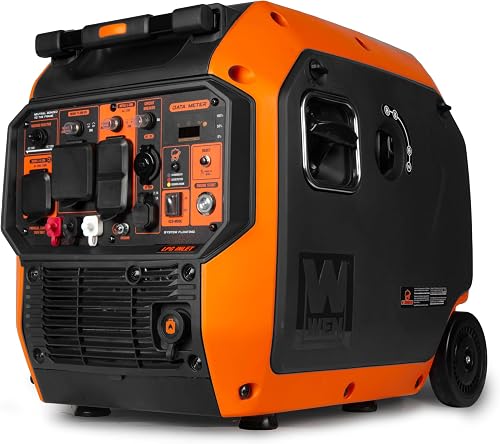
WEN 6800-Watt Dual Fuel RV-Ready Electric Start: Best for EV backup and RV power
- 6800 surge watts on gasoline
- 6000 surge watts on propane
- Bonded-neutral 240V configuration
- CO Watchdog shutdown sensor
This WEN combines dual-fuel flexibility with a bonded-neutral 240V configuration for low-power Level 2 electric vehicle charging. Its RV receptacle, CO shutdown sensor and fuel shutoff add useful backup features.
Pros
- RV-ready outlets
- 240V configuration for low-power EV charging
- Fuel shutoff and CO shutdown
Cons
- Heavier than compact inverter models
- Lower propane output than gasoline output
The WEN 6800-Watt Dual Fuel RV-Ready Electric Start is the most versatile pick for buyers who want RV power, home backup and low-power EV charging in one unit. Compare more dual fuel generators for RVs if RV use is your main priority.
On gasoline, its 224cc engine produces 6800 surge watts and 5100 rated watts.
Propane output is 6000 surge watts and 4500 rated watts.
Its bonded-neutral 240V configuration provides low-power Level 2 charging for battery and hybrid electric vehicles. The outlet layout also includes a 120V/240V L14-30R receptacle, two 120V receptacles, a TT-30R RV receptacle, a 12V DC receptacle and two 5V USB ports.
The WEN Watchdog CO Shutdown Sensor turns the generator off if dangerous carbon monoxide levels are detected. Fuel shutoff uses remaining carburetor fuel before shutdown, which can help limit stale-fuel maintenance.
At 99.2 lb, it is not the easiest model here to lift, but onboard wheels and a telescoping handle help with movement. Choose it when the extra outlet flexibility matters more than a compact footprint.
WEN Quiet and Lightweight 4800-Watt Dual Fuel: Best for quiet RV camping
- 4800 surge watts on gasoline
- 4000 rated watts on gasoline
- Quiet operation
- RV-ready TT-30R receptacle
The lighter WEN gives RV users clean inverter power, electric start and a TT-30R receptacle. It trades some output for a quieter, easier-to-move design.
Pros
- 78.5 lb weight
- Clean power for sensitive electronics
- Fuel shutoff and CO Watchdog
Cons
- Less output than larger home-backup models
- Propane output is lower than gasoline output
The WEN Quiet and Lightweight 4800-Watt Dual Fuel fits RV users and campers who need clean inverter power without moving a full-size home-backup unit. Gasoline output reaches 4800 surge watts and 4000 rated watts, while propane output reaches 4320 surge watts and 4000 rated watts.
Its 224cc engine is designed for quiet operation comparable to a normal conversation. The unit includes four 120V receptacles, a TT-30R RV receptacle, a 12V DC receptacle and two 5V USB ports.
Electric start, a recoil backup, a CO Watchdog sensor and fuel shutoff cover the main convenience and care needs. Learn what an electric start generator adds before choosing a starting method.
The built-in wheels and telescoping pull handle are useful because the generator weighs 78.5 lb.
Choose this WEN when RV connections and lower noise are more important than whole-home wattage. For a larger home setup, compare it with best dual fuel generators with electric start.
Westinghouse 12500 Watt Dual Fuel Home Backup: Best for whole-home backup
- 12500 peak watts on gasoline
- 9500 running watts on gasoline
- Remote key fob
- Transfer-switch-ready outlets
This Westinghouse is built around high-output home backup, with remote, electric and recoil start plus 120/240V outlets. Its fuel gauge, hour meter and VFT display make operation easier to monitor.
Pros
- Highest home-backup score
- Remote start key fob included
- 50A RV-ready outlet
Cons
- Open-frame design is less quiet than inverter models
- Large and heavy home-backup format
The Westinghouse 12500 Watt Dual Fuel Home Backup is the strongest all-around choice for larger residential loads. Gasoline output reaches 12500 peak watts and 9500 running watts, while propane output reaches 11200 peak watts and 8500 running watts.
Remote start comes from the included key fob, and electric and recoil start provide two additional methods. The 6.6 gal gasoline tank can run for up to 12 hours, and the fuel gauge helps you track the remaining supply.
The control panel has two GFCI 120V household receptacles, a transfer-switch-ready 120V L14-30R outlet and a 120/240V 14-50R RV-ready outlet. A VFT display shows voltage, frequency and lifetime hours.
This is an open-frame generator, so it is a better match for a home backup location than a quiet campground. Choose it when you need high running watts and remote starting for appliances such as an air conditioner, refrigerator or sump pump.
DuroStar DS13000MX: Best for maximum peak output
- 13000 peak watts
- 10500 running watts
- 500cc engine
- 50A transfer-switch-ready outlet
The DuroStar supplies the highest peak and running output in this group. Its 500cc engine, remote electric start and 50A outlet suit large home loads, but the 220 lb weight limits easy movement.
Pros
- Highest output here
- CO alert and low-oil shutdown
- Rugged steel construction
Cons
- Heaviest pick
- Open-frame format is not aimed at quiet camping
The DuroStar DS13000MX is the output leader, with 13000 peak watts and 10500 running watts from its 500cc engine. Gasoline provides maximum power, while propane gives you another fuel option during an outage or storm.
For natural-gas compatibility, see dual-fuel generator natural gas options.
A push-button electric start and remote control make startup easier, and the front-facing fuel selector helps you switch between fuel types. The 50A outlet is transfer-switch-ready for whole-home backup connections.
The CO Alert system shuts the generator down when dangerous carbon monoxide levels are detected. Low-oil shutdown adds another automatic protection feature.
At 220 lb, this is the heaviest generator in the group. Its steel construction and wheel and handle kit suit a planned home-backup location, but moving it over rough ground may take more effort than moving a compact inverter model.
Westinghouse 12000 Peak Watt Dual Fuel Portable: Best for quiet high-output backup
- 12000 peak watts on gasoline
- 9000 running watts on gasoline
- Up to 19 hours at 25% load
- Less than 3% THD
This enclosed Westinghouse pairs high output with inverter power, Eco Mode and remote start. It is a strong fit when you want home-backup capacity with lower stated noise than an open-frame generator.
Pros
- Inverter output for sensitive electronics
- Large 7.9 gal tank
- Transfer-switch-ready 50A outlet
Cons
- 187.4 lb weight
- Lower score than the open-frame high-output picks
The Westinghouse 12000 Peak Watt Dual Fuel Portable is the best fit when you want high output with inverter power. Gasoline output reaches 12000 peak watts and 9000 running watts, while propane output reaches 11000 peak watts and 8100 running watts.
Its inverter design states less than 3% total harmonic distortion, which makes it a useful option for sensitive electronics as well as major appliances. That cleaner output matters when you charge laptops, phones or other devices while also running household loads.
Eco Mode, insulation and mufflers help keep stated operation as low as 64 dBA. The enclosed design is aimed at quieter use than an open-frame generator, though it still needs an outdoor location with clear airflow.
A 7.9 gal gasoline tank supports up to 19 hours at 25% load. That long stated runtime can reduce refills during an outage, but heavier loads will use fuel faster and shorten the run time.
The LED data center shows fuel level, power output, remaining runtime, voltage, lifetime hours and maintenance information. Those readings make it easier to plan refuelling and service instead of guessing from sound or a single gauge.
The unit weighs 187.4 lb and includes heavy-duty wheels and a foldable handle. Choose it for high-capacity home backup when quieter enclosed operation and cleaner inverter output matter, and plan for a fixed or semi-fixed location because of its weight.
AIVOLT 4300W Dual Fuel Inverter Generator 53dB: Best for quiet portable remote start
- 4300 surge watts
- 53 dBA operation
- 64 lb weight
- Remote and electric start
The AIVOLT is easy to roll and quiet enough for an RV or campsite, with a key fob remote and a dedicated 30A outlet. Its lower running output fits lighter loads rather than whole-home backup.
Pros
- Lightest model in this group
- 53 dBA stated operation
- Parallel-ready design
Cons
- Lower output than home-backup models
- Parallel kit is sold separately
The AIVOLT 4300W Dual Fuel Inverter Generator 53dB is a portable remote-start choice for RVs, campsites and lighter residential backup. It produces 4300 output watts and 3300 running watts, with gasoline and propane operation.
A key fob lets you start it from an RV couch, while the electric start and the dedicated 30A outlet add convenience for RV equipment. The generator weighs 64 lb and has built-in wheels plus a telescoping handle.
AIVOLT states 53 dBA operation at 25% load. That low stated level suits campsites and neighborhoods where noise can be a concern, especially when the unit is not under heavy load.
Its stated runtime reaches 11.5 hours on gasoline and 34 hours on propane at 25% load, so fuel choice can affect how often you refill. Propane may suit long, low-load use, while gasoline may suit higher demand within its rating.
Carbon monoxide auto-shutoff and low-oil protection support safer operation. Those systems add protection, but the generator still belongs outdoors and away from living spaces.
The generator is parallel-ready, but the parallel kit is sold separately. Choose it when low noise and portability matter more than powering an entire home, and check the kit requirement if you plan to add a second unit later.
LIFAN 4800W Dual Fuel Inverter Generator: Best for three start options
- 4800 watts maximum
- Remote, electric and recoil start
- CO-MINDER shutdown
- 10-hour runtime
LIFAN gives RV and emergency-power users three ways to start the generator, including a key fob. Its 223cc inverter setup, wheels and CO-MINDER sensor keep the design portable and practical.
Pros
- Three start methods
- Parallel cable included
- 68.3 lb portable format
Cons
- Battery must be connected or charged before electric or remote start
- Lower output than large home-backup models
The LIFAN 4800W Dual Fuel Inverter Generator gives you three start methods: remote key fob, electric start and recoil backup. Gasoline output reaches 3800 running watts and 4800 watts maximum, while propane output reaches 3400 running watts and 4300 watts maximum.
Before using remote or electric start, connect or charge the starter battery as shown in the manual. This setup step matters because a remote cannot start the unit if the battery is not ready.
LIFAN includes an LPG hose with regulator, a TT-30 adapter plug, a NEMA 5-20P adapter plug, an oil funnel, a parallel cable and basic tools. The unit weighs 68.3 lb and has wheels plus a fold-out handle.
CO-MINDER shuts the engine down at dangerous carbon monoxide levels. The generator also offers a 10-hour runtime and pure sine wave inverter output under 3% THD.
Choose it when you want several starting methods and included parallel equipment.
GENMAX Dual Fuel Generator: Best for compact digital controls
- 4600 starting watts
- 3800 running watts
- Remote and electric start
- LED light and digital display
GENMAX packs remote start, an LED light and a digital display into a compact dual-fuel generator. Its 58.4 lb weight suits camping and residential backup where portability matters more than high output.
Pros
- Lightest stated weight
- Digital display
- CO alert and LED light
Cons
- Lower output than the larger picks
- Series-parallel box is sold separately
The GENMAX Dual Fuel Generator is the compact choice for buyers who want remote start, a digital display and an LED light. It produces 4600 starting watts and 3800 running watts from its dual-fuel engine.
The digital control center shows run hours, voltage output, load and fuel level. A 30A RV-ready outlet supports camper use, while the 12V outlet and USB-C and USB-A adapter add charging options.
GENMAX also includes a remote control key, LPG hose, funnel, spark plug socket wrench and other basic accessories. The unit weighs 58.4 lb and has a telescopic handle and wheels.
The CO detector shuts the generator down when unsafe carbon monoxide levels are detected. An LED floodlight turns on for 30 seconds when the main switch is on while the generator is not running.
Choose GENMAX for compact storage and clear controls. The series-parallel box is sold separately, so check that added requirement before planning a higher-output setup.
How much power should a remote-start generator provide?
Choose a generator by running watts first, then check its starting-watt capacity for appliances with motors. Refrigerators, sump pumps, air conditioners and some power tools can need extra power at startup.
Running watts are the steady power available once loads are on. Starting watts are the brief extra capacity some motors need to get going, so a unit that looks close on paper may still struggle if you ignore that gap.
Make a short list of the loads you need at the same time. Add their running watts together, then leave room for startup demand and for the fact that not every load may be at its best rating on propane.
The WEN 4800-Watt, LIFAN 4800W, GENMAX and AIVOLT models suit RVs, camping and essential residential loads. They fit smaller systems where portability, noise and clean inverter power are central concerns.
The Westinghouse and DuroStar models are better suited to major appliances and larger home-backup plans. Their higher running output gives more headroom for an air conditioner, refrigerator and other household equipment running together.
Outlets matter as much as wattage. An RV receptacle, a transfer-switch-ready outlet or a standard household receptacle each point to a different setup, and the wrong match can limit how you use the power.
Remote start adds convenience, but it does not add watts. A remote-start unit still needs a charged starting battery, correct fuel selection and the manual steps completed before you rely on it.
Do not connect a generator directly to household wiring through a wall outlet. Use the correct transfer-switch or interlock setup, and have a qualified electrician handle the connection.
For camping and RV use, keep cords sized for the load and route them so they are not a trip hazard. For home backup, plan the connection before an outage so you are not sorting cords or fittings in the dark.
Is a remote start generator dual fuel safe to use?
A remote start generator is safe only when it is operated outdoors in a well-ventilated location. Carbon monoxide can build up quickly in garages, sheds, porches and other partly enclosed spaces, even when doors are open.
Remote start can tempt you to start the unit and close the door, but the generator must stay outside. Wind, walls and vents can push exhaust back toward a home or RV, so placement matters more than convenience.
Keep the generator away from doors, windows and vents. The CO sensors on several models add an automatic shutdown layer, but they do not replace outdoor placement or regular checks.
Treat a CO sensor as a last line of protection, not as permission to run the unit in a garage. Keep the area clear, check the exhaust direction and move the unit if fumes collect near an opening.
Let the unit cool before refueling. Hot parts and fuel vapor are a poor combination, and rushing a refill can undo an otherwise careful setup.
Keep gasoline and propane containers away from heat, and switch the fuel selector fully before starting. A partial switch or wrong setting can cause starting trouble and wasted effort in cold or wet weather.
Use only the fuel and oil types named in the manual. Check oil before use, and follow the stated service intervals so the engine and starting system stay ready.
Follow the manual for battery connection, oil checks, cord size and maintenance intervals. Before remote or electric start, confirm the starter battery is connected or charged as directed.
Keep children and pets away from cords, outlets and hot surfaces. A generator that can start from a fob still needs the same care as one started by hand at the panel.
Which fuel should you use?
Gasoline gives the higher output on many generators in this group. Propane can be useful for stored emergency fuel and longer planning, but the propane wattage is often lower than the gasoline rating.
That drop is not just a number on a label. It can affect whether a motor load starts smoothly and whether you can run the same set of appliances at once on propane.
Use the fuel that matches your current load and storage plan. If you know gasoline will be your main fuel, size the load to the gasoline rating and treat propane as the backup option.
A generator that can run on either fuel gives you flexibility during an extended outage, especially if one fuel becomes difficult to obtain. That choice can matter after storms, when stations may be closed or fuel lines may be long.
Propane can be easier to store for some households because it does not turn stale in the same way as gasoline in a carburetor. Still, you should follow all storage and handling rules in the manual and keep containers in a safe place.
Fuel shutoff features on the WEN models use remaining carburetor fuel before shutdown. That helps limit stale fuel build-up, but it is not a substitute for regular use, stabilizer guidance or the manual storage steps.
For every generator, follow the manual's storage steps and avoid leaving old fuel in the system for long periods. Run the unit now and then when the manual calls for it, and check hoses, seals and connections for wear.
Switch fuels only with the engine off and the selector fully set, following the steps for your model. Then keep the first run short and watch for smooth operation before you put a full load on the unit.
Final pick for the best dual fuel generator with remote start
Choose the Westinghouse 12500 Watt Dual Fuel Home Backup when your priority is high-output residential backup with remote, electric and recoil start. Pick the WEN 6800-Watt if RV connections, low-power EV charging and fuel shutoff are more useful.
For quiet portable power, choose the AIVOLT 4300W or WEN 4800-Watt. Those models trade high home-backup output for lower weight, quieter operation and easier movement at a campsite or RV site.
For the highest available output, choose the DuroStar DS13000MX, but plan for its 220 lb weight and a fixed backup location. That weight can be worth it for large loads, but it is a real limit when you need to roll the unit over rough ground.
If clean inverter output matters with high capacity, look at the Westinghouse 12000 Peak Watt model. Its enclosed design and low stated harmonic distortion suit a different use than the open-frame high-output picks.
Match the final choice to your main load, outlet needs and fuel plan. The best unit is the one you can place safely, start reliably and run with room to spare.
Our top 3 picks at a glance
-
1
Best for EV backup and RV power
WEN 6800-Watt Dual Fuel RV-Ready Electric Start
9.7/10 our score
See it on Amazon -
2
Best for quiet RV camping
WEN Quiet and Lightweight 4800-Watt Dual Fuel
9.6/10 our score
See it on Amazon -
3
Best for whole-home backup
Westinghouse 12500 Watt Dual Fuel Home Backup
9.5/10 our score
See it on Amazon
Frequently asked questions
What is the best dual fuel generator with remote start?
The Westinghouse 12500 Watt Dual Fuel Home Backup is the best fit for many homes because it combines remote, electric and recoil start with 9500 running watts on gasoline and transfer-switch-ready outlets.
For RVs or camping, choose a quieter inverter model such as the WEN 4800-Watt or AIVOLT 4300W.
Can you start a dual fuel generator from inside the house?
Yes, a remote-start dual fuel generator can start from a key fob when the unit is set up correctly and has a charged starting battery. The remote does not remove the need to place the generator outdoors, away from doors, windows and vents.
Use the manual's fuel-selector and starting steps before relying on remote operation.
Is propane or gasoline better for a remote-start generator?
Gasoline usually gives the higher output on the models here, while propane offers a second fuel option for backup planning. Compare each generator's gasoline and propane wattage because propane output can be lower.
Store and connect fuel according to the manual, and switch the selector fully before starting.
What size dual fuel generator do I need for home backup?
Add the running watts of the appliances you need at the same time, then allow extra capacity for motor starting loads. Large models such as the DuroStar DS13000MX and Westinghouse WGen9500DF suit heavier home-backup loads, while 4300W to 4800W inverter models fit smaller essentials and RV use.
A licensed electrician should handle transfer-switch connections.
Are inverter generators better for sensitive electronics?
Inverter generators are often the better match for sensitive electronics because the models here are designed to provide cleaner power. The WEN and Westinghouse inverter models state low total harmonic distortion, while the AIVOLT and LIFAN are also described as inverter generators.
Use a properly rated cord and follow the equipment manuals.