6 Best Dual Fuel Generator for Home Backup (November 2026)
The best dual fuel generators for home backup include the DuroMax XP13000HXT for maximum fuel flexibility, the Westinghouse 6500 Watt Dual Fuel Home Backup for moderate essential loads, and the WEN for compact dual-fuel backup.
On this page (8 sections)
- Which dual fuel generator is best for home backup?
- Best dual fuel generators for home backup
- How do gasoline and propane compare for home backup?
- What size generator do essential household loads need?
- Do you need a transfer switch?
- How should you use a dual fuel generator safely?
- What maintenance does a fuel generator need?
- Which dual fuel generator should you choose?
The best dual fuel generator for home backup is the Westinghouse 12500 Watt Dual Fuel Home Backup for households that need high running output, remote start and a 50A connection. The DuroStar offers 13,000 watts, while the WEN is easier to move for a smaller essential-load plan.
Dual fuel means you can use gasoline or propane instead of relying on one fuel source. Gasoline generally gives the models here their higher stated output, while propane gives you another option during a long outage.
If natural gas matters to your plan, the DuroMax XP13000HXT and Generac models add that third fuel choice. See dual-fuel natural gas compatibility before assuming a dual-fuel model accepts it.
For a broader overview, see our fuel generators complete buying guide.
Our picks at a glance
-
1

-
2
 Best for moderate essential loads
Westinghouse 6500 Watt Dual Fuel Home Backup
9.6/10 our score
See it on Amazon -
3

- 4
 Check it
Westinghouse 12500 Watt Dual Fuel Home Backup
Best for high-demand home outages - 5
 Best for 13,000-watt dual-fuel outputCheck it
- 6
 Best for tri-fuel runtime planningCheck it
Which dual fuel generator is best for home backup?
The best choice depends on the loads you want to run, the outlet needed for your transfer setup and how much generator weight you can manage. A model that suits a broad household plan may be far more than a smaller essential list requires.
Start by listing what must stay on during an outage, including a refrigerator, sump pump, lights and phone chargers. Then consider which of those items can start together, since motor loads need extra power at startup.
Fuel choice matters just as much as wattage. Gasoline gives several of these models their highest output, while propane gives you a stored alternative when gasoline is hard to find.
The Westinghouse 12500 Watt model is the strongest high-demand pick in this group. It offers 9,500 running watts on gasoline, 8,500 running watts on propane, remote start and both 30A and 50A connections.
The WEN fits a smaller backup plan at the other end of the scale. It is lighter, more compact and uses a 120V/240V selector, but its output is best aimed at selected essentials.
We compared the stated wattage, fuel choices, start controls, safety features, outlets, runtime information and size of these six models. Our score weighs specs, features and buyer feedback against what you're shopping for.
Think about storage before you buy. The largest models weigh more than 200 pounds, so you need a dry place to keep one and a clear route to an outdoor operating spot.
Also check your transfer switch and inlet before choosing an outlet rating. A generator only becomes useful home backup when its connection matches equipment that is already safely installed.
If you plan to run smaller loads only, a lighter model can be easier to move and store. If you want central air conditioning or several major appliances at once, high output should come first.
| Product | Best for | Output | Fuel | Weight | Our score |
|---|---|---|---|---|---|
| DuroMax XP13000HXT | maximum fuel flexibility | 13,000 watts | Gasoline, propane and natural gas | 240 lb | 9.7 |
| Westinghouse 6500 Watt Dual Fuel Home Backup | moderate essential loads | 6,500 peak watts | Gasoline and propane | 135.6 lb | 9.6 |
| WEN | compact dual-fuel backup | 4,750 watts | Gasoline and propane | 105.8 lb | 9.6 |
| Westinghouse 12500 Watt Dual Fuel Home Backup | high-demand home outages | 12,500 peak watts | Gasoline and propane | 210 lb | 9.5 |
| DuroStar DS13000MX | 13,000-watt dual-fuel output | 13,000 watts | Gasoline and propane | 220 lb | 9.4 |
| Generac | tri-fuel runtime planning | 12,500 starting watts | Gasoline, propane and natural gas | 219 lb | 8.8 |
Best dual fuel generators for home backup
DuroMax XP13000HXT: Best for maximum fuel flexibility
DuroMax XP13000HXT: Best for maximum fuel flexibility
- 13,000 watts
- Gasoline, propane and natural gas
- 500cc OHV engine
- CO Alert
- 50A transfer switch-ready outlet
This tri-fuel model gives you gasoline, propane and natural gas options while producing 13,000 watts. Its CO Alert, remote start and 50A outlet suit demanding home backup plans.
Pros
- Highest output in this group
- Three fuel choices
- Remote start
Cons
- Heaviest model here
- Larger footprint
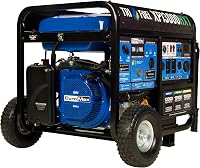
The DuroMax XP13000HXT is the most flexible fuel choice in this group because it runs on gasoline, propane or natural gas. Its 13,000-watt output gives it the capacity for a demanding home backup plan, but its 240 lb weight means you should decide where it will live before an outage.
The 500cc OHV engine and 50A transfer switch-ready outlet suit larger electrical loads. A front-facing interface lets you change fuel type, and the push-button and remote start controls reduce the need to work directly beside the unit during startup.
CO Alert is a useful safety feature, but it cannot make indoor operation safe. Place this generator outdoors, keep exhaust away from openings and follow the owner's manual for fuel connections.
Choose this model when fuel flexibility matters as much as output. Pick the DuroStar instead if you want dual fuel only and a slightly lighter 13,000-watt model.
Westinghouse 6500 Watt Dual Fuel Home Backup: Best for moderate essential loads
Westinghouse 6500 Watt Dual Fuel Home Backup: Best for moderate essential loads
- 5,300 running watts on gasoline
- 4,800 running watts on propane
- Up to 14.5 hours
- CO shutdown
- 30A transfer switch-ready outlet
The Westinghouse 6500 Watt Dual Fuel Home Backup covers moderate outage loads with gasoline or propane. Its 30A outlet, CO shutdown and 4.7-gallon tank fit a practical essentials-only plan.
Pros
- Long stated gasoline runtime
- 30A transfer switch-ready outlet
- Lighter than high-output picks
Cons
- Less output than the large models
- No remote start listed
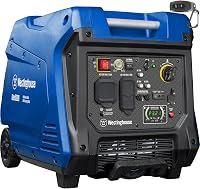
The Westinghouse 6500 Watt Dual Fuel Home Backup suits a home that needs selected essentials rather than the largest possible load. For other home backup formats, compare our inverter generators for home backup guide.
It produces 5,300 running watts and 6,500 peak watts on gasoline, or 4,800 running watts and 5,800 peak watts on propane.
Its 4.7-gallon tank provides up to 14.5 hours of stated runtime, with a fuel gauge to help you plan refueling. The 30A L14-30R outlet is transfer switch ready, while the TT-30R outlet supports an RV connection.
Automatic low-oil and carbon monoxide shutdown add protection features. The 135.6 lb weight is much easier to manage than the 200 lb-plus models, although you still need a clear outdoor operating location.
Choose it for moderate essential loads and a lighter frame. If your plan includes higher-demand appliances at the same time, move up to the Westinghouse 12500 Watt model.
WEN: Best for compact dual-fuel backup
WEN: Best for compact dual-fuel backup
- 4,750 surge watts
- 120V/240V selector
- Electric start
- 4-gallon tank
- Wheel and handle kit
The WEN DF475T is the lightest model here and supports gasoline or propane. Its 120V/240V selector and L14-30R outlet make it useful for a smaller essential-load plan.
Pros
- Lightest model here
- Electric start
- 120V/240V selection
Cons
- Lowest output in this group
- Shorter stated half-load runtime
The WEN DF475T is the smallest and lightest dual fuel option here. Its portable size may suit RV owners too; compare our dual fuel generators for RVs guide.
Gasoline produces 4,750 surge watts and 3,800 running watts, while propane produces 4,350 surge watts and 3,500 running watts.
A selector changes between 120V and 240V output, and the electric start uses a 224cc 4-stroke OHV engine. The L14-30R twist-lock outlet can connect to a transfer switch designed for that connection.
The 4-gallon tank provides up to 11 hours at half load. The box includes a wheel and handle kit, a 47-inch LPG hose and oil, so setup planning can focus on safe placement and the correct fuel connection.
Choose the WEN for a compact essential-load backup. It is not the right match if your outage plan requires the higher running output of a large refrigerator, pump and air conditioner setup at the same time.
Westinghouse 12500 Watt Dual Fuel Home Backup: Best for high-demand home outages
Westinghouse 12500 Watt Dual Fuel Home Backup: Best for high-demand home outages
- 9,500 running watts on gasoline
- 8,500 running watts on propane
- Remote electric start
- 50A RV-ready outlet
- Digital voltage and frequency display
This Westinghouse model gives a large home backup setup 9,500 running watts on gasoline and 8,500 on propane. Remote start, a 50A outlet and a digital display add useful control.
Pros
- Strong running output
- Remote start key fob
- 50A outlet
Cons
- Large and heavy
- Propane output is lower than gasoline output
The Westinghouse 12500 Watt Dual Fuel Home Backup is the best overall fit for a high-demand home outage plan. On gasoline, it provides 9,500 running watts and 12,500 peak watts.
On propane, it provides 8,500 running watts and 11,200 peak watts. That gap is worth planning around, so size your load list using the fuel you are most likely to use.
Remote electric start, a key fob and recoil start give you several ways to start the 457cc generator. Remote start is handy when the unit is already placed outdoors and you want to avoid a pull cord start.
Its 50A RV-ready outlet and 30A transfer switch-ready outlet make connection planning important. Confirm the requirements of your installed equipment before assuming either outlet will fit your setup.
The digital VFT display shows voltage, frequency and lifetime hours. That information helps you watch output during use and keep track of maintenance intervals over time.
A 6.6-gallon fuel tank provides up to 12 hours of stated runtime, and the fuel gauge helps you track the gasoline supply. Plan refueling outdoors with the engine cool and the area clear of ignition sources.
Choose this model for broad household coverage through a transfer switch. Its 210 lb weight calls for a fixed storage plan and a clear route to the outdoor operating position.
DuroStar DS13000MX: Best for 13,000-watt dual-fuel output
DuroStar DS13000MX: Best for 13,000-watt dual-fuel output
- 13,000 watts
- Gasoline and propane
- 500cc engine
- CO Alert
- 50A transfer switch-ready outlet
The DuroStar DS13000MX matches the top output class with gasoline or propane operation. Its 50A outlet, remote electric start and CO Alert suit whole-home backup planning.
Pros
- 13,000-watt output
- Dual-fuel operation
- 50A outlet
Cons
- Heavy to move
- Gasoline provides maximum power
The DuroStar DS13000MX gives you 13,000 watts with gasoline or propane operation. Gasoline is the choice for maximum power, while propane gives you a second fuel path for emergency planning.
Its 500cc engine, 50A heavy-duty outlet and transfer switch-ready design target whole-home backup setups. That outlet rating suits larger transfer equipment, but you still need matching installed hardware.
Remote electric start makes startup easier from a distance. Check the included remote control before an outage so you know how it pairs and where the controls are.
CO Alert can shut down the generator when dangerous carbon monoxide levels are detected. It is a safety layer, not a reason to run the unit in a garage or near open windows.
The steel frame and power panel are designed for heavy use. The reinforced build also means you should think about surface strength and storage space before delivery.
The 220 lb weight remains a major planning factor. The included wheel and handle kit helps with movement, though it does not remove the need for a safe storage location.
Choose it for high output without adding natural gas. Compare it with the DuroMax if you want a third fuel option.
Generac: Best for tri-fuel runtime planning
Generac: Best for tri-fuel runtime planning
- 9,500 running watts
- Gasoline, propane and natural gas
- COsense technology
- Automatic voltage regulation
- 7.5-gallon tank
Generac's tri-fuel portable generator adds natural gas to the usual gasoline and propane choices. Its AVR, COsense technology and 7.5-gallon tank support longer outage planning.
Pros
- Three fuel choices
- AVR
- Natural gas option
Cons
- Lower score for this dual-fuel search
- Heavy portable design
Generac's 12,500 Starting Watt Tri-Fuel Portable Generator is a strong option when natural gas matters. It runs on gasoline, liquid propane or natural gas, with 9,500 running watts and 12,500 starting watts on gasoline.
Automatic voltage regulation is designed to stabilize output for connected equipment. That matters when motor-driven tools, pumps or appliances are part of your outage plan.
COsense detects rising carbon monoxide levels and shuts the generator down before dangerous thresholds. Keep the unit outdoors and keep working carbon monoxide alarms inside the home.
The electric start uses an included 12V battery, which removes pull-cord effort. Keep the battery charged and follow the manual for storage and seasonal checks.
The 7.5-gallon tank provides up to 9.5 hours at 50% load or up to 14 hours at 25% load on gasoline. Runtime figures depend on load, so light duty use will stretch fuel further than heavy use.
A natural gas line can support virtually unlimited runtime, subject to the installation and fuel supply. That option only helps if your home already has a suitable line and approved connection.
Choose Generac for long outage planning around three fuel types. If your search is strictly for dual fuel, the Westinghouse and DuroStar models are more direct matches.
How do gasoline and propane compare for home backup?
Gasoline gives the models here their higher stated wattage, while propane gives you a stored alternative that can be useful when gasoline is unavailable. The exact difference varies by generator, so use the fuel-specific running and peak figures when sizing loads.
For example, the Westinghouse 12500 Watt model produces 9,500 running watts on gasoline and 8,500 on propane. The WEN produces 3,800 running watts on gasoline and 3,500 on propane.
The Westinghouse 6500 Watt model drops from 5,300 running watts on gasoline to 4,800 on propane. That pattern makes gasoline the stronger choice when you need maximum output for a demanding load list.
Propane still has clear value for backup planning. Sealed tanks can be stored for long periods, and a propane supply can keep you running when fuel stations are closed.
Gasoline has the advantage of wide availability, but stored gasoline needs careful handling and rotation. Use approved containers, keep fuel away from living spaces and follow local storage rules.
Dual fuel does not mean unlimited runtime on either fuel. Tank size, load level and fuel type all shape how long the generator can run before refueling or switching tanks.
Switching fuels mid-outage should be done only with the engine off and cool, unless the manual states a different procedure. Read the fuel selection and connection steps before you need them under pressure.
Natural gas is a separate consideration and is not included with every dual fuel model. Only the tri-fuel models here offer that third option, and connection requirements differ by model.
Think about which fuel you can actually obtain in your area during a storm. A lower wattage on a fuel you have available is more useful than higher output on a fuel you cannot get.
Match your plan to real household loads, not just headline peak numbers. Running watts tell you what the generator can sustain, while peak or starting watts help cover brief motor surges.
Keep fuel storage, connection instructions and local rules in mind. A dual fuel generator is flexible only when both fuel sources are available and you can use them safely.
What size generator do essential household loads need?
A smaller model can cover a planned group of essentials, while a 9,500-watt or larger running output gives you more room for simultaneous loads. Write down the appliances you want during an outage before choosing a generator.
Refrigerators, sump pumps and air conditioners can need extra starting power. Do not add only the running wattage if several motor-driven appliances may start together.
The WEN and Westinghouse 6500 Watt models suit narrower plans. The Westinghouse 12500 Watt, DuroStar and DuroMax give more capacity for larger demand, but they also require more storage space and careful movement planning.
For the connection question, compare a portable generator vs whole house generator before you buy. A portable model still needs a safe circuit connection and proper transfer equipment.
Do you need a transfer switch?
You need a transfer switch or another approved connection method when you want to power household circuits through the home's wiring. Never connect a portable generator to a wall outlet, since backfeeding can create a serious hazard.
Backfeeding can send power back toward utility lines and put line workers and neighbors at risk. A transfer switch keeps your home circuits separate from the utility supply during an outage.
The models here include transfer switch-ready outlets, but their outlet ratings differ. The WEN and Westinghouse 6500 Watt model include 30A connections, while the larger DuroMax, DuroStar and Westinghouse 12500 Watt models include 50A options.
Outlet rating alone does not decide what your home can run. Your transfer switch, inlet box and breaker layout set the limits for which circuits can be powered safely.
A 30A setup may suit a smaller group of essential circuits. A 50A setup gives more room for larger loads, but only when the rest of your electrical hardware is rated for it.
Have a qualified electrician confirm the transfer switch, inlet, breaker arrangement and generator connection before an outage. This is part of the home backup system, not a detail to solve after the power fails.
Ask the electrician to label which breakers the generator will serve. Clear labels help you avoid overloads when you start turning appliances back on.
Plan your cord route before the outage as well. Keep the generator outdoors, run the cord through a safe entry point and protect it where people may walk over it.
Test the transfer setup under supervision if your electrician recommends it. A practice run before storm season can reveal mismatched outlets or missing adapters while there is still time to fix them.
Do not use extension cords as a substitute for a transfer switch when powering household circuits. Direct cord use is fine for standalone devices within the generator rating, but whole-home wiring needs proper isolation.
Keep the generator manual and transfer switch details together in one place. That record makes it easier for an electrician to confirm compatibility if you change generators later.
How should you use a dual fuel generator safely?
Run the generator outdoors in a dry, open area with exhaust directed away from doors, windows and vents. Carbon monoxide protection helps, but CO Alert or COsense does not replace safe placement and working indoor carbon monoxide alarms.
Keep the unit on a stable surface and follow the manual for grounding, fuel changes, startup and shutdown. Let the generator cool before refueling, and keep gasoline and propane away from ignition sources.
Use the controls and outlets within their stated ratings. Avoid stacking extension cords or connecting loads that exceed the generator's running or starting capacity.
If you prefer propane as your main backup fuel, compare our best propane generator for home guide. Buyers considering a larger fixed setup can also review the best propane generator whole house.
What maintenance does a fuel generator need?
Routine care includes checking oil, inspecting fuel connections, keeping the unit clean and following the service schedule in the manual. The Generac data specifies a first oil change at 20 hours, then every 100 hours.
Fuel planning also matters. Store fuel only in approved containers, rotate gasoline as needed and inspect propane hoses and regulators before use.
Do not start an emergency run with an unknown fuel connection.
Keep the generator manual, transfer switch information and extension cord plan together. A short practice review helps you find the controls and confirm the outdoor location before an outage.
If you only need short, quiet power for phones, lights or small devices, a portable power station for home backup may be a better fit. Our guide to using a camping power station for home backup covers the limits of that approach.
Which dual fuel generator should you choose?
Choose the Westinghouse 12500 Watt Dual Fuel Home Backup if your priority is high household output, remote start and a 50A connection. Choose the DuroStar if you want 13,000 watts on gasoline or propane, or the DuroMax if natural gas is also part of your plan.
Pick the Westinghouse 6500 Watt model for moderate essential loads and the WEN when lower weight and a compact dual-fuel setup matter most. For long outages with access to natural gas, Generac offers the most flexible fuel plan.
The right best dual fuel generator for home backup is the one whose running and starting output matches your actual circuits, whose outlet fits your transfer equipment and whose fuel plan you can use safely.
Our top 3 picks at a glance
-
1
-
2
Best for moderate essential loads
Westinghouse 6500 Watt Dual Fuel Home Backup
9.6/10 our score
See it on Amazon -
3
Frequently asked questions
What is the best dual fuel generator for home backup?
The Westinghouse 12500 Watt Dual Fuel Home Backup is the strongest match for high-demand home outages because it provides 9,500 running watts on gasoline, 8,500 on propane, remote start and a 50A outlet.
Choose the WEN for a smaller essential-load plan, or the DuroStar for 13,000-watt output.
Is gasoline or propane better for generator backup?
Gasoline usually gives these generators their higher output, while propane gives you another fuel option when gasoline is hard to store or find. Compare the stated gasoline and propane wattage before sizing your loads.
Store and use both fuels only as directed by the generator maker and local rules.
How many watts do I need for home backup?
Add the running watts of the appliances you need at the same time, then account for the higher starting demand of motor loads such as refrigerators and sump pumps.
A 4,750-watt generator may suit selected essentials. Larger models here provide 9,500 to 13,000 watts for broader loads.
Can a dual fuel generator power a whole house?
It can power selected household circuits, and a high-output model may cover many major loads, but the exact answer depends on your home's wiring and appliance demand.
Use a properly installed transfer switch and have an electrician confirm the connection. Never connect a portable generator directly to a wall outlet.
Are dual fuel generators safe to use indoors?
No. Run a fuel generator outdoors, far from doors, windows and vents, because engine exhaust can contain carbon monoxide.
CO Alert or COsense adds a shutdown safety feature, but it does not replace outdoor placement, ventilation distance and working carbon monoxide alarms in the home.