5 Best Propane Generators for Home Backup (November 2026)
The best propane generators for home backup include the DuroMax XP13000HXT for maximum home backup output, the Westinghouse 12500 Watt Dual Fuel Home Backup for high-output dual-fuel backup, and the DuroStar DS13000MX for heavy emergency loads.
On this page (9 sections)
- Which propane generator is best for home backup?
- DuroMax XP13000HXT: Best for maximum home backup output
- Westinghouse 12500 Watt Dual Fuel: Best for high-output dual-fuel backup
- DuroStar DS13000MX: Best for heavy emergency loads
- ERAYAK 4500W: Best for quiet essential-load backup
- Westinghouse 4650 Peak Watt: Best for simple portable backup
- How do you choose a propane generator for home use?
- How should you use and maintain a propane generator at home?
- Which propane generator should you buy?
The best propane generator for home backup is the DuroMax XP13000HXT when you need high output and the choice of gasoline, propane or natural gas. The Westinghouse 12500 Watt model and DuroStar DS13000MX are strong dual-fuel alternatives, while the ERAYAK and smaller Westinghouse suit essential loads.
Your first decision is not the brand. It is the load plan.
List the refrigerator, freezer, furnace controls, sump pump, lights, internet equipment and other essentials you want during an outage. Then check both their running demand and their startup demand.
For a broader look at fuel choices, read our gas generator buying guide. If you are deciding between a movable unit and a permanently installed system, compare portable generator vs whole house options.
Our picks at a glance
-
1

-
2
 Best for high-output dual-fuel backup
Westinghouse 12500 Watt Dual Fuel Home Backup
9.5/10 our score
See it on Amazon -
3

- 4
 Check it
ERAYAK 4500W Dual-Fuel Portable Inverter Generator
Best for quiet essential-load backup - 5
 Check it
Westinghouse 4650 Peak Watt Dual Fuel Portable
Best for simple portable backup
Which propane generator is best for home backup?
The DuroMax XP13000HXT is the best overall pick for large essential-load plans because it offers 13,000 watts and three fuel choices. That output suits homes planning to run several major appliances together during an outage.
The ERAYAK is easier to move and better suited to a smaller load plan, but its 4,500-watt peak output limits what you can run together. It is a better fit when your list is short and portability matters more than whole-home capacity.
Our score weighs specifications, features and buyer feedback against the needs of someone shopping for propane home backup. The products are ordered from highest score to lowest score.
For a large plan, look first at running watts rather than peak watts. Running watts tell you what the generator can support once motors are already turning.
Also check the propane rating in particular, since some dual-fuel models produce less power on propane than on gasoline. Planning around the lower propane figure avoids surprises during an outage.
Fuel choice should match what you can actually store or connect at home. Gasoline, propane and natural gas each bring different storage, hose and connection needs.
The XP13000HXT accepts gasoline, propane and natural gas, which gives more options if one fuel runs low. A dual-fuel model still works well when two options cover your storage plan.
Connection method matters just as much as output. A transfer switch-ready outlet supports a planned home connection, while standard outlets suit direct appliance use.
Work through your essential loads one by one before you compare models. Note running demand, startup demand and which items must run at the same time.
Size and weight deserve a place in that list too. A 240 lb unit needs a clear storage spot and a safe moving path before you need it in bad weather.
A lighter inverter generator may be the smarter choice for a refrigerator, lights, internet equipment and a sump pump. Match the machine to the plan instead of buying output you cannot store or handle.
| Product | Best for | Output | Fuel | Size and weight | Our score |
|---|---|---|---|---|---|
| DuroMax XP13000HXT | maximum home backup output | 13,000 watts | Gasoline, propane and natural gas | 30 x 30 x 26 in; 240 lb | 9.7 |
| Westinghouse 12500 Watt Dual Fuel Home Backup | high-output dual-fuel backup | 12,500 peak watts | Gasoline and propane | 27.2 x 26.1 x 26.5 in | 9.5 |
| DuroStar DS13000MX | heavy emergency loads | 13,000 peak watts | Gasoline and propane | 29.75 x 27.5 x 25.75 in; 220 lb | 9.4 |
| ERAYAK 4500W Dual-Fuel Portable Inverter Generator | quiet essential-load backup | 4,500 peak watts | Gasoline and propane | 20 x 11.7 x 19.3 in; 54 lb | 9.1 |
| Westinghouse 4650 Peak Watt Dual Fuel Portable | simple portable backup | 4,650 peak watts | Gasoline and propane | 23.5 x 18.5 x 18.9 in; 108 lb | 8.9 |
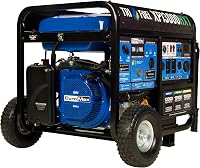
DuroMax XP13000HXT: Best for maximum home backup output
DuroMax XP13000HXT: Best for maximum home backup output
- 13,000 watts
- 500cc OHV engine
- Gasoline, propane and natural gas
- CO Alert
- 50 amp transfer switch-ready outlet
The XP13000HXT combines 13,000 watts with tri-fuel flexibility, remote start and a transfer switch-ready 50 amp outlet for large home backup needs.
Pros
- Highest output in this roundup
- Three fuel choices
- Remote start and CO Alert
Cons
- Heaviest model here
- Large footprint
The DuroMax XP13000HXT has the highest listed output in this group at 13,000 watts. Its 500cc OHV engine and steel construction make it a fit for buyers planning around several large household loads rather than a small emergency kit.
Its tri-fuel design accepts gasoline, propane and natural gas. That flexibility matters when one fuel source is difficult to obtain, although each installation still needs a clear fuel and connection plan.
The front-facing interface lets you change fuel type, and the unit includes electric and remote start. Its transfer switch-ready 50 amp outlet supports a properly planned home connection, but a generator does not remove the need for correct electrical installation.
At 30 x 30 x 26 in and 240 lb, this is the largest and heaviest pick here. Plan the storage location, moving path and outdoor operating position before an emergency.
The XP13000HXT includes a CO Alert, an oil funnel, spark plug wrench, tool set, wheel and handle kit, natural gas hose, propane regulator, remote control and owner's manual. Those included parts support setup, but you still need to follow the operating instructions and local safety rules.
Choose it when your load plan needs high output and fuel flexibility. If your goal is only to keep a refrigerator, lights and small electronics running, its size may be more than you need.
Westinghouse 12500 Watt Dual Fuel: Best for high-output dual-fuel backup
Westinghouse 12500 Watt Dual Fuel Home Backup: Best for high-output dual-fuel backup
- 12,500 peak watts
- 9,500 running watts on gasoline
- 8,500 running watts on propane
- Remote electric start
- 50 amp RV-ready outlet
This Westinghouse model suits homes that need strong dual-fuel output, remote starting and several covered household or transfer-switch-ready outlets.
Pros
- High gasoline and propane output
- Remote start key fob
- Fuel gauge and hour meter
Cons
- Less output on propane than gasoline
- Open-frame design
The Westinghouse 12500 Watt Dual Fuel Home Backup produces 9,500 running watts and 12,500 peak watts on gasoline, or 8,500 running watts and 11,200 peak watts on propane. That difference is central to planning because propane output is lower on this model.
It runs on gasoline or propane and offers remote, electric and recoil start. The included key fob lets you start it from a distance, while the fuel gauge and digital hour meter help you track fuel and service timing.
The control panel includes two GFCI 120V household receptacles, a transfer switch-ready 120V L14-30R outlet and a 120/240V 14-50R outlet. Rubber covers protect the outlets from dust and debris when they are not in use.
This model measures 27.2 x 26.1 x 26.5 in. Its 457cc 4-stroke OHV engine has a cast iron sleeve, automatic low-oil shutdown and a display for voltage, frequency and lifetime hours.
The Westinghouse package includes a battery charger, engine oil and funnel, key fob, propane hose, quick-start guide, owner's manual and warranty. The brand also states that the generator is EPA compliant and functionally tested at the factory.
Choose it when you want high dual-fuel output with clear control-panel information. Compare its propane running wattage with your largest combined load before relying on it for home backup.
DuroStar DS13000MX: Best for heavy emergency loads
DuroStar DS13000MX: Best for heavy emergency loads
- 13,000 peak watts
- 10,500 running watts
- 500cc engine
- Gasoline and propane
- CO Alert and 50 amp outlet
The DS13000MX is a large dual-fuel generator for homes that need substantial emergency capacity and a transfer switch-ready 50 amp connection.
Pros
- 10,500 running watts
- Dual-fuel flexibility
- Steel frame and CO Alert
Cons
- Heavy to move
- Large emergency-power footprint
The DuroStar DS13000MX is the best fit here for buyers who want 13,000 peak watts and 10,500 running watts from a dual-fuel portable generator. It runs on gasoline or propane and is designed around large emergency loads.
Its 500cc 4-stroke engine and steel frame suit a demanding backup setup. The front-facing fuel selector makes fuel changes easier, while push-button electric start reduces the work needed to start the unit.
A 50 amp outlet is ready for a properly installed transfer-switch connection. The control panel also includes a CO Alert, low-oil shutdown and the outlets needed for common portable-generator connections.
At 29.75 x 27.5 x 25.75 in and 220 lb, it is slightly lighter than the DuroMax XP13000HXT but still requires planned storage and movement. The wheel and handle kit helps with transport around the operating area.
The package includes an oil funnel, spark plug wrench, tool set, wheel and handle kit, propane regulator, remote control and owner's manual. The product description presents it as suitable for household essentials, job sites and RV use.
Choose it when you need large dual-fuel capacity without moving to a tri-fuel model. If portability and low weight matter more than output, the ERAYAK is easier to handle.
ERAYAK 4500W: Best for quiet essential-load backup
ERAYAK 4500W Dual-Fuel Portable Inverter Generator: Best for quiet essential-load backup
- 4,500 peak watts
- 3,500 running watts
- Gasoline and propane
- Pure sine wave output
- CO sensor and 30 amp RV outlet
The ERAYAK fits buyers who need a lighter inverter generator for selected home loads, RV use or outdoor power rather than whole-home demand.
Pros
- Lightest model here
- Inverter output
- Automatic fuel switching
Cons
- Less output than the large open-frame picks
- Recoil start
The ERAYAK 4500W Dual-Fuel Portable Inverter Generator is the most portable choice here at 54 lb. It produces 4,500 peak watts and 3,500 running watts on gasoline, or 4,050 peak watts and 3,150 rated watts on propane.
Its inverter design provides pure sine wave output, which makes it a useful choice for selected electronics and smaller home loads. It has two 120V/20A outlets, a 30A RV outlet, USB-A and USB-C connections.
The generator supports gasoline and propane with an automatic fuel-switching system. The product data states that it can switch to gasoline when gas runs out, which may help maintain power without a manual shutdown.
At 20 x 11.7 x 19.3 in and 54 lb, it is much easier to store and move than the large open-frame generators. It also includes an automatic idle control, parallel readiness and a CO sensor.
The product data states 58 dBA at 23 ft at quarter load and up to 16 hours on a full 2.25-gallon gasoline tank at 25% load. Treat runtime as load-dependent because heavier demand uses fuel faster.
The package includes a 30A conversion plug, gas inlet pipeline and regulator, oil kettle, repair tools and owner's manual. It uses recoil start rather than electric start.
Choose it for selected circuits, RV use or outdoor power where low weight matters. It is not the first choice for a load plan built around several large appliances at once.
Westinghouse 4650 Peak Watt: Best for simple portable backup
Westinghouse 4650 Peak Watt Dual Fuel Portable: Best for simple portable backup
- 4,650 peak watts
- 3,600 rated watts on gasoline
- Gasoline and propane
- CO sensor
- 30 amp RV-ready outlet
This compact Westinghouse model is a practical fit for essential circuits, RV loads and buyers who want dual-fuel operation without a 4,650-watt frame.
Pros
- 14-hour gasoline runtime claim
- 30 amp RV outlet
- Low-oil and CO shutdown
Cons
- Lower output for large homes
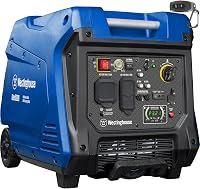
- Heavier than the inverter model
The Westinghouse 4650 Peak Watt Dual Fuel Portable Generator suits buyers who need a compact dual-fuel unit for essential loads, RV use or occasional home backup. It produces 4,650 peak watts and 3,600 rated watts on gasoline, or 4,180 peak watts and 3,240 rated watts on propane.
It runs on gasoline or liquefied petroleum gas and includes a 4-gallon fuel tank with a fuel gauge. The product data states up to 14 hours of runtime per tank, while propane runtime depends on the connected propane supply and load.
The control panel has a 120V household duplex receptacle, a 30A RV-ready TT-30R receptacle and a 30A L5-30R receptacle. Choose a correctly rated generator extension cord for the outlet and load.
Rubber outlet covers help protect the connection points from dust and debris.
This Westinghouse measures 23.5 x 18.5 x 18.9 in and weighs 108 lb. It is smaller than the high-output models but heavier than the ERAYAK inverter generator.
Automatic low-oil shutdown, CO shutdown, voltage regulation and overload protection add useful safety and control features. The package includes engine oil and funnel, propane hose, quick-start guide, owner's manual and warranty.
Choose it when you want straightforward dual-fuel backup with a 30 amp connection. Match its 3,240-watt propane rating to your actual essential loads before choosing it over a higher-output model.
How do you choose a propane generator for home use?
Choose a propane generator by required running watts, startup watts, fuel type, connection method and storage needs. A unit that can produce more peak power than your appliances need may still be unsuitable if its propane running output is too low.
How many watts should a propane generator for home use produce?
Add the running watts for the appliances you expect to use together. Then identify the appliance with the highest startup demand and include that temporary surge in your plan.
Large models in this roundup are aimed at heavier home backup plans. The DuroMax XP13000HXT reaches 13,000 watts, while the DuroStar DS13000MX reaches 13,000 peak watts and 10,500 running watts.
The ERAYAK and Westinghouse 4650 Peak Watt are better matched to a short list of essentials. They can support a refrigerator, lights, communications equipment and other modest loads when the combined demand stays within their propane ratings.
Is a dual-fuel or tri-fuel generator better?
A dual-fuel generator gives you gasoline and propane. A tri-fuel generator adds natural gas, as with the DuroMax XP13000HXT.
More fuel choices can make outage planning more flexible, but each fuel requires suitable storage or a proper connection. Propane is useful for keeping a second fuel option available, while gasoline may offer higher output on some models.
For a broader comparison, see our best propane generator whole house guide, best inverter generator for home backup guide and best dual fuel generator for home backup guide.
What does transfer switch ready mean?
Transfer switch ready means the generator has an outlet designed for connection to a compatible transfer-switch setup. It does not mean the generator can be connected directly to household wiring with an ordinary cord.
A transfer switch helps separate generator power from utility power. Have the connection planned and installed by a qualified electrician, and follow local electrical requirements.
The Westinghouse 12500 Watt model and DuroStar DS13000MX include 50 amp connections. The DuroMax XP13000HXT includes a transfer switch-ready 50 amp outlet.
Should you buy an inverter propane generator for home backup?
Buy an inverter propane generator when portability, cleaner electrical output and smaller essential loads matter more than maximum whole-home capacity. The ERAYAK 4500W is the inverter option in this group.
A traditional open-frame generator is usually the better match for high-output emergency planning. The large DuroMax and Westinghouse models offer substantially more power for multiple household loads.
If you are comparing fuel generators with battery systems, read Can A Solar Generator Power A House? and What Is the Best Portable Power Station for Home Backup?.
How should you use and maintain a propane generator at home?
Use a propane generator outdoors, keep it away from openings and follow the owner's manual for fuel, starting, stopping and maintenance. Let the unit cool before refueling and never operate it inside a home, garage or enclosed space.
Place the generator where exhaust cannot enter through doors, windows or ventilation openings. Keep cords and fuel connections arranged so they do not create trip hazards or contact hot components.
Before an outage, identify the loads you will run and practice the startup sequence without connecting unnecessary appliances. Store the manual, fuel connections and required tools where you can find them quickly.
Inspect the fuel hose, propane regulator, outlets, wheels and controls before use. Check oil as directed by the manufacturer, and use the low-oil or CO shutdown features as safety backups rather than reasons to ignore placement rules.
Which propane generator should you buy?
Pick the DuroMax XP13000HXT if your home backup plan needs the highest output and three fuel choices. It produces 13,000 watts and runs on gasoline, propane or natural gas.
That range suits households with several large loads and a clear plan for fuel storage or connection. It also suits buyers who want remote start and a transfer switch-ready 50 amp outlet.
Pick the Westinghouse 12500 Watt for high-output dual-fuel use with remote starting and a detailed control display. It produces 9,500 running watts and 12,500 peak watts on gasoline.
On propane, it produces 8,500 running watts and 11,200 peak watts, so use the propane figures when you plan essential loads. The fuel gauge, hour meter and covered outlets help with steady day-to-day use.
Choose the DuroStar DS13000MX for large dual-fuel emergency loads. It produces 13,000 peak watts and 10,500 running watts from a 500cc engine.
It runs on gasoline or propane and includes a 50 amp outlet for a properly installed transfer switch connection. Its steel frame and wheel and handle kit support demanding use around a home, job site or RV.
Choose the ERAYAK 4500W for a light inverter generator and smaller essential circuits. It produces 4,500 peak watts and 3,500 running watts on gasoline.
It produces 4,050 peak watts and 3,150 rated watts on propane, so keep combined loads within that propane rating. At 54 lb, it is far easier to store and move than the large open-frame models.
Choose the Westinghouse 4650 Peak Watt for compact dual-fuel backup with a 30 amp outlet. It produces 3,600 rated watts on gasoline and 3,240 rated watts on propane.
Its 4-gallon tank, fuel gauge, low-oil shutdown and CO shutdown make it a practical fit for selected circuits. It suits RV use and occasional home backup where a smaller footprint matters.
The best propane generator for home backup is the one whose propane running wattage matches your essential-load plan, whose connection method fits your installation and whose size you can store and move safely.
Our top 3 picks at a glance
-
1
-
2
Best for high-output dual-fuel backup
Westinghouse 12500 Watt Dual Fuel Home Backup
9.5/10 our score
See it on Amazon -
3
Frequently asked questions
What is the best propane generator for home backup?
The DuroMax XP13000HXT is the strongest choice here for high-demand home backup because it produces 13,000 watts and accepts gasoline, propane and natural gas. Choose a smaller dual-fuel model when you only need selected circuits such as a refrigerator, lights, internet equipment or a sump pump.
How many watts does a propane generator need for a house?
The required wattage depends on which loads you run at the same time and which appliances need extra starting power. Add the running watts of essential devices, then account for startup demand.
A transfer-switch installation should be planned with a qualified electrician.
Is propane better than gasoline for a backup generator?
Propane gives you a second fuel option and can make emergency planning easier when gasoline is unavailable. Gasoline may provide higher output on some dual-fuel models.
Compare the generator's propane wattage, fuel storage plan and the loads you need to run.
Can a propane generator power a whole house?
A propane generator can power many household circuits when its output matches the home's demand and it is connected through a correctly installed transfer switch. A portable generator does not automatically power every circuit.
Have the load plan and connection checked before an outage.
Where should you use a propane generator?
Use a propane generator outdoors in a well-ventilated location away from doors, windows and air intakes. Never operate a fuel generator inside a home, garage or enclosed area.
Carbon monoxide safety features add protection but do not replace outdoor placement and careful setup.