How to Choose a 400W Flexible Solar Panel
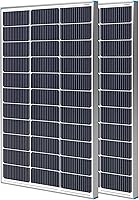
A 400W flexible solar panel is best bought as two 200W panels or four 100W panels, not as a single 400W panel. You get the same rated watts with smaller pieces that fit curved roofs, weigh less to lift, and keep producing if one section is shaded. Match the pieces to your roof space, battery voltage and charge controller before you compare brands.
On this page (11 sections)
- Is a single 400W flexible panel the right buy?
- What does 400W of rated power really mean?
- What size array fits an RV or van roof?
- Which cell type should you choose for a flexible panel?
- How does anti-shading technology change your choice?
- What do panel dimensions, weight and bend tell you?
- How should you check voltage and current before you wire panels?
- Which mounting method suits a flexible panel?
- How do you size a 400W array for daily use and care?
- How do the three example panels compare for a 400W build?
- Final verdict: which 400W flexible panel setup should you buy?
A 400w flexible solar panel setup is usually two 200W panels or four 100W panels joined into one system. That split gives you 400 rated watts in pieces that bend, weigh less and fit around roof gear.
One giant 400W sheet would be hard to carry, hard to curve and hard to replace.
Start with your roof, not with the wattage. Measure the flat or curved area you can actually use, then subtract space for vents, fans, hatches, antennas and walkways.
A panel that is 62 inches long needs a clear run of that length plus room to route cables.
Think about what the watts will charge. A 400W array suits a 12V, 24V or 48V battery bank only when the panel voltage, controller limits and battery type all line up.
Write those three numbers down before you shop.
Our solar panels buying guide explains the full system in one place. This guide stays focused on the flexible panel choice, the output claims behind it and the trade-offs between panel sizes.
Is a single 400W flexible panel the right buy?
Most buyers do better with two 200W panels or four 100W panels than with one 400W panel. Smaller panels fit curved roofs, and you can place them on both sides of a vent.
A single large sheet forces one long rectangle onto a roof that rarely has one long clear strip.
Weight tells the same story. The Renogy 100 Watt panel below weighs 4 pounds, so four of them total 16 pounds.
The two 200W panels below weigh 7.7 pounds and 7.9 pounds, so a pair totals about 16 pounds as well. You carry the same total weight, but in lighter pieces that one person can handle.
Replacement is easier with smaller panels. If one 100W panel fails, you replace 100W, not 400W.
If a 200W panel is damaged by a branch, you still have the second panel in the system.
Wiring also gives you options. Two 200W panels can run in series for higher voltage or in parallel for higher current, depending on your controller.
Four 100W panels give even more layout choices on a short or broken roof space.
Rule: Buy a 400W flexible solar panel as smaller panels that fit your roof, not as one large sheet.
What does 400W of rated power really mean?
A 400W flexible solar panel rating means 400 watts under lab conditions, not 400 watts on your roof at noon. The lab test uses strong direct light, a fixed angle and a cool panel.
Your roof adds heat, cloud, shade and imperfect angles. Morning and late afternoon sun hits lower, summer heat lowers efficiency, and clouds can cut output for minutes or hours.
Controller losses matter too. The BougeRV panel below notes PWM may run at about 75% efficiency, while MPPT can run above 90%.
That gap can outweigh a small panel efficiency difference.
Shading causes the biggest surprise drops. One shaded cell can drag down a whole string in a standard panel, while newer anti-shading designs use bypass diodes to limit that loss.
Plan battery size around a realistic daily average. If your loads need steady power for many hours, you may need more rated watts, a larger battery or backup charging.
Rule: Size your system for variable real-world output, not for a flat 400 watts all day.
What size array fits an RV or van roof?
A 400W flexible array needs about 12 to 14 square feet of usable roof with two 200W panels. The Renogy 200W panel below measures 62.2 by 27.4 inches, about 11.8 square feet.
The BougeRV 200W panel below measures 52.95 by 30.91 inches, about 11.4 square feet.
Four 100W panels need more area. The Renogy 100W panel below measures 48 by 21.5 inches, about 7.2 square feet each.
Four total about 28.7 square feet.
That matters on a van. One 200W panel may fit across the back and another ahead of the fan, while four 100W panels may need to split into narrower strips beside the fan and hatch.
Length matters as much as area. A 62-inch panel needs a 62-inch clear run, while shorter 48-inch panels fit shorter sections and tighter curves.
Walk the roof with tape before you order. Mark vents, hatch swings, antenna bases and the cable path, and leave a few inches of margin around each panel.
Rule: Measure usable roof runs first, then pick the panel length that fits them.
Which cell type should you choose for a flexible panel?
N-Type cells with 25% listed efficiency give you more watts in less roof space than older 22% cells. The Renogy 100W panel below lists 22% efficiency.
The Renogy 200W ShadowFlux panel and the BougeRV Arch Pro 200W panel both list 25% efficiency with N-Type cells.
Efficiency is not the only difference. The 200W Renogy panel lists 63 cells.
The BougeRV 200W panel lists 16BB N-Type cell design. The 100W Renogy panel lists 64 cells.
Cell count affects how shading moves through the panel. More cells in a string can mean more points where a shadow causes a drop.
Anti-shading designs add bypass diodes to route current around shaded cells.
N-Type cells also tend to hold up well over time in maker claims. Renogy says its N-Type cells help reduce crack risk and degradation.
BougeRV says its 16BB design helps extend service life.
For a small roof, the efficiency gap is practical. Two 25% 200W panels can deliver 400 rated watts in less area than four 22% 100W panels.
If roof space is tight, that matters more than a small price gap.
Cell options for a 400W build
Choose 25% N-Type panels when roof space is tight and you want fewer square feet per watt. Choose 22% 100W panels when you need shorter pieces for tight curves or a lower cost per panel.
Our best flexible solar panels guide compares individual panels so you can see what the panel itself brings.
Rule: Pick 25% N-Type panels when roof space is tight, and 22% panels when budget or fit matters more.
How does anti-shading technology change your choice?
Anti-shading designs help when part of your panel sits under a branch, vent shadow or roof edge for part of the day. The Renogy 200W ShadowFlux panel below uses up to 30 bypass diodes at the cell level.
Renogy says that setup helps maintain more stable output when trees, buildings or leaves shade part of the panel.
The BougeRV Arch Pro 200W panel below uses bypass diode technology as well. BougeRV says those diodes help capture more energy in low light or partial shading, and help reduce hot-spot risk.
That protection is not magic. Renogy advises keeping over half the panel in direct sunlight for best results.
A panel in deep shade will still produce little power, even with bypass diodes.
Anti-shading helps most on roofs with fixed shadows. A vent, air conditioner or rack can shade the same corner every afternoon.
On a clean roof with no shade, standard cells may be fine.
Think about where you park. A rig that parks under trees benefits more from anti-shading than a rig that parks in open sun.
A boat near a mast or rigging may see moving shadows all day.
Rule: Pay for anti-shading when your roof has repeat shade, not as a default add-on.
What do panel dimensions, weight and bend tell you?
Panel weight and bend decide if you can install the array alone and fit your curve. The Renogy 100W panel weighs 4 pounds, is 0.08 inches thick and bends up to 240 degrees.
Renogy says it is 70% lighter than a conventional panel and about 95% thinner.
The Renogy 200W panel weighs 7.7 pounds, is 0.1 inches thick and bends up to 270 degrees along its long axis. Horizontal bending is more limited to protect cells from micro-cracks.
The BougeRV 200W panel weighs 7.9 pounds, is 2.5 millimeters thick and bends up to 270 degrees. BougeRV lists fiberglass construction with an ETFE coating, while the Renogy 200W panel uses UV-resistant TPO with glass-fiber reinforcement.
Bend direction matters on install day. A panel that bends along its long axis suits a roof curving front to back, while limited bend in one direction may not suit a side-to-side curve.
Rule: Match bend direction and weight to your roof curve and to who will lift the panel.
How should you check voltage and current before you wire panels?
Voltage and current checks prevent mismatches between panels, controller and battery. The Renogy 200W panel lists a maximum voltage of 44.1 volts and amperage of 5.57 amps.
Renogy says that voltage suits 12V, 24V and 36V off-grid systems.
The Renogy 100W panel lists 4.84 amps and a 12-volt output. Its maximum voltage is listed at 1000 volts of direct current, which describes the panel rating rather than your system voltage.
The BougeRV 200W panel lists 24 volts output and an open circuit voltage of 36V plus or minus 5%. BougeRV warns that range may not suit certain power stations, so check your power station specs before connecting.
Series wiring adds voltages and keeps current the same. Parallel wiring keeps voltage the same and adds current.
Keep panels with the same voltage and current together. Mixing a 100W and a 200W panel in one string can waste power if one panel limits the whole string.
Rule: Write down open circuit voltage and current for each panel, then wire only matched panels together.
Which mounting method suits a flexible panel?
Mounting depends on roof material, willingness to drill and need to remove the panel later. Adhesive keeps the profile low and avoids holes, screws give a firmer hold and easier removal, and a mix suits many RV roofs.
The BougeRV 200W panel comes with 2.95 feet of pre-attached 14AWG cable. BougeRV describes hanging holes, adhesive backing and glass glue options, with adhesive tape sold separately.
The Renogy 100W panel lists MC4 connector type. Check that your controller and cables use matching connectors for cable runs and extensions.
Sealant and airflow matter more than most buyers expect. BougeRV describes applying adhesive with room for airflow, sealing the windward side and allowing 48 hours to cure.
That reduces moisture traps under the panel, and flexible panels sit close to the roof so heat can build under them.
Our best flexible solar panels for camping page looks at panels for tents, vans and campsite power. Read it if your setup is portable rather than roof mounted.
Rule: Pick adhesive for a low profile, screws for easy removal, or a mix for a permanent roof mount.
How do you size a 400W array for daily use and care?
Daily use starts with your loads, not with the 400W label. List the fans, lights, fridge, water pump and device chargers you run each day.
Add their watts and their hours of use to get a daily watt-hour need.
A 400W array in good sun can support a modest daily load for an RV or van. It may not cover a large air conditioner, a power-hungry fridge in summer heat and full device charging at once.
Battery size sets your buffer. A larger battery stores daytime power for evening use and cloudy hours.
A small battery fills quickly and then wastes extra solar power you cannot store.
Season changes the math. Winter sun is lower and shorter, so the same array makes less per day.
Summer sun is stronger and longer, but panel heat lowers efficiency.
Care follows the same logic. The Renogy 100W panel lists IP68 protection for its junction box and IP67 rated solar connectors.
The Renogy 200W panel and the BougeRV 200W panel both list IP68-rated protection.
Care options by season
Clean dust, pollen and bird droppings with water and a soft cloth, and avoid abrasive pads. Inspect cables and mounts each season for cracked sealant, lifted edges, chafed wires and loose screws.
If you plan to camp under trees, add margin, since shade still cuts daily totals even with anti-shading panels.
A flexible solar panel 300w guide can help you compare a smaller array if 400W is more than your loads need. Our best 400w solar panel guide compares rigid and flexible 400W options side by side.
Rule: Size the array to your daily watt-hours, then inspect sealant and cables every season.
How do the three example panels compare for a 400W build?
The three panels below show how wattage, cell type and size change a 400W build. Four Renogy 100W panels give you 400W in 4-pound pieces at 22% efficiency.
Two Renogy 200W ShadowFlux panels give you 400W in 7.7-pound pieces at 25% efficiency with up to 30 bypass diodes.
Two BougeRV Arch Pro 200W panels give you the same 400W in 7.9-pound pieces at 25% efficiency. BougeRV lists ETFE coating, fiberglass construction and a 270-degree bend.
Its 52.95-inch length is shorter than the Renogy 200W panel at 62.2 inches.
Fit is the main split. The 100W Renogy panel is 48 inches long, so four of them fit four shorter roof sections.
The BougeRV panel is about 53 inches long, so two of them fit two medium runs. The Renogy 200W panel is over 62 inches long, so it needs the longest clear runs.
Cell design is the second split. The Renogy 200W panel uses 63 cells with ShadowFlux bypass technology.
The BougeRV panel uses a 16BB N-Type design with bypass diodes. The Renogy 100W panel uses 64 cells at 22% efficiency.
Our best solar panel for camping page covers portable use beyond roof mounts. Read it if your panels will move between a vehicle and a campsite.
Rule: Choose the panel length that fits your roof runs, then pick the cell type that fits your shade.
Final verdict: which 400W flexible panel setup should you buy?
For most RVs, vans and boats, two 200W N-Type flexible panels make the cleanest 400W array. You get 25% efficiency, anti-shading diodes and pieces one person can carry.
The Renogy 200W ShadowFlux panel and the BougeRV Arch Pro 200W panel both fit that build.
Pick the Renogy 200W ShadowFlux panel if your roof has long clear runs and repeat shade. Its 62.2-inch length suits long roofs, its bypass diodes help under branches and roof gear, and its TPO surface and glass-fiber reinforcement suit repeated bending.
Pick the BougeRV Arch Pro 200W panel if your roof runs are closer to 53 inches. Its ETFE coating, fiberglass build and 270-degree bend suit curved roofs and tight sections.
Check its 36V open circuit range against your controller or power station before wiring.
Pick four Renogy 100W panels if your roof is broken into short curved sections. Each panel weighs 4 pounds and measures 48 inches long, so they fit around vents and hatches.
You trade 22% efficiency for better fit and easier handling.
Avoid common mistakes. Do not buy watts before measuring roof and battery, trust rated watts as daily output, mix mismatched panels, ignore cable length or skip the mounting plan.
Adhesive needs clean dry surfaces and cure time, while screws need sealed holes.
Our roundup of the best flexible solar panels compares more sizes and cell types. Use this guide to narrow the field, then check voltage and roof fit for your final pick.
Final rule: Fit the roof first, match the voltage second, and pay for anti-shading only when shade is part of your daily parking.
Frequently asked questions
How many flexible panels do I need for 400 watts?
Two 200W panels or four 100W panels give you 400W of rated power in smaller, easier to place pieces. Two large panels spread across a roof can be simpler to wire.
Four small panels fit tighter curved spaces and leave more room for vents and hatches.
Does a 400W flexible solar panel give 400 watts all day?
No. A 400W rating is measured in lab conditions with strong, direct sun and a cool panel.
Real output falls with cloud, heat, angle, shading and controller losses.
Plan for a useful average in good sun rather than a flat 400W all day.
Can I mix 100W and 200W flexible panels in one system?
You can, but only when the voltages and wiring match your charge controller and battery. Panels wired in series add voltage, and panels wired in parallel add current.
Odd mixes can waste power, so check open circuit voltage and current before you wire them.
Are flexible panels weaker than rigid panels?
Flexible panels trade some peak efficiency for low weight and bend. The 100W Renogy below is listed at 22% efficiency, while the two 200W N-Type panels below are listed at 25%.
That gap matters on a small roof where every square inch must earn its place.
What should I check before mounting a flexible panel?
Measure the roof area, note vents and hatches, and check the panel bend direction. Clean the surface, plan cable runs to the controller, and confirm the mounting method suits the roof material.
Our guide on how to mount flexible solar panels walks through each step.