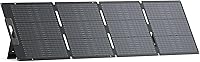
What Can a 200W Solar Panel Power?
A 200W solar panel can power lights, phones, a laptop, a 12V fridge, and small DC loads directly, and it can recharge a battery for larger AC loads later. In good sun it often makes about 600 to 1,000 watt hours per day, so storage and timing matter more than the panel alone.
On this page (10 sections)
- How much daily energy does a 200W panel really make?
- What loads can a 200W solar panel run directly?
- What can a 200W panel power with a battery?
- Can a 200W panel charge a power station fast enough?
- Which 200W panel fits a 12V RV or van system?
- When does a bifacial 200W panel make sense?
- Do you need a kit or just a panel?
- What size and weight should you expect?
- How should you set up and care for a 200W panel?
- What can a 200W solar panel power in real life?
A 200W solar panel can power lights, phones, a laptop, a 12V fridge, and small DC loads directly, and it can recharge a battery for larger AC loads later. In good sun it often makes about 600 to 1,000 watt hours per day, so storage and timing matter more than the panel alone.
The panel does not make 200 watts all day. It makes up to 200 watts under strong, direct sun, then less as heat, angle, and clouds change.
Think in daily energy, not peak watts. A 200W panel in 4 peak sun hours makes about 800 watt hours before losses.
After controller and wiring losses, you may keep closer to 650 to 750 watt hours.
How much daily energy does a 200W panel really make?
A 200W panel makes about 600 to 1,000 watt hours on a good day. Fewer sun hours, winter light, or shade can drop that to 300 to 500 watt hours.
Peak sun hours are not daylight hours. Four peak sun hours means energy equal to four hours at full 200W output, and even a long summer day may give only 4 or 5.
Angle, shade, and heat also affect output. A tilt toward the sun helps, while Renogy and Callsun temperature coefficients near -0.29%/°C to -0.30%/K limit the drop in hot sun.
What loads can a 200W solar panel run directly?
Direct loads work best when they match the panel voltage and stay under about 150 watts in real sun. LED lights, phone charging, a small fan, and a laptop through a suitable DC or inverter setup are realistic daytime uses.
A 12V LED light may draw 5 to 15 watts. A laptop often draws 45 to 90 watts when charging and running, so it uses far more than a phone over a day.
Many portable 12V fridges draw 30 to 60 watts while the compressor runs, but they cycle on and off. A 200W panel can help them by day, yet night cooling needs battery storage.
Avoid direct use for heaters, kettles, hair dryers, and microwaves. Those loads often draw 800 to 1,500 watts, far above what one 200W panel can supply at once.
What can a 200W panel power with a battery?
With a battery, a 200W panel can run evening lights, phones, a laptop, a TV, and a small fridge for several hours. Runtime depends on battery size, inverter efficiency, and stored energy.
A 12V 100Ah lithium battery stores about 1,280 watt hours in theory, with usable energy a little less. For home wiring, see solar electrical panel connections.
That is roughly one good day from a 200W panel, before losses.
An inverter adds loss and has a peak limit, so check surge ratings for motor loads. If you are choosing a panel for a portable power station, our guide to the Best Solar Panel For Power Station explains voltage and current limits.
Can a 200W panel charge a power station fast enough?
Yes, a 200W panel can charge many portable power stations, but a large unit will take several good sun hours. A 500Wh station may need most of a sunny day, while a 1,000Wh station may need more than one day.
Voltage is the main limit, not just watts. Open circuit voltage and current must stay below the station maximum solar input voltage and current.
Also confirm the solar panel connectors fit the panel and station.
The Callsun pair shows why series wiring needs care. Two 200W panels in series reach 400W, 47.48V at maximum power, and 54.62V open circuit, which Callsun says suits many 60V-class inputs.
A single 200W panel is simpler for 12V battery systems, which is why many RV and van buyers look first at the Best 12V 200W Solar Panels.
How do series and parallel change output?
Series raises voltage, while parallel raises current. Series can help a power station reach its efficient input range, but it can exceed the voltage limit if panels are mismatched.
Parallel keeps voltage near one panel and adds current. That suits some battery and controller setups, but it can exceed a power station current limit.
Never mix different panel types in the same string unless the maker allows it. Different voltage and current ratings can waste power or create risk.
Which 200W panel fits a 12V RV or van system?
For a 12V RV or van battery, a single 200W panel or two 100W panels works well with a proper charge controller. The choice comes down to roof space, weight, and whether you want one large panel or two smaller ones.
The Renogy 200 Watt N-Type panel offers 25% efficiency, 16BB cell technology, and 24V system use. Renogy says it is 7.5% smaller and 11.7% lighter than previous models, which helps on vans where roof space is tight.
Its listed maximum voltage is 37.44 volts, so controller input range matters. Renogy says a controller should allow at least 40V for a single panel connection, or 40V times the number of panels for series.
Two 100W panels can suit buyers who want easier handling or a split roof layout. The Renogy 100W 2PCS set gives two panels at 34.1 x 22.8 inches each, with 25% efficiency and a low -0.29%/°C temperature coefficient.
Renogy lists each 100W panel at 5.31 amps and 22.79 volts maximum, with an IP67 rating and a 5-year material and workmanship warranty. The two-panel format can fit around roof vents better than one large panel in some layouts.
When does a bifacial 200W panel make sense?
A bifacial panel makes sense on a ground mount, carport, or open rooftop where reflected light can reach the back. It helps less on a flush RV roof where the back gets little light.
The Callsun N-Type 16BB 400W Bifacial Solar Panel includes two 200W panels, each 51.3 x 30.3 inches and 23.8 pounds. It has 25.6% efficiency, a transparent backsheet, and a dual-module parallel design that limits the effect of partial shade.
Callsun says the two panels in series reach 400W and suit many 60V portable power station inputs. That turns a simple 200W question into a 400W setup, so confirm voltage, current, connector type, and mounting space first.
Callsun also lists a low -0.30%/K temperature coefficient, tempered glass, an aluminum frame, and an IP68-rated junction box. Those details support hot, outdoor use, but the rear-side gain still depends on ground cover and mounting height.
Do you need a kit or just a panel?
A kit helps if you lack a controller, cables, and mounts, while a panel alone suits buyers who already have a matched system. The choice depends on what you own and what battery you are charging.
A best 200w solar panel kit can save guesswork on parts. Check what is included, because some kits add short cables, basic mounts, or a controller that may not match a large battery bank.
Panel-only buyers should plan for a charge controller sized for panel voltage and current. Renogy says its 200W N-type panel fits 12V lithium, AGM, and deep-cycle setups, but controller settings should match battery chemistry.
Panel type also matters. Our best type of solar panel guide compares monocrystalline, polycrystalline, flexible, and bifacial options.
For broader context, start with what is the best solar panel, which covers cell type, efficiency, size, and warranty.
What size and weight should you expect?
A single 200W panel is usually about 50 x 30 inches and 23 to 24 pounds. Two 100W panels are easier to carry, but they take more total roof area and need more wiring.
The Renogy 200W panel measures 49.7 x 30.1 x 1.2 inches and weighs 23.4 pounds. The Callsun 200W panels measure 51.3 x 30.3 x 1.4 inches and weigh 23.8 pounds each.
Those sizes are close, so either one needs a clear roof zone.
Suitability alone is not enough. A panel that fits the roof must still clear vents, antennas, and walking paths.
Measure the roof before ordering, and leave room for mounts and wiring.
Two smaller panels can be a better fit for curved roofs or roofs with equipment in the middle. One larger panel can mean fewer mounts, fewer wire runs, and a cleaner install.
How should you set up and care for a 200W panel?
Keep the panel clean, unshaded, and wired through a matched controller. If a Renogy panel still underperforms, use this Renogy panel troubleshooting guide to check common causes.
Clean the glass with water and a soft cloth when dust or pollen builds up. Dirt can cut output and is a common reason a panel seems weak.
Check mounts after travel or storms. Tighten loose hardware, look for cracked glass or bent frames, and confirm cables stay sealed and supported, even though Renogy lists IP67 protection and Callsun lists an IP68-rated junction box.
Point portable panels toward the sun and move them as shade changes. Fixed roof panels cannot move, so layout matters more at install time.
Avoid walking on panels and stacking gear on them, as point loads and impacts can still cause damage.
What can a 200W solar panel power in real life?
What can a 200w solar panel power comes down to daily energy, battery size, and load timing. It can handle small DC loads directly, charge a battery for evening use, and support a portable power station within its input limits.
Pick one panel if roof space is tight and you want a simple install. Pick two 100W panels if you need a split layout or easier carrying.
Pick bifacial panels if the back can see reflected light and your power station accepts the series voltage.
Before you buy, compare the Best 200W Solar Panel picks by voltage, size, and weight. Then match the panel to your controller or power station, not just to the watt number.
Frequently asked questions
How many watt hours does a 200W solar panel make per day?
A 200W panel in 3 to 5 peak sun hours commonly makes about 600 to 1,000 watt hours before losses. Heat, shade, angle, wiring, and controller efficiency reduce that total.
Cloudy days can cut output by half or more, so plan loads around the low end.
Can a 200W solar panel run a house?
No, a single 200W panel cannot run a typical house. It suits small off-grid loads, a cabin, an RV, or charging a battery for lights and devices.
A house needs many panels, a larger battery bank, and an inverter sized for peak demand.
Does a 200W panel need a battery?
Not for small direct DC loads, but most useful setups use a battery. A battery stores daytime sun for night use and smooths clouds.
A charge controller between panel and battery protects the battery from overcharging.
Can a 200W panel charge a power station?
Yes, if voltage and current stay within the power station input limits. Check open circuit voltage and operating current before connecting.
Two panels in series raise voltage, while parallel raises current, so match the setup to the input range.