Anker SOLIX PS400 Bifacial Solar Panel Review: Worth It? (November 2026)
The Anker 400W solar panel in the F3800 Plus bundle suits home backup first and portable charging second. Buy the bundle if you want 3,840Wh of storage with the panel, or pick a standalone folding panel if you mainly move between campsites.
On this page (11 sections)
- Anker 400W solar panel review: what you get in the bundle
- Who the Anker bundle suits best
- Specs that matter in daily use
- How 400W of solar actually charges a station
- Setup: connecting the panel to the station
- Care and storage for the panel and station
- Trade-offs between the Anker bundle and folding panels
- Alternatives here: Renogy 400W portable panel
- Alternatives here: Ecosonique 400W portable panel
- Which 400W panel should you buy?
- Verdict on the Anker 400W solar panel
The Anker 400W solar panel in the F3800 Plus bundle is best viewed as part of a home backup system, not as a solo travel panel. Our score weighs specs, features and buyer feedback against what you are shopping for.
The bundle pairs a 3,840Wh station with a 400W Bifacial Solar Panel, so the panel's value depends on how much solar input your station can use.
This anker 400w solar panel review looks at the bundle, then compares two standalone 400W folding panels. That gives you a clear choice between home capacity, travel toughness and light carry.
Every panel here aims for 400W, but weight, connectors and warranty differ a lot.
Anker 400W solar panel review: what you get in the bundle
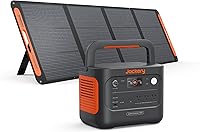
You get a 3,840Wh station plus a 400W bifacial panel, shipped separately. Anker says the power station and panel will be dispatched separately, so one item may arrive before the other.
Plan to wait for both parts before you count on full solar recharging.
Anker SOLIX F3800 Plus Portable Power Station: Best for home backup bundles

- 3,840Wh LiFePO4 battery
- 6,000W output
- 3,200W solar input
- 120V / 240V dual voltage
- 400W Bifacial Solar Panel included
A home-first power station paired with a 400W bifacial panel. It suits readers who want backup capacity and solar recharging in one purchase.
Pros
- Large 3,840Wh capacity for home loads
- 3,200W solar input uses large panels well
- Dual-voltage output for home appliances
- 5-year warranty
Cons
- Bundle ships in separate parcels
- Large station is not a light camping carry
- Panel and station arrive separately, so plan setup timing
The included parts are the F3800 Plus station, the 400W Solar Panel, an AC charging cable, two solar charging cables at 1.6 ft, a user manual, a warning notice and a warranty card. That short 1.6 ft solar lead matters, since you may need longer cables if the panel sits far from the station.
Check your site layout before setup day.
The panel itself is listed as a 400W Bifacial Solar Panel in the included components. Bifacial means both sides can collect light, so a bright ground surface can add output from the rear.
In practice, you still need direct sun on the front side for the rated result.
Who the Anker bundle suits best
The bundle suits homeowners who want backup power with solar recharging. The F3800 Plus starts at 3.84kWh, which Anker says can power a home for a full day, and it can expand to 26.9kWh with six batteries.
That scale fits outages, not a weekend tent trip.
It also suits RV and off-grid users with fixed parking spots. You can aim the panel each day and run larger loads through the station at night.
The 6,000W output and 120V / 240V dual-voltage support help with home appliances, including a dryer, according to Anker.
Skip this bundle if you want the lightest camping setup. The station measures 15.6 x 15.3 x 27.6 in and is built for stationary use.
A folding panel plus a smaller station will carry far more easily in a car boot or on foot. Compare portable 200W solar panels if you want a lighter panel setup.
Specs that matter in daily use
The key numbers are 3,840Wh of storage, 6,000W of output and 3,200W of solar input. Those three figures tell you how much energy you store, how much you can draw at once and how fast solar can refill it.
A 400W panel will feed the solar input well below its limit, which is fine for steady charging.
Anker says the station can reach outage-ready in 63 minutes via solar and generator charging. It also supports four recharge methods: solar, generator, home power panel or AC outlet.
For most buyers, the practical point is flexibility during an outage, not the fastest possible charge time.
The battery uses EV-grade LFP cells through Anker InfiniPower, with smart temperature management. Anker backs the station with a 5-year warranty and a 10-year lifespan claim.
Those terms matter more for a home unit you may keep for a decade than for a panel you swap often.
How 400W of solar actually charges a station
A 400W panel gives you steady daytime charging, not instant refills. In strong sun, you might collect close to the rated watts, but real output falls with sun angle, heat, shade and cable length.
That is true for every panel in this review, including the Anker panel.
Think of 400W as a strong input for mid-size stations. It can refill a smaller station during a sunny day while you use some power.
With the F3800 Plus at 3,840Wh, the same panel works as a trickle source that extends runtime rather than a quick full recharge.
Panel placement does more work than most buyers expect. Face the panel toward the sun, keep it clear of shadows and raise the rear side so ground-reflected light can reach a bifacial surface.
A few degrees of tilt toward the sun often beats a flat placement on concrete.
Setup: connecting the panel to the station
Setup is straightforward when you match voltage, current and connectors first. The F3800 Plus has two solar input ports, each supporting 11 to 165V with a solar charging connector and 17A max current.
Check your panel's voltage against that range before you connect anything.
Use the two included 1.6 ft solar charging cables for a short run. If your panel will sit more than a few feet away, plan for longer cables and keep connections off damp ground.
Avoid submerging connectors, and inspect cables after travel or heavy outdoor use.
Our guide to what is the best solar panel helps you check those limits before you buy. Match the panel's open-circuit voltage and short-circuit current with your station's input specs.
A mismatch can cap output or, in the worst case, damage equipment.
Care and storage for the panel and station
Care is simple: keep surfaces clean, dry and free of cracks. Wipe the panel with a soft damp cloth, then dry it.
Never use abrasive pads or harsh cleaners on the face, since scratches reduce light capture over time.
Store the station in a dry, cool place with the main power off. Anker advises checking capacity each week and charging if it falls below 30%, plus a full recharge every three months.
That habit helps the battery stay ready for an outage.
Fold or pack the panel by its design, not by forcing it flat. Keep the carry case closed, avoid stacking heavy items on folded cells and inspect kickstands, hinges and cable ends before each trip.
Small chips in a coating can grow under repeated flexing.
Trade-offs between the Anker bundle and folding panels
The main trade-off is capacity versus portability. The Anker bundle gives you 3,840Wh and high output, but it is heavy and stationary.
The Renogy and Ecosonique panels give you 400W in a suitcase, but you still need your own power station.
Warranty terms also differ in a useful way. Anker gives the station a 5-year warranty.
Renogy gives its panel 3-year materials and workmanship coverage. Ecosonique gives 12 months with free replacement for defects.
Longer coverage suits a unit you plan to keep and use hard.
Connector needs deserve a hard look before you order. The Renogy panel has MC4 output cables only, and its 4-in-1 adapter cable is sold separately.
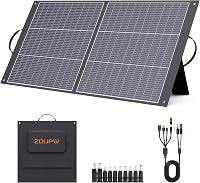
The Ecosonique panel includes a 3m MC4 cable plus a 0.5m MC4 to XT60, Anderson and DC8020 cable. Those included cables can save a frustrating first setup.
Alternatives here: Renogy 400W portable panel
The Renogy suits RV, marine and overland users who travel often. It folds to 33.7 x 27.95 in and weighs 30.2 lbs, with a carry case for trips and home blackout backup.
For many buyers, that suitcase format is the whole point.
Renogy 400W Portable Solar Panel
Renogy uses fiberglass reinforcement, an ETFE coating and Grade A+ monocrystalline cells. It rates efficiency at 23% and uses parallel wiring to reduce the impact of partial shading.
Corner protection and an aluminum backsheet help with rough handling on the road.
Compatibility is wide but not automatic. Renogy lists Jackery Explorer 1000 v2, EcoFlow DELTA 3 and DELTA 3 Max, Anker SOLIX S2000, C1000 Gen 2 and C2000 Gen 2, plus BLUETTI AC180 and Elite 100 V2.
Other stations work when voltage, current and connectors match. For Anker owners, our list of the best solar panels for Anker SOLIX C1000 is a useful cross-check.
Among best folding solar panels, this Renogy stands out for toughness. IP67 waterproofing, hail-resistant coating and fiberglass help in rain, snow and heat.
You should still avoid submerging connectors and inspect the panel after delivery or heavy outdoor use.
Alternatives here: Ecosonique 400W portable panel
The Ecosonique suits campers who want the lightest 400W carry. It weighs 20.3 lbs and folds in six sections to 26 x 22 x 3 in.
That size fits across a car boot far more easily than the Renogy suitcase.
Ecosonique Technology 400W Portable Solar Panel for Power
High-grade Oxford fabric and CPC lamination make the folding surface tear-resistant, dustproof and waterproof. The panel uses a 6-angle kickstand, so you can tilt it toward the sun without props.
Anker, EcoFlow, Jackery and Bluetti stations are listed as compatible brands, but you should still check voltage fit.
Ecosonique rates conversion at 23.5% and says charging can reach 80% in a few hours under good sun. Auto-restart tech resumes after interruptions, with smart protection for safer use.
Treat those as maker claims, since your real result depends on sun, station limits and cable length.
For a smaller station, compare this panel with our guide to the best solar panel for Anker SOLIX C300. A 400W panel may exceed what a compact station can accept, so input limits decide how much of the rating you can use.
The same logic applies to any station you already own.
Which 400W panel should you buy?
Buy the Anker bundle for home backup, Renogy for travel toughness or Ecosonique for light carry. That rule covers most readers.
The Anker F3800 Plus bundle is the only option here that includes both storage and a panel, so it wins on capacity by a wide margin.
Choose Renogy if you will fold and unfold the panel often in harsh weather. Its IP67 rating, fiberglass build and 3-year coverage fit that use.
Choose Ecosonique if weight matters most and you want adapter cables in the box from day one.
Before you order, compare the best portable 400w solar panels and the best 400w solar panel overviews to confirm size and connector fit. Then check one line on the product page for the exact dimensions.
Measure your storage space first, since a folded suitcase still needs room to travel.
Verdict on the Anker 400W solar panel
This anker 400w solar panel review finds the strongest case for the bundle at home, not on the trail. The F3800 Plus gives you 3,840Wh, 6,000W output and a 400W bifacial panel for solar recharging.
That mix suits outages and off-grid cabins with a fixed setup spot.
If you camp most weekends, a standalone folding panel will serve you better. The Renogy costs you more carry effort but brings tougher materials and longer coverage.
The Ecosonique saves weight and includes more cables, at the cost of a shorter warranty.
Pick the option that matches where the panel will live. Home backup points to Anker.
Frequent travel points to Renogy. Light camping points to Ecosonique.
Any of the three can feed a compatible station, so match voltage and connectors before you connect and enjoy steady solar power.
Frequently asked questions
Is the Anker 400W solar panel bifacial worth it for home backup?
It suits home backup when paired with the F3800 Plus, since the station accepts 3,200W of solar input and stores 3,840Wh. Bifacial output depends on light reaching the rear side, so ground surface and mounting angle matter.
For a backup setup, place the panel where it gets direct sun and check that the station input limits match the panel voltage and current.
Can I use the Anker panel with a smaller Anker SOLIX station?
Check the station's solar input voltage, current and watt limits before connecting any 400W panel. A smaller station may accept the panel but cap the input, so you may not use the full 400W.
Our guide to the best solar panels for Anker SOLIX C1000 explains how to match panel output with station limits for safer setup.
What is the difference between the Renogy and Ecosonique 400W panels?
The Renogy weighs 30.2 lb and has IP67 protection with a 3-year materials and workmanship warranty. The Ecosonique weighs 20.3 lb, includes more adapter cables and has a 12-month warranty.
Choose Renogy for tougher travel use and Ecosonique for lighter carry, then confirm connector and voltage fit for your power station.