Best 12V 100Ah Lithium Battery with Charger: Top 7 Picks (November 2026)
The best 12V 100Ah lithium batteries with chargers include the Haisito 20-Amp Smart Battery Charger for mixed battery types, the DC HOUSE Metal Case 48V 100Ah Lithium for 48V golf cart conversion, and the LiTime 12V 20A Lithium Battery Charger for dedicated 12V LiFePO4 charging.
On this page (9 sections)
- The best 12V 100Ah lithium battery with charger picks at a glance
- How we compared these battery and charger bundles
- Best 12V 100Ah lithium battery and charger combinations
- How many amps do you need for a 100Ah lithium battery?
- Should you buy a battery and charger bundle or separate parts?
- What charger profile should a 12V LiFePO4 battery use?
- How do you set up and care for a 12V lithium battery and charger?
- Is a 48V 100Ah kit a good substitute for a 12V 100Ah battery?
- Verdict: which 12V 100Ah lithium battery with charger should you buy?
The best 12V 100Ah lithium battery with charger is the one matched to your battery voltage, capacity and charging time. A 20A 14.6V LiFePO4 charger fits most single 100Ah batteries.
An 80A charger fits large banks, while a 10A charger fits overnight charging.
Our score weighs specs, features and buyer feedback against what you are shopping for. We compared amps, output voltage, charging stages, connectors and battery types across these seven picks.
A bundle saves guesswork because the charger profile matches the battery chemistry. LiFePO4 batteries generally need a 14.6V full charge target.
Lead-acid chargers use different voltage and float rules.
Amperage is the main practical difference in daily use. Higher amps shorten the time between a depleted battery and a usable charge.
Lower amps reduce heat, cable demands and the risk of exceeding a small battery limit.
Start with our guide on what is a deep cycle battery if you are new to deep cycle use. Then compare battery capacity in our best 12v 100ah lifepo4 battery roundup before you pair a charger.
Our picks at a glance
-
1

-
2
 Best for 48V golf cart conversion
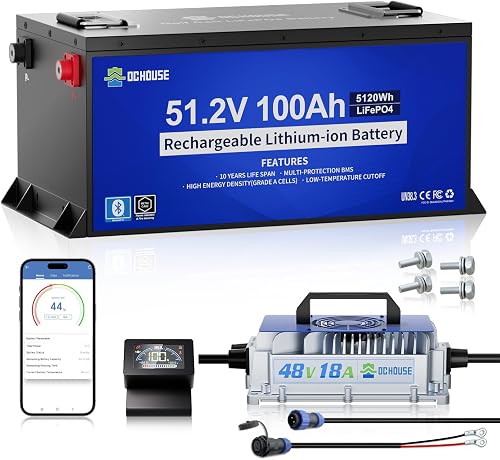
DC HOUSE Metal Case 48V 100Ah Lithium
9.6/10 our score
See it on Amazon -
3
 Best for dedicated 12V LiFePO4 charging
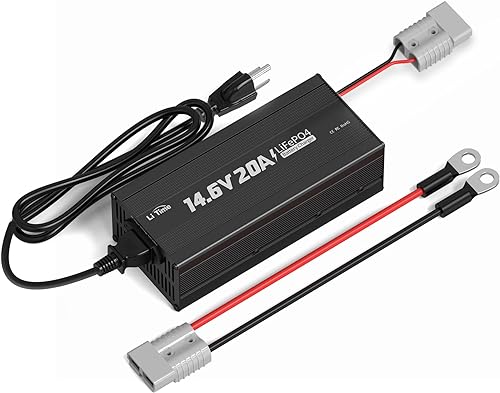
LiTime 12V 20A Lithium Battery Charger
9.4/10 our score
See it on Amazon
- 4
 Check it
BROODAY 14.6V 10A LiFePO4 Battery Charger
Best for slower overnight charging - 5
 Check it
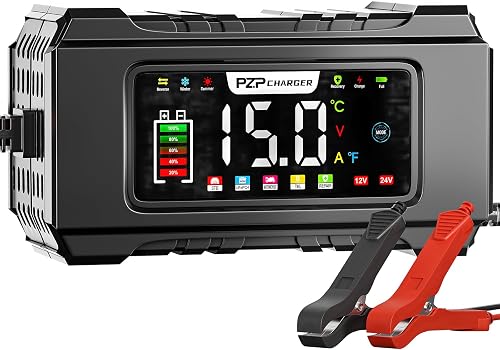
PZ.P 15-Amp 12V/24V Smart Battery Charger
Best for maintenance and trickle charging - 6
 Check it
LiTime 12V 80A Lithium Battery Charger
Best for fast charging large banks - 7
 Check it
tyeloftute 14.6V 10A LiFePO4 Battery Charger Designed
Best for 10Ah to 100Ah 12V batteries
The best 12V 100Ah lithium battery with charger picks at a glance
The Haisito leads for mixed battery types, and the LiTime 20A leads for dedicated LiFePO4 charging. The DC HOUSE kit is the outlier because it is a 48V golf cart system.
The table of picks separates fixed chargers from portable clip chargers. That split explains differences in weight, connectors and expected mounting.
A 100Ah label also means different things at different voltages. A 48V 100Ah battery stores far more energy than a 12V 100Ah battery, so charger choice follows the system voltage first.
How we compared these battery and charger bundles
We checked amperage, output voltage, charging stages and battery compatibility for each pick. We also checked connectors, weight and stated protections.
We excluded chargers that lacked a clear LiFePO4 profile for lithium-only picks. Mixed-mode chargers stayed in because many buyers maintain both battery types.
We used buyer patterns only as supporting evidence. Scores reflect fit for a 12V 100Ah search, not raw power alone.
What we weighted for a 100Ah search
Voltage match came first, because a 14.6V profile does not fit every battery chemistry. Amperage came next, because it sets charging time for a stated capacity.
Connectors and protections mattered more than screen size in our scoring. A charger that fits your cables and stops on a fault is easier to use safely every week.
Weight and dimensions then shaped portability and installation. A 0.44 kg clip charger and a 7.7 lb fixed charger serve different jobs, even at the same output voltage.
| Product | Best for | Amperage | Output voltage | Input voltage | Our score |
|---|---|---|---|---|---|
| Haisito 20-Amp Smart Battery Charger | mixed battery types | 20 A | 12 volts | 100 volts AC | 9.7 |
| DC HOUSE Metal Case 48V 100Ah Lithium | 48V golf cart conversion | 9.6 | |||
| LiTime 12V 20A Lithium Battery Charger | dedicated 12V LiFePO4 charging | 20 A | 14.6 volts DC | 9.4 | |
| BROODAY 14.6V 10A LiFePO4 Battery Charger | slower overnight charging | 10 A | 14.6 volts | 9.2 | |
| PZ.P 15-Amp 12V/24V Smart Battery Charger | maintenance and trickle charging | 15 A | 12 volts DC | 8.9 | |
| LiTime 12V 80A Lithium Battery Charger | fast charging large banks | 80 A | 14.6 volts DC | 8.8 | |
| tyeloftute 14.6V 10A LiFePO4 Battery Charger Designed | 10Ah to 100Ah 12V batteries | 10 A | 14.6 volts | 8.5 |
Best 12V 100Ah lithium battery and charger combinations
Haisito 20-Amp Smart Battery Charger: Best for mixed battery types
- 20A for 12V and 10A for 24V
- Lithium LiFePO4, AGM, GEL, SLA and lead-acid modes
- Large LCD with amps, voltage, temperature and percentage
- Automatic 12V/24V detection and pulse repair mode
A 20A smart charger with separate lithium and lead-acid modes, a large LCD and automatic 12V/24V detection for boats, trucks and RVs.
Pros
- Dedicated lithium mode protects the battery management system
- LCD shows current, voltage, temperature and percentage
- Works across many vehicle battery types
Cons
- Speed depends on battery state; current drops as charge rises
- X-Connect connector may not match every existing cable
The Haisito 20-Amp Smart Battery Charger suits owners who maintain LiFePO4 and lead-acid batteries in the same garage or boat. It delivers 20A for 12V systems and 10A for 24V systems.
Its separate lithium and lead-acid modes matter more than raw speed. You can lock the profile for LiFePO4, AGM, GEL, SLA or flooded lead-acid instead of relying on one generic setting.
The large LCD shows charging current, voltage, temperature and battery percentage in real time. That display helps you spot taper as the battery fills instead of guessing from a blinking light.
Automatic 12V/24V detection simplifies hookup, and pulse repair mode targets old or stratified batteries. Haisito notes that pulse repair cannot activate a battery at a full 0V.
Forced charging mode helps when a low 24V battery is first recognized as 12V. That is a useful fallback, but it requires care and a manual check.
The 20A rate means a depleted 100Ah battery can charge in roughly half the time of a 10A unit under ideal conditions. Current will still fall as voltage rises, so the screen reading below 20A near full charge is normal behavior.
Compared with the LiTime 20A, the Haisito trades dedicated simplicity for flexibility. It is the better garage charger if you own more than one battery chemistry.
DC HOUSE Metal Case 48V 100Ah Lithium: Best for 48V golf cart conversion
- 48V 100Ah LiFePO4 battery with 18A charger
- 200A battery management system
- Bluetooth app and LCD monitor
- Metal case with vent and one-key safety switch
A 48V 100Ah golf cart battery kit with an 18A charger, Bluetooth monitoring and a metal case, built for cart conversions rather than 12V systems.
Pros
- Complete battery, charger and monitor kit
- 200A battery management system
- Metal case designed for golf cart use
Cons
- 48V system, not a 12V battery
- Fit depends on cart battery compartment size
The DC HOUSE Metal Case 48V 100Ah Lithium kit suits golf cart owners converting from lead-acid to lithium. It is not a 12V 100Ah battery, so it only belongs here for readers shopping by 100Ah capacity.
The kit includes a 48V 100Ah LiFePO4 battery, battery monitor and 48V 18A charger. DC HOUSE says the 900W charger can fully charge the battery in about 5.5 hours.
Its 200A battery management system supports strong climbing and acceleration for cart use. The battery weighs 99 pounds and measures 11.1 by 19.9 by 9.2 inches.
The metal case includes a vent and one-key safety switch, and metal fixtures secure the internal cells. Bluetooth app and LCD monitoring show capacity, voltage and fault status.
DC HOUSE says the battery is compatible with 48V Yamaha, EZ GO and Club Cart models, but fit depends on compartment size. Measure your cart tray before ordering.
The stated range is 56 miles, with seven to nine rounds of 18 holes in typical cart use. The design also lists 4000 plus deep cycles and a 74 percent weight reduction compared with lead-acid.
This kit wins on completeness for a golf cart conversion, not for a 12V RV or solar build. If your system is 12V, skip this pick and choose a 12V charger below.
LiTime 12V 20A Lithium Battery Charger: Best for dedicated 12V LiFePO4 charging
- 20A, 14.6V output for 12V LiFePO4
- 0V activation for deeply discharged batteries
- Anderson 50A and M8 terminal connections
- Aluminum alloy housing with cooling fan
A dedicated 14.6V 20A charger for 12.8V LiFePO4 batteries, with 0V activation, LED indicators and aluminum housing for RV and off-grid use.
Pros
- Dedicated LiFePO4 charging profile
- 0V activation for wakeable batteries
- Compact 2.9 lb design
Cons
- Not waterproof and not for marine use
- 20A is slower than 80A for large banks
The LiTime 12V 20A Lithium Battery Charger suits RV, off-grid and solar owners with a single 12.8V LiFePO4 battery or a small bank. It outputs 14.6V at 20A.
At 20A, a depleted 100Ah battery needs roughly 5 hours under ideal conditions. That makes it an overnight or daytime shore power charger rather than a quick top-up unit.
Its 0V activation helps wake a battery management system after deep discharge. LiTime positions this as a way to protect long-term battery life after storage or heavy use.
The aluminum alloy housing and cooling fan support heat dissipation during long sessions. LED indicators give a simple charge status check without a full screen.
Connections use an Anderson 50A connector and M8 terminal. That pairing suits fixed RV and solar installs more than temporary clip-on use.
The charger uses constant current, constant voltage and float or cut off stages in sequence. Protections cover over-temperature, over-voltage, short-circuit, over-current, low voltage and reverse polarity.
LiTime warns that this charger is not waterproof and is not for marine environments. It also carries a 2-year warranty from LiTime.
Compared with the Haisito, this charger is narrower in scope but simpler for pure LiFePO4 use. It is the cleanest pick if you do not need lead-acid modes.
BROODAY 14.6V 10A LiFePO4 Battery Charger: Best for slower overnight charging
- 14.6V 10A output for 12V LiFePO4
- LED indicator and cooling fan
- Alligator clips for simple connection
- Overheat protection
A simple 10A LiFePO4 charger with alligator clips, LED indicator and overheat protection, suited to overnight charging of smaller 12V banks.
Pros
- Simple clip connection
- Lightweight and portable
- Focused LiFePO4 profile
Cons
- 10A charging takes about 10 hours for 100Ah
- Not compatible with lead-acid batteries
The BROODAY 14.6V 10A LiFePO4 Battery Charger suits owners who charge overnight or keep a spare charger in a storage bin. It outputs 14.6V at 10A for 12V LiFePO4 batteries only.
At 10A, a 100Ah battery needs about 10 hours to charge fully. BROODAY gives a faster reference: a 50Ah battery reaches 50% in about 2.5 hours.
Its alligator clips make connection simple and portable. You can move it between batteries without wiring an Anderson connector or M8 terminal.
The LED indicator shows charging status, and a cooling fan doubles as an overheat protection heat sink. BROODAY claims over 90% charging efficiency for its LiFePO4 profile.
The charger weighs 0.51 kg and measures 8 by 4 by 2 inches. That size fits a toolbox or RV storage compartment easily.
At 10A, the trade-off is time. It suits a nightly routine where the battery sits plugged in for many hours, not a morning departure after a deep discharge.
It is not compatible with lead-acid batteries, so clip color discipline matters. BROODAY instructs users to match red to positive and black to negative.
Compared with the 20A picks, this charger trades speed for simplicity and portability. It fits small banks and smaller 12V batteries better than large parallel banks.
PZ.P 15-Amp 12V/24V Smart Battery Charger: Best for maintenance and trickle charging
- 15A for 12V and 8A for 24V
- 9-stage charging with trickle and float mode
- Color screen with voltage, current, temperature and percentage
- Pulse repair and temperature compensation
A 15A smart charger with 9-stage charging, color screen, pulse repair and trickle mode for LiFePO4 and lead-acid batteries in vehicles and boats.
Pros
- 9-stage charging plus float mode
- Color screen shows charge status
- Handles 12V and 24V systems
Cons
- 15A is not fast for large lithium banks
- Cannot activate a totally dead battery
The PZ.P 15-Amp 12V/24V Smart Battery Charger suits owners who want maintenance charging as well as regular charging. It delivers 15A for 12V and 8A for 24V systems.
Its 9-stage charging process ends in trickle and float mode after full charge. That float stage helps batteries stored through winter or holiday seasons.
The color screen shows voltage, current, internal temperature, charge percentage and summer or winter mode. PZ.P says the screen remains readable in direct sunlight.
Temperature compensation adjusts charging for conditions from 14°F to 82°F. Protections include reverse polarity, overcurrent, overvoltage and short-circuit prevention.
Pulse repair targets sulfation and acid stratification in lead-acid batteries. PZ.P notes that it cannot activate or charge a totally dead battery.
The 6.7 ft charging cable helps reach batteries mounted in tight vehicle compartments. Clips connect to LiFePO4, AGM, GEL, SLA and flooded types.
At 15A, it sits between 10A and 20A chargers in speed. That middle rate can balance overnight charging with a shorter daytime top-up for vehicle batteries.
Compared with the LiTime 20A, this charger is slower but more versatile for maintenance. It is a strong garage pick for vehicles that sit unused for weeks.
LiTime 12V 80A Lithium Battery Charger: Best for fast charging large banks
- 80A output for 12V LiFePO4
- 14.6V output with 0V activation
- 120A Anderson connector and M8 terminal
- Aluminum alloy housing with cooling fan
An 80A LiFePO4 charger for fast charging of 12V banks in RV, home and solar storage systems, with 0V activation and LED indicators.
Pros
- 80A output for shorter charge times
- 0V activation function
- Built for large 12V LiFePO4 banks
Cons
- Not waterproof and not for marine use
- 7.7 lb size needs fixed mounting space
The LiTime 12V 80A Lithium Battery Charger suits owners with large PARALLEL lithium banks or tight turnaround times. It delivers up to 80A at 14.6V for 12V LiFePO4 batteries.
At 80A, charge time drops sharply compared with 10A or 20A chargers. That speed matters when you run a large bank in an RV, home or solar storage setup.
Its 0V activation helps restore deeply discharged lithium batteries that a battery management system has protected. LiTime lists the same function on its 20A charger.
Three-stage charging covers pre-charge, constant current and constant voltage phases. Protections cover over-temperature, over-voltage, short-circuit, over-current, low voltage and reverse polarity.
The aluminum alloy housing and cooling fan handle heat from sustained high current. LED indicators show charge status during operation.
Connections use a 120A Anderson connector and M8 terminal. The charger weighs 7.7 pounds and measures about 13 by 5.94 by 3.94 inches.
LiTime warns that this charger is not waterproof and is not for marine use. High amperage also demands correctly rated cables and bank capacity.
Check your battery maker's maximum charge current before choosing 80A. A single small battery may not accept that much current safely.
Compared with 20A picks, this charger trades portability for speed. It belongs in a fixed install with space, airflow and cables matched to 80A output.
tyeloftute 14.6V 10A LiFePO4 Battery Charger Designed: Best for 10Ah to 100Ah 12V batteries
- 14.6V 10A output for 12V 12.8V LiFePO4
- 3-stage CC, CV and full charge process
- 0V charging function
- Overvoltage, overcurrent, overheating and short-circuit protection
A compact 10A LiFePO4 charger for 10Ah to 100Ah 12V batteries, with 3-stage charging, 0V function and multiple safety protections.
Pros
- Compact and portable design
- Sized for 10Ah to 100Ah batteries
- 3-stage charging profile
Cons
- 10A gives about 10 hours for 100Ah
- Best matched to LiFePO4 only
The tyeloftute 14.6V 10A LiFePO4 Battery Charger Designed suits owners with 12V LiFePO4 batteries from 10Ah to 100Ah. It outputs 14.6V at 10A.
At 10A, tyeloftute says a 50Ah battery charges in about 5 hours and a 100Ah battery in about 10 hours. That pace fits overnight charging and weekend prep.
Its 3-stage charging process moves through constant current, constant voltage and full charge stages. That profile aims to reach full LiFePO4 capacity compared with non-lithium chargers.
The charger supports 0V charging to reactivate or repair a long-unused battery. That function helps after storage, but it does not fix a damaged battery.
Protections include overvoltage, overcurrent, overheating, no-load, short-circuit, reverse connection and overcharge. Charging stops on a fault and resumes after the fault clears.
The design weighs 0.44 kg and measures 7.5 by 3.5 by 1.7 inches. That compact size suits a camper, truck or home energy storage shelf.
For a 10Ah to 100Ah range, 10A is a gentle rate that many small batteries can accept. Larger parallel banks will finish faster in absolute terms, but a 100Ah battery still needs an overnight window.
Compared with the BROODAY 10A charger, this pick adds staged charging and 0V function. Both are overnight chargers, so choose by connectors and mounting needs.
How many amps do you need for a 100Ah lithium battery?
A 20A charger is the sweet spot for a single 100Ah battery. It charges in about 5 hours under ideal conditions and leaves room for taper near full charge.
A 10A charger needs about 10 hours for 100Ah. That works for overnight charging, storage and smaller banks.
An 80A charger is for large banks, multiple batteries in parallel or fast turnaround. Check the battery maker's recommended charge current first.
Charging time depends on how empty the battery is when you start. A half depleted 100Ah battery will take about half the time of a fully depleted one at the same amps.
Cable losses and temperature also change real time. Cold batteries and long thin cables can reduce effective current, so treat the 5 hour and 10 hour figures as ideal estimates.
10A chargers for overnight use
10A chargers suit small banks and owners who plug in at night. The BROODAY and tyeloftute picks fit this pattern.
20A chargers for most single batteries
20A chargers balance speed, size and cost for a single 100Ah battery. The Haisito and LiTime 20A picks fit most RV and solar setups.
80A chargers for large banks
80A chargers suit large banks where 10A or 20A would take too long. The LiTime 80A pick needs fixed mounting and high-rated cables.
Should you buy a battery and charger bundle or separate parts?
A bundle reduces mismatch risk between battery voltage and charger profile. That matters most for LiFePO4 batteries that need a 14.6V target.
Separate parts give you more choice on amperage, connectors and mounting. You can upgrade the charger later as your bank grows.
For a first 12V 100Ah setup, a matched bundle is simpler. For an expanding solar bank, separate parts may scale better.
Our best 12v lithium battery guide helps you compare batteries before you lock in a charger.
If weight matters for a portable build, check our best lightweight 12v lithium battery picks next.
What charger profile should a 12V LiFePO4 battery use?
Use a 14.6V output profile designed for 12V 12.8V LiFePO4 batteries. That target helps the battery reach full capacity.
A lead-acid profile may stop early or apply the wrong float voltage. Mixed-mode chargers solve this with separate lithium and lead-acid settings.
Our best lifepo4 battery charger 12v 100ah guide breaks down charger profiles in more detail.
LiFePO4-only chargers
LiFePO4-only chargers keep the profile simple and focused. The LiTime, BROODAY and tyeloftute picks follow this approach.
Multi-mode chargers
Multi-mode chargers switch between lithium and lead-acid profiles. The Haisito and PZ.P picks suit garages with both battery types.
How do you set up and care for a 12V lithium battery and charger?
Mount the charger where air can flow around the cooling fan. Heat shortens charger life and can trigger protection stops.
Connect positive to positive and negative to negative before powering on. Reverse polarity protection helps, but correct hookup is still the rule.
Use cables and connectors rated for the charger amperage. An 80A charger needs heavier cabling than a 10A clip-on charger.
Store the battery at partial charge for long periods when possible. Check voltage before a trip and top off with the correct LiFePO4 profile.
If you travel with lithium gear, read Is It Safe to Fly with a Lithium Battery Power Station? before packing.
Is a 48V 100Ah kit a good substitute for a 12V 100Ah battery?
No. A 48V battery does not drop into a 12V system without a converter and a full system redesign.
Voltage, chargers and loads must all match.
The DC HOUSE kit makes sense for a 48V golf cart conversion. It does not make sense for a 12V RV, truck or solar build.
If capacity is your main concern, compare 12V options in our best 12v lithium battery 10ah guide for smaller builds.
For environmental context on lithium batteries, read What Is Environmental Impact Of Lithium Batteries?.
Verdict: which 12V 100Ah lithium battery with charger should you buy?
Pick the Haisito 20-Amp Smart Battery Charger if you maintain more than one battery type. Its lithium mode, LCD and 12V/24V detection cover the widest range of garage and vehicle use.
Pick the LiTime 12V 20A Lithium Battery Charger if your setup is pure 12V LiFePO4. Its 14.6V profile and 0V activation focus on that single job.
Pick the LiTime 12V 80A Lithium Battery Charger for large banks and fast charging. Pick the BROODAY or tyeloftute 10A chargers for overnight charging on a budget of time rather than speed.
Pick the PZ.P 15A charger if maintenance and float mode matter as much as charging speed. Its 9-stage process and color screen suit vehicles that sit unused between trips.
Skip the DC HOUSE kit unless you own a 48V golf cart. It is a complete 48V conversion kit, not a 12V battery and charger bundle.
Our score weighs specs, features and buyer feedback against what you are shopping for. Match voltage first, then amperage, then connectors.
Our top 3 picks at a glance
-
1
-
2
Best for 48V golf cart conversion
DC HOUSE Metal Case 48V 100Ah Lithium
9.6/10 our score
See it on Amazon -
3
Best for dedicated 12V LiFePO4 charging
LiTime 12V 20A Lithium Battery Charger
9.4/10 our score
See it on Amazon
Frequently asked questions
How long does a 20A charger take to charge a 100Ah battery?
A 20A charger needs about 5 hours in ideal conditions for a fully depleted 100Ah battery. Real charge time varies with battery state, temperature and cable losses.
Charging current tapers as the battery fills, so plan for extra time near full charge.
Can I use a lead-acid charger on a LiFePO4 battery?
Use a charger with a dedicated LiFePO4 mode or a charger designed for 12V LiFePO4 profiles. A generic lead-acid profile may stop short of full charge or charge at the wrong voltage.
A 14.6V LiFePO4 output is the standard target for most 12.8V batteries in this guide.
What does 0V activation do?
0V activation helps wake a lithium battery whose battery management system shut it down after deep discharge. It applies a small charge so the system can detect voltage again.
It does not repair a truly dead or damaged battery, and it cannot activate every battery at 0V.
Do I need an 80A charger for a 100Ah battery?
No. A 20A charger will charge a 100Ah battery overnight in most cases.
An 80A charger is aimed at large banks, multiple batteries in parallel or short turnaround times.
Check the battery maker's recommended charge current before using high amperage.