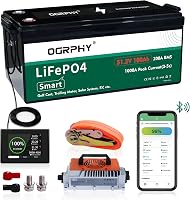
Best 12V RV House Batteries: Top 9 Picks (November 2026)
The best 12V RV house batteries include the ExpertPower EXP1270 for small RV backup loads, the Renogy 12 Volt 100Ah Deep Cycle AGM for balanced RV power, and the Interstate Batteries Marine/RV Battery 12V 70Ah 750CCA for RV and marine dual use.
On this page (13 sections)
- How we chose the best 12V RV house battery
- Best 12V RV house battery options compared
- 1. ExpertPower EXP1270: Best for small RV backup loads
- 2. Renogy 12 Volt 100Ah Deep Cycle AGM: Best for balanced RV power
- 3. Interstate Batteries Marine/RV Battery 12V 70Ah 750CCA: Best for RV and marine dual use
- 4. Daakmax 12V 35ah Deep Cycle AGM Battery: Best for paired mid-size AGM capacity
- 5. SUPER EMPOWER 12V 300Ah LiFePO4 Lithium Battery: Best for maximum single-battery capacity
- 6. yeagulch 2 Pack 12V 100Ah LiFePO4 Lithium: Best for expandable lithium banks
- 7. DC HOUSE 12V 100Ah Bluetooth LiFePO4 Trolling: Best for app-based battery monitoring
- 8. Interstate Batteries Marine/RV Battery 12V 100Ah 925CCA: Best for high-cranking AGM power
- 9. Power Queen 12V 200Ah LiFePO4 RV Lithium: Best for large RV solar banks
- How do you choose a 12V RV house battery?
- Which 12V RV house battery should you buy?
The best 12V RV house battery for most travelers is the Renogy 12 Volt 100Ah Deep Cycle AGM. It provides 100Ah capacity, sealed AGM construction and a practical fit for RV, solar and off-grid systems.
House batteries run lights and fans, charge phones and laptops, support water pumps and help some appliances through an inverter. A 100Ah bank suits many weekend trips and is easier to plan around than a small battery or a large lithium bank that may need new charging gear.
Choose lithium when lower weight, larger capacity or long-term expansion matters more than a familiar lead-acid setup. If you are upgrading, see how to convert an RV to lithium batteries.
A lighter lithium bank can leave more room in the compartment and provide more usable energy for the same amp-hour rating in many cases. Lithium is not right for every RV, however, since older charging systems may need different settings and cold weather charging limits need a clear plan.
For a small alarm, emergency light or UPS, the compact ExpertPower EXP1270 may be a better match. Its 7Ah capacity suits modest backup loads rather than a full RV appliance bank.
Fit matters as much as capacity. A battery that fits the compartment and works with your charger will serve you better than a larger battery that does not fit.
For a broader explanation of battery construction and discharge patterns, start with our guide to what is a deep cycle battery. Our best rv house battery roundup covers more battery types and RV use cases.
Our picks at a glance
-
1

-
2

-
3
 Best for RV and marine dual use
Interstate Batteries Marine/RV Battery 12V 70Ah 750CCA
9.2/10 our score
See it on Amazon
- 4
 Check it
Daakmax 12V 35ah Deep Cycle AGM Battery
Best for paired mid-size AGM capacity - 5
 Check it
SUPER EMPOWER 12V 300Ah LiFePO4 Lithium Battery
Best for maximum single-battery capacity - 6
 Check it
yeagulch 2 Pack 12V 100Ah LiFePO4 Lithium
Best for expandable lithium banks - 7
 Check it
DC HOUSE 12V 100Ah Bluetooth LiFePO4 Trolling
Best for app-based battery monitoring - 8
 Check it
Interstate Batteries Marine/RV Battery 12V 100Ah 925CCA
Best for high-cranking AGM power - 9
 Check it
Power Queen 12V 200Ah LiFePO4 RV Lithium
Best for large RV solar banks
How we chose the best 12V RV house battery
The best 12V RV house battery depends on capacity, chemistry, size, connection limits and the loads you plan to run. We compared stated specifications and features against common RV needs such as lighting, appliances, solar charging, marine use and backup power.
That approach keeps the focus on real rig use. A battery for lights and fans has different needs from one that must support a fridge or an inverter.
Our score weighs specs, features and buyer feedback against what you're shopping for. Scores also reflect how clearly each battery fits a particular use, not just its amp-hour number.
We looked at weight as well as capacity. A heavy AGM battery may be fine in a storage bay, but it can be hard to lift into a tight compartment.
Physical size played a large role in the comparison. Some batteries are short and wide, others are long and low, and that shape can decide whether installation is simple or awkward.
Connection limits also matter for buyers who plan to grow a bank. Parallel wiring adds capacity, while series wiring raises voltage, and not every product allows the same arrangements.
Chemistry guided another part of the assessment. Sealed lead acid options are familiar and maintenance free, while LiFePO4 options often bring lower weight and larger capacity.
We also paid attention to charging needs. A battery that requires a dedicated lithium charger or a specific AGM setting should be judged with that step in mind.
The products are listed from highest score to lowest score. A 300Ah lithium battery offers more stored energy than a 7Ah SLA battery, but capacity alone does not decide the best choice.
For most travelers, a balanced 100Ah option is easier to use than an extreme choice. It gives useful runtime without forcing a full system redesign in many RVs.
Where a battery is aimed at marine or cranking duties, we treated that as a separate use. House power and starting power can overlap, but they are not always the same job.
Best 12V RV house battery options compared
The Renogy AGM is the strongest all-around pick, while the ExpertPower is better for small loads and the lithium options make more sense for larger energy banks. Compare chemistry and capacity before focusing on extra features.
Start with the loads you run most often. Lights, fans and charging phones need far less energy than a fridge, microwave or coffee maker.
Then check the compartment size and the charger you already own. Those two limits can narrow the field faster than amp hours alone.
| Product | Best for | Capacity | Chemistry | Terminals | Our score |
|---|---|---|---|---|---|
| ExpertPower EXP1270 | small RV backup loads | 7Ah | Sealed lead acid | F1 | 9.6 |
| Renogy 12 Volt 100Ah Deep Cycle AGM | balanced RV power | 100Ah | 9.4 | ||
| Interstate Batteries Marine/RV Battery 12V 70Ah 750CCA | RV and marine dual use | 70Ah | 9.2 | ||
| Daakmax 12V 35ah Deep Cycle AGM Battery | paired mid-size AGM capacity | 35Ah per battery | Sealed lead acid AGM | 9.1 | |
| SUPER EMPOWER 12V 300Ah LiFePO4 Lithium Battery | maximum single-battery capacity | 300Ah | 8.7 | ||
| yeagulch 2 Pack 12V 100Ah LiFePO4 Lithium | expandable lithium banks | 100Ah each | 8.5 | ||
| DC HOUSE 12V 100Ah Bluetooth LiFePO4 Trolling | app-based battery monitoring | 100Ah | 8.3 | ||
| Interstate Batteries Marine/RV Battery 12V 100Ah 925CCA | high-cranking AGM power | 100Ah | 8.2 | ||
| Power Queen 12V 200Ah LiFePO4 RV Lithium | large RV solar banks | 200Ah | 7.9 |
1. ExpertPower EXP1270: Best for small RV backup loads
ExpertPower EXP1270: Best for small RV backup loads
- 12V 7Ah capacity
- Sealed lead acid design
- F1 terminals
- 5.94 x 2.56 x 3.70 in
This compact SLA battery fits small 12V backup jobs, including emergency lighting, alarms and UPS systems. Its 7Ah capacity is better suited to modest loads than a full RV appliance bank.
Pros
- Compact size
- Maintenance-free design
- F1 terminals
Cons
- Smallest capacity here
- Lead acid construction
The ExpertPower EXP1270 is a 12V 7Ah sealed lead acid battery for compact backup duties. Its small 5.94 x 2.56 x 3.70 in case and F1 terminals make it a straightforward replacement for compatible 12V 7Ah battery systems.
At 4.3 lb, it is easy to carry and place. That light weight suits small rigs, tight storage spaces and devices that do not need a large house bank.
This battery suits emergency lighting, alarm systems, security devices and 12V UPS equipment better than a full RV appliance bank. It also works with devices such as kids ride-on cars and deer feeders, according to its stated applications.
For an RV, think of it as a backup or auxiliary battery. It can support a small light, a control panel or a compact device, but it will not run several appliances for long.
The maintenance-free, spill-proof design reduces routine care compared with a battery that needs fluid checks. The ABS case and leak-proof construction are useful where vibration or placement around electronics is a concern.
F1 terminals keep installation simple for compatible equipment. You should still match polarity, crimp connections well and secure the battery so it cannot shift on the road.
The main trade-off is capacity. At 7Ah, it cannot compete with the 100Ah, 200Ah or 300Ah batteries here for extended RV loads.
Pick it when the device calls for a compact 12V 7Ah replacement. For a main house bank, a larger AGM or lithium battery will be a more practical starting point.
2. Renogy 12 Volt 100Ah Deep Cycle AGM: Best for balanced RV power
Renogy 12 Volt 100Ah Deep Cycle AGM: Best for balanced RV power
- 100Ah capacity
- AGM lead-acid chemistry
- Supports up to 4 batteries in parallel
- 1100A maximum discharge for 5 seconds
The 100Ah AGM format gives RV owners a practical middle ground for lighting, electronics and appliances. Its sealed construction and RV, solar and off-grid positioning make it the strongest general-purpose AGM pick.
Pros
- 100Ah capacity
- Sealed AGM construction
- Parallel expansion up to 4P
Cons
- Heavy at 63.9 lb
- Lead acid battery
The Renogy 12 Volt 100Ah Deep Cycle AGM is the best balanced choice for many RV owners. Its 100Ah capacity, sealed AGM chemistry and RV-focused design give you a practical starting point for lighting, electronics and selected appliances.
The battery measures 13.1 x 6.9 x 8.6 in and weighs 63.9 lb. That weight is a real installation consideration, so measure the battery compartment and plan how you'll lift it into place.
Renogy supports series connections without a stated limit and up to 4 batteries in parallel. Connected batteries should use the same voltage, capacity and AGM chemistry.
Renogy also recommends avoiding discharge below 50% to help reduce cycle-life shortening.
The battery is described for appliances including a fridge, microwave, CPAP machine, coffee maker and laptop. Its 1100A maximum discharge current for 5 seconds is a high short-duration figure, but your RV wiring, fuses and inverter still need to match the load.
3. Interstate Batteries Marine/RV Battery 12V 70Ah 750CCA: Best for RV and marine dual use
Interstate Batteries Marine/RV Battery 12V 70Ah 750CCA: Best for RV and marine dual use
- 70Ah capacity
- 750CCA
- Group 24M size
- Pure lead AGM construction
This Group 24M AGM battery is a fit for buyers who need one battery for RV and marine duties. Its dual-purpose design combines cranking support with deep-cycle power for accessories.
Pros
- RV and boat compatibility
- 750CCA starting rating
- Group 24M format
Cons
- 70Ah capacity
- Heavier than small SLA batteries
The Interstate Batteries Marine/RV Battery 12V 70Ah 750CCA is a Group 24M AGM battery for buyers who need both deep-cycle and cranking support. Its dual-purpose design is aimed at RV and boat use, including motor starting and accessory power.
The battery has a 70Ah capacity, a 750CCA rating and marine terminals. It measures 6.81 x 11 x 8.98 in and weighs 44.6 lb, so it is smaller and lighter than the 100Ah Group 31 AGM option in this roundup.
Interstate describes the battery as using pure lead and thick plates for repeated discharge and recharge. It is intended to power accessories such as lights, televisions, appliances and water pumps while also supporting a motor.
Choose this battery when your setup combines RV-style house loads with marine or motor-related duties. If you only need a large stationary house bank, a 100Ah or lithium battery may better match the capacity goal.
4. Daakmax 12V 35ah Deep Cycle AGM Battery: Best for paired mid-size AGM capacity
Daakmax 12V 35ah Deep Cycle AGM Battery: Best for paired mid-size AGM capacity
- 35Ah capacity per battery
- Pack of 2
- Sealed AGM design
- M6 bolts
This 2-pack gives you two 12V 35Ah AGM batteries for RV, camping, UPS or off-grid use. It suits buyers who want a matched pair and more flexibility than a single small SLA battery.
Pros
- Two-battery pack
- 35Ah capacity per battery
- M6 bolts for wiring
Cons
- No listed dimensions
- Less capacity per battery than 100Ah picks
The Daakmax battery comes as a pack of 2 12V 35Ah deep-cycle AGM batteries. That format suits buyers who want matched batteries for RV, camping, UPS, marine, medical or off-grid solar use.
Together, the pair gives you 70Ah of nominal capacity in two smaller units. That can be easier to split across tight spaces than one large battery.
Each battery provides 35Ah, while the sealed AGM design is described as maintenance-free, leak-proof and resistant to vibration. Zinc-plated M6 bolts support wiring during installation.
AGM construction means the plates are held in an absorbent glass mat. That sealed design suits RV use where movement, tilting and enclosed compartments are part of daily life.
The 2-pack gives you more planning flexibility than a single compact SLA battery. You can use the pair where your system calls for two 12V batteries, but connection method and total system voltage must follow the equipment instructions.
Match the batteries correctly before wiring them together. Same voltage, same capacity and same chemistry help the bank share work evenly over time.
This is a middle option between the 7Ah ExpertPower and the 70Ah to 100Ah batteries. Choose it when two 35Ah units fit your setup better than one larger battery.
The product data does not include case dimensions, so confirm the physical fit before ordering. Measure height, width and terminal access before you commit to this pair.
5. SUPER EMPOWER 12V 300Ah LiFePO4 Lithium Battery: Best for maximum single-battery capacity
SUPER EMPOWER 12V 300Ah LiFePO4 Lithium Battery: Best for maximum single-battery capacity
- 3840Wh capacity
- 200A BMS
- Low-temperature charging pause
- 5-year warranty
This 300Ah LiFePO4 battery is built for long RV, marine, solar and off-grid runtimes. Its high capacity and battery management system suit large 12V systems, but its cabinet size must fit your battery compartment.
Pros
- Largest capacity here
- 200A BMS
- Low-temperature charging function
Cons
- Large physical size
- Not the lightest lithium option
The SUPER EMPOWER 12V 300Ah LiFePO4 Lithium Battery offers the largest single-battery capacity in this roundup. Its stated 3840Wh capacity is designed for RVs, camper vans, boats, solar systems, off-grid setups and home backup.
That much energy is aimed at longer stays away from shore power. It suits buyers who want lights, fans, electronics and inverter loads to run with less worry about the gauge dropping fast.
The case measures 15.35 x 7.59 x 9.84 in and weighs 58.4 lb. That is lighter than the Renogy 100Ah AGM despite the much larger capacity, but the case still needs a battery compartment with enough clearance.
Measure the bay in all directions before you order. Cable bend room and terminal access matter as much as the basic footprint.
A built-in 200A battery management system monitors voltage, current and temperature. The battery also pauses charging below 32°F and stops discharge at -4°F, then resumes above the stated recovery temperatures.
Those cold weather limits are worth planning around for winter travel. If your RV sits in freezing conditions, confirm how the battery will be charged and stored.
This is a strong fit for buyers who want long runtimes from one 12V battery. It is less suitable when your RV compartment is tight or your charging system is not ready for a LiFePO4 battery.
6. yeagulch 2 Pack 12V 100Ah LiFePO4 Lithium: Best for expandable lithium banks
yeagulch 2 Pack 12V 100Ah LiFePO4 Lithium: Best for expandable lithium banks
- Two 12V 100Ah batteries
- 100A BMS
- 4S or 4P expansion
- 95% capacity utilization claim
This matched 2-pack offers a ready starting point for a larger lithium bank. The batteries support series or parallel expansion within the stated limits, making them useful for RV solar and off-grid planning.
Pros
- Two 100Ah batteries
- Series and parallel expansion
- LiFePO4 chemistry
Cons
- Connection limits need careful planning
- Not recommended for trolling motors above 700W
The yeagulch 2 Pack 12V 100Ah LiFePO4 Lithium battery set gives you two 100Ah lithium batteries for RV, solar, marine, UPS, lighting and off-grid use. Each battery weighs 21.60 lb, making the pair easier to handle than many lead-acid alternatives.
The batteries support up to 4 units in series for a 48V system or up to 4 in parallel for more capacity. The stated limits require careful planning, and the batteries should be matched correctly before you build a larger bank.
The 100A BMS and flat discharge profile are aimed at steady lithium performance. The battery information also claims up to 95% capacity utilization compared with 50% for lead acid, but your real usable capacity will still depend on charging, loads and system settings.
Do not choose this set for a trolling motor above 700W. For an expandable RV solar bank, however, the matched 2-pack gives you more flexibility than one standalone 100Ah battery.
7. DC HOUSE 12V 100Ah Bluetooth LiFePO4 Trolling: Best for app-based battery monitoring
DC HOUSE 12V 100Ah Bluetooth LiFePO4 Trolling: Best for app-based battery monitoring
- Bluetooth 5.1 monitoring
- 100Ah capacity
- Low-temperature cutoff
- Up to 4S or 4P expansion
Bluetooth monitoring gives you access to state of charge, voltage and current through the DC HOUSE app. This battery fits RV, solar, marine and trolling-motor setups, but it is not designed as a starting battery.
Pros
- Bluetooth monitoring
- Low-temperature protection
- 23.8 lb weight
Cons
- Requires a dedicated lithium charger
- Not for starting or cranking
The DC HOUSE 12V 100Ah Bluetooth LiFePO4 Trolling Motor Lithium Battery is the best pick here for app-based monitoring. Bluetooth 5.1 connects with the DC HOUSE app to show state of charge, voltage, current and cell-level battery information.
That visibility helps on the road and on the water. You can check the battery from a short distance instead of opening every compartment to guess at its charge.
The battery measures 6.6 x 10.2 x 9.2 in and weighs 23.8 lb. It is close to BCI Group 24 size but about 0.32 in taller than the standard Group 24 specification, so measure the compartment carefully.
The extra height is easy to miss during a quick swap. Confirm lid clearance, hold down space and cable routing before installation.
Low-temperature protection stops charging below 19.4°F and stops discharge below -4°F. The system automatically recovers after the temperature rises to 32°F.
That protection suits use in cold weather, but it also means the battery may sit idle until it warms up. Plan charging stops with that limit in mind.
The battery supports up to 4 in series or 4 in parallel, with a maximum of 8 batteries total. It requires a dedicated lithium battery charger and is not designed for starting or cranking, so use it for house loads and the stated RV, solar or trolling-motor applications.
8. Interstate Batteries Marine/RV Battery 12V 100Ah 925CCA: Best for high-cranking AGM power
Interstate Batteries Marine/RV Battery 12V 100Ah 925CCA: Best for high-cranking AGM power
- 100Ah capacity
- 925CCA and 1110CA
- Group 31 AGM format
- Pure lead construction
This Group 31 AGM battery combines 100Ah deep-cycle capacity with high cranking figures. Choose it when marine-style terminals and starting support matter alongside RV accessory power.
Pros
- 100Ah capacity
- 925CCA
- Group 31 format
Cons
- 60 lb weight
- Not intended for automotive or mobility devices
The Interstate Batteries Marine/RV Battery 12V 100Ah 925CCA is a Group 31 AGM battery for buyers who want deep-cycle capacity with high cranking figures. It provides 100Ah, 925CCA and 1110CA in a marine-terminal format.
That mix of ratings suits a dual-purpose role. It can support house loads while also providing strong starting power for a motor.
The battery uses pure lead AGM construction and weighs 60 lb. Its stated applications include boat accessories, appliances, trolling motors, audio systems, depth finders, fish locators and windlasses.
At 60 lb, this is a two-person lift in many setups. Plan the route into the compartment and check that the tray and hold downs can handle the weight.
Thick plates are intended to support repeated discharge and recharge. Interstate positions this battery for marine dual-purpose use, but the product data specifically says it is not for automotive or mobility devices.
Marine terminals are a practical detail for boat and RV work. They help with the wiring styles used around motors, switches and accessories.
Choose it when starting support and marine-style terminals are important. For a typical RV house bank with no cranking role, the Renogy AGM or a lithium battery may be easier to match to your goals.
9. Power Queen 12V 200Ah LiFePO4 RV Lithium: Best for large RV solar banks
Power Queen 12V 200Ah LiFePO4 RV Lithium: Best for large RV solar banks
- 2560Wh capacity
- 200Ah capacity
- IP65 dust and water resistance
- Up to 16-battery expansion
This 200Ah LiFePO4 battery gives RV owners a large energy reserve in a 43 lb package. Its expansion options suit solar banks, but the 21 in length demands careful compartment measurement.
Pros
- 200Ah capacity
- 43 lb weight
- IP65 protection
Cons
- Long 21 in case
- Large system planning required
The Power Queen 12V 200Ah LiFePO4 RV Lithium Battery is a large-capacity choice for RV trailers, camper vans and off-grid systems. It provides 200Ah and 2560Wh in a 43 lb case.
That capacity suits longer off-grid stays and larger daily loads. It gives more headroom for lights, fans, electronics and inverter use than a 100Ah battery.
The battery measures 8.2 x 21 x 8.5 in, so its 21 in length is the key fit check. It includes insulating caps for bolts, M8 terminal bolts and a product manual.
A long case can work well under a bench or along a wall. It can also be a poor match for a square compartment designed for a Group battery.
Power Queen describes the battery with automotive-grade LiFePO4 cells, IP65 dust and water resistance, salt-spray protection and more than 20 BMS protections. It can be expanded to up to 16 batteries for a larger system, including a 48V 800Ah arrangement.
Expansion is useful for solar banks that need to grow over time. Still, plan the wiring, fusing and charger settings before you add more batteries.
This battery suits an RV owner planning a substantial solar bank. It is a poor fit for a short compartment, so measure the available length before you decide that the 200Ah capacity is worth the installation space.
How do you choose a 12V RV house battery?
Choose capacity first, then confirm chemistry, dimensions, terminals and charging equipment. A battery that fits your energy target but cannot fit the compartment or work with the charger is not a practical RV house battery.
How much capacity do your RV loads need?
List the devices you use away from shore power, including lights, fans, phones, laptops, refrigerators, pumps and inverter-powered appliances. Short trips with light loads may work with 70Ah or 100Ah, while longer off-grid stays can justify 200Ah or 300Ah.
A 7Ah battery is usually a small backup choice rather than a full house bank. The ExpertPower EXP1270 is better for alarms, emergency lighting and UPS equipment than for running several RV appliances.
Should you choose AGM, SLA or LiFePO4?
AGM and SLA are sealed lead-acid options with familiar 12V use. AGM batteries in this roundup include 35Ah, 70Ah and 100Ah options, while the ExpertPower SLA is a compact 7Ah battery.
LiFePO4 batteries offer larger capacities in several of the products here, including 100Ah, 200Ah and 300Ah choices. They may also weigh less than comparable lead-acid capacity, but they need compatible charging equipment and careful low-temperature planning.
Our guide to best 12v lithium battery for rv compares lithium-focused RV choices. If you're deciding between bank layouts, read 6 volt vs 12 volt batteries for rv before wiring a system.
How does solar charging change the choice?
Solar charging works best when the battery, charge controller and wiring are set for the same chemistry. Renogy recommends SLD battery settings for its AGM battery, while the DC HOUSE battery requires a dedicated lithium charger.
Your panel size, sunlight, daily loads and battery capacity all affect recharge time. A larger battery can store more energy, but it also needs enough charging input to recover after use.
See our guide to best rv batteries for solar for a solar-focused comparison. A battery bank is only one part of the system, so also consider whether a solar generator can power a house or what it takes to power a whole house with a solar generator.
What should you check before installation?
Measure the compartment, including height, width and cable clearance. Confirm the terminal type, polarity, mounting position and connection hardware before lifting the battery into place.
Use the correct charger and follow the battery instructions for series or parallel connections. Never mix batteries with different voltages, capacities or chemistries in the same bank unless the equipment maker specifically supports that arrangement.
For batteries that sit unused between trips, use an appropriate maintenance plan for the chemistry. A 12V automotive battery maintainer is not automatically suitable for every RV house battery, so match the charger to the battery type.
Which 12V RV house battery should you buy?
The best 12V RV house battery depends on the job. Pick the ExpertPower EXP1270 for small 12V backup loads, the Renogy 100Ah AGM for balanced RV use, and the SUPER EMPOWER 300Ah LiFePO4 for the largest single-battery capacity.
Those three choices cover the main paths in this roundup. Small backup power, balanced house power and maximum single-battery energy each point to a different product.
Choose the Power Queen 200Ah for a large RV solar bank, the DC HOUSE 100Ah when Bluetooth monitoring matters, or the Interstate AGM batteries when marine use and cranking support are part of the plan. For a matched lithium pair, the yeagulch 2 Pack gives you a clear expansion path.
The Daakmax 2-pack also deserves a look when two 35Ah AGM batteries fit your space better than one large unit. Its sealed design suits camping, UPS and off-grid solar setups.
Before you buy, measure the compartment and check the charger settings. A battery that fits and charges correctly will give you a smoother setup than a larger battery that fights the rest of the system.
Think about travel style as well as specs. Short trips with light loads need less capacity than long off-grid stays with appliances and solar charging.
If you plan to expand later, choose a chemistry and connection plan that supports growth. That step is easier to handle at purchase than after the bank is installed.
For most RV owners, the Renogy 100Ah AGM remains the simplest starting point. It balances capacity, sealed construction and familiar 12V use without asking you to rebuild the whole system.
Our top 3 picks at a glance
-
1
-
2
-
3
Best for RV and marine dual use
Interstate Batteries Marine/RV Battery 12V 70Ah 750CCA
9.2/10 our score
See it on Amazon
Frequently asked questions
What is the best 12V RV house battery chemistry?
AGM is a practical choice when you want sealed lead-acid construction and a familiar 12V setup. LiFePO4 is often better for buyers who want lower weight, larger usable capacity and expansion options.
SLA works best for small loads such as alarms, emergency lighting and compact UPS systems.
How many amp hours does an RV house battery need?
The right capacity depends on your daily loads and how often you can recharge. A 7Ah SLA battery suits small backup devices, while 70Ah to 100Ah batteries fit more general RV duties.
Choose 200Ah or 300Ah when you need longer runtimes between charging opportunities.
Can you use a lithium battery as an RV house battery?
Yes, a LiFePO4 battery can serve as an RV house battery when its voltage, charger settings, wiring and compartment size match the RV system. Some products require a dedicated lithium charger.
Check the battery instructions and confirm the RV charging equipment before installation.
Should RV house batteries be connected in parallel?
Parallel connections increase total capacity while keeping the system voltage the same, but the batteries should match in voltage, capacity and chemistry. Renogy supports up to 4 batteries in parallel, while other products have different limits.
Follow the battery instructions and use suitable wiring.
Can a 12V RV battery power appliances?
Yes, a 12V house battery can supply RV lighting, electronics and appliances when the system has enough capacity and the required inverter or direct-current connection. The Renogy 100Ah AGM is described for appliances such as a fridge, microwave, CPAP machine, coffee maker and laptop.