9 Best Marine Deep-Cycle Batteries (November 2026)
The best marine deep-cycle batteries include the Interstate Batteries 12V 35Ah SLA AGM Deep for compact auxiliary loads, the SUPER EMPOWER 12V 100Ah LiFePO4 Battery for Group 24 lithium storage, and the Newport 12V 50Ah Deep Cycle AGM Marine for small boats and trolling motors.
On this page (6 sections)
The best marine deep-cycle battery depends on the load and charging system: choose a 100Ah model for larger auxiliary needs, or a smaller 20Ah to 50Ah option for modest electronics. Among these picks, SUPER EMPOWER’s Group 24 lithium battery combines 100Ah capacity with a built-in 100A BMS.
A deep-cycle battery supplies sustained power to electronics and other onboard loads. If you plan to run an inverter, compare deep-cycle batteries for inverters.
It is separate from the engine-starting decision: some batteries here are designed for storage only, so check intended use before wiring your boat.
If you need a refresher on what a deep-cycle battery is, start there. Our guide to what a marine deep-cycle battery is explains how boat use affects the choice.
Our picks at a glance
-
1
 Best for compact auxiliary loads
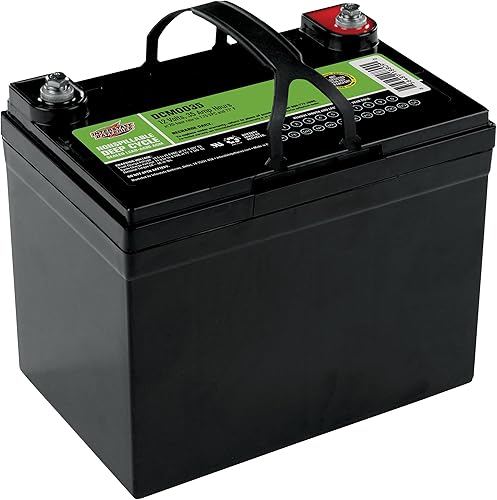
Interstate Batteries 12V 35Ah SLA AGM Deep
9.7/10 our score
See it on Amazon -
2
 Best for Group 24 lithium storage
SUPER EMPOWER 12V 100Ah LiFePO4 Battery
9.5/10 our score
See it on Amazon -
3
 Best for small boats and trolling motors
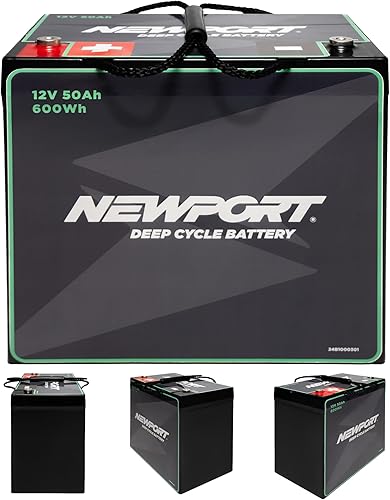
Newport 12V 50Ah Deep Cycle AGM Marine
9.4/10 our score
See it on Amazon
- 4
 Check it
Renogy 12 Volt 100Ah Deep Cycle AGM
Best for 100Ah AGM capacity - 5
 Best for a smaller AGM batteryCheck it
- 6
 Check it
ABKpower 12V 20Ah LiFePO4 Battery
Best for a compact lithium setup - 7
 Check it
SUPER EMPOWER 12.8V 100Ah LiFePO4 Battery
Best for Group 31 lithium storage - 8
 Check it
Mighty Max Battery 12V 100AH Battery
Best for sealed 100Ah storage - 9
 Check it
BUKNUWO 12.8V 100Ah LiFePO4 Battery With Low
Best for Bluetooth battery monitoring
How we chose a marine deep-cycle battery
We compared stated capacity, chemistry, marine use, terminals, size and charging notes against the needs of onboard electronics and auxiliary loads. Our score weighs specs, features and buyer feedback against what you're shopping for.
Marine fit is not just a capacity question. Check battery-box dimensions, terminal style, wiring, charger compatibility and whether the battery is meant for storage or engine starting.
Marine deep-cycle battery comparison
The table highlights the details that most affect fit and day-to-day use. Confirm the chosen battery's manual and your boat's electrical requirements before installation.
| Product | Best for | Capacity | Chemistry | Terminals | Our score |
|---|---|---|---|---|---|
| Interstate Batteries 12V 35Ah SLA AGM Deep | compact auxiliary loads | 35Ah | AGM sealed lead-acid | Insert terminal | 9.7 |
| SUPER EMPOWER 12V 100Ah LiFePO4 Battery | Group 24 lithium storage | 100Ah | LiFePO4 | 9.5 | |
| Newport 12V 50Ah Deep Cycle AGM Marine | small boats and trolling motors | 50Ah | AGM lead-acid | Marine terminal | 9.4 |
| Renogy 12 Volt 100Ah Deep Cycle AGM | 100Ah AGM capacity | 100Ah | AGM lead-acid | 9.4 | |
| VEVOR Deep Cycle Battery | a smaller AGM battery | 40Ah | AGM lead-acid | 9.3 | |
| ABKpower 12V 20Ah LiFePO4 Battery | a compact lithium setup | 20Ah | LiFePO4 | 9.2 | |
| SUPER EMPOWER 12.8V 100Ah LiFePO4 Battery | Group 31 lithium storage | 100Ah | LiFePO4 | 9.1 | |
| Mighty Max Battery 12V 100AH Battery | sealed 100Ah storage | 100Ah | SLA/AGM | 9.0 | |
| BUKNUWO 12.8V 100Ah LiFePO4 Battery With Low | Bluetooth battery monitoring | 100Ah | LiFePO4 | 8.1 |
The best marine deep-cycle batteries for different boats
These marine deep-cycle batteries range from compact 20Ah and 35Ah choices to 100Ah AGM and lithium options. Match the battery to your load, available space and charging setup.
Interstate Batteries 12V 35Ah SLA AGM Deep: Best for compact auxiliary loads
- 12V, 35Ah
- AGM sealed lead-acid
- Insert terminals with bolt
- Maintenance-free and spill-proof
A compact 35Ah option for modest auxiliary loads. Its insert terminals and mobility-battery focus make fit and wiring checks essential for a boat.
Pros
- 12V, 35Ah capacity
- Sealed, maintenance-free construction
- Terminal hardware included
Cons
- Smallest capacity in this group
- Not a replacement for golf cart batteries
Interstate's 12V 35Ah AGM battery is the highest-scoring pick for compact auxiliary loads. It has a sealed, maintenance-free design and insert terminals with bolts.
Its 35Ah capacity fits a narrower job than the 100Ah batteries below. Consider it for modest electronics or other compatible low-demand equipment, and check the battery tray and cable lugs before buying.
Interstate describes the DCM0035 for deep-discharge mobility use, and its compatibility details include trolling motors. It is not a golf cart battery replacement, so don't assume that every similar battery application is suitable.
Choose this battery when the load is modest and its insert-terminal format fits your wiring. For a larger marine battery with specific trolling-motor positioning, compare Newport's 50Ah AGM option.
SUPER EMPOWER 12V 100Ah LiFePO4 Battery: Best for Group 24 lithium storage
- 12.8V, 100Ah
- Built-in 100A BMS
- Group 24 size with M8 terminals
- Charging disabled below 32°F
A 100Ah lithium battery in Group 24 dimensions, intended for marine and other energy-storage use. It is not designed for engine starting.
Pros
- 100Ah capacity
- Built-in 100A BMS
- Supports up to 4 in series and 4 in parallel
Cons
- Requires a compatible lithium charging setup
- Charging pauses below 32°F
The SUPER EMPOWER 12V 100Ah LiFePO4 battery is the top choice here for a Group 24 lithium setup. It measures 6.49 x 10.24 x 8.98 in, has M8 terminals and weighs 21.6 lb.
Its built-in 100A BMS helps manage charging, discharge, current and temperature conditions. The battery supports up to 4 in series and 4 in parallel, but confirm that the planned system and charger follow the manufacturer's requirements.
This battery is meant for energy storage, not engine starting. For compatible charging options, see solar chargers for deep-cycle batteries.
Charging is disabled below 32°F, and SUPER EMPOWER recommends a 12V LiFePO4 charger or a solar controller set to lithium mode.
Pick it for a 100Ah auxiliary bank where the Group 24 dimensions work. For a larger Group 31 footprint, compare the other SUPER EMPOWER lithium model later in this guide.
Newport 12V 50Ah Deep Cycle AGM Marine: Best for small boats and trolling motors
- 12V, 50Ah
- Sealed AGM construction
- Marine terminals
- Designed for Newport trolling motors
This marine-focused 50Ah AGM battery is sized for smaller boats, kayaks and compatible 12V electronics. Newport also describes it for its trolling motors.
Pros
- Marine-specific deep-cycle use
- Sealed AGM construction
- Marine terminals
Cons
- 50Ah capacity is below the 100Ah options
- Confirm dimensions and battery-box fit before buying
Newport's 12V 50Ah AGM battery is the most directly marine-focused compact choice in this group. It has marine terminals and is described for trolling motors and compatible 12V boating electronics.
At 50Ah, it offers less stated capacity than the 100Ah options, which can make it more suitable for a smaller boat or a shorter electronics duty cycle. Newport also names kayaks, inflatable boats and jon boats as use cases.
The sealed AGM construction is presented as low-maintenance. Check dimensions and tray fit before you choose it, since the data here does not give measurements.
Choose Newport if its 50Ah capacity suits your planned load and you value a marine-terminal setup. For an AGM battery with 100Ah capacity, consider Renogy or Mighty Max.
Renogy 12 Volt 100Ah Deep Cycle AGM: Best for 100Ah AGM capacity
- 12V, 100Ah
- AGM lead-acid
- Up to 4 batteries in parallel
- 2-year prorated warranty
A 100Ah AGM option for marine, solar and off-grid applications. Renogy recommends keeping discharge above 50% to avoid shortening cycle life.
Pros
- 100Ah capacity
- Sealed AGM design
- Supports up to 4 batteries in parallel
Cons
- Weighs 63.9 lb in the supplied specifications
- Avoid discharging below 50%
Renogy's 12V 100Ah AGM battery suits buyers who want 100Ah capacity without switching to lithium. Its dimensions are 13.1 x 6.9 x 8.6 in, and Renogy supports up to 4 batteries in parallel.
Renogy recommends not discharging below 50% to avoid shortening cycle life. That guidance matters when estimating how much of the stated capacity you can plan to use for onboard electronics.
The battery is described for marine, RV, solar and off-grid use. Its listed weight is 63.9 lb, so plan for a secure battery location and safe handling.
Choose this model if AGM chemistry and 100Ah capacity fit your boat's system. If you want to compare AGM options with more marine-specific picks, see the best AGM marine deep-cycle batteries.
VEVOR Deep Cycle Battery: Best for a smaller AGM battery
- 12V, 40Ah
- AGM construction
- 400A maximum discharge for 5 seconds
- 7.8 x 6.5 x 6.7 in
A 40Ah AGM battery for light-duty loads and compact installations. Its stated applications center on mobility devices, so confirm marine fit and charging needs.
Pros
- Compact dimensions
- Maintenance-free AGM construction
- Rechargeable 12V battery
Cons
- 40Ah capacity limits longer or heavier loads
- Marine use is not the main stated application
VEVOR offers a 12V 40Ah AGM battery in a compact 7.8 x 6.5 x 6.7 in case. Its stated applications focus on mobility devices, though the product information also describes marine power use.
The 40Ah capacity places it between the 35Ah Interstate and 50Ah Newport. VEVOR specifies a maximum discharge current of 400A for 5 seconds, a detail to consider alongside the continuous needs of your equipment.
The battery uses AGM construction and does not require maintenance. VEVOR says professional charging equipment is required, so check the charger requirements before using it aboard.
Choose it when the compact size and 40Ah capacity fit your installation. For a battery marketed more directly for boats and trolling motors, compare Newport.
ABKpower 12V 20Ah LiFePO4 Battery: Best for a compact lithium setup
- 12.8V, 20Ah
- Built-in 20A BMS
- M5 bolt terminals
- Supports up to 4 batteries in parallel
A small, 5 lb lithium battery for low-demand storage, such as a fish finder or lighting. Its 20Ah capacity is a poor match for long-running, high-draw loads.
Pros
- Light weight
- Built-in 20A BMS
- Supports up to 4 batteries in parallel
Cons
- Limited 20Ah capacity
- Not intended for starting batteries
The ABKpower 12V 20Ah LiFePO4 battery is the lightest compact option here at 5 lb. A built-in 20A BMS provides protection against overcharge, over-discharge, short circuit and overheating.
Its 20Ah capacity is better suited to smaller loads such as a fish finder or lighting than to running a large trolling motor for an extended period. The battery has M5 bolt terminals and supports up to 4 in parallel.
ABKpower says the battery is for deep-cycle energy storage, not starting batteries. Its compact size may help where a larger battery won't fit, but check cable ends and mounting space before ordering.
Pick it for a small lithium auxiliary setup with compatible charging. For substantially more stored capacity, compare the 100Ah lithium batteries in this roundup.
SUPER EMPOWER 12.8V 100Ah LiFePO4 Battery: Best for Group 31 lithium storage
- 12.8V, 100Ah
- Group 31 size with M8 terminals
- Built-in 100A BMS
- Charging disabled below 32°F
This 100Ah lithium battery uses a Group 31 footprint and M8 terminals. It is intended for energy storage, not engine starting.
Pros
- 100Ah capacity
- Built-in 100A BMS
- Group 31 dimensions
Cons
- Requires a compatible lithium charging setup
- Charging pauses below 32°F
This SUPER EMPOWER 12.8V 100Ah battery uses a Group 31 footprint with M8 terminals. It weighs 20.94 lb and includes a built-in 100A BMS.
Like the Group 24 version, it is designed for energy storage rather than engine cranking. Charging is disabled below 32°F, and the brand recommends a lithium charger or a solar controller set to lithium mode.
The larger Group 31 dimensions are 6.77 x 13.18 x 9.05 in. Measure your available space and check the battery box before deciding between this and the Group 24 model.
Choose it when you need 100Ah lithium capacity and the Group 31 size fits. See our guide to the best 12V lithium marine deep-cycle batteries for more lithium-specific options.
Mighty Max Battery 12V 100AH Battery: Best for sealed 100Ah storage
- 12V, 100Ah
- Group 27 sealed lead-acid AGM
- Maintenance-free
- Mountable in any position
A sealed Group 27 100Ah battery with AGM construction. Check its dimensions and terminal setup against your boat before choosing it for auxiliary power.
Pros
- 100Ah capacity
- Sealed, rechargeable construction
- Can be mounted in any position
Cons
- Battery and screws only
- Confirm marine fit and charging compatibility
Mighty Max pairs 100Ah capacity with a Group 27 sealed lead-acid AGM design. The case measures 12.09 x 6.65 x 8.48 in, and the battery can be mounted in any position.
The package includes the battery and screws, but no wire harness or mounting accessories. Check what your installation requires, including terminal connections and secure mounting.
Its 28 lb stated weight is lower than Renogy's listed weight, though the models have different stated dimensions and details. Confirm the fit, charger compatibility and intended use for your boat.
Choose Mighty Max if the Group 27 size and AGM setup suit your auxiliary system. For more 12V marine choices across battery types, see the best 12V marine deep-cycle batteries.
BUKNUWO 12.8V 100Ah LiFePO4 Battery With Low: Best for Bluetooth battery monitoring
- 12.8V, 100Ah
- Bluetooth monitoring app
- Built-in 100A BMS
- Supports up to 4 in series and 4 in parallel
Bluetooth monitoring can show battery state, voltage, current and temperature through a phone app. Check the case protection and charging limits for your installation.
Pros
- 100Ah capacity
- Phone-based monitoring
- Built-in 100A BMS
Cons
- Confirm charging compatibility for your setup
- Bluetooth range is stated as 33 ft
BUKNUWO's 12.8V 100Ah LiFePO4 battery stands out for Bluetooth monitoring. Its app can show state of charge, voltage, current, power, temperature and protection status within a stated 33 ft range.
The battery has a built-in 100A BMS and supports up to 4 in series and 4 in parallel. BUKNUWO describes temperature cutoffs for charging and discharging, so check those limits against the conditions where you plan to use it.
At 22 lb, it is much lighter than the lead-acid 100Ah models in this roundup. The brand describes an ABS case as dustproof, weather-resistant and lightly waterproof, so confirm whether its protection is adequate for your installation.
Choose it if phone-based monitoring is useful and the charging setup matches. Compare its fit and temperature requirements with the other lithium options before building a battery bank.
What should you check before choosing a marine deep-cycle battery?
Start with the boat's load, then confirm battery size, chemistry, terminals and charging compatibility. A battery that fits one part of the system can still be a poor choice if its current limits or intended role don't match.
How much capacity do onboard electronics need?
Estimate the total load and how many hours you want to run it. A 100Ah battery provides more stated capacity than the 20Ah to 50Ah models here, but usable energy depends on battery chemistry and discharge guidance.
For AGM, Renogy recommends stopping above 50% discharge to avoid shortening cycle life. For each battery, follow its specific instructions rather than treating the amp-hour figure as fully usable.
Which chemistry fits your boat?
AGM can suit a buyer who wants sealed lead-acid construction and does not want to manage liquid electrolyte. LiFePO4 options here weigh less at 100Ah, but require compatible charging and have temperature-related charging limits.
Don't mix battery types in one bank unless the manufacturers and your system design explicitly allow it. Also verify that a lithium battery's BMS current limits align with the connected equipment.
Do terminals and dimensions match?
Measure the battery tray or box, including room for cables and safe access. Compare terminal type too: the choices here include marine terminals, M8 posts, M5 bolts and insert terminals.
Check cable lug fit and polarity before installation. A battery with the right voltage and capacity can still require a different cable end or mounting plan.
Can a marine deep-cycle battery power an RV too?
Some batteries in this guide are also described for RV energy storage, but using one between a boat and RV still depends on the system. Confirm the charger, wiring, battery chemistry and load requirements in each vehicle.
If you're planning an RV setup, read how to power an RV with a portable power station and how to use a portable power station in an RV. Those guides cover a different power approach, but can help you compare system needs.
Which marine deep-cycle battery should you choose?
Choose the SUPER EMPOWER Group 24 if you want 100Ah lithium capacity in a compact footprint and can use a compatible lithium charger. Pick Newport if you want a marine-focused 50Ah AGM battery, or Renogy if 100Ah AGM capacity fits your boat.
For a small electronics load, consider ABKpower's 20Ah lithium battery or Interstate's 35Ah AGM option. Before buying, match the battery's intended use, terminals, physical size, discharge guidance and charging limits to your onboard system.
Our top 3 picks at a glance
-
1
Best for compact auxiliary loads
Interstate Batteries 12V 35Ah SLA AGM Deep
9.7/10 our score
See it on Amazon -
2
Best for Group 24 lithium storage
SUPER EMPOWER 12V 100Ah LiFePO4 Battery
9.5/10 our score
See it on Amazon -
3
Best for small boats and trolling motors
Newport 12V 50Ah Deep Cycle AGM Marine
9.4/10 our score
See it on Amazon
Frequently asked questions
What size marine deep-cycle battery do I need?
Choose capacity from the loads you plan to run and how long you need them powered. A 20Ah or 35Ah battery suits modest loads, while 100Ah options provide more stored capacity.
Check each device's draw, planned run time, battery chemistry and usable discharge guidance before sizing.
Can a marine deep-cycle battery start an engine?
Not every deep-cycle battery is designed for engine starting. The SUPER EMPOWER lithium options here are explicitly intended for energy storage and are not suitable for cranking.
Use a battery rated for your engine's starting needs, and keep auxiliary loads on a battery designed for that role.
Is AGM or lithium better for a marine deep-cycle battery?
AGM can suit buyers who want sealed lead-acid construction, while LiFePO4 can offer a lighter battery for the same stated capacity. Charging requirements differ, so check charger compatibility and the battery's temperature limits.
Compare size, weight, capacity and your boat's charging system together.
Can I use a marine deep-cycle battery for a trolling motor?
Yes, if its voltage, capacity, terminals and current limits match the trolling motor. Newport describes its 12V 50Ah AGM battery for Newport trolling motors, and other models also name trolling motors among their uses.
Follow the motor and battery instructions for wiring and charging.
Can I charge a lithium marine battery with an AGM charger?
Use a charger suited to the specific lithium battery. SUPER EMPOWER recommends a 12V LiFePO4 charger or a solar controller set to lithium mode, and says non-lithium chargers are not recommended.
Check your battery and charger manuals before connecting them.