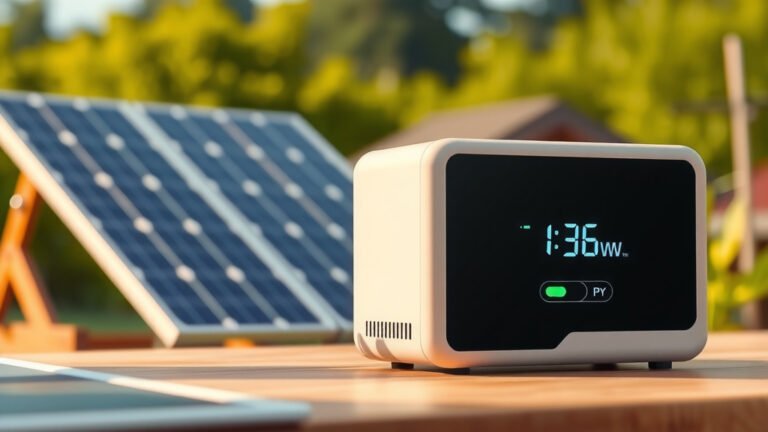
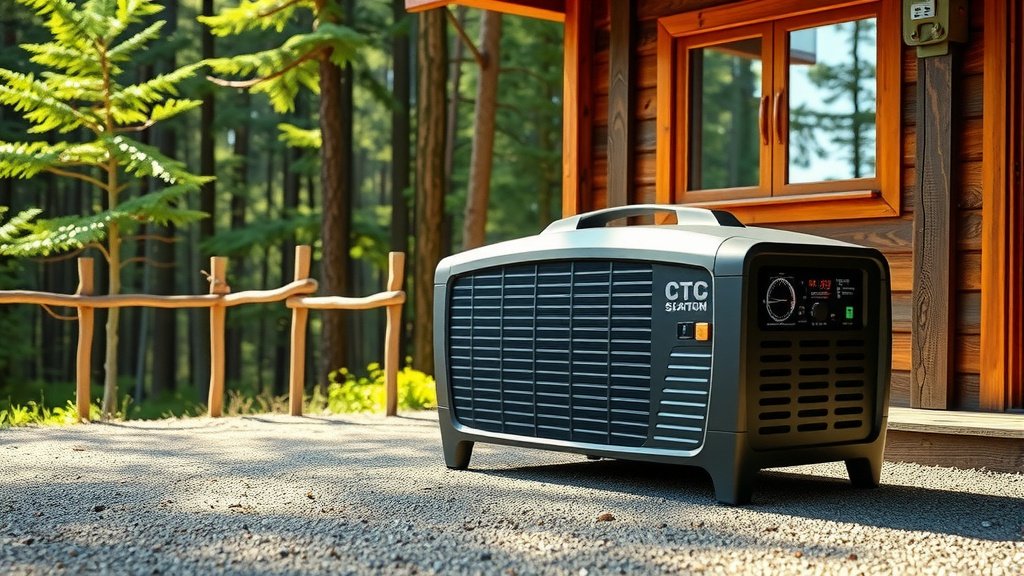
Choosing the best solar generator for an off-grid cabin means prioritizing high capacity, a powerful inverter, and a durable LiFePO4 battery.
For your off-grid cabin, the ideal solar generator offers ample power storage and output to run your essential appliances reliably and efficiently.
TL;DR: Picking the right solar generator for your off-grid cabin means looking at a few key things:
- Aim for a high battery capacity (2000Wh+) to cover your daily energy use.
- Ensure the inverter can handle all your appliances’ wattage, including surge power.
- Always choose a generator with a LiFePO4 battery type for long life and safety.
- Consider expandability if you think your power needs might grow in the future.
- Match your solar panel input to your generator for efficient recharging.
What Solar Generator Is Best For Off-Grid Cabin?
The best solar generator for an off-grid cabin is one that reliably meets your daily power needs, features a long-lasting battery, and can handle your essential appliances.
It’s all about balancing capacity, inverter power, and battery chemistry to ensure consistent electricity away from the grid.
Why a Solar Generator for Your Cabin?
Living off-grid provides amazing freedom, doesn’t it? A solar generator gives you reliable power without the noise or fumes of traditional gas generators.
You get clean, quiet electricity, letting you enjoy nature without interruption. It’s a smart step towards true energy independence.
Understanding Your Cabin’s Power Needs
Before you pick any solar generator, you need to know your cabin’s power appetite. What do you plan to run?
Take a few moments to list all your appliances. Think about their wattage and how long you use them each day. This “power audit” is very important.
Essential vs. Comfort Appliances
Are you just powering lights and a small fridge? Or do you dream of a microwave, a coffee maker, and maybe even a hairdryer?
Your needs will change the size of the solar generator you require. Prioritize what’s truly essential first, then add comfort items.
Key Factors When Choosing Your Off-Grid Solar Generator
Picking the right solar generator isn’t a guessing game. There are a few core features you’ll want to carefully examine.
Let’s walk through what makes a solar generator suitable for your cabin. We want you to feel confident in your choice.
Battery Capacity (Watt-hours – Wh)
Think of watt-hours (Wh) as the fuel tank size for your generator. This number tells you how much energy it can store.
An off-grid cabin often needs at least 2000Wh of capacity, but 3000Wh to 5000Wh is better for extended use and more appliances (Consumer Reports).
Calculate your total daily Wh usage. Your generator should exceed this to give you a buffer for cloudy days.
Inverter Output (Watts – W)
The inverter converts the battery’s DC power into the AC power your appliances use. Look for two numbers: continuous watts and surge watts.
Continuous watts tell you what it can run steadily. Surge watts show what it can handle for a few seconds, like when a fridge motor starts.
Your inverter’s continuous output needs to be higher than the highest wattage appliance you run. Many experts suggest an inverter of 2000W or more for a cabin.
Battery Type: LiFePO4 is King
You’ll mainly find two battery types: Lithium-ion (NMC) and Lithium Iron Phosphate (LiFePO4). For a cabin, LiFePO4 is the superior choice.
LiFePO4 batteries offer a much longer lifespan, often 3,500+ charge cycles compared to 500-1000 for NMC (Battery University).
They are also more stable and safer, especially in varying temperatures, which is great for cabin environments.
Expandability and Modularity
Will your power needs grow over time? Some solar generators let you connect extra battery packs or more solar panels.
This expandability means you can start smaller and upgrade later. It adds great flexibility to your off-grid setup.
Charging Speed and Methods
How quickly can you recharge your solar generator? This depends on the solar input capacity and other charging options.
High solar input (e.g., 1000W+) means faster recharging from your panels. Many units also allow AC wall charging or car charging.
The Solar Panel Connection
A solar generator is only as good as its ability to recharge. That’s where your solar panels come in.
Ensure your generator has a strong MPPT (Maximum Power Point Tracking) charge controller. This makes sure your panels charge the battery as efficiently as possible (EnergySage).
Panel Wattage and Efficiency
The total wattage of your solar panels should ideally be enough to recharge your generator within a day, even on partially sunny days.
We found that a good rule of thumb is to have solar panel input equal to at least 1/3 to 1/2 of your battery capacity (in Wh converted to W) for a quick recharge.
Safety Features You Can’t Ignore
A quality solar generator will have built-in safety mechanisms. These protect both the unit and you.
Look for features like over-charge protection, over-discharge protection, short-circuit protection, and temperature control. These are vital for safe operation.
Cost vs. Value for Your Cabin
Solar generators are an investment. While you might be tempted by cheaper options, remember the long-term value.
A more expensive unit with a LiFePO4 battery and higher capacity will likely last longer and perform better, saving you money in the long run.
| Feature | Small Cabin (Minimalist) | Medium Cabin (Comfort) | Large Cabin (Homestead) |
|---|---|---|---|
| Battery Capacity | 1000-2000 Wh | 2000-4000 Wh | 4000 Wh+ |
| Inverter Output | 1000-1500 W | 1500-2500 W | 2500 W+ |
| Battery Type | LiFePO4 (preferred) | LiFePO4 | LiFePO4 |
| Expandability | Nice to have | Recommended | Highly recommended |
| Solar Input | 200-500 W | 500-1000 W | 1000 W+ |
Before You Buy Your Cabin’s Solar Generator
Here’s a quick checklist to help you make your final decision:
- Calculate your total daily energy consumption in Wh.
- List all peak appliance wattages.
- Confirm the battery type is LiFePO4.
- Check for good expansion options.
- Verify the number and type of output ports.
Conclusion
Choosing the best solar generator for your off-grid cabin truly depends on your specific power needs and lifestyle. It’s not a one-size-fits-all answer.
By focusing on high battery capacity, a robust inverter, and the reliable LiFePO4 battery chemistry, you’ll be well on your way.
Take your time, do your power audit, and select a unit that will provide you with dependable, clean energy for years to come. Your cabin deserves the best.
What is the typical lifespan of a solar generator battery for off-grid use?
For off-grid use, a solar generator with a LiFePO4 battery typically lasts for 3,500 to 6,000 charge cycles before its capacity significantly degrades. This often translates to 10 to 15 years or even more, depending on usage.
Can a solar generator power an entire off-grid cabin year-round?
Yes, a sufficiently sized solar generator, matched with enough solar panels and potentially backup storage, can power an entire off-grid cabin year-round. It requires careful planning of capacity, consumption, and seasonal sunlight availability.
How many solar panels do I need to recharge my cabin’s solar generator?
The number of solar panels you need depends on your generator’s battery capacity, its maximum solar input, and your local sun hours. A general guide is to have panel wattage that can recharge your battery in 5-8 hours of peak sunlight.
Are all solar generators waterproof or weather-resistant for outdoor cabin use?
No, most portable solar generators are not fully waterproof. While some might be somewhat weather-resistant, they are generally not designed for prolonged exposure to rain or harsh elements. Always check the manufacturer’s specifications for IP ratings.
What’s the difference between a solar generator and a traditional gas generator?
A solar generator stores energy in a battery and recharges silently with solar panels or AC power, producing no emissions. A traditional gas generator burns fuel to create electricity, which is noisy, produces fumes, and requires ongoing fuel purchases.