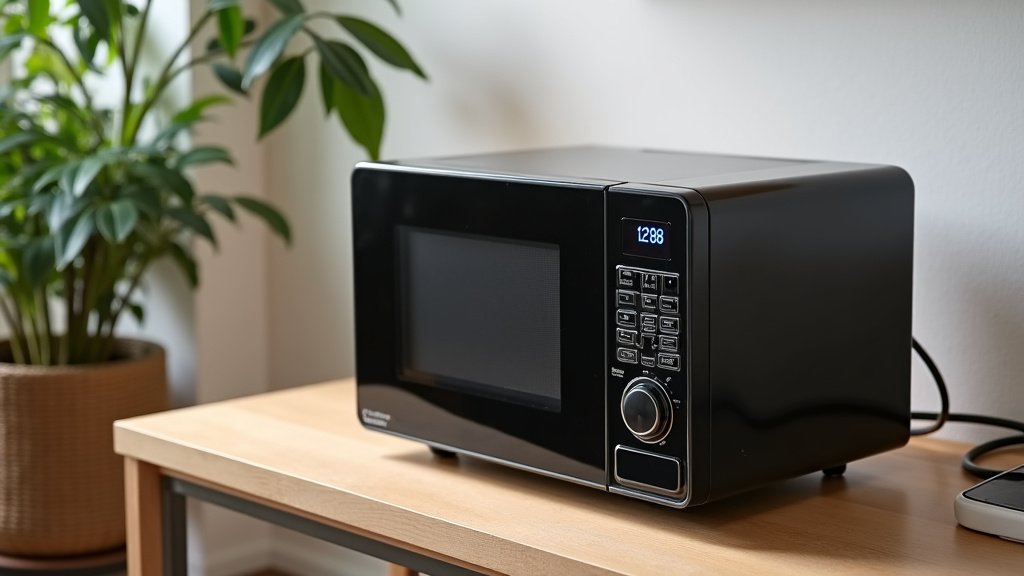
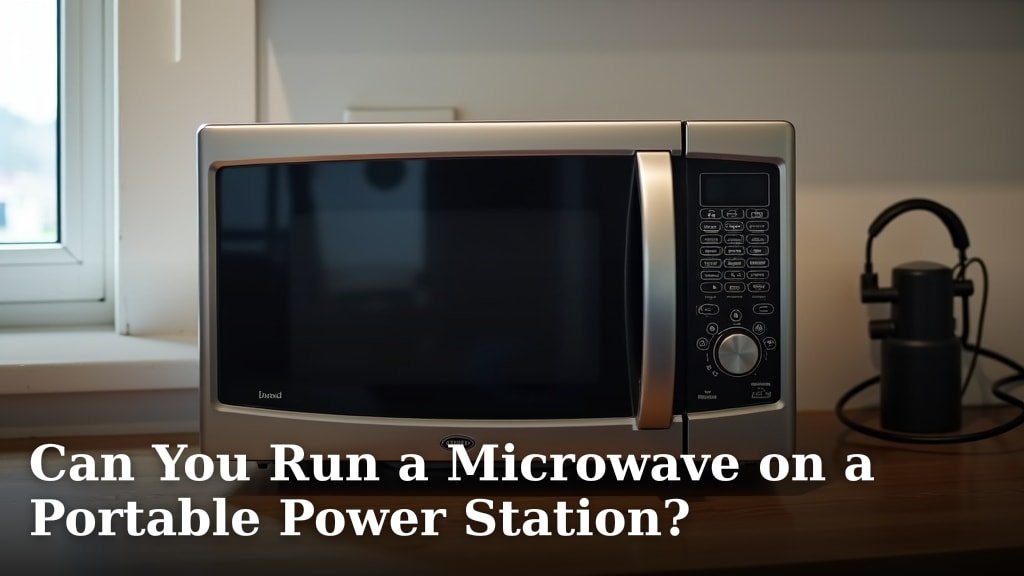
Yes, you can run a microwave on a portable power station, but it depends on the power station’s capacity and the microwave’s wattage. You need a power station that can handle the microwave’s peak power draw and continuous output. If the numbers don’t match, you risk tripping the power station or damaging it.
Powering Your Microwave with a Portable Power Station: What You Need to KnowYou can definitely use a microwave with a portable power station, but it’s not a “one size fits all” situation. You need to match the power station’s capabilities with your microwave’s needs. Think of it like pairing shoes for a hike – you wouldn’t wear flip-flops for a mountain trail, right?
Understanding Microwave Power Requirements
Microwaves are hungry appliances. They use a lot of electricity in a short amount of time. You’ll often see two power ratings for a microwave: cooking wattage and input wattage.
- Cooking Wattage: This is the power your microwave uses to actually heat food. It’s usually what you see advertised (e.g., “700-watt microwave”).
- Input Wattage: This is the total power the microwave draws from the wall. It includes the magnetron (which creates the microwaves), the turntable motor, the light, and the display. This number is always higher than the cooking wattage.
When you’re checking your microwave, look for the input wattage. It’s usually on a sticker on the back or inside the door frame. This is the crucial number for your power station.
Microwaves also have a “peak” or “surge” power draw. This is a quick burst of extra power they need when they first start up. It’s like a car needing more gas to get going from a stop. This surge can be 2-3 times the continuous input wattage.
Portable Power Station Capabilities
Portable power stations have two main output ratings you need to pay attention to:
- Continuous Output (Rated Power): This is the amount of power the station can reliably supply constantly. It’s like your car’s cruising speed.
- Peak Output (Surge Power): This is the maximum power the station can provide for a very short time, usually a few seconds. This is for those brief startup needs of appliances.
You need a power station where its continuous output is higher than your microwave’s input wattage. And its peak output needs to be higher than your microwave’s peak draw. If these numbers don’t line up, you’ll have problems.
Why Matching Matters
If your microwave tries to draw more power than the power station can give, a few things can happen:
- The power station might shut down to protect itself (trip a circuit).
- The microwave might not work properly, or it could even be damaged.
- In some cases, you could damage the power station itself.
It’s always better to have a power station with a little extra capacity than to cut it too close.
Choosing the Right Portable Power Station for Your Microwave
This is where the rubber meets the road. You’ve got your microwave’s power needs, now let’s pick a power station.
First, find your microwave’s input wattage. Let’s say it’s 1200 watts. Now, estimate its surge power. Many sources suggest a surge can be 1.5 to 2 times the running wattage for motors (NCBI). For microwaves, it can be even higher due to the magnetron. For a 1200W microwave, assume a surge of at least 1800W to 2400W.
Here’s a general guide:
| Microwave Input Wattage | Recommended Power Station Continuous Output | Recommended Power Station Peak Output |
|---|---|---|
| 700-800 Watts | 1000 Watts or more | 1500-2000 Watts or more |
| 900-1000 Watts | 1200 Watts or more | 1800-2500 Watts or more |
| 1100-1200 Watts | 1500 Watts or more | 2300-3000 Watts or more |
These are estimates. Always check the specific numbers on your appliances and power stations. When in doubt, go a size up with the power station.
Battery Capacity: How Long Will It Run?
Okay, so your power station can *run* the microwave. But for how long? That’s where battery capacity comes in. Battery capacity is measured in watt-hours (Wh).
Let’s say you have a 1000 Wh portable power station and a microwave that draws 1000 watts. Theoretically, it could run for one hour (1000 Wh / 1000 W = 1 hour). However, it’s not quite that simple.
Portable power stations aren’t 100% efficient. Some energy is lost as heat. You should expect about 80-85% efficiency. So, that 1000 Wh station might only give you about 800-850 Wh of usable power.
Also, microwaves aren’t usually run for hours at a time. Most meals are heated for 30 seconds to a few minutes. So, a 1000 Wh power station could heat many meals. For example, if your microwave runs at 1000 watts for 2 minutes (1/30th of an hour), it uses about 33 Wh (1000 W * 1/30 hr). That means you could heat roughly 24 meals (800 Wh / 33 Wh per meal) before needing to recharge.
Inverter Type: Pure Sine Wave is Best
Most quality portable power stations use a pure sine wave inverter. This is important. Household electricity comes as a pure sine wave. Many sensitive electronics, like microwaves, expect this kind of clean power.
Some older or cheaper inverters produce a “modified sine wave.” While some simple appliances might run on it, a microwave usually won’t like it. It can lead to inefficient operation, buzzing noises, or even damage to the microwave’s components. Always opt for a pure sine wave inverter when powering appliances like microwaves.
Practical Considerations and Tips
Using a microwave with a portable power station can be a lifesaver during outages or on camping trips. Here are some things to keep in mind:
- Check Your Labels: Always double-check the wattage labels on both your microwave and your power station. Don’t guess!
- Keep it Short: Microwaves are very power-hungry. Running them for extended periods will drain your power station quickly. Heat your food, then turn it off.
- Charge Up: Make sure your power station is fully charged before you plan to use it with a microwave.
- Ventilation: Ensure your portable power station has good ventilation while in use. It can generate heat, especially when powering a high-draw appliance like a microwave.
- Other Appliances: Don’t try to run your microwave and a bunch of other high-power appliances off the same power station at the same time. You’ll likely overload it.
Checklist for Microwave and Power Station Compatibility
Before you plug in, run through this quick checklist:
Is your power station’s continuous output greater than your microwave’s input wattage?
Is your power station’s peak output greater than your microwave’s surge wattage?
Does your power station have a pure sine wave inverter?
Do you have enough battery capacity (Wh) for your intended use?
Is the power station fully charged?
Are there any other high-power devices drawing from the station at the same time?
Answering “yes” to the first three questions means you’re likely in good shape for compatibility. The remaining points help ensure a smooth and effective experience.