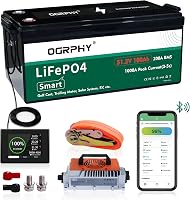
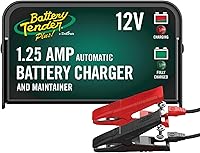
Why Won't Your Deep-Cycle Battery Charge?
A deep-cycle battery may not charge because it is too deeply discharged, has poor connections, uses the wrong charger setting, or has internal damage. Check the battery type, cables, charger output, and voltage before replacing anything.
On this page (9 sections)
- Why won't your deep-cycle battery charge?
- Are the charger and outlet working?
- Are the battery connections clean and correct?
- Is the charger set for the right battery?
- Is the battery voltage too low for normal detection?
- Could sulfation or battery age be the problem?
- How can you tell whether the charger or battery failed?
- What should you do after the battery starts charging?
- When should you replace a deep-cycle battery?
A deep-cycle battery may not charge because it is too deeply discharged, poorly connected, set to the wrong charging mode, sulfated, or damaged. Start with the safe checks below before assuming the charger or battery has failed.
Disconnect charging power before inspecting terminals. Do not try to charge a battery that is swollen, cracked, leaking, hot, or visibly damaged.
Why won't your deep-cycle battery charge?
The most common causes are low battery voltage, loose connections, wrong settings, and battery wear. A charger may also refuse to start when it cannot identify the battery or when the battery type does not match the selected mode.
A deep-cycle battery stores energy for repeated discharge and recharge. If you need a basic explanation first, read what is a deep cycle battery before troubleshooting.
Check these causes in order:
- The outlet or charger has no power.
- The clamps or terminals are loose, dirty, or reversed.
- The charger is set for the wrong voltage or chemistry.
- The battery voltage is below the charger's normal detection range.
- Sulfation, age, or internal damage prevents normal charging.
- The charger or cable has failed.
This order starts with simple problems and avoids forcing a questionable battery into a charging cycle.
Are the charger and outlet working?
Confirm that the outlet supplies power and that the charger shows a normal indicator before checking the battery. A dead outlet, damaged cable, or incorrect connection can look like a failed battery.
Plug another suitable device into the outlet, then reconnect the charger according to its instructions. Check the charger's display or indicator without touching exposed metal.
A charger that stays completely blank may have a power or charger problem. A charger that shows reverse polarity, a fault, or no battery may be responding to the battery connection instead.
The TowerTop 2/10/25 Amp 12V Smart Car Battery Charger has 2A, 10A, 25A, and automatic current settings, plus a display for charging stages and parameters.
The TowerTop is suited to readers who want more charging-current choices and a display that shows charging progress. Its title includes AGM, standard, gel, and deep-cycle battery compatibility, while its output voltage is 12 volts.
Use the setting that matches the battery and charging instructions. Its repair mode cannot repair a completely drained battery, so a battery that remains unresponsive still needs a condition check.
Are the battery connections clean and correct?
A loose, dirty, or reversed connection can stop a charger from starting. Turn off the charger, inspect the terminals, and connect the positive and negative leads exactly as instructed.
Look for corrosion, loose hardware, damaged cable ends, and clamps that can move by hand. Clean only as the battery manufacturer allows, and keep sparks, flames, and metal tools away from the battery.
Check polarity before restoring power. Reversed connections can trigger charger protection and may create a safety risk.
If the charger uses eyelet terminals, make sure they sit securely on the correct posts. If it uses clamps, confirm that each clamp has firm metal contact rather than resting on dirt or paint.
Is the charger set for the right battery?
A charger must match the battery's voltage and chemistry. A 12V deep-cycle battery needs a compatible 12V charging mode, while some smart chargers also support 6V batteries or lithium battery types.
Read the battery label and instructions for its chemistry. Do not choose AGM, gel, flooded, standard, or lithium settings by guesswork.
The NOCO GENIUS1 1A 6/12V Smart Battery Charger, Trickle Charger & Maintainer supports 6V and 12V lead-acid batteries, including AGM, gel, SLA, VRLA, flooded, maintenance-free, and deep-cycle batteries. It also supports LiFePO4 batteries and has an integrated thermal sensor.
The GENIUS1 suits small-battery maintenance and readers who need both 6V and 12V modes. It includes battery clamps with integrated eyelet terminals and can charge batteries from as low as 1 volt, with Force Mode for completely dead batteries down to zero volts.
Its 1A output favors slower charging. For the right current range, compare what amp charger do you need for a deep-cycle battery.
Is the battery voltage too low for normal detection?
A deeply discharged battery may fall below a charger's normal detection range. Some chargers can begin recovery at very low voltage, while others may show a fault or act as if no battery is connected.
Measure the battery with a suitable meter if you know how to do so safely. A low reading does not prove that the battery can be recovered, because internal damage can also cause low voltage.
Do not repeatedly force-charge a battery that becomes hot, swells, leaks, or produces an unusual smell. Stop charging and follow the battery maker's safety guidance.
The NOCO GENIUS5 5A 6/12V Smart Battery Charger, Trickle Charger & Maintainer supports 6V and 12V lead-acid and LiFePO4 batteries, including deep-cycle batteries. It can charge batteries from as low as 1 volt and includes Force Mode for batteries down to zero volts.
The GENIUS5 is a better fit than a 1A charger when a compatible battery needs more charging current. It includes battery clamps with integrated eyelet terminals, a mounting bracket, screws, a 72-inch AC cable, and an 80-inch DC cable.
A higher current setting does not make an unsuitable battery safe to charge. Follow the battery instructions and compare the charge time and current guidance in a deep cycle battery charge chart.
Could sulfation or battery age be the problem?
Sulfation, long storage, repeated deep discharge, and internal damage can keep a battery from accepting a normal charge. A charger may have a repair or desulfation mode, but that feature cannot guarantee recovery.
Sulfation can develop when a lead-acid battery remains undercharged. A battery that charges briefly but drops quickly may have lost usable capacity, even if the charger reaches a full-charge indication.
The TowerTop includes desulfization and repair controls, and the NOCO GENIUS1 and GENIUS5 include pulse charging and desulfation features. These functions are options for compatible batteries, not proof that a damaged battery will work again.
If your battery is stored for long periods, a compatible maintainer can help keep charge levels steady. See best deep cycle battery maintainer for maintenance-focused choices.
How can you tell whether the charger or battery failed?
Test the simple parts separately when it is safe: outlet, charger connections, charger mode, and battery condition. If the charger works with a suitable battery but one battery repeatedly refuses to charge, that battery is the stronger suspect.
Look for a stable charging indicator, normal temperature, and a battery voltage that improves during charging. A battery that remains low after a suitable charging attempt may have internal wear or damage.
If the charger fails with more than one suitable battery, inspect its cable, outlet, mode selection, and instructions. Do not open the charger or bypass its safety controls.
A portable power station is not automatically a battery charger. For that separate question, see Can You Use a Portable Power Station to Charge a Car Battery?.
What should you do after the battery starts charging?
Let the charger complete its normal cycle, then check that the battery holds charge after resting. Keep the battery in a suitable ventilated area and follow its charging instructions.
Do not disconnect and reconnect repeatedly just to make the charger move faster. Avoid mixing battery types, changing modes while connected, or leaving a damaged battery unattended.
If the battery works in an RV, boat, or other system but the charger still fails, inspect the system's fuse, wiring, switch, and ground according to its manual. A charger problem may be elsewhere in the circuit.
If the wider issue is a device that will not power on, read why won't my camping power station turn on for a separate troubleshooting path.
When should you replace a deep-cycle battery?
Replace or professionally assess the battery when it is damaged, repeatedly loses charge, or will not accept a correct charging cycle. A repair mode is not a substitute for safe battery evaluation.
Choose the TowerTop if you need a 12V charger with 2A, 10A, 25A, and automatic settings. Choose the NOCO GENIUS1 for slower 1A charging across 6V and 12V batteries, or the GENIUS5 for 5A charging with the same voltage choices and low-voltage recovery features.
The right fix depends on the failure point. Check power, connections, voltage, settings, and battery condition in that order, then stop charging if the battery shows physical damage or unsafe heat.
Frequently asked questions
Why won't my deep-cycle battery charge?
A deep-cycle battery may not charge because its voltage is too low, the terminals or cables have a poor connection, the charger is set for the wrong battery type, or the battery has sulfation or internal damage. Check the charger, connections, battery condition, and safety instructions in that order.
Can a completely dead deep-cycle battery be recharged?
Sometimes. A charger with a low-voltage recovery or force mode may recognize a deeply discharged battery, but recovery is not guaranteed.
Stop if the battery is swollen, leaking, hot, cracked, or otherwise damaged, and follow the battery and charger safety instructions.
What amp charger should I use for a deep-cycle battery?
Choose an amp setting suited to the battery's voltage, chemistry, capacity, and charging instructions. A lower setting can suit long maintenance charging, while a higher setting can reduce charge time when the battery and charger support it.
See the battery maker's guidance before choosing.
How do I know if my deep-cycle battery or charger is bad?
Check the outlet, charger indicators, cable connections, battery voltage, and selected charging mode first. If the charger works with a suitable battery but one battery repeatedly stays low, overheats, or will not accept charge, the battery may need professional evaluation or replacement.