Generator Transfer Switch at Meter: What to Look For
A generator transfer switch at the meter must match your electrical service, generator output, load needs and utility requirements. Confirm compatibility with the meter socket, service rating and installation rules before you choose equipment.
On this page (10 sections)
- What does a generator transfer switch at the meter do?
- Which compatibility details should you check first?
- What utility requirements affect a meter-mounted switch?
- Is a meter switch right for a whole-home generator?
- Should you choose manual or automatic transfer equipment?
- Which generator fuel setup fits the transfer plan?
- What load capacity should the transfer switch handle?
- How should you plan installation and maintenance?
- What are the best alternatives to a meter-mounted switch?
- Final checklist for a generator transfer switch at the meter
A generator transfer switch at the meter changes the source feeding a home between utility power and a generator. The right setup depends on the meter arrangement, service rating, generator connection, selected loads and the utility's rules.
Meter-mounted transfer equipment is not a universal add-on. It can affect the service entrance, meter socket and conductors that supply the building, so compatibility and approval matter before appearance, convenience or price.
This guide explains the checks that help you narrow the options. For generator basics first, see our gas generator buying guide.
What does a generator transfer switch at the meter do?
A meter transfer switch changes the home's incoming power source while helping prevent utility and generator power from being connected at the same time. That separation is essential because an incorrectly connected generator can send power back toward utility lines.
The word “meter” does not mean every switch fits every meter. The equipment must work with the home's service arrangement, meter socket, enclosure and connection method.
Some systems transfer power for the whole service. Others support a defined group of loads or use additional equipment downstream.
Read the documentation for the exact switch and generator combination rather than assuming that a meter position automatically means whole-home backup.
A transfer switch also does not create more generator capacity. If the generator cannot support the loads connected to the backed-up service, the switch cannot solve that limitation.
Which compatibility details should you check first?
Check the service rating, meter arrangement, voltage, phase, connection type and generator output before considering a meter-mounted transfer switch. These details determine whether the equipment can be installed and used as intended.
What service rating does the home have?
Find the service rating shown on the main service equipment or electrical documentation. Common residential services vary, so do not assume the rating from the home's age, size or appearance.
The switch must be rated for the service it controls. A generator's wattage and the home's service rating describe different things.
The service rating concerns the electrical equipment and conductors, while generator output describes how much power the generator can supply. For a comparison of connection approaches, see transfer switches versus interlocks.
If the service information is unclear, have an electrician identify it before you buy. A wrong assumption can affect the switch, meter equipment and the conductors connected to it.
Does the switch fit the meter socket?
A meter-mounted design must match the meter socket and the utility's accepted equipment. The physical shape, connection points and enclosure arrangement all matter.
A switch that appears similar to your meter equipment may still be unsuitable. Confirm the exact model, socket type and approval requirements rather than relying on a general product description.
Also check whether the utility owns or controls the meter socket. The property owner may not be free to replace, open or alter utility-controlled equipment.
What voltage and phase does the generator provide?
The transfer equipment and generator must use compatible voltage and phase arrangements. A generator that supplies the wrong electrical configuration is not made compatible by a matching-looking plug.
Read the generator's electrical specifications and the transfer switch documentation together. If either source uses unclear terms, ask a qualified electrician to confirm the match before installation.
The best transfer switch guide can help you compare switch types, but the correct choice still depends on your service and generator.
Does the generator have enough rated output?
Use the generator's rated output for planning, not only its peak number. Starting a pump, refrigerator, furnace blower or other motor can require more power for a short time.
Make a list of the loads you want during an outage. Add their running demand, then account for starting demand where the equipment requires it.
The total must stay within the generator's usable rating.
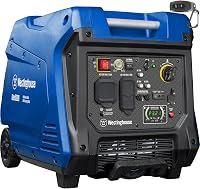
The Westinghouse iGen5000 has 5000 peak watts and 3900 rated watts, so it suits a plan built around that output range rather than an assumption that all household loads can run at once.
Its 3.4 gallon tank, up to 18 hour claimed run time and economy mode may help reduce refueling during a longer outage. The generator also has a rotating display for fuel level, power output, remaining run time, voltage output and lifetime hours.
The output plan still matters. A transfer switch can connect a service, but it cannot let a 3900-rated-watt generator carry a larger simultaneous load safely.
What utility requirements affect a meter-mounted switch?
Utility approval can be a deciding requirement for a generator transfer switch at the meter. Check the utility's rules before buying equipment or scheduling work.
Requirements may cover the meter socket, approved equipment, disconnects, labeling, inspections and who may remove or reinstall the meter. They may also specify how the generator connects to the service and how utility workers can identify the system.
Ask the utility these questions:
- Is a meter-mounted transfer switch allowed at your address?
- Does the utility require a particular equipment type or approval?
- Who may disconnect and reinstall the meter?
- Is an inspection or permit required?
- Does the installation need a visible disconnect?
- What labeling must be present?
- Does the utility need to review drawings or equipment details first?
Keep the answers with the transfer-switch documentation. Requirements can differ by location, even when two homes have similar electrical services.
Do not open utility-controlled equipment or remove a meter yourself. Work that affects service equipment should be handled through the utility and a qualified electrician.
Is a meter switch right for a whole-home generator?
A meter-mounted switch may fit a whole-service backup plan, but it is not automatically the best option. The decision depends on whether the generator can support the loads you expect to operate.
Whole-service connection can make the electrical layout simpler for the people in the home because circuits remain in their normal locations. The trade-off is that the generator still has a finite output, so heavy loads may need to be managed.
Selected-load transfer can be easier to size around a smaller generator. It may keep essential circuits such as refrigeration, lighting or selected outlets available without trying to supply every large appliance.
Before choosing whole-service equipment, write down the loads that matter during an outage:
- Refrigeration and freezers.
- Heating or cooling equipment.
- Sump pumps or well pumps.
- Internet equipment and device charging.
- Lighting.
- Cooking equipment.
- Workshop or outdoor equipment.
Separate loads that must run continuously from those that can wait. This list gives your electrician a clearer starting point for sizing and connection planning.
For installation details and the work sequence, read our generator transfer switch installation guide. It explains why the connection should be planned before equipment is mounted.
Should you choose manual or automatic transfer equipment?
Choose manual equipment when you can safely start, stop and manage the generator during an outage. Automatic equipment may suit a system that needs the transfer process to happen without someone standing at the electrical panel, but it requires a compatible generator and control arrangement.
A manual system usually requires you to:
- Confirm utility power is unavailable.
- Move the transfer control to the generator position.
- Start and connect the generator according to its instructions.
- Monitor the generator's load.
- Return the system to utility power when service is restored.
- Shut down and store the generator correctly.
An automatic system needs more than an automatic-looking switch. The generator, controls, sensing equipment and transfer equipment must communicate and operate together.
Our guide to the best manual generator transfer switch is useful if you expect to manage the changeover yourself. If you want an automatic setup, compare the requirements in our best automatic transfer switch for generator guide.
Which generator fuel setup fits the transfer plan?
Fuel choice affects runtime planning, storage and the generator's operating procedure. It does not remove the need to match electrical output and transfer equipment.
The HIPA carburetor supports gasoline, propane and natural gas on compatible generator engines. Its title identifies compatibility with Honda GX340, GX390, GX420 and GX460 engines and clones, along with several listed generator ranges.
Before choosing this kit, verify the generator's engine displacement, original carburetor style and available physical space. The compatibility information specifically calls for a standard manual choke carburetor and enough clearance in the engine compartment.
The kit includes a GX390 dual-fuel carburetor, gasket and LPG/CNG conversion kit. Its 3-position rotary switch has an OFF setting, and the manual choke lever is intended for cold starts.
This type of fuel conversion changes how a compatible generator is supplied with fuel. It does not change the service rating of the home or prove that the converted generator is suitable for every transfer switch.
The Hutch Mountain conversion kit is identified for the Honda EU2200i. It includes a dual-fuel conversion kit, manual and fuel adapters, and its product information describes gasoline, propane and natural gas compatibility.
Its materials are identified as metal, and the installation instructions are photo-based. The kit is described for basic-tool installation, but compatibility should still be checked against the exact generator before work begins.
The kit's stated output is 2200 watts. That output may suit a smaller selected-load plan, but it does not provide the same capacity as a larger portable generator.
For a broader explanation of fuel choices and generator operation, read how to use a transfer switch with a generator. A transfer switch is only one part of a safe outage plan.
What load capacity should the transfer switch handle?
The transfer switch should handle the service or load arrangement it is designed to control. The generator should handle the loads you plan to run.
Both ratings need to make sense together.
Do not size from the largest appliance alone. Consider simultaneous use and starting demand.
A refrigerator may cycle while lights, internet equipment and a pump are already running.
A practical load worksheet includes:
| Load | Running demand | Starting demand | Can it wait? |
|---|---|---|---|
| Refrigerator | Check nameplate | Check manual | Usually no |
| Freezer | Check nameplate | Check manual | Usually no |
| Pump | Check nameplate | Check manual | Depends |
| Furnace blower | Check nameplate | Check manual | Depends |
| Lights | Add fixture loads | Usually low | Sometimes |
| Electronics | Check adapters | Usually low | Sometimes |
Use the appliance manuals or nameplates for actual values. Do not replace missing information with a guess based on the appliance's size.
If the generator has an economy mode, that feature may reduce fuel use when demand is lower, but it does not increase the generator's rated output. The Westinghouse model's economy mode and display help with operating information, while its 3900 rated watts remain the key planning figure.
How should you plan installation and maintenance?
Have a qualified electrician handle the service connection and follow the utility's process. The electrician can verify the service arrangement, equipment ratings, grounding and connection points before the work begins.
Keep the generator outdoors and follow its safety instructions for placement, ventilation and fuel handling. Never operate a fuel generator in a home, garage or other enclosed space.
Before an outage, prepare:
- The generator manual.
- Transfer-switch instructions.
- Utility contact information.
- Fuel and approved fuel connections.
- A load priority list.
- Flashlights and communication equipment.
- A way to monitor generator operation.
- A record of the last maintenance task.
Check fuel connections and generator condition according to the manufacturer's instructions. For a converted generator, inspect the conversion components and confirm that the fuel source is appropriate for the kit and generator.
Do not test a transfer switch by improvising a connection. The system should be checked using the proper procedure so utility power and generator power cannot be joined incorrectly.
What are the best alternatives to a meter-mounted switch?
A meter-mounted switch is only one way to connect backup power. A service-rated manual switch, a selected-load transfer panel or a compatible automatic system may be more suitable.
Choose a meter-mounted option when the utility allows it, the service equipment is compatible and you need a service-level changeover.
Choose a manual transfer switch when you want a simpler selected-load plan and can operate the generator during an outage.
Choose an automatic transfer switch when the generator and controls support automatic operation and the installation requirements fit your property.
Choose a fuel conversion kit only when the exact generator engine and carburetor arrangement match. The HIPA kit targets compatible manual-choke engines, while the Hutch Mountain kit is identified for the Honda EU2200i.
For Reliance options, see our guide to the best generator transfer switch Reliance models. Compare the exact service rating and connection requirements rather than choosing by brand name alone.
Final checklist for a generator transfer switch at the meter
Before you choose a generator transfer switch at the meter, confirm the utility's approval, the home's service rating, the meter socket arrangement, the generator's voltage and phase, the connection type and the loads you need during an outage.
Then have a qualified electrician verify the equipment and installation path. Pick the Westinghouse generator when its 3900 rated watts and 30 amp outlet fit your selected-load plan.
Pick the HIPA kit when your engine matches its listed 338cc to 460cc manual-choke compatibility. Pick the Hutch Mountain kit when you have the specified Honda EU2200i and need its fuel-conversion setup.
Frequently asked questions
What is a generator transfer switch at the meter?
A generator transfer switch at the meter is equipment installed at or near the utility meter to change the home's electrical supply between utility power and a generator. The exact design must match the service equipment, meter socket, utility rules and generator connection.
A licensed electrician and the utility may need to approve the installation.
Can any generator use a meter-mounted transfer switch?
No. The generator must provide the right voltage, phase, connection type and usable capacity for the transfer equipment and the home's selected loads.
The service rating and meter equipment must also be compatible.
Check the generator manual, transfer-switch documentation and utility requirements before ordering.
Is a transfer switch at the meter better than a manual switch?
A meter-mounted system can simplify whole-service changeover when it is approved for the property, but it may involve utility coordination and professional installation. A manual transfer switch can suit a smaller selected-load system.
The better choice depends on service size, desired circuits, generator output and local rules.
How do I size a generator for a transfer switch?
Start with the loads you need during an outage, then account for motor starting demand and the generator's rated output. Peak watts alone are not enough.
A generator must support the selected loads without exceeding its rated capacity, and the transfer equipment must be rated for the electrical service it controls.